 Of Ghosts and Machines
The Entertainment Layer: Rethinking DeFi Liquidity
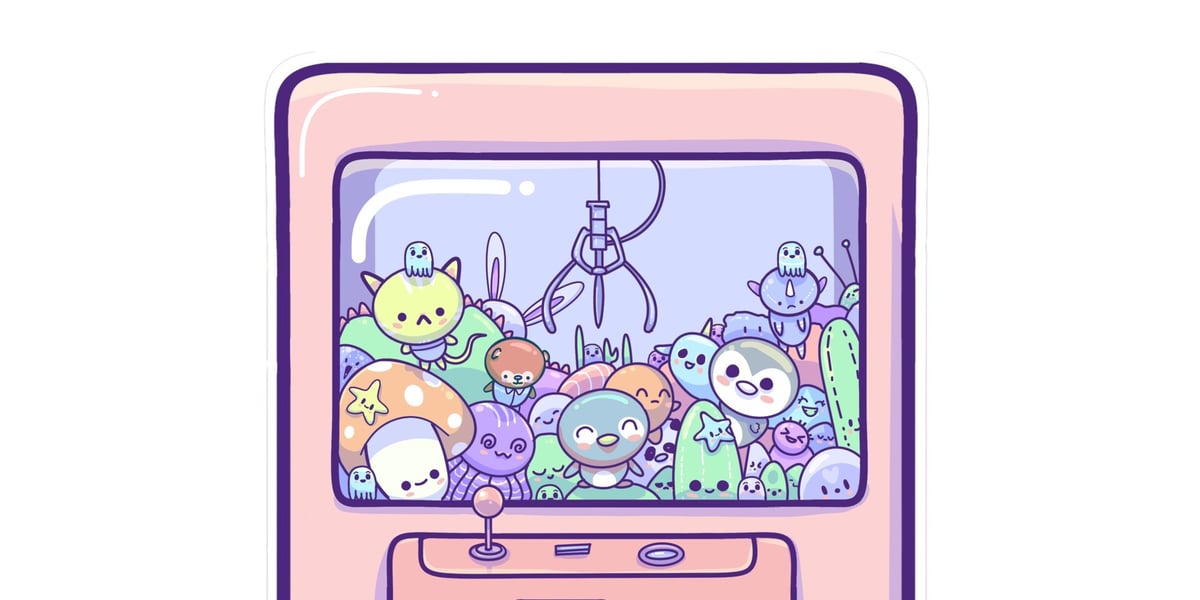
I think one of the most underappreciated insights in DeFi is that entertainment captures retail attention far more effectively than finance ever could. Users don't naturally wake up excited to provide liquidity for optimal yield. But they will spend hours playing games, wanting rewards, and competing with others. This is not a weakness; it's a design primitive to build around.
Traditional AMMs struggle with a fundamental problem: liquidity can be short-term. Capital flows to wherever APY is highest this week, creating constant rotation and thin markets. The moment incentives dry up, liquidity exits. This creates a vicious cycle where protocols burn tokens to attract TVL that disappears the instant emissions stop. The problem isn't the incentives themselves; it's that purely financial incentives attract purely financial behavior.
Entertainment changes everything. When users derive value from the experience itself, they become less price-sensitive to pure yield. They're paying for entertainment with their attention and capital, not just optimizing for max APY. This creates fundamentally different liquidity dynamics.
The Microstructure of Entertainment-Driven Trading
Consider how market microstructure shifts when entertainment value competes with financial returns. In a standard AMM, every interaction is purely transactional: swap tokens, provide liquidity, claim rewards (if that's even the case). The interface is boring. The experience is mechanical. Users tolerate it because they're chasing yield, not engagement.
Gamified mechanics flip this dynamic. When trading becomes play, users accept different tradeoffs. They'll interact more frequently, even at lower expected returns, because the entertainment value subsidizes the financial calculation. A user might pass on a 20% APY liquidity pool elsewhere to participate in a gamified protocol offering 8% APY plus the thrill of variable rewards and competitive dynamics.
That's not insane, it's actually rational once you account for entertainment utility. The same person pays $15 for a movie ticket knowing the expected financial return is zero. They'll pay for engagement, for status, for the dopamine hit of mystery rewards. DeFi protocols that ignore this are leaving massive user acquisition opportunities on the table.
The microstructure that emerges differs from traditional markets in measurable ways. Order flow becomes less predictable because entertainment-motivated users trade on impulse and emotion alongside financial calculation. Volume patterns shift from the typical "deposit, wait, withdraw" cycle to continuous engagement with smaller, more frequent interactions. This changes everything about how liquidity behaves.
Fee generation becomes more stable because it's distributed across many small transactions rather than concentrated in a few large moves. Liquidity providers earn from sustained activity rather than hoping for occasional large swaps. The revenue stream smooths out, making LP positions more predictable even if individual user behavior becomes less so.
Price impact dynamics also shift. In purely financial markets, large orders create significant slippage that sophisticated traders carefully manage. In entertainment-driven markets, users willingly accept higher price impact because they're optimizing for experience, not just execution quality. This creates opportunities for LPs to earn more from the same depth of liquidity.
How Gamified AMMs Create Liquidity Flywheels
The self-reinforcing nature of gamified liquidity provision creates compounding advantages that traditional AMMs cannot replicate. The flywheel starts with a simple observation: better prizes attract more players. But "better" doesn't just mean larger, it means more variety, more frequent, and more surprising.
When liquidity providers deposit capital into entertainment-driven pools, they're not just providing price quotes for swaps. They're funding the prize pool. They're funding the game itself. This fundamentally changes the relationship between LPs and traders. In traditional AMMs, LPs and traders are adversaries; traders want tight spreads, and LPs want to capture value from volatility. In gamified systems, LPs are enabling the experience that traders are paying for.
More players mean more fee revenue flowing to LPs. But the revenue composition differs from standard AMMs. Some fees come from swaps, as usual. But additional revenue streams emerge from the entertainment layer itself like entry fees for games, costs to attempt prize claims, and penalties for early exits. The protocol can capture value from engagement that has nothing to do with traditional trading.
This increased revenue makes LP positions more attractive, drawing additional capital. New LPs aren't just yield farmers checking TVL dashboards. Some are former players who've realized the house edge is profitable. Others are sophisticated capital allocators who recognize that entertainment-driven protocols have lower liquidity elasticity than pure DeFi. The composition of LPs becomes more diverse, which paradoxically makes the liquidity base more stable.
As more liquidity enters, the prize pool deepens. The ceiling on potential rewards rises. The variance increases. The entertainment value improves. Users who previously found the prizes uninteresting now see life-changing amounts at the high end of the distribution. New player cohorts enter, each with different risk preferences and entertainment budgets.
Better prizes and improved experience attract more players, completing the loop. But the flywheel doesn't just return to its starting point; it returns with momentum. Each cycle increases the protocol's mindshare, strengthens its network effects, and deepens the behavioral moats around retained users.
Variable Reward Psychology and DeFi Incentives
The psychology of variable rewards, the core mechanic behind claw machines, slot machines, and loot boxes, maps surprisingly well to DeFi incentive structures. Traditional liquidity mining offers predictable, linear rewards: provide X capital, earn Y tokens. This predictability sounds appealing, but actually reduces engagement. Humans are wired to find uncertainty more compelling than certainty when the expected value is similar.
Claw machines succeed not because they offer good odds (they're notoriously difficult) but because they create hope through visible near-misses and occasional dramatic wins. The same psychological mechanisms apply to DeFi. A user who narrowly misses a large prize will often try again immediately, even though the odds haven't changed. This behavior would seem irrational in purely financial terms, but it's perfectly rational when entertainment utility is factored in.
Variable reward mechanisms introduce controlled randomness into the return profile. Instead of a guaranteed 10% APY, imagine a structure where users might earn anywhere from 5% to 50% depending on timing, skill, or chance. The average remains 10%, but the experience is fundamentally different. Users check back more frequently. They develop strategies. They compete with each other. The protocol occupies mindshare in ways that static yield farming never could.
This creates deeper, stickier liquidity because the capital deployed exhibits different behavioral characteristics. Entertainment-motivated LPs don't obsessively monitor APY fluctuations across competing protocols. They're invested in the game mechanics, the community, and the experience itself. When yields compress during bear markets, they exit slower because they're valuing more than pure financial returns.
The result is that gamified protocols can maintain liquidity through conditions that would devastate traditional AMMs. During the depths of bear markets, mercenary capital flees to stablecoins or exits crypto entirely. Entertainment-driven protocols retain core user bases who continue participating at a reduced scale because the entertainment value hasn't disappeared.
Why "Fun" Mechanics Bootstrap Deeper Liquidity Than APY Alone
Fun mechanics bootstrap liquidity through different pathways. First, entertainment creates organic word-of-mouth growth that financial products rarely achieve. People naturally share entertaining experiences with friends. They post about big wins. They explain clever strategies they've discovered. This social amplification brings new users at zero customer acquisition cost.
Second, fun mechanics reduce price sensitivity to yields. A user engaged in an entertaining experience will accept 8% APY when they could get 10% elsewhere because the 2% difference is offset by entertainment value. This allows protocols to maintain liquidity with lower token emissions, extending runway, and reducing sell pressure.
Third, entertainment creates behavioral lock-in through learned mechanics and invested time. Users develop expertise in the specific game mechanics of a protocol. They understand the optimal times to play, the strategies that work, the patterns in prize distribution. This knowledge has value, but only within that specific protocol. Switching to a competitor means abandoning this accumulated expertise, creating real switching costs.
Fourth, entertainment enables multi-sided network effects that pure finance cannot. Players attract LPs who attract better prizes which attract more players. But entertainment also attracts spectators, content creators, community builders, and social dynamics that have nothing to do with yield optimization. These stakeholders create additional gravity around the protocol.
The compounding effect is that entertainment-driven protocols can reach deeper, more sustainable liquidity levels with lower token emissions than purely financial protocols. Entertainment protocols extend their runway while building stronger liquidity bases.
The Feedback Loop: Player Engagement, Liquidity Depth, and Prize Quality
The relationship between these three elements creates the core economic engine of entertainment-driven DeFi. Player engagement drives fee generation through frequent transactions. Those fees make LP positions more profitable, attracting deeper liquidity. Deeper liquidity enables better prizes like larger jackpots, high quality rewards, more frequent payouts. Better prizes attract more players and increase session time for existing users.
The feedback loop has built-in stability that traditional AMMs lack. When one element weakens during a bear, the others provide cushion. Engaged communities continue generating fees even when new user growth slows. Deep liquidity prevents death spirals where declining TVL forces prizes lower and accelerates exits. Social dynamics create retention independent of prize quality. The users stick around. Their friends are there because they've invested time learning the mechanics. After all, they have a status to protect.
EntertainmentFi as Protocol Design Philosophy
The lesson isn't that DeFi should become casinos or that financial rigor doesn't matter. The insight is that pure finance captures a narrow user base while entertainment reaches exponentially broader audiences. Most people will never voluntarily optimize yield or provide liquidity to AMMs. But they will play games. They will compete. They will bet, they will try to predict.
The design philosophy isn't about adding gamification as a superficial layer on top of existing DeFi primitives. It's about rethinking the primitives themselves with entertainment value as a first-class concern. What does an AMM look like when entertainment utility matters as much as capital efficiency? What incentive structures emerge when variable rewards compete with predictable yields?
These questions lead to fundamentally different protocol architectures. The entertainment layer isn't marketing, it's core infrastructure. The game mechanics are the primary user interface. The community dynamics aren't just nice-to-have to show off; they're essential retention mechanisms.
When a teenager in SEA spends an hour engaging with a gamified protocol, learning about liquidity through play, competing with friends, and gradually accumulating yield, that's not "DeFi for dummies." That's DeFi achieving its stated goal of financial inclusion and helping people to learn about finance (more than half of US adults lack financial literacy).
The protocols that win the next cycle (not many are left since DeFi summer, to be honest) won't be the ones with the highest TVL from mercenary capital and 5 daily txs on average. The winning protocols will be the ones users join for fun and stay for the yield.
a few references:
1. Studies on behavioral economics demonstrate that unpredictable rewards create stronger dopamine responses and increase persistence compared to consistent rewards
https://www.brainscape.com/academy/variable-rewards-motivation-learning/
2. MIT thesis on retention strategies showing how entertainment-aligned benefits reduce switching and enhance customer lifetime value in competitive sectors https://dspace.mit.edu/handle/1721.1/163281
3. Hyperliquid: how user experience and product differentiation matter more than pure execution https://blockworks.co/news/hyperliquid-the-frontend-wars