
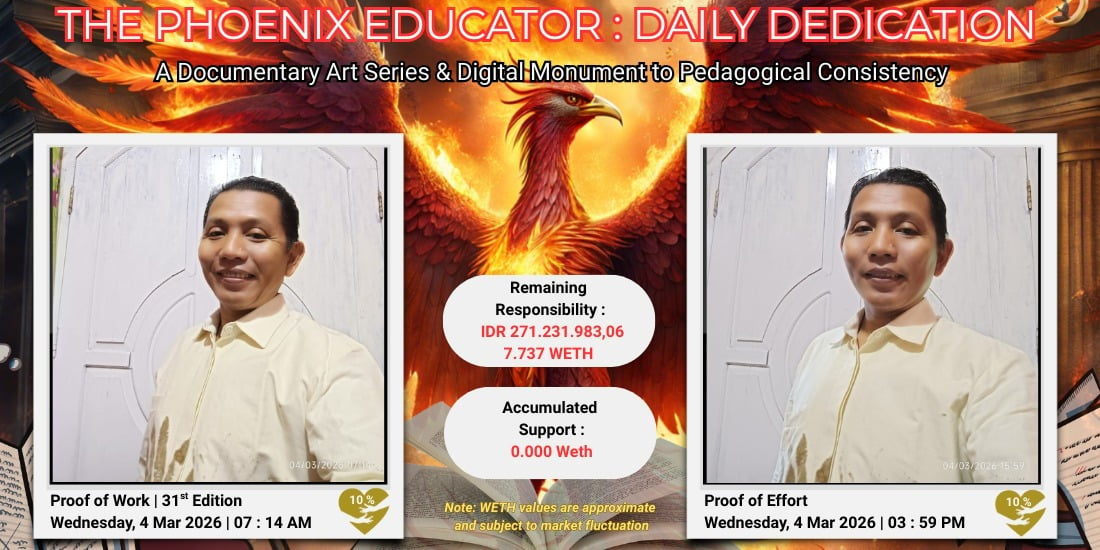
Ramadan day 14 has arrived, bringing with it a sacred breeze that greets souls thirsting for peace. That morning, the sky remained clear like an unblemished blue canvas, and the sun—ah, the faithful sun—never tires of illuminating the earth with its eternal light. In the philosophy of life, the sun is a symbol of divine steadfastness, a reminder that behind every dark night lies the promise of a new dawn. Just like that, Phoenix, the educator with a burning heart, soars toward the Garden of Paradise—a name that is not merely a label, but a metaphor for the place where seeds of knowledge are planted to blossom into trees of wisdom. The morning road flows like a calm river: bustling yet smooth, without obstacles or traffic jams that often test human patience. Every kilometer traveled becomes a contemplation of life's journey, where hurdles are mere temporary illusions, and the true destination is steadfastness of the heart in facing them.
Upon arriving at the classroom in the Garden of Paradise, the children of the nation— the innocent and hopeful next generation—were already ready to receive the lesson. They are reflections of the future, young souls thirsty for the light of knowledge. In the midst of the lesson flowing like clear river water, one of the nation's children raised his hand with genuine curiosity: "Teacher, what was the religion before the arrival of Islam, before Prophet Muhammad?" The question was like a spark igniting a profound discussion. As an educator, Phoenix answered with burning enthusiasm, yet calmly and meaningfully, as if every word was a seed sown to grow into eternal understanding. "My dear children," he said, "the religion before Islam was the religion of Ibrahim—Hanifiyyah, the pure religion that affirms the Oneness of God, the Most Exalted. This is not a new religion, but the red thread connecting the history of humanity since Prophet Adam. Imagine: from the beginning of creation, God has taught tawhid, the absolute unity with the Creator. The prophets before Him, from Noah to Moses, from Jesus to the others, all carried the same message: do not associate anything with God. However, the way of worship differed from the Islam we know today, because each era has its own trials and guidance. This teaches us the philosophy of eternity: religion is not merely ritual, but a soul's journey toward purity, where differences in form are only shells, and the essence is sincere devotion to the Almighty." The children listened seriously, their eyes reflecting awe, as if every line of words was a window into a deeper understanding of human existence. Here, education is not just the transfer of knowledge, but the philosophical shaping of character: teaching that the history of religion is a mirror for our personal journeys, where past mistakes become lessons to avoid straying from the straight path.
Entering another room in the Garden of Paradise, the atmosphere grew warmer with more personal interaction. Phoenix, wisely, posed a thought-provoking question: "After graduating from the Garden of Paradise, what major do you want to study in college?" One of the nation's children, eyes sparkling with confidence, answered, "I will major in Information Systems, Teacher." Phoenix smiled, then continued encouragingly: "Excellent. After finishing college, what will you do?" The child, without hesitation, replied, "I want to become a digital marketer, Teacher. Helping businesses grow in the virtual world." As an educator full of wisdom, Phoenix then offered meaningful advice to all the children in the room, his voice like a wind caressing the leaves of the tree of life. "This is an extraordinary example, my children. When you enter college, do not merely follow the flow. Understand the dream you wish to achieve— that dream is the fire burning in your chest, making every lesson meaningful, every exam a strengthening challenge. The philosophy behind this is: life without a dream is like a ship without a compass, drifting aimlessly in the ocean. Dreams give meaning to struggle, transforming routine into a heroic journey. Remember, education is not the end, but a means to realize a greater vision, where every step is a foundation stone for a better society." Those words sank deep, leaving a philosophical trace that the future is not random fate, but the result of dreams pursued with steadfastness.
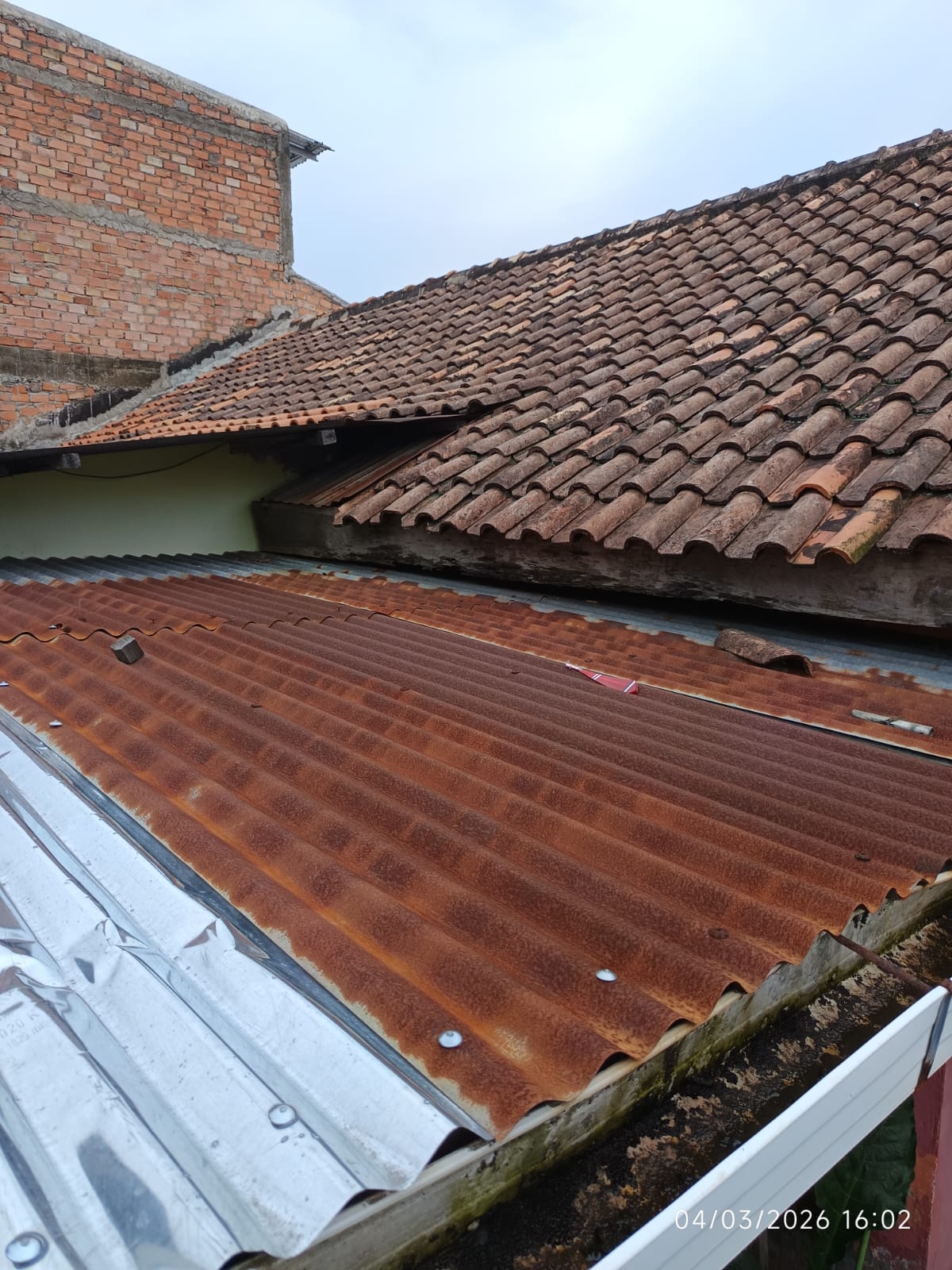
The learning time ended, leaving a sense of satisfaction in the heart. It was time for Phoenix to return to the "Nest of Dreams"—a small home full of warmth, where family waited like a harbor for a weary sailor. As he was about to enter the door, his youngest child ran nimbly, hugging his legs tightly. "Dad, help! My toy got thrown onto the roof," he said in an innocent voice that touched the heart. With joy, Phoenix immediately helped, climbing carefully and retrieving the beloved toy. When the toy returned to the little hands, the child's face beamed with simple happiness. This moment is a profound philosophical lesson: true happiness does not come from abundant wealth, but from sincere bonds of love. In the busyness of the world, we often forget that small things like this are the essence of life—small sacrifices that build a strong family foundation, reminding us that being a parent is a divine calling to instill values of goodness.
As Maghrib approached, the scent of Ramadan grew stronger. Phoenix and his wife, in harmony like a symphony of married life, bought food for breaking the fast for their first and second children, who were studying at the Qur'an Education Garden. They wanted sate— a traditional food that is simple yet rich in flavor: chicken meat skewered on sticks, drenched in savory peanut sauce, a symbol of togetherness amid cultural diversity. Together with his wife and youngest child, they headed to the bustling market, where the clamor of traders became a metaphor for life: every transaction is an exchange of value, every smile an unspoken prayer. The provisions were prepared with love, then Phoenix flew toward the Qur'an education institution. As usual, his children ran joyfully upon seeing their father bringing the food; their embraces were the most beautiful reward. This is a philosophical reminder that fasting is not just abstaining from hunger, but training the soul to appreciate God's blessings, and family is the first school where those values are taught.

On the way home, midway along the road illuminated by twilight, Phoenix met one of the nation's children who had graduated the previous year. The face was recognizable, though the name was faint in memory—proof that time is a river flowing without pause. The child, now working at a heavy equipment procurement company, greeted warmly. "Teacher, how are you? I'm working now," he said proudly. Phoenix listened attentively, his heart filled with gratitude. This encounter was the philosophical climax of the day: witnessing the fruit of the education sown, where a former student now contributes to society. It teaches that the educator's duty is like a farmer sowing seeds—the results may not be visible immediately, but in time, they grow into a shady tree, providing shade for many. The alumnus's success is a mirror for Phoenix himself: that life is a cycle of giving, where every lesson imparted returns as eternal inspiration.
The day ended with a tranquil Maghrib, leaving a deep trace of meaning: in everyday routines, philosophical lessons about steadfastness, dreams, compassion, and the soul's journey toward eternity are hidden. Phoenix, the educator, returned to his nest, ready to welcome tomorrow with unquenchable spirit.
One day, one photo, one mint closer to freedom: 271 Million mortgage + 10% charity
Explore the documentary art collection and support the mission by acquiring your NFT on OpenSea.
Lost in the narrative?
[Return to the story map]