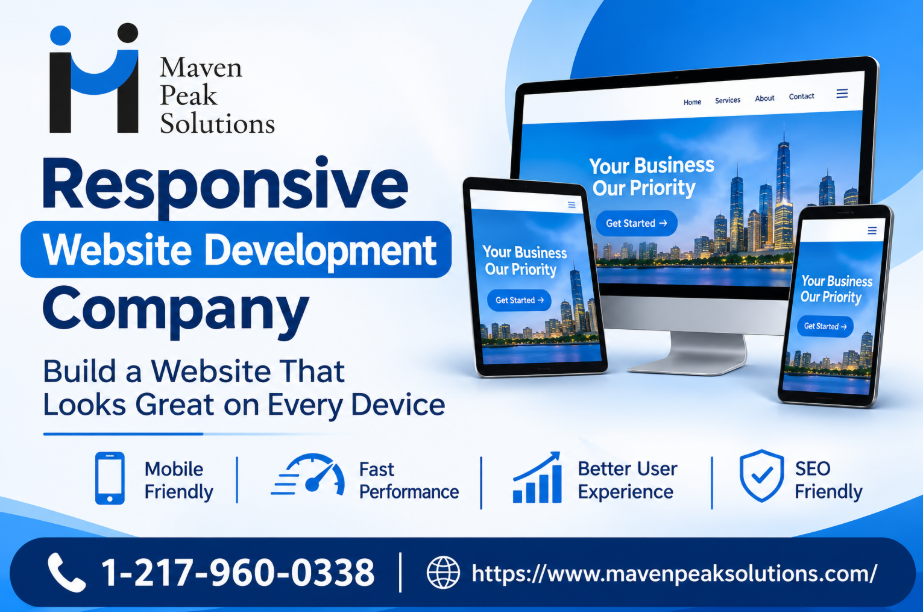
A business website is often the first place potential customers visit when they want to learn about your products or services. If your website loads slowly, looks outdated, or does not work properly on mobile devices, visitors may leave before exploring what your business offers. This is why choosing a responsive website development company in USA is an important decision for businesses looking to build a strong online presence.
A responsive website provides a consistent browsing experience across desktops, laptops, tablets, and smartphones. It automatically adjusts its layout, images, navigation, and content according to the visitor's screen size. This makes it easier for customers to explore your website, find information, and interact with your business from different devices.
Whether you run a startup, local business, eCommerce store, or established company, investing in responsive web development can improve usability, support search visibility, and create more opportunities to connect with customers.
What Is Responsive Website Development?
Responsive website development is the process of designing and building websites that automatically adapt to different screen sizes and devices. Instead of creating separate websites for desktop and mobile users, developers use flexible layouts, responsive images, CSS media queries, and adaptable navigation.
For example, a desktop website may display a navigation menu horizontally across the top of the page. On a smartphone, the same menu may appear as a collapsible navigation panel. Images, columns, buttons, and text also adjust to fit the available screen space.
A responsive website should provide:
-
Easy navigation on smaller screens.
-
Readable text without unnecessary zooming.
-
Images that adjust to different screen sizes.
-
Buttons that are easy to tap on mobile devices.
-
Consistent layouts across modern browsers.
-
Fast loading and smooth interactions.
These features help businesses deliver a better experience to visitors regardless of how they access the website.
Why US Businesses Need a Mobile-Friendly Website
Customers in the United States use different devices to research businesses, compare services, shop online, and make purchasing decisions. A website that works well only on desktop computers can create unnecessary barriers for mobile visitors.
Here are some important reasons businesses should prioritize responsive web design.
1. Improve the Mobile User Experience
Mobile users expect websites to be simple, readable, and easy to navigate. They should be able to find service information, view product details, and contact your business without struggling with small text or oversized images.
A responsive layout automatically adjusts website elements to the visitor's screen. This reduces unnecessary horizontal scrolling and makes important information easier to access.
For example, a restaurant website should allow mobile visitors to check the menu, view operating hours, find directions, and make reservations without switching to a desktop computer.
2. Support Search Engine Visibility
Mobile usability is an important part of website quality. Google uses the mobile version of website content for indexing through mobile-first indexing.
Responsive design helps maintain consistent content across desktop and mobile versions, making website management and optimization easier.
However, responsive design alone does not guarantee higher rankings. Businesses should also focus on page speed, useful content, technical SEO, crawlability, internal linking, and a secure website structure.
3. Increase Customer Engagement and Conversions
Visitors are more likely to explore a website when its layout is easy to understand. Clear navigation, readable content, visible contact details, and properly sized buttons make it easier for users to take action.
Depending on your business, these actions may include requesting a quote, booking an appointment, purchasing a product, or submitting an inquiry.
A responsive website helps remove design-related obstacles that may prevent visitors from completing these actions.
Essential Features of Professional Responsive Web Development
A well-developed website needs more than a flexible layout. It should combine visual design, technical performance, functionality, and usability.
1. Flexible Website Layouts
Responsive websites use flexible grids and layouts that adjust according to available screen space. Developers may use CSS Flexbox, CSS Grid, and relative units to create layouts that work across different devices.
For example, a three-column service section on desktop may automatically change into a single-column layout on mobile. This keeps information organized without making the page difficult to read.
2. Responsive Images and Media
Images should resize according to the device without losing their proportions or becoming distorted.
Developers can use responsive image techniques such as the HTML srcset and sizes attributes to deliver suitable image sizes for different screens.
Optimized images also help reduce unnecessary loading time, particularly for visitors using mobile networks.
3. Mobile-Friendly Navigation
Navigation should make it easy for visitors to move between important website sections.
A good responsive menu should have clearly labeled links, sufficient spacing, and an easy-to-use mobile navigation system. Important pages such as Services, About Us, Contact, and Pricing should remain accessible.
4. Fast Loading Performance
Website speed affects how visitors interact with your business. Large images, unnecessary scripts, excessive plugins, and poorly optimized code can slow down a website.
A professional web development team should focus on image compression, browser caching, efficient code, reduced JavaScript execution, and suitable hosting.
Core Web Vitals, including Largest Contentful Paint (LCP), Interaction to Next Paint (INP), and Cumulative Layout Shift (CLS), can help evaluate important aspects of website performance.
5. Secure Website Structure
Website security is important for businesses that collect customer information, process payments, or provide online services.
Essential security practices include HTTPS, secure form handling, regular software updates, reliable hosting, and appropriate access controls.
These measures help protect website data and provide visitors with a safer browsing experience.
Why Choose a Professional Website Development Company in USA?
Building a business website involves several technical and creative decisions. A professional development team can help businesses plan their website structure, select suitable technologies, and create features based on their requirements.
A reliable website development service can support different stages of website creation, including planning, design, development, testing, and deployment.
Here are some advantages of working with experienced website developers.
Business-Focused Website Planning
Every business has different requirements. A startup may need a simple website to present its services, while an established company may require advanced integrations, customer portals, or multiple service sections.
A development team should understand your objectives before recommending a website structure or technology.
Custom Design and Development
Using a generic template may be sufficient for some projects, but businesses with specific branding or functionality requirements may benefit from custom website development.
Custom layouts, tailored features, and business-specific integrations help create a website that supports your operations and customer expectations.
Ongoing Technical Support
Websites require regular maintenance after launch. Software updates, security checks, performance monitoring, bug fixes, and content changes help keep them functional.
Having access to technical support can make it easier to manage these requirements as your business grows.
Custom Website Development for Different Business Needs
Every industry has different website requirements. A professional development strategy should consider the type of business, target audience, services, and expected website functionality.
Websites for Startups and Small Businesses
Startups often need websites that explain their services, establish credibility, and generate inquiries. Important elements include clear service descriptions, contact forms, testimonials, and simple navigation.
A responsive website helps these businesses present a professional image to customers using different devices.
eCommerce Website Development
Online stores need responsive product pages, shopping carts, secure checkout processes, product filters, and mobile-friendly payment options.
Customers should be able to browse products, compare options, and complete purchases without encountering navigation or display problems.
Corporate and B2B Websites
Corporate websites often contain detailed service pages, company information, case studies, industry resources, and inquiry forms.
Responsive layouts help decision-makers access important information when researching potential business partners.
Custom Business Platforms
Some companies need advanced website functionality, such as booking systems, customer dashboards, membership portals, and third-party API integrations.
Businesses with these requirements can benefit from custom website development, where the website structure and functionality are built around specific operational needs.
Responsive Web Development Services for Dallas Businesses
Dallas is an important business and technology market in Texas. Companies operating in this region need professional websites that communicate their services clearly and provide convenient access to customers.
A responsive website can help local businesses present their offerings, improve mobile usability, and support online inquiries.
For companies targeting customers in Dallas, working with a development team that understands local business requirements can be valuable. A web development company in Dallas, TX can help businesses plan website structures, build service pages, and create digital experiences suited to their goals.
Whether you operate a professional services firm, technology startup, healthcare business, or retail company, your website should make it easy for visitors to understand what you offer and how to contact you.
How to Choose the Right Responsive Web Development Partner
Selecting a development company requires more than comparing website designs or project prices. Businesses should evaluate technical skills, communication, project experience, and the ability to meet specific requirements.
Consider the following factors before making a decision.
1. Review Previous Projects: Examine the company's portfolio to understand its design quality, website functionality, and experience across different industries.
2. Check Technical Expertise: Ask about its experience with responsive design, HTML, CSS, JavaScript, content management systems, website frameworks, and relevant integrations.
3. Understand the Development Process: A reliable team should explain how it handles project planning, design approval, development, testing, and launch.
4. Discuss Website Performance: Ask how the developers approach mobile usability, loading speed, image optimization, and Core Web Vitals.
5. Confirm Maintenance and Support: Understand what happens after the website goes live, including updates, bug fixes, security checks, and technical assistance.
6. Review Pricing and Project Scope: Compare proposals based on deliverables, functionality, timelines, and support instead of choosing a provider based only on the lowest price.
Common Responsive Website Development Mistakes to Avoid
Even a visually attractive website can create problems if important usability and performance requirements are overlooked.
Some common mistakes include:
-
Designing only for desktop screens and adjusting mobile layouts later.
-
Using oversized images that slow down mobile loading.
-
Adding too many pop-ups that interrupt browsing.
-
Placing buttons too close together on smaller screens.
-
Using text that becomes difficult to read on smartphones.
-
Ignoring website accessibility requirements.
-
Failing to test forms, navigation, and checkout processes across devices.
Testing your website on different screen sizes and browsers before launch helps identify these issues early.
Build a Better Digital Experience With Maven Peak Solutions
Your website should help customers understand your business, explore your services, and take meaningful action. Responsive design, useful content, clear navigation, and reliable performance all contribute to a better online experience.
Maven Peak Solutions helps businesses across the USA build professional digital platforms through website development and related digital services. Whether you need a business website, a custom-built platform, or a mobile-friendly website redesign, selecting the right development approach can support your long-term business goals.
Focus on creating a website that works well for real users, communicates your value clearly, and supports your business requirements. With the right planning and development process, your website can become an important part of your digital presence and customer acquisition strategy.