japan
中国の南シナ海戦略を読み解く

BitCap
中国の南シナ海戦略を読み解く
For English version, please scroll down
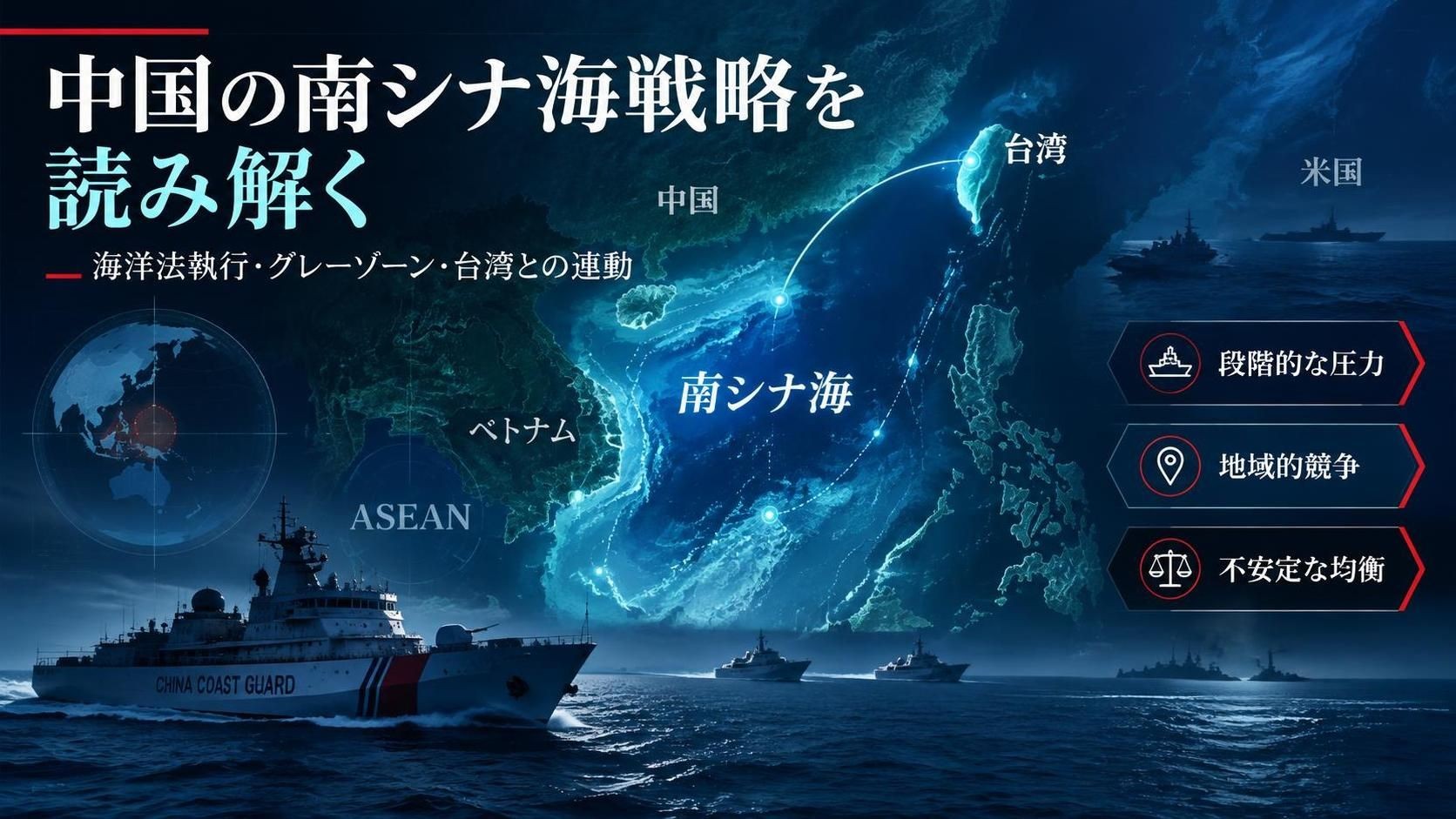
『NIDS中国安全保障レポート2027』は、南シナ海をめぐる紛争が、単なる地域的な対立から、中国、ASEAN、そして米国を巻き込んだ複雑な戦略的競争へと変容した過程を描き出している。中国は、国内法整備や世界最大の沿岸警備隊(海警局)の戦力を背景に、段階的かつ非対立的な戦術を駆使することで、強引な海洋法執行を正当化し、同地域での支配を確立しようとしている。
さらに同レポートは、台湾問題との重要な関連性にも言及している。中国の軍事演習が南シナ海と台湾周辺という二つの領域を連結させていること、そしてベトナムなど地域の他のアクターも、同様の「破壊的(サブバーシブ)」な戦略を採用し始めていることを指摘している。グレーゾーン事態に関する理論的な掘り下げは不十分な面もあるものの、同文書は、絶え間ない摩擦と外交的な膠着状態によって特徴づけられる、不安定な地域均衡の姿を浮き彫りにしている。
総じて、本書は地政学上の既存の概念を提示しつつも、現代のインド太平洋地域における安全保障の力学を理解するための貴重な資料となっている。
以下に、本レポートの要点をまとめる。
1/ 日本の防衛研究所(NIDS)が『NIDS中国安全保障レポート2027』を公表した。本レポートは南シナ海に焦点を当てている。その主要な知見と、それに対する筆者の評価を見ていこう。
2/ 本レポートの核心的な主張はこうだ。南シナ海をめぐる紛争は、もはや東南アジア諸国間における主権問題にとどまらない。今日では、中国、ASEAN、米国が関与する多層的な戦略的競争へと変容している。この競争は、今や海面や空域を超え、海底にまで及んでいる。
3/ レポートによれば、中国の長期的な目標は、南シナ海を事実上の「内海」化し、同地域における米軍の影響力を可能な限り排除することにある。この目標は、直接的な衝突ではなく、段階的に既成事実を積み重ねていく「サラミ戦術」を通じて追求されている。
4/ 筆者の見解では、本レポートの中で最も価値が高いのは、中国海警局(CCG)に関するセクションである。同セクションによると、中国は南シナ海をめぐる紛争を「国内問題」と位置づけ、「海洋強国」という概念を通じて、この方針を国内法に組み込んでいる。これにより、中国海警局(CCG)による威圧的な活動を、日常的な法執行活動であるかのように見せかけることが可能となっている。
5/ 2021年に施行された「海警法」は、この戦略の法的枠組みを実質的に提供している。実際、中国がとるあらゆる措置には法的根拠があると言ってよい。同法には、「管轄海域」、一時的な安全区域、そして武器使用に関する曖昧な規定が含まれている。報告書によれば、この曖昧さが、グレーゾーン活動に対する「法的隠れ蓑」として機能しているのである。
6/ 報告書に示された数値も目を引く。それによると、中国海警局は686隻の船舶を擁する世界最大の沿岸警備隊であり、2022年には海軍からミサイルコルベット艦22隻を引き継いだ。また、AMTI(アジア海洋透明性イニシアティブ)のデータによれば、2025年には同地域に毎日平均241隻の海上民兵船が存在しており、中国海警局が関与した衝突事案の約半数に海上民兵が関わっていた。
7/ 台湾との関連性は、本報告書において戦略的に最も重要な発見と言えるかもしれない。報告書によると、台湾周辺における中国の演習は、南シナ海方面へとますます拡大している。台湾海峡の掌握は、将来的な封鎖シナリオにおいて極めて重要となるだけでなく、海南島を拠点とする戦略原子力潜水艦の安全確保という観点からも不可欠な要素となっている。
8/ もう一つ重要でありながら、これまでほとんど議論されてこなかった発見として、ベトナムが中国のグレーゾーン手法を模倣し始めているという点が挙げられる。ハノイによる海上民兵部隊の創設や、中国の規模に迫る勢いの埋め立て活動が、その顕著な例として指摘されている。これは、グレーゾーン行動が現状変更を志向する大国特有のものではなく、地域全体に広がり得るものであることを如実に示している。
9/ 個人的な見解を述べれば、本報告書は概念的枠組みの面で不十分である。「グレーゾーン」という概念は用いられているものの、理論的な検討はなされておらず、ハイブリッド脅威や認知領域の問題についてはほとんど触れられていない。ハイブリッド脅威を「手法」として捉え、グレーゾーンをそれらの手法が適用される「戦略的領域」として区別することは、沿岸警備隊、海上民兵、そして法的ツールがどのように組み合わされているのかを理解する上で、依然として不可欠な分析的ステップであるはずだ。また、海底についても言及はあるものの、詳細な記述はなく、これも見過ごすべきではない点である。 11/ 結論として、本報告書は、この地域における「脆い均衡」の姿を描き出している。中国は、直接的な衝突というリスクを冒すことなく、今後も徐々に歩みを進めていくだろう。東南アジア諸国は、米中の間で戦略的自律性を維持しようと努めるはずだ。その一方で、ASEANによる「行動規範(COC)」策定のプロセスは行き詰まっている。
12/ では、この報告書が、我々がすでに知っていることとは異なる何かを提示しているかといえば、答えは「ノー」である。本書は、この地域を研究する者であれば誰もが承知している問題を改めて指摘しているに過ぎない。とはいえ、南シナ海、台湾、そしてインド太平洋地域の安全保障に関わる人々にとっては、一読の価値がある報告書だと言える。
南シナ海の構造変化とグレーゾーン戦略

Decoding China's South China Sea Strategy
The "NIDS China Security Report 2027" illustrates how the South China Sea dispute has transformed from a regional disagreement into a complex strategic rivalry involving China, ASEAN, and the United States. Beijing seeks to dominate the region by utilizing gradual, non-confrontational tactics, backed by domestic legislation and the world's largest coast guard fleet, to legitimize aggressive maritime enforcement.
Furthermore, the publication highlights critical connections to Taiwan, noting that Chinese military exercises are bridging the two areas while regional actors like Vietnam begin adopting similar subversive strategies. Despite lacking deeper theoretical analysis regarding gray-zone conflicts, the document outlines a precarious regional equilibrium defined by ongoing friction and diplomatic stalemates.
Ultimately, while presenting familiar geopolitical concepts, the study serves as a valuable resource for understanding contemporary Indo-Pacific security dynamics.
Below, I present the main points of the report.
1/ The National Institute for Defense Studies (NIDS) in Japan has published the "NIDS China Security Report 2027." The report focuses on the South China Sea. Let's take a look at its key findings and my assessments together.
2/ The report's central argument is this: The South China Sea dispute is no longer a sovereignty issue among Southeast Asian countries. Today, it has become a multilayered strategic competition involving China, ASEAN and the US. This competition now extends beyond the sea surface and airspace to the seabed.
3/ According to the report, Beijing's long-term goal is to turn the South China Sea into a de facto "internal sea" and reduce US military influence in the region as much as possible. This goal is being pursued not through direct conflict, but through a gradual salami-slicing strategy.
4/ In my view, the report's most valuable section is the one on the China Coast Guard (CCG). According to this section, China defines the disputes as an "internal matter" and embeds this approach in its domestic law through the concept of a "maritime country." This allows the CCG's coercive activities to be presented as routine law enforcement.
5/ The 2021 Coast Guard Law essentially provides the legal framework for this strategy. Indeed, it is fair to say that every step China takes has a legal basis. The law contains vaguely defined provisions on "seas under its jurisdiction," temporary security zones and the use of weapons. According to the report, this ambiguity serves as legal cover for gray-zone activities.
6/ The figures in the report are also striking. According to them, the CCG has the world's largest coast guard fleet, with 686 vessels, and took over 22 missile corvettes from the navy in 2022. According to AMTI data, an average of 241 militia vessels were present in the region each day in 2025, and maritime militias were involved in roughly half of CCG collisions.
7/ The Taiwan connection may be the report's most strategically critical finding. According to the report, China's exercises around Taiwan are increasingly expanding toward the South China Sea. Control of the Taiwan Strait is becoming crucial both in a potential blockade scenario and for the security of strategic submarines based in Hainan.
8/ Another important but little-discussed finding is that Vietnam has begun imitating China's gray-zone tools. Hanoi's establishment of militia fleets and its land reclamation efforts, which are approaching China's total, are cited as significant examples. This particularly underscores that gray-zone behavior is not exclusive to revisionist great powers and can spread regionally.
9/ In my view, the report falls short in its conceptual framework. The concept of the "gray zone" is used but not examined theoretically; hybrid threats and the cognitive dimension are barely addressed at all. In my opinion, distinguishing between hybrid threats as methods and gray zones as the strategic arenas in which these methods are applied remains a necessary analytical step toward understanding how coast guards, militias and legal tools are combined. The seabed is mentioned only in passing, without any detail. That should not be overlooked either.
11/ In conclusion, the report paints a picture of a "fragile balance" in the region. China will continue to advance gradually without risking direct conflict. Southeast Asian countries will try to maintain their strategic autonomy between the US and China. Meanwhile, ASEAN's Code of Conduct process is deadlocked.
12/ So, if you ask whether the report ultimately says anything different from what we already know, the answer is no. It restates issues that anyone who studies the region is familiar with. It is a report worth reading for those working on the South China Sea, Taiwan and Indo-Pacific security.