

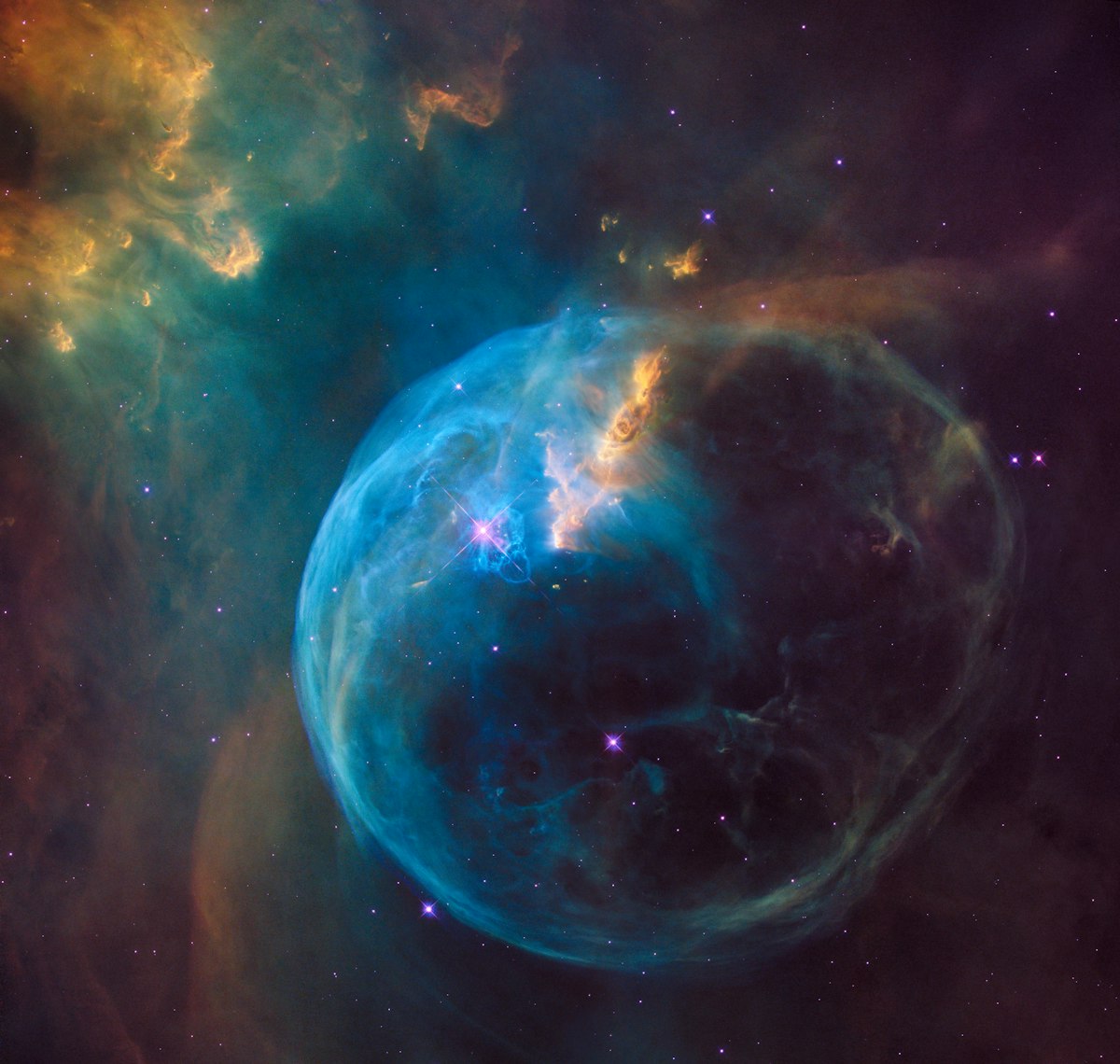
If our Milky Way galaxy hosts hundreds of billions of stars and organic chemistry is ubiquitous across the cosmos, where is everyone?
In 1950, physicist Enrico Fermi posed this deceptively simple query over lunch at Los Alamos. By all mathematical expectations—formalized later by the Drake Equation—our radio telescopes should be inundated with a cacophony of extraterrestrial signals, Von Neumann probes, and signs of stellar engineering like Dyson Spheres.
Instead, the human species is met with a deafening, terrifying Great Silence.
1. The Axioms of Cosmic Game Theory
Why would a universe teeming with civilizations appear completely silent? The answer may not be that life is rare, but that the survivors have learned to stay completely hidden.
Popularized by visionary sci-fi author Liu Cixin in The Dark Forest, cosmic sociology applies brutal game-theory axioms to interstellar survival:
-
Survival is the primary need: The supreme imperative of every civilization is self-preservation and perpetual continuity.
-
Resource Scarcity: Matter and energy are finite, but the theoretical expansion rate of advanced species is limitless.
-
Chains of Suspicion: Across light-years of void, the speed of light limits communication. You can never verify whether an alien species is benevolent or malevolent before they possess the capacity to destroy you.
-
Technological Explosions: A primitive civilization today can experience an exponential technological leap in mere centuries, transforming into an existential threat almost overnight.
"The universe is a dark forest. Every civilization is an armed hunter stalking through the trees like a ghost... If he finds other life, there is only one thing he can do: open fire and eliminate the threat."

2. The Danger of Shouting in the Dark
Under the Dark Forest Hypothesis, shouting greetings into the cosmos—as humanity has done with the Arecibo message and unshielded radio broadcasts—is akin to an unarmed child lighting a bonfire in the middle of a predator-infested jungle.
The silent civilizations are not absent; they are camouflaged. They understand that in relativistic space combat, striking first with kinetic relativistic kill vehicles (RKVs) or photoid attacks carries zero risk, while attempting diplomacy carries the risk of total planetary extinction.
3. Cosmic Paranoia Meets Neuro-Surveillance: Fracture Experiment
This exact philosophical dread—that existence requires deciphering hidden survival protocols before invisible overseers purge you—is the bedrock of modern hard science fiction.
In the Fracture Experiment duology (The Beginning of Synchrony & The Last Frequency) by Brazilian author Gabriel Santos da Silva, this cosmic paranoia is transplanted into a claustrophobic cyberpunk reality:
"They didn't need to put chains around our wrists when they could simply modulate the frequency of fear directly into our cortex."
Whether dealing with interstellar predators across the void or mega-corporations holding a monopoly on synthetic neural implants, the existential rule remains identical: the moment your frequency steps out of line, the system moves to eliminate the anomaly.
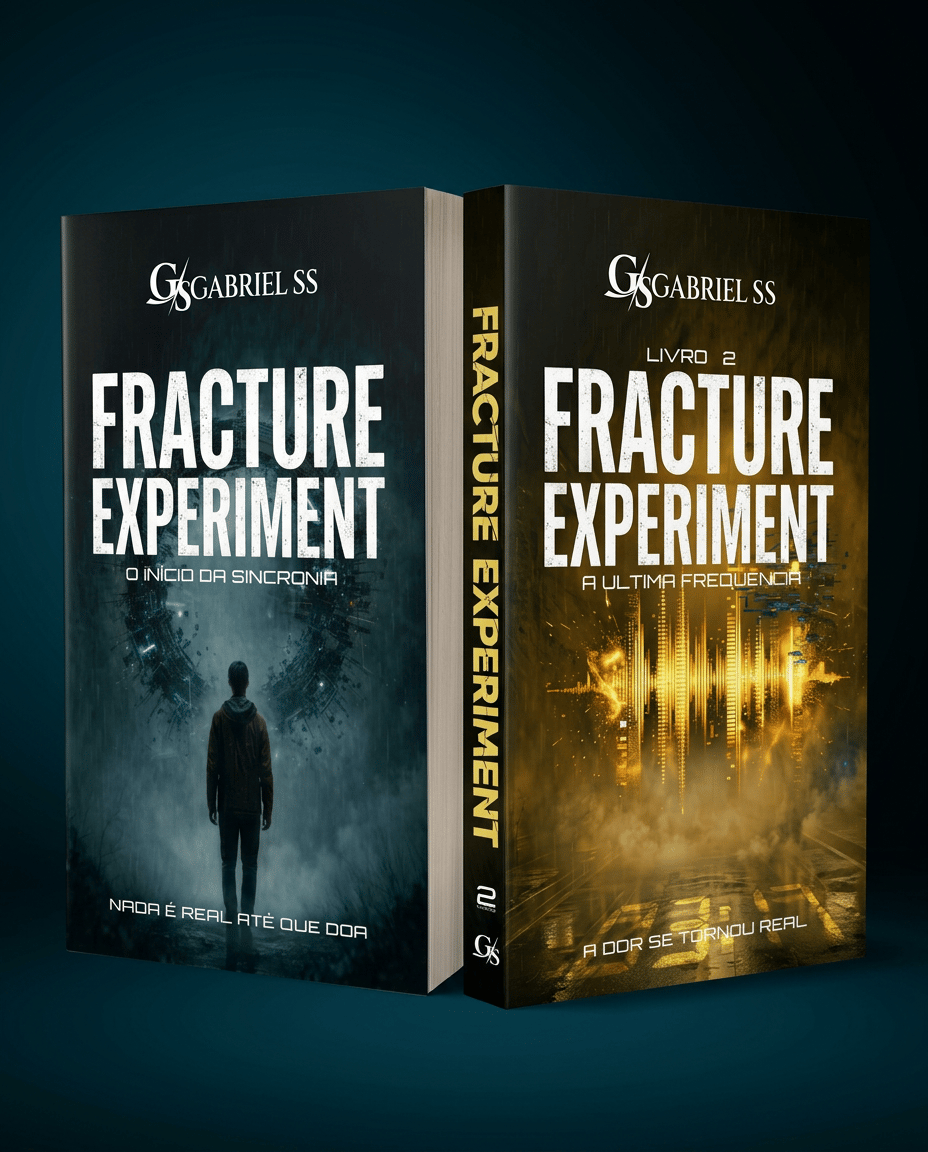
Discover the Fracture Experiment Duology
If you are drawn to uncompromising hard science fiction, theoretical physics, and mind-bending psychological thrillers:
-
📖 Fracture Experiment 1: The Beginning of Synchrony — Amazon Global (Kindle) | Amazon Brazil
-
📖 Fracture Experiment 2: The Last Frequency — Amazon Global (Kindle) | Amazon Brazil
-
☕ Support Independent Sci-Fi on Ko-fi: Back our research and future translations at ko-fi.com/bieuulls.
-
🌐 Read More Essays: Visit the literary portal Acervo de Elite.