If you have played Geometry Dash for a while, you already know that some levels feel easy at first and then suddenly become much harder. A few missed clicks can end a run, especially when the speed increases or the game switches from a cube to a ship, UFO, or wave.
For players looking for the toughest challenges, Geometry Dash Lite has several levels that can really test timing, memory, reaction speed, and patience. The hardest level is also different for every player. Someone who is good at ship control may struggle with wave sections, while another player may find fast cube or dual sections more difficult.
This guide looks at some of the hardest current main levels and explains what makes them difficult. It also includes simple practice tips that can help you turn difficult sections into more manageable ones.
Hardest Levels in Geometry Dash Lite
There is no official ranking that says one level is absolutely the hardest for every player. However, some stages are clearly more demanding than others.
| Rank | Level | Main Challenge |
|---|---|---|
| 1 | Deadlocked | Wave, speed, transitions |
| 2 | Theory of Everything 2 | Memory and timing |
| 3 | Clubstep | Ship control and fake obstacles |
| 4 | Electrodynamix | Speed and reactions |
| 5 | Hexagon Force | Dual gameplay |
| 6 | Blast Processing | Wave control |
| 7 | Theory of Everything | UFO and transitions |
This is a practical ranking based on the skills each level demands. Your own experience may be different depending on which game mechanics you find easier.
What Is the Hardest Level in Geometry Dash Lite?
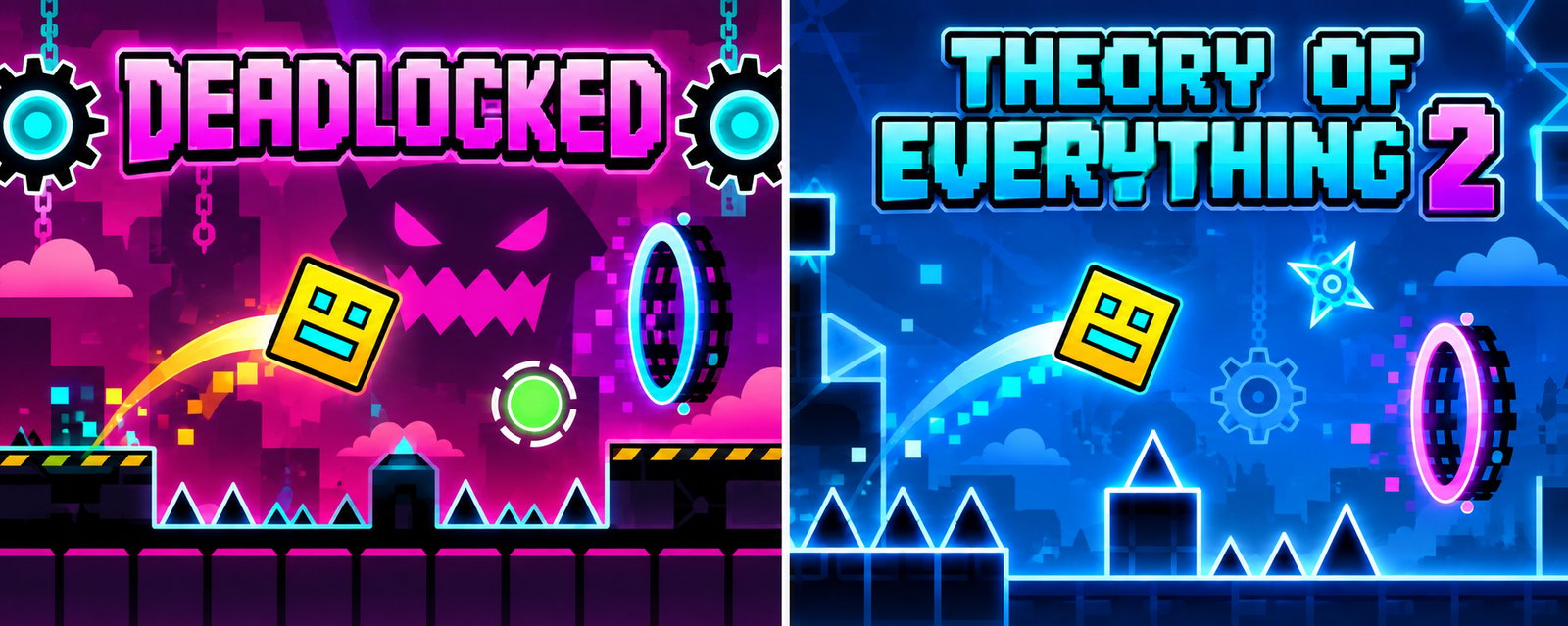
For many players, Deadlocked and Theory of Everything 2 are strong candidates for the hardest challenges. Both require much more control than the earlier stages, and mistakes become especially costly during fast sections.
Deadlocked stands out because it combines speed with difficult wave and transition sections. Theory of Everything 2 takes a different approach and uses memory, timing, and deceptive obstacles to challenge the player.
Clubstep is another major step up in difficulty. Its ship sections and fake obstacles can catch players off guard, particularly if they are still getting comfortable with flying.
So, rather than choosing one level as the universal winner, it is better to look at the type of challenge each stage gives you.
1. Deadlocked
Deadlocked is one of the toughest stages for players who have difficulty with fast movement and wave control. The level moves quickly, and several sections require precise inputs.
The wave can be especially frustrating. Holding for too long can send your character into an obstacle, while releasing too quickly can make you lose control.
Tip: Use Practice Mode to isolate the wave sections. Start from just before the difficult part and repeat it until your movements become consistent. Focus on small, controlled inputs instead of making large corrections.
2. Theory of Everything 2
Theory of Everything 2 tests more than reaction speed. It also asks you to remember patterns and recognize deceptive sections.
Some obstacles can be difficult to read immediately, which means reacting at the last second is not always enough. Learning the route ahead of time makes a big difference.
If you keep dying at the same location, place a checkpoint before that section and practice it repeatedly. Once you know the pattern, connect it with the section before and after it.
This is one of the places where Geodash players can benefit from focusing on memory rather than simply trying to react faster.
3. Clubstep
Clubstep is a classic Demon challenge and a major test of ship control.
The level contains fake obstacles and sections designed to make you question what you see. Its ship passages can also be difficult because small changes in your input can completely change your position.
The best approach is to avoid overcorrecting. Try to make small movements and learn how much input is needed to keep the ship at the right height.
Practice the hardest ship sections separately before attempting full runs.
4. Electrodynamix
Electrodynamix is difficult because of its speed.
When the level accelerates, you have much less time to react. A movement that feels comfortable at normal speed can suddenly become difficult when the pace increases.
Before entering a fast section, pay attention to where the speed changes happen. Knowing that a speed increase is coming gives you time to prepare instead of reacting after the change has already happened.
5. Hexagon Force
Hexagon Force introduces challenging dual sections where two characters must be controlled at the same time.
The main difficulty is learning how the two characters interact with the same inputs. A pattern that looks simple can become confusing once gravity changes or both characters move through different obstacles.
When practicing, concentrate on the rhythm of the section instead of trying to watch every object individually. Once the pattern becomes familiar, the dual section feels much less overwhelming.
6. Blast Processing
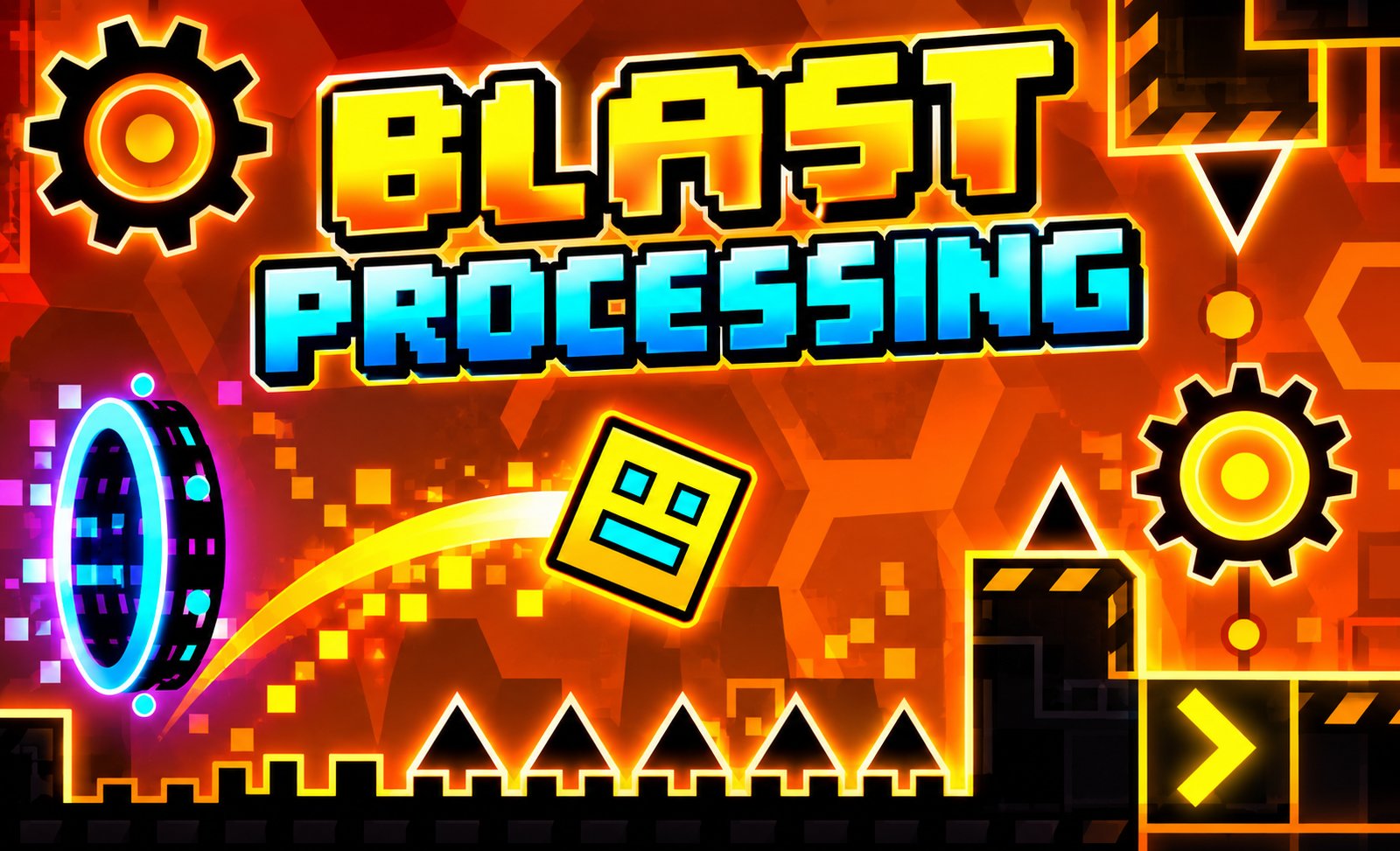
Blast Processing is a good test of wave control. The wave moves diagonally, so your timing and button control need to stay consistent.
If you struggle here, start by learning the shape of each wave passage. Avoid making sudden, large movements. Small adjustments are usually easier to control, especially when the available space becomes narrow.
Practice slowly first, then work toward normal speed.
7. Theory of Everything
Theory of Everything remains an important difficulty milestone, even though it should not automatically be called the hardest current stage.
The level mixes different gameplay forms and asks you to adjust quickly when the mechanics change. Its UFO sections are particularly useful for learning controlled tapping and timing.
Take your time when entering a new gameplay mode. Don't assume the same timing that worked in the previous section will work after the transition.
Tips for Beating Hard Levels
Use Practice Mode
Practice Mode is one of the most useful tools for learning difficult stages. Instead of restarting from the beginning after every mistake, place checkpoints near the sections where you usually fail.
The goal is to make the movement repeatable. Once you can clear a difficult section consistently, try connecting it to the sections around it.
Learn Your Weakest Skill
Don't just practice the level you are currently stuck on. Think about why you are failing.
If ship sections are the problem, work on ship control. If wave movement causes most of your deaths, spend time practicing wave sections. Improving one specific skill can make several difficult levels easier.
Watch Your Deaths
Your percentage tells you how far you got, but the location of your deaths tells you much more.
If you repeatedly die at the same point, that section deserves your attention. Don't waste most of your practice replaying parts you already know.
Take Breaks
Hard levels can become frustrating quickly. If your timing gets worse after repeated attempts, step away for a few minutes.
Coming back with a clear head can be more useful than forcing another twenty attempts while frustrated.
Final Thoughts
The hardest stages in Geometry Dash Lite challenge different skills. Deadlocked is tough for wave and speed control, Theory of Everything 2 tests memory and timing, while Clubstep puts serious pressure on ship control. Electrodynamix focuses on speed, and Hexagon Force makes dual gameplay a major part of the challenge.
There is no need to measure your progress only by the number of attempts. Find the section that causes the most problems, practice it separately, and slowly build it into a full run.
The same approach works across Geometry Dash and other levels in the series: learn the pattern, control your inputs, and give yourself enough practice to make difficult movements feel natural.