(disclosure: this is my entry for the AirdropBuzz Creator Campaign. It follows my earlier AirdropBuzz review. Nobody from AirdropBuzz or the other tools saw it before it went up. Not financial advice.)
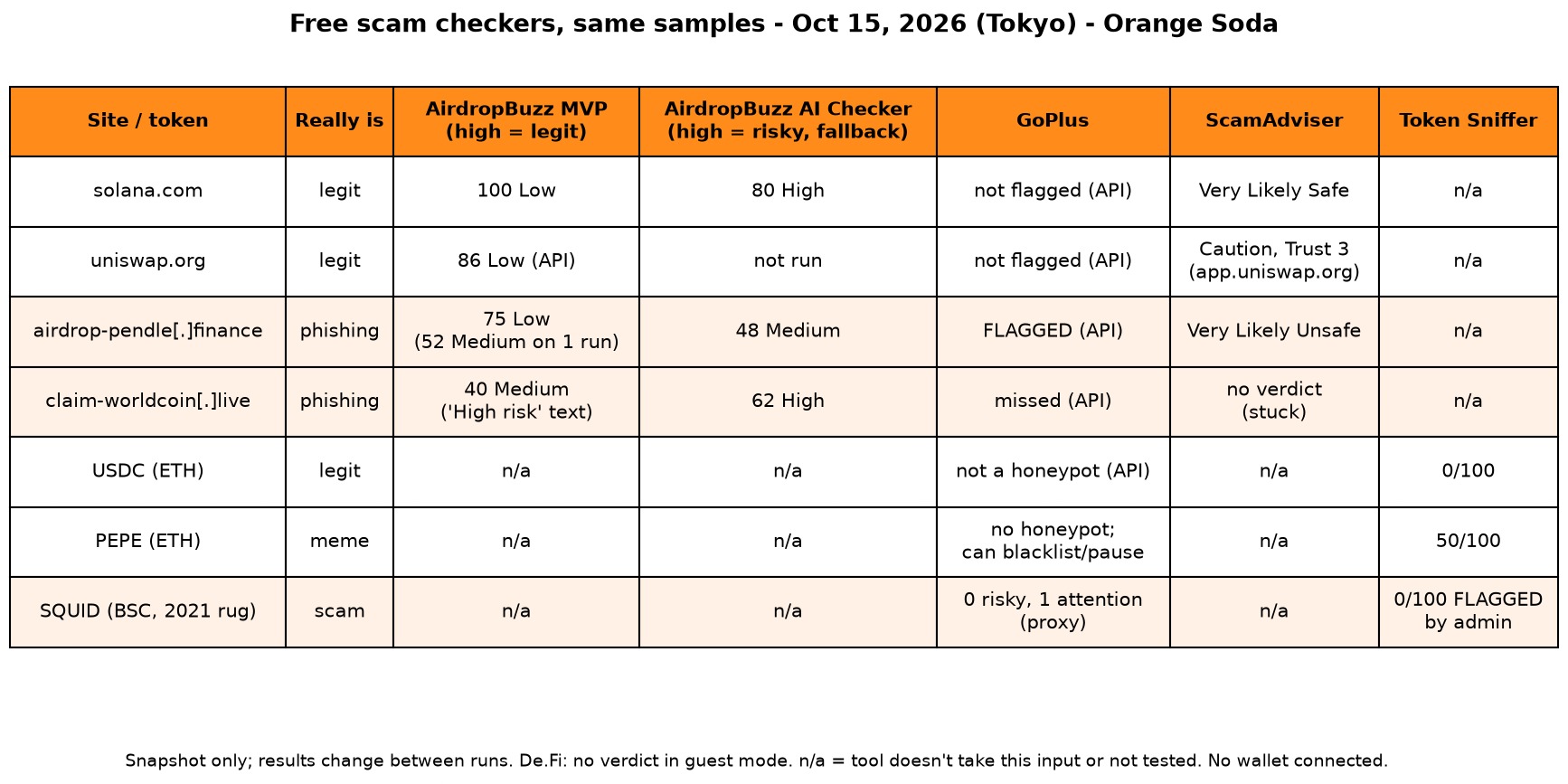
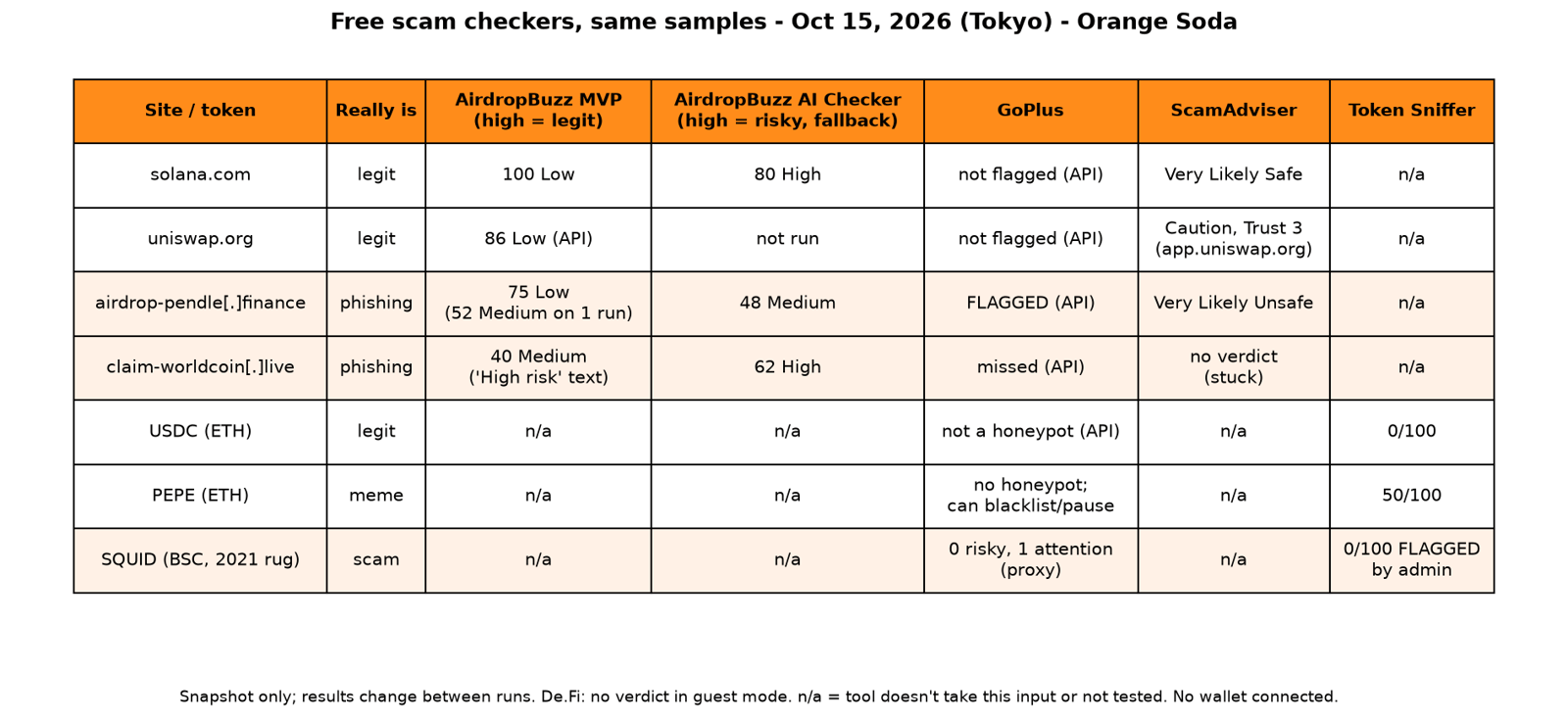
Short version: no free checker caught everything. Each tool caught something another one missed. If you only run one, you're trusting its blind spots.
How I tested
-
When: October 15, 2026, between about 1:55 and 2:45am Tokyo time (JST). Treat everything here as a snapshot. Scores moved even during my own session.
-
Samples: 2 real sites (solana.com, uniswap.org), 2 phishing domains from MetaMask's public phishing blocklist (airdrop-pendle[.]finance, claim-worldcoin[.]live), and 3 tokens: USDC, PEPE, and the 2021 "Squid Game" SQUID token on BNB Chain, which collapsed in what the BBC called an apparent scam (https://www.bbc.com/news/business-59129466).
-
Tools: AirdropBuzz's MVP Risk Scanner and AI Airdrop Risk Checker, GoPlus Security, ScamAdviser, Token Sniffer and De.Fi Scanner. I used the free versions only.
-
Rules: I never opened the phishing sites. I only pasted the addresses into the checkers. I didn't connect a wallet or sign anything.
Websites
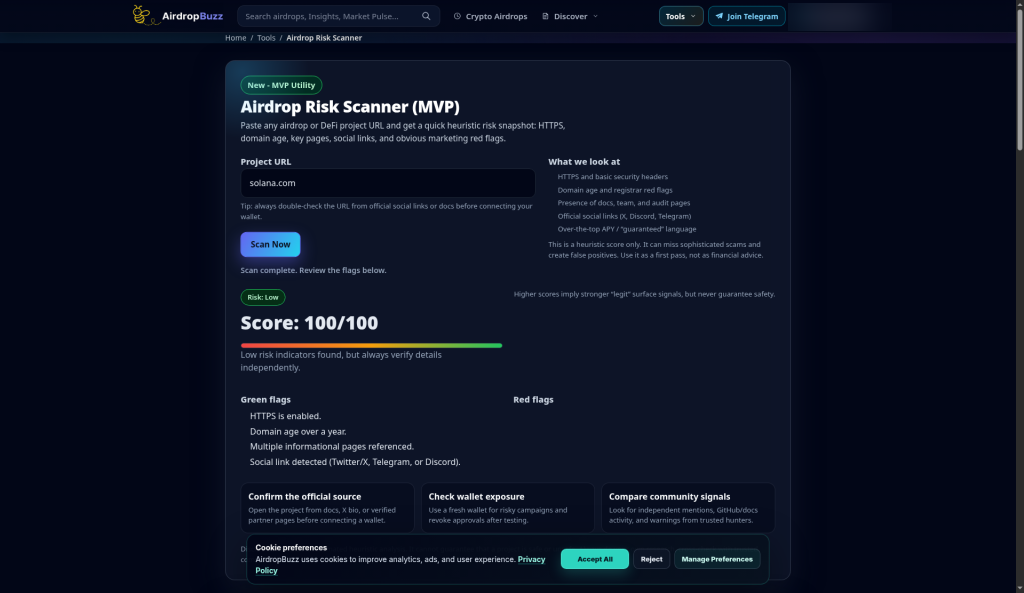
AirdropBuzz MVP scanner
Free, no login, and every result explains itself with green and red flags. I like that.
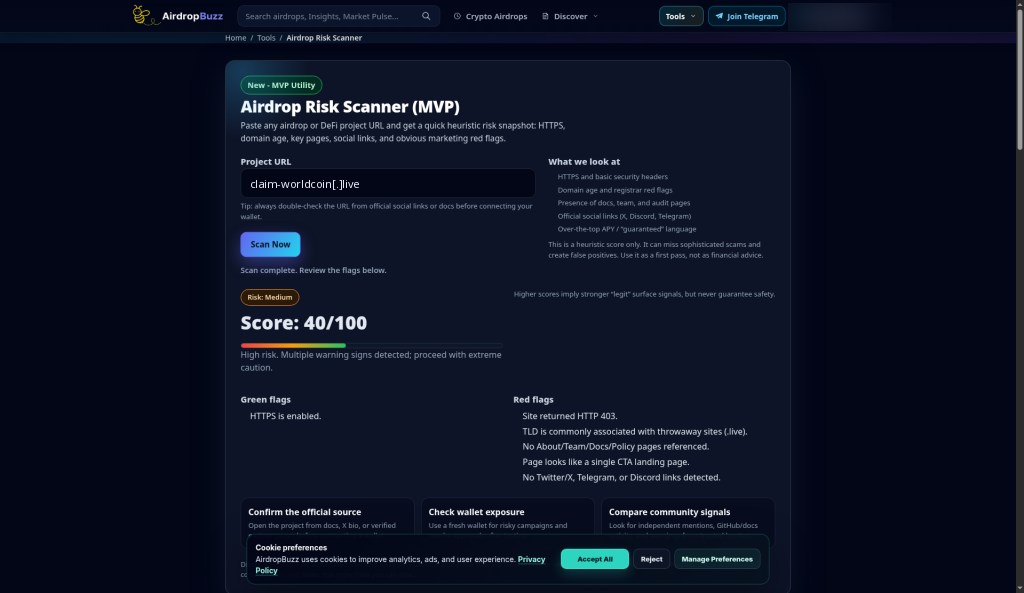
On claim-worldcoin[.]live it did well: 40/100 with five red flags (the site returned an error, it's a throwaway-style .live domain, no about or docs pages, a single call-to-action page, no social links). One thing to watch: the badge said "Medium" while the verdict line underneath said "High risk". Read the text, not just the badge.
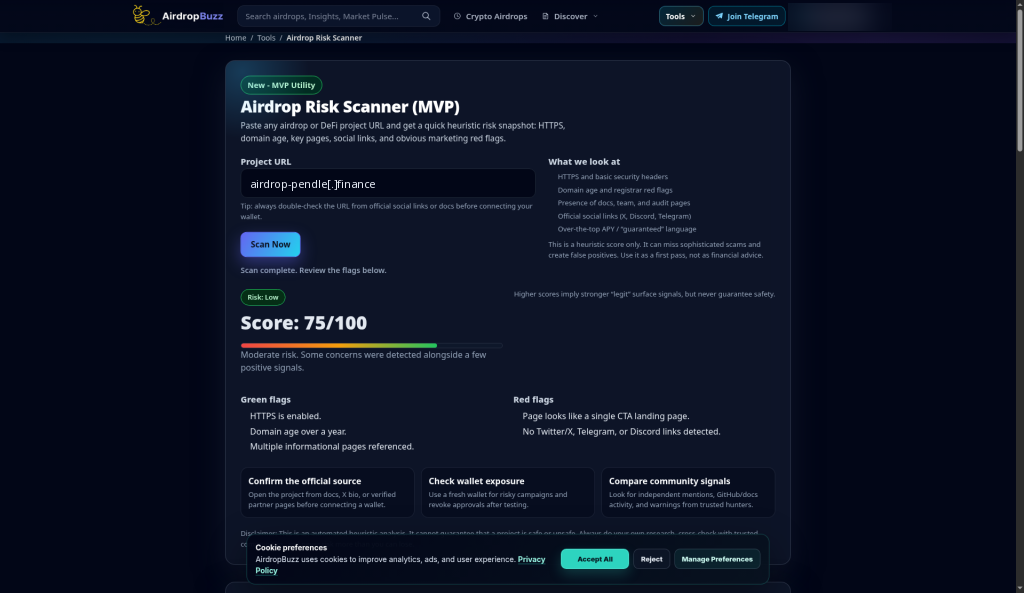
airdrop-pendle[.]finance was harder for it. The completed run gave 75/100, "Low". It did list two red flags (single call-to-action page, no socials) and the verdict line said "Moderate risk", but HTTPS and an old domain pulled the score up. An earlier attempt the same night gave 52/100 "Medium" with a fetch timeout (I didn't screenshot that run). So the score depends on whether the scanner manages to load the page, which is worth knowing before you trust a single run.
AirdropBuzz AI Risk Checker
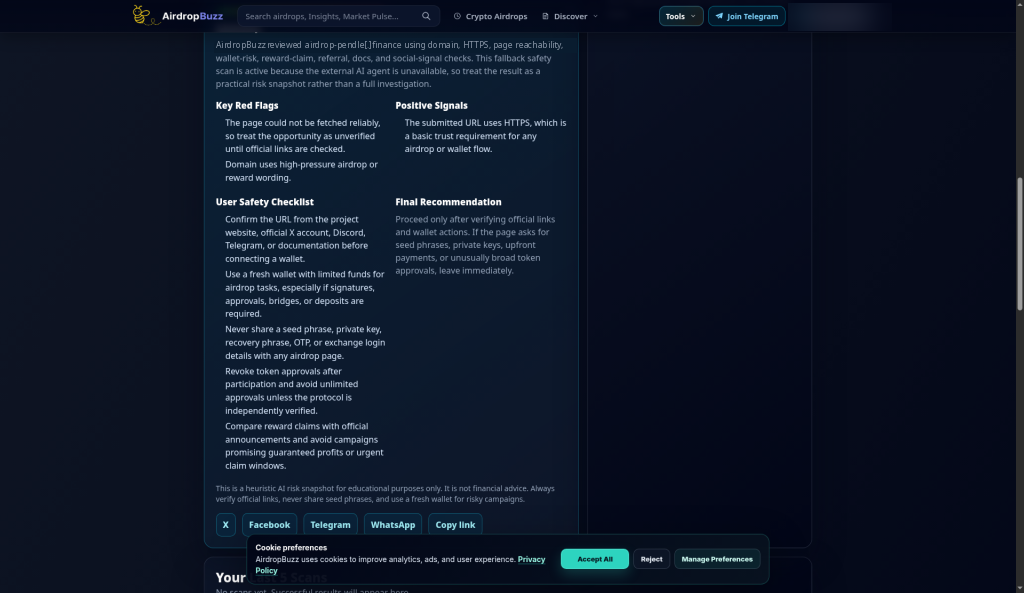
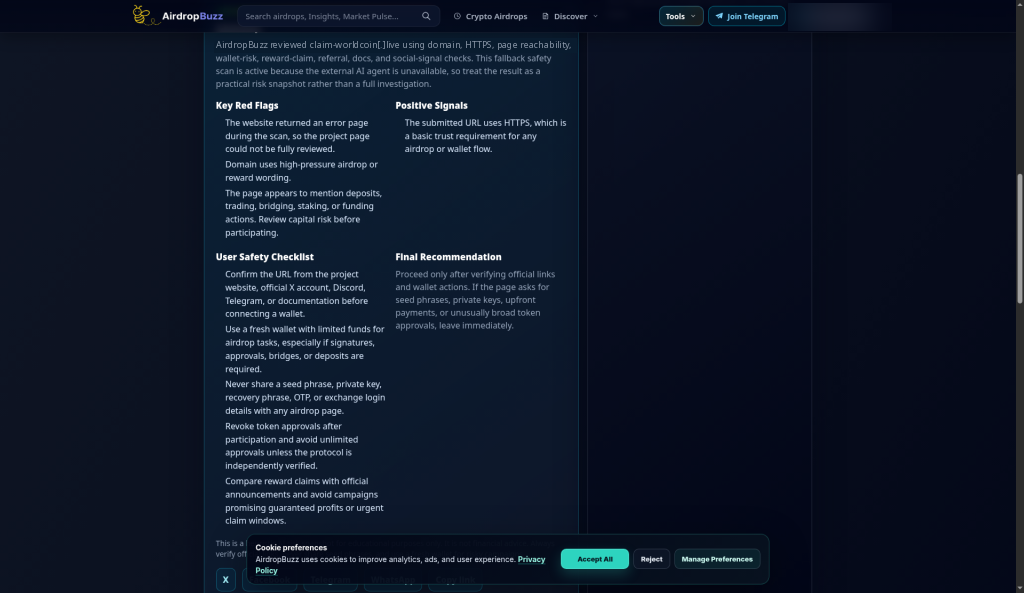
This is the newer one. It needs a free account and gives you 3 scans a day. Its score runs the other way (higher = riskier). All three of my results said "fallback safety scan" because their external agent was unavailable, so these are its backup heuristics, not the full check. With that caveat, on the two fakes it put claim-worldcoin[.]live at 62, High, and airdrop-pendle[.]finance at 48, Medium (scores from my notes; the screenshots below show the flags, not the score badge). It called out "high-pressure reward wording" on both, which the MVP scanner doesn't look for. I'd rerun these once the full mode is back.
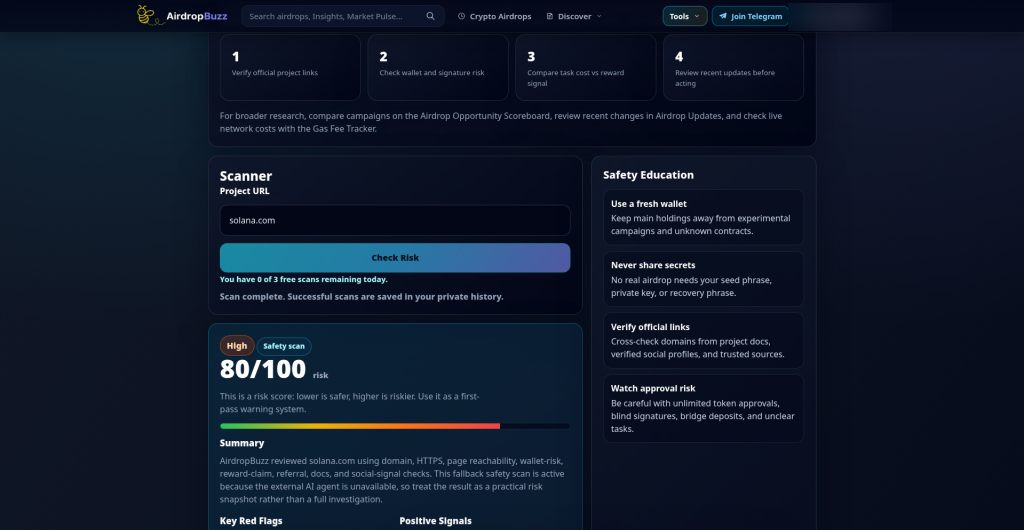
I used the last free scan of the day on solana.com. Same fallback mode. It scored 80, High. The flags talked about seed/private/recovery phrases, wallet connection or approvals, and deposits/trading/staking, which is basically what a real L1 homepage talks about. So on a known-good site, the fallback heuristics can look loud. That's another reason to read the flags, not just the number.
GoPlus and ScamAdviser
GoPlus doesn't have a phishing checker on its website, so I used its free public API for this part. It flagged the Pendle fake and didn't flag the Worldcoin one.
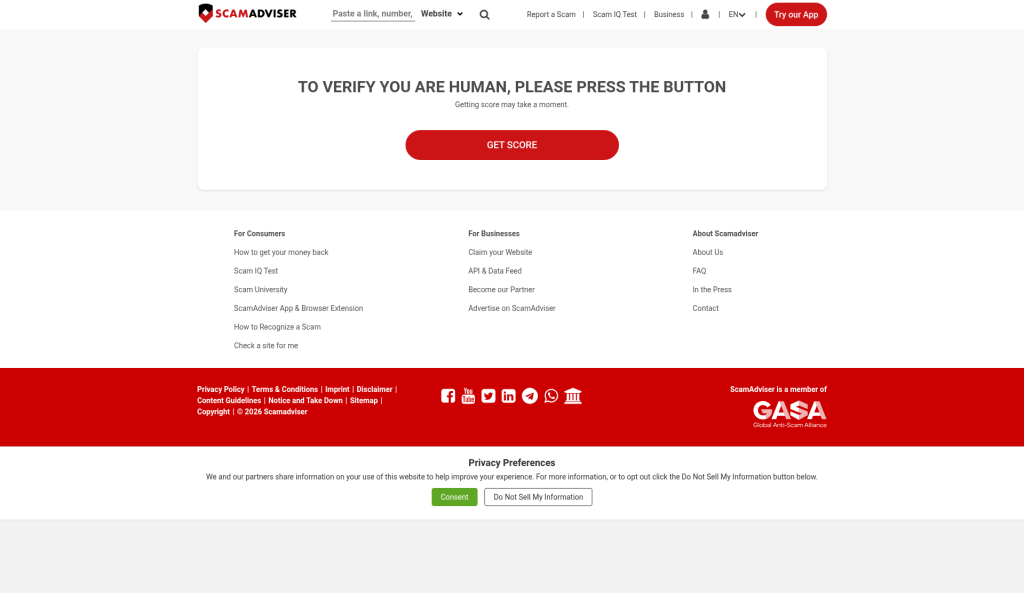
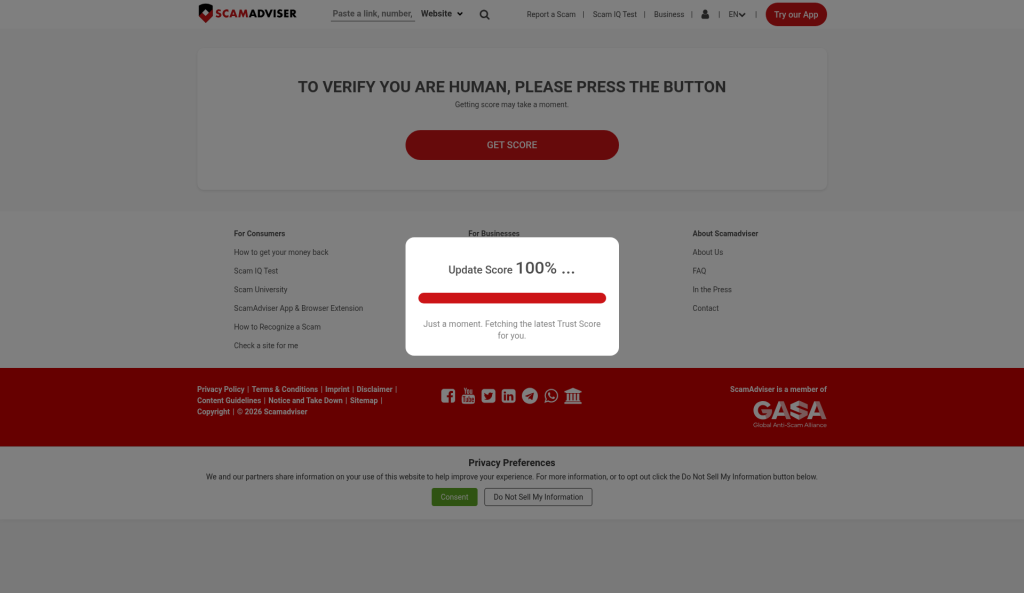
ScamAdviser said "Very Likely Unsafe" for the Pendle fake. For the Worldcoin one it made me press a human-check button, then sat at 100% loading and never showed a score. It also gave real Uniswap a "Caution Recommended" with a trust score of 3, after redirecting to app.uniswap.org. That's a false alarm on a legit site. My guess is ScamAdviser is built mostly for online shops, and crypto apps look strange to that kind of check.
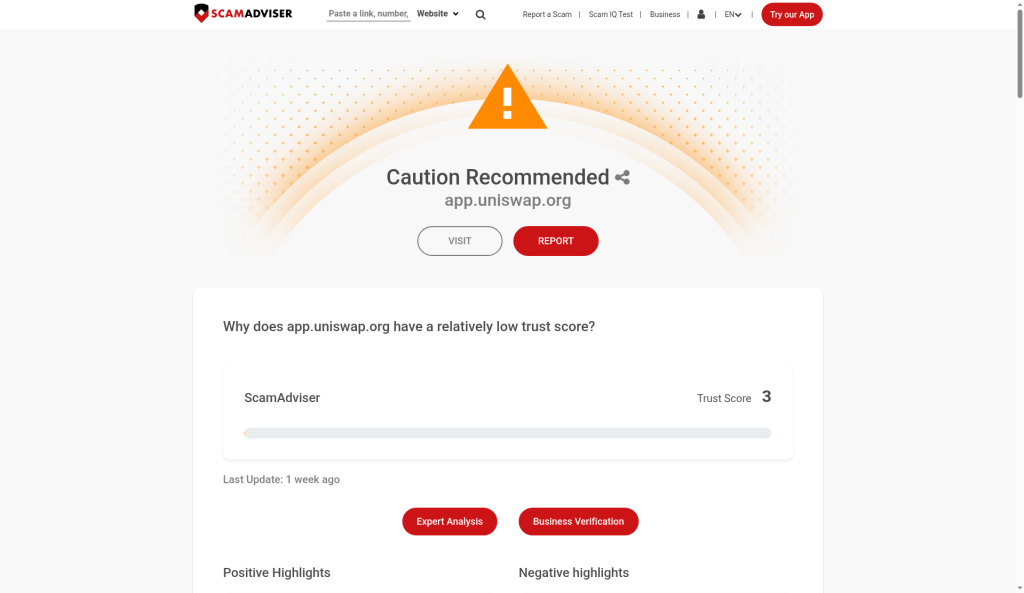
(screens below: the ScamAdviser check page for claim-worldcoin[.]live)
Tokens: the SQUID result
-
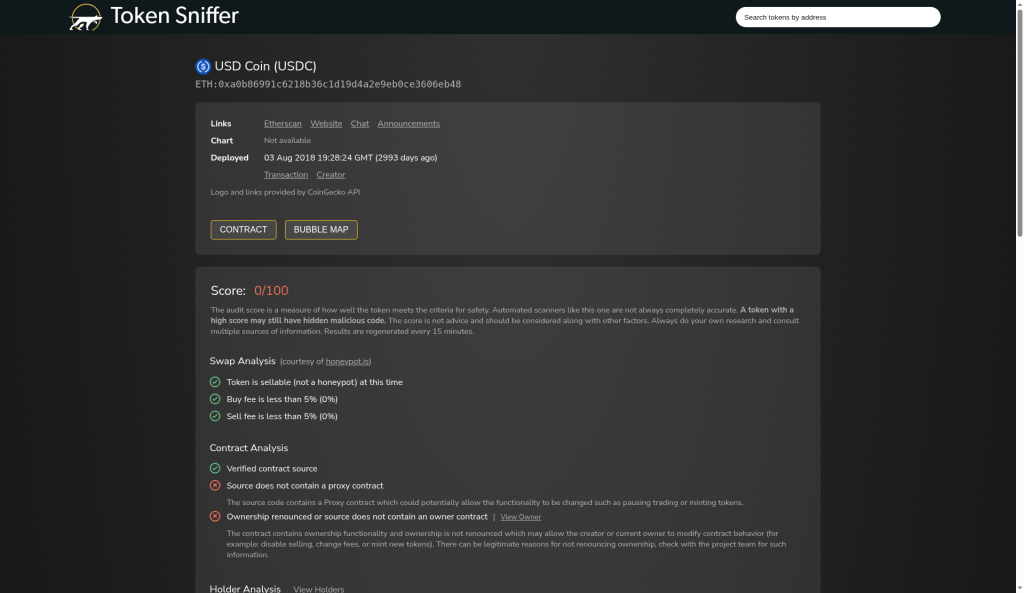
USDC (Ethereum): GoPlus: not a honeypot, 0% tax, on trust list, proxy contract. Token Sniffer: 0/100 (proxy, ownership not renounced). De.Fi: couldn't get a verdict (guest mode, stuck loading).
-
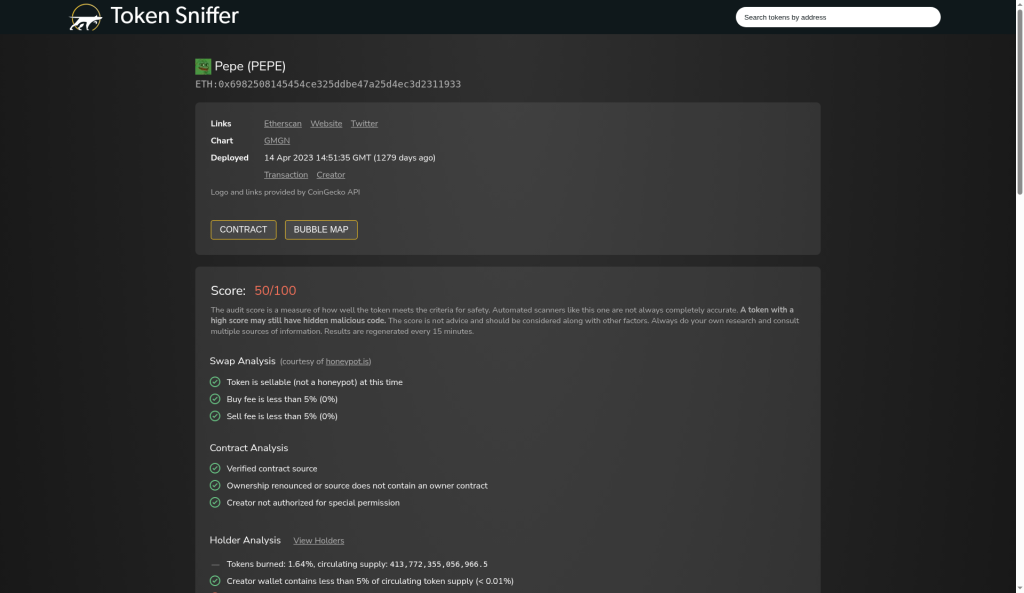
PEPE (Ethereum): GoPlus: not a honeypot, 0% tax, contract can blacklist and pause. Token Sniffer: 50/100. De.Fi: didn't run.
-
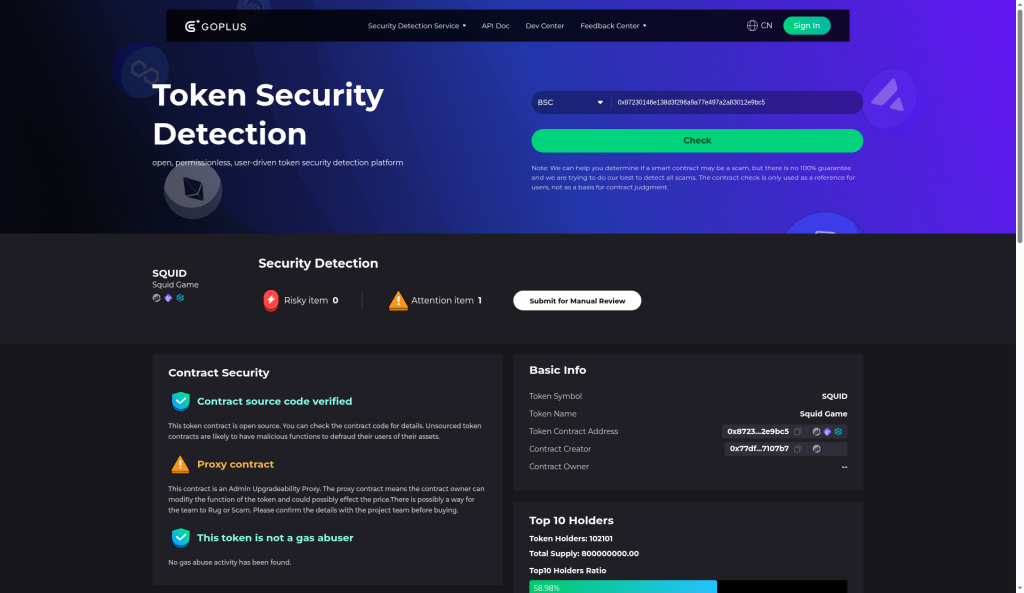
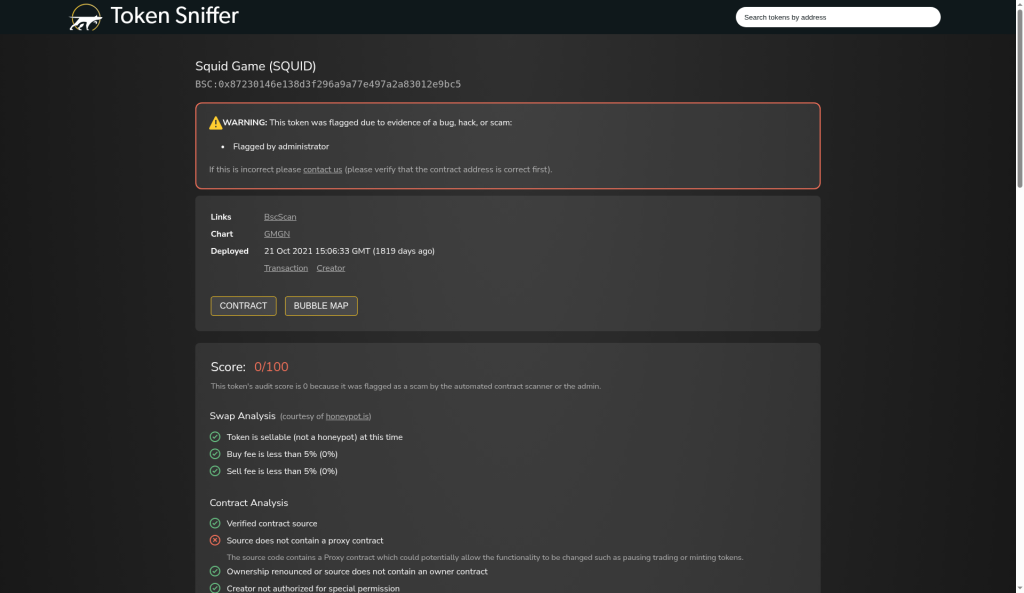
SQUID (BNB Chain, 2021 rug): GoPlus: 0 risky items, 1 attention item (proxy). Token Sniffer: 0/100, "Flagged by administrator" scam warning. De.Fi: didn't run.
This was the most useful thing I found. GoPlus checks the contract code as it is today: SQUID can be bought and sold, 0% tax, so it found nothing risky. Token Sniffer also found it sellable, but it showed a big warning because the site's admin had flagged the token as a scam. A code scan doesn't know the history of a token. An admin flag does.
The other side of it: Token Sniffer gave USDC 0/100 too. Its contract checks flagged the proxy and the owner that hasn't renounced control. That's normal for a regulated stablecoin. A low score there doesn't mean scam, it means "someone controls this contract", and for USDC everyone knows who (Circle).
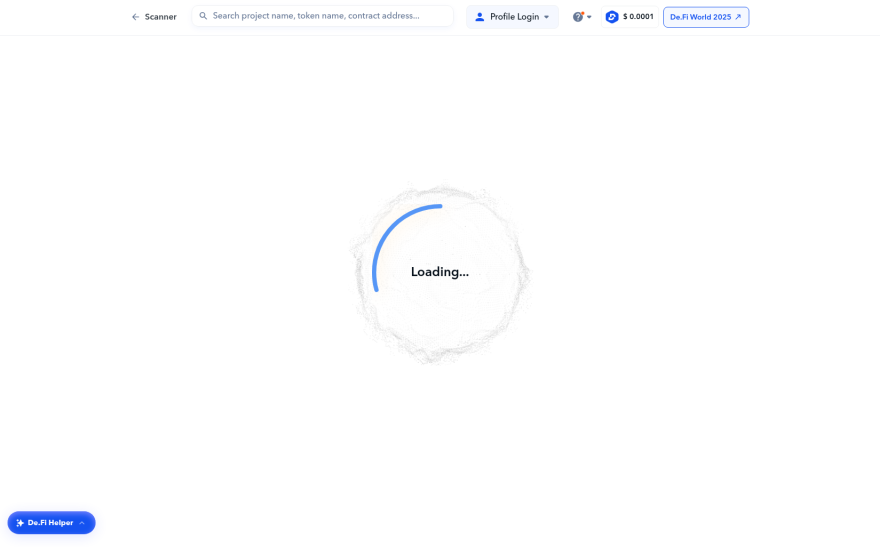
De.Fi let me in as a guest, but the checks sat on "Loading..." for over 40 seconds, so I have no De.Fi results. Maybe it works better with an account.
(De.Fi scanner page for USDC, still loading)
What I take from this
-
Every tool missed or stalled on something: GoPlus missed one phishing domain, ScamAdviser stalled on one and false-flagged Uniswap, the AirdropBuzz MVP scanner rated one fake "Low" on a good run, its AI Checker (in fallback mode) rated real solana.com "High" risk, and De.Fi didn't finish.
-
AirdropBuzz's strength is that it tells you why in plain English, and it looks for airdrop-specific stuff like reward wording and landing-page shape. Its weak spot is that the score swings depending on whether the page loads, and the full AI mode wasn't up when I tested.
-
For tokens, run a code checker and a reputation checker. SQUID shows why.
How I actually check now
1. Get the link from the project's official X or docs, never from a reply or DM.
2. Check AirdropBuzz Airdrop Updates to see if the guide or link changed recently.
3. Paste the URL into two checkers. If either one complains, read the flags before going on.
4. For tokens: GoPlus for the code, Token Sniffer for flags, then search the name with "scam".
5. Don't connect your main wallet to a claim site anyway.
AirdropBuzz: https://airdropbuzz.com
Orange Soda, Tokyo. Tested Oct 15, 2026. If you rerun this and get different numbers, tell me. That's kind of the point.