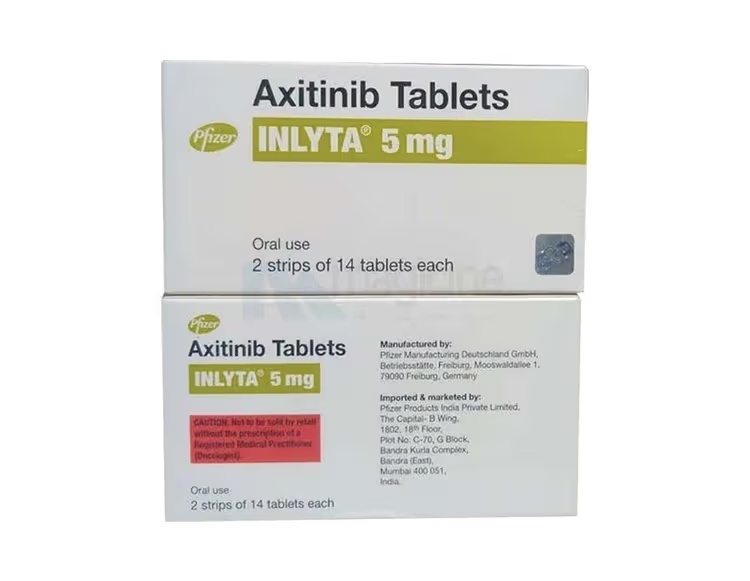
Having the Renal Cell Carcinoma (RCC) may raise many questions concerning treatment and the disease itself. Once the cancer of the kidney enters its advanced stages, the therapy will concentrate on the prevention of further progression of the tumour. This is where the use of special drugs like Axitinib 5 mg Tablet comes into play. The latter medication is meant to inhibit certain signals responsible for cancer cell growth.
Why Does Advanced RCC Require Targeted Treatment?
However, for kidney tumors to survive, they require much more than only uncontrolled cell proliferation. Another thing they require is vascularization and access to oxygen and other substances necessary for their development. Among such substances, one of the most important ones is called vascular endothelial growth factor (VEGF). In advanced stages of RCC, signaling pathways that involve this particular protein may facilitate angiogenesis of the tumor. Angiogenesis is a process that leads to development of new blood vessels around the tumor and, therefore, supports its development.
What Happens When Axitinib Blocks VEGF Signalling?
This medication is one of the tyrosine kinase inhibitors (TKIs). The mechanism of action of the tablet lies in the inhibition of VEGF receptors, which include VEGFR-1, VEGFR-2, and VEGFR-3. However, by inhibiting those receptors, signaling that enables the development of new blood vessels is hindered. Thus, the ability of the tumour to form its own vasculature system is limited.
How Is The Medicine Included in an RCC Treatment Plan?
Medicine can be taken in various forms of treatment:
-
In combination with immunotherapy: Axitinib can be taken together with pembrolizumab or avelumab in eligible cases of advanced RCC.
-
As an individual treatment: It can be taken alone by patients with advanced RCC who have undergone systemic therapy before.
Choice of the appropriate form of treatment is made by the oncologist.
What Should Patients Monitor During The Treatment?
The patients should visit their health practitioners for follow-ups in order to assess the effectiveness of the drug and also to manage any side effect that may occur. The possible side effects include:
-
Diarrhea
-
Fatigue
-
Nausea
-
Loss of appetite
-
Change of voice
Any abnormal bleeding should be reported immediately to the health care practitioner.
Conclusion
The Axitinib 5 mg Tablet uses in kidney cancer treatment represents a tailored solution through inhibition of VEGF-induced blood vessels formation. The application of the drug is conditional upon personal needs regarding treatment and may be conducted individually or in combination with immunotherapy.
FAQs
1. Can the tablet cure advanced kidney cancer?
It helps in managing the advanced RCC and slowing down its progression. The medicine cannot be called a complete cure for the condition.
2. For how long will a patient have to take the tablet?
The duration of the treatment depends on the response of the patient and the condition itself. The oncologist decides on further actions.