

Our story begins in the late 20th century. The realization of the potential for digital gaming has led to the rise of numerous gaming consoles during a digital gold-rush era in the late 70’s and early 80’s, and by the 1990’s, digital gaming had already made its way into the mainstream, with systems such as the Nintendo 64, PlayStation, and the Sega Saturn bringing cutting-edge 3D games to the TVs of consumers worldwide.
It was in the midst of these innovations that a new game would pop up, one that would endure the test of time to the surprise of many, and help establish a new genre that laid the foundations for visualizing commitment, contribution, and progress.
The Birth of a Genre: The Rise of Tamagochi
The year is 1996 and people aren’t just gaming in their living rooms, but rather, anywhere they’re allowed to carry batteries in. Handheld gaming devices such as the Game Boy were an international success, spawning titles such as Pokemon and inspiring future devices such as the Game Boy Color and the PSP. These systems were naturally more limiting than home consoles due to their more compact size, but still allowed players to enjoy numerous different titles on the go.
So, what if a company came along and released a small handheld, limited to a single game? Furthermore, what if the aim of that game was to look after a digital pet, featuring some of the responsibilities that come with taking care of a real one? For some, this idea would have seemed absurd, especially in the context of the time, but as you can already tell, that fire wasn’t quite put out.
Released internationally in 1997, Akihiro Yokoi of WiZ and Aki Maita of Bandai released the Tamagotchi, a small egg-shaped handheld that housed a virtual pet with seemingly as many needs as a living, breathing creature. The black-and-white LCD screen gave life to a lovable digital being that people could look after and interact with using only three or so physical buttons on the device, and in the span of a single year, they’d sell over 40 million units worldwide.
The pet could be fed, cleaned, played with, and more; but these weren’t mere features, rather, they were necessities, for if players were to be neglective of their pets, they’d lead them to unhappiness, illness, and even death. This key design choice not only made these otherwise simple devices more immersive, it also mimicked the experience of pet care, and paved the way for an entire genre of virtual pets to emerge.
Virtual Evolution
The appeals of virtual pets undoubtedly underline numerous aspects of the human experience; the need to care, the desire to grow, and the ability to play with other creatures… These needs were now made available without the serious commitment that real pets demand, brought to them in new, exciting, and innovative digital environments. These games felt like a good exercise for commitment and care but with minimal consequences, and a fresh community with a new yet familiar set of interests.
It wouldn’t take too long for the genre to hop from the limiting medium of the original Tamagotchi to broader computer and gaming systems. Even earlier hits such as Neopets managed to garner a peak playerbase of over 25 million people despite the infant stages of the internet at the time. In a similar vein, one of the best-selling games of the Nintendo DS handheld device also happened to be a virtual pet game, selling over 23 million copies worldwide.
While virtual pet games never dominated the landscape like other genres, the sector consistently enjoyed a more-than-moderate amount of success throughout its existence. Following the mid-2000s, it would see other genres overshadow the landscape, but, in the midst of that darkness, a new light would appear, radiating from a newly-emerging market–smartphones.
The behemoth that is the mobile games market is also home to an endless library of pet-care games. Over the years, these devices have proven to be an ideal environment for such a genre to thrive in. From earlier titles such as Talking Tom, to the countless spinoffs and imitations abundantly available for both Android and iOS, these games, oftentimes running on freemium models, have not only garnered billions of downloads, but also, billions in revenue.
What Tamagotchi kicked off was certainly more than just a genre.
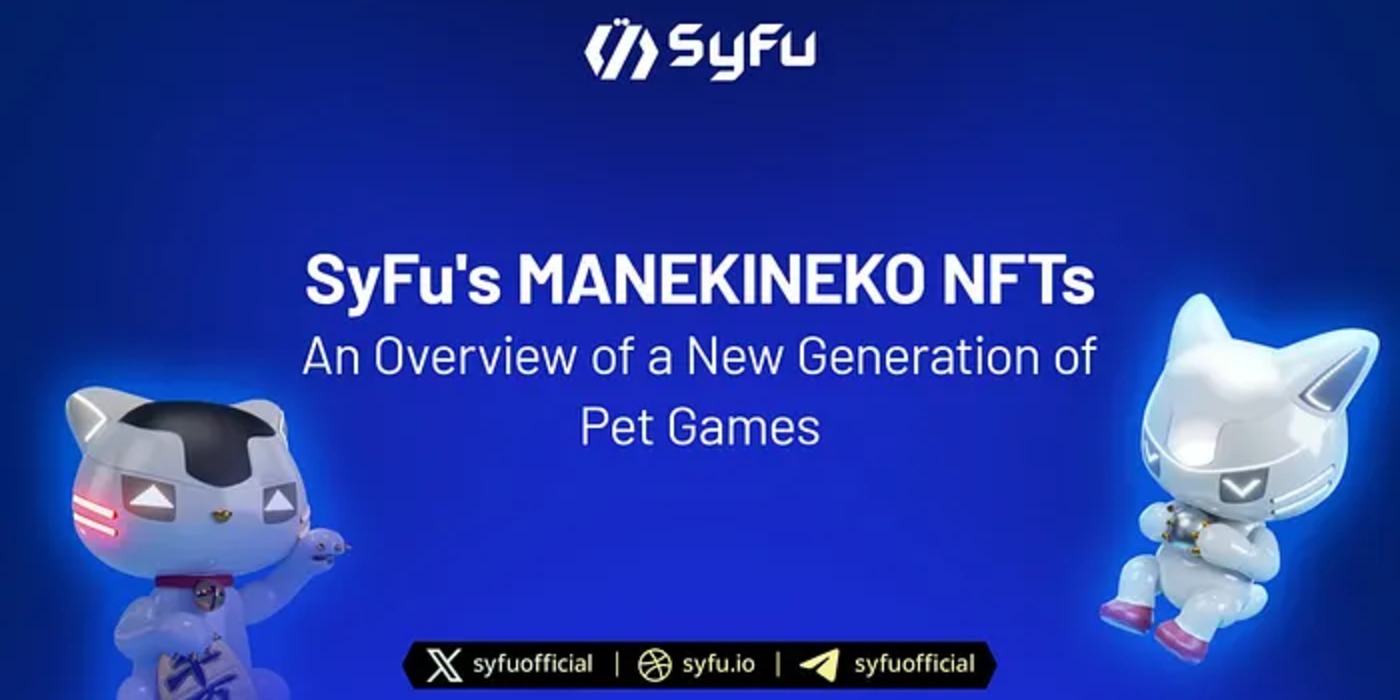
MANEKINEKO
There are numerous qualities and attributes that allow SyFu’s MANEKINEKO NFTs to build upon this decades-long genre and continue its legacy in a new and transformed world.
Similar to other virtual pets, the MANEKINEKO can be bred, raised, taken care of, and evolved, with a notable key differentiator–they can be traded on free and secondary marketplaces. Whereas the idea itself has been attempted before, this time, these actions take place in open, transparent, and decentralized environments, where value can flow through freely without any constraints. Paired with various genes and character traits, trading MANEKINEKOs can be as exciting as using them–with different trait combinations appealing to different types of users and collectors.
From a utility point of view, the MANEKINEKO truly shine and stand apart by transcending the virtual pet genre and becoming interconnected with the global economy. Through SyFu’s protocol, owners earn tokens and other rewards through their day-to-day spending, which they can then use to take care of and upgrade their MANEKINEKO pets. Either by using SyFu-issued cards or pre-existing ones, purchases made on established payment networks such as Visa and Mastercard are tracked and rewards are handed out to MANEKINEKO owners. The MANEKINEKO are there to appreciate users for their economic contributions.
The more they spend, the more their economic contribution accumulates, which directly contributes to the growth of their NFTs. As the NFTs grow, their parameters are strengthened, leading to the receipt of greater rewards. Starting from a pod, the MANEKINEKOs gradually develop with each spending, clearly visualizing users’ economic contributions through their evolution. Given that the MANEKINEKO has traditionally been used by businesses for good luck, it is highly fitting that they serve as the central theme in SyFu’s protocol, driving more business through its comprehensive incentive structure.
MANEKINEKO may appear like a pet game to the naked eye, but in reality, the commitment exerted by users are as much towards the economy as they are for their cats. Similarly, the rewards are also economical in nature, and not merely sentimental. This inseparable connection to the economy renders the MANEKINEKO timeless pets that will maintain their relevance and utility for as long as humanity is able to trade.
In doing so, SyFu takes a complex human construct–the economy, a fundamental force of collective effort–and applies millenia worth of principles and understanding of human nature to gamify a daily activity in a fun, engaging, and rewarding manner. Smartphones, digital banking, and blockchain technology are more accessible than ever, and with a MANEKINEKO NFT, anyone can turn their payments into pleasure, and payment data into rewards.
Here in this article, we delve deeper into how the actual MANEKINEKO is shaping the future of the SyFu ecosystem.
https://medium.com/@syfu/manekineko-nfts-shaping-the-future-of-the-syfu-ecosystem-794b354771dd
Highlights of the SyFu Project
The SyFu project has achieved several significant milestones to date:
-
Partnered with major Japanese fintech company, Money Forward ME
-
Won the “Excellence Award” at Japan’s Financial Innovation Award (JFIA 2024)
About the SyFu Project
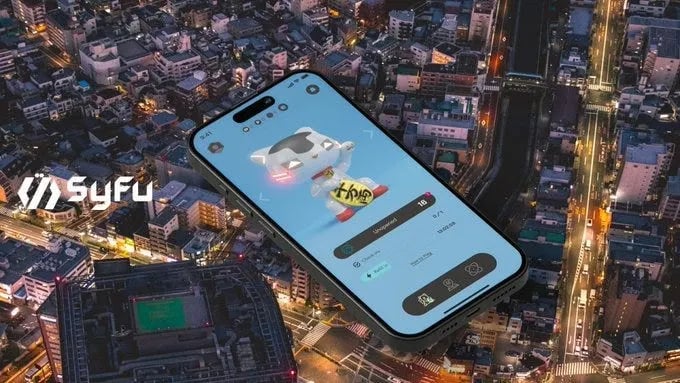
SyFu is a Payment Data-Based DePIN project. It is a new Web3 lifestyle app that transforms payment data into digital assets. Users can earn tokens and NFTs through a Tamagotchi-like experience by nurturing the iconic Japanese “Lucky Cat” NFT using their daily payment data. This platform manages real-world spending and economic contributions on a decentralized network, creating an entirely new consumer experience and Web3 universal credentials.
Official Website: https://syfu.io/
In Conclusion
We sincerely thank our initial community members for their support of the SyFu project. We are thrilled to open up the community and advance to the next stage with you all. We look forward to the future developments of the SyFu project and invite you to join us in creating a new future together.
[SyFu Project Information]
To learn more about SyFu and stay updated on our latest developments, follow us on:
-
Official Website : https://syfu.io/
-
Whitepaper :https://syfu.io/whitepaper/SyFu_White_paper_ver1.0_en.pdf
-
Discord:https://discord.gg/kPMczw5rfe
-
Telegram : https://t.me/syfupj