

On 19 August 2026, Donald Trump mentioned Hyperliquid during a press appearance. He said CFTC chair Mike Selig was working to bring the platform into the United States in a compliant, legal form. official transcript
$HYPE rallied. The connection was direct: the president was discussing potential US access for the platform behind the token. An experienced news trader could recognise the significance and identify the relevant market quickly.
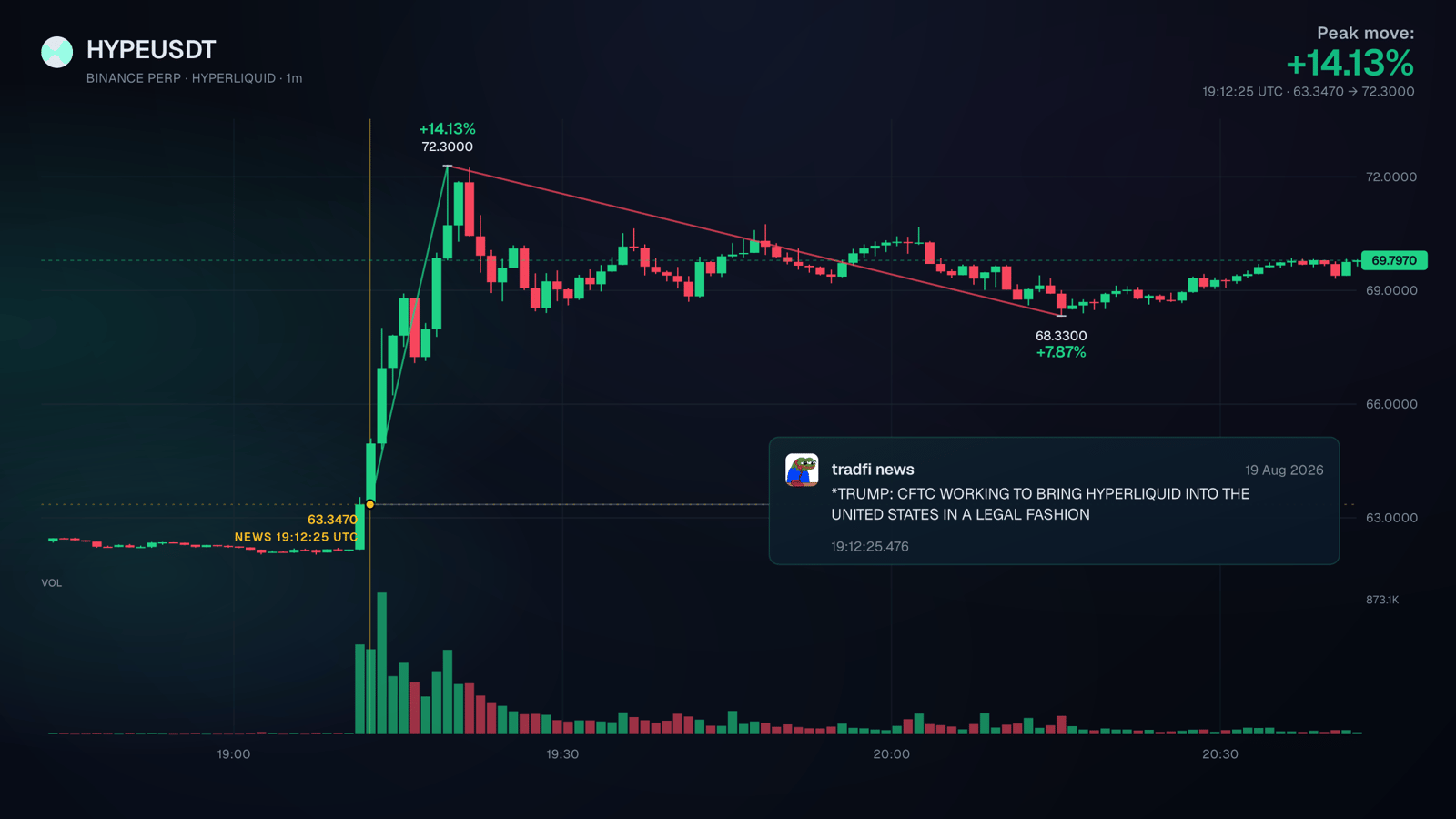
The reaction was large enough that traders arriving after the initial move could still find an opportunity. Even so, speed mattered. As the price rose, later buyers were paying more for the same exposure. A large move can give traders more time to participate while still rewarding those who recognise the catalyst and act sooner.
That is the competition in news trading. Traders can reach the same conclusion about a headline and end up with very different trades because they entered at different prices.
When unexpected news changes how traders value an asset, they compete to buy or sell the liquidity available at the existing price. As those orders trade, the market adjusts. Meanwhile, other participants are still reading the announcement, checking its significance, choosing an instrument or preparing an order.
For a news trader, each of those steps matters. Seeing the news early helps. Understanding which part matters helps. Being ready to execute helps. The advantage comes from putting those things together before counterparts have completed the same process.
There is no universal window in which a news trade works. Some announcements produce a sharp adjustment followed by a reversal. Others change expectations enough for buying or selling to continue as more participants assess the information. The size of the surprise, liquidity and existing positioning all affect the response.
Recent reactions in crypto and US shares show how different those trading windows can be.
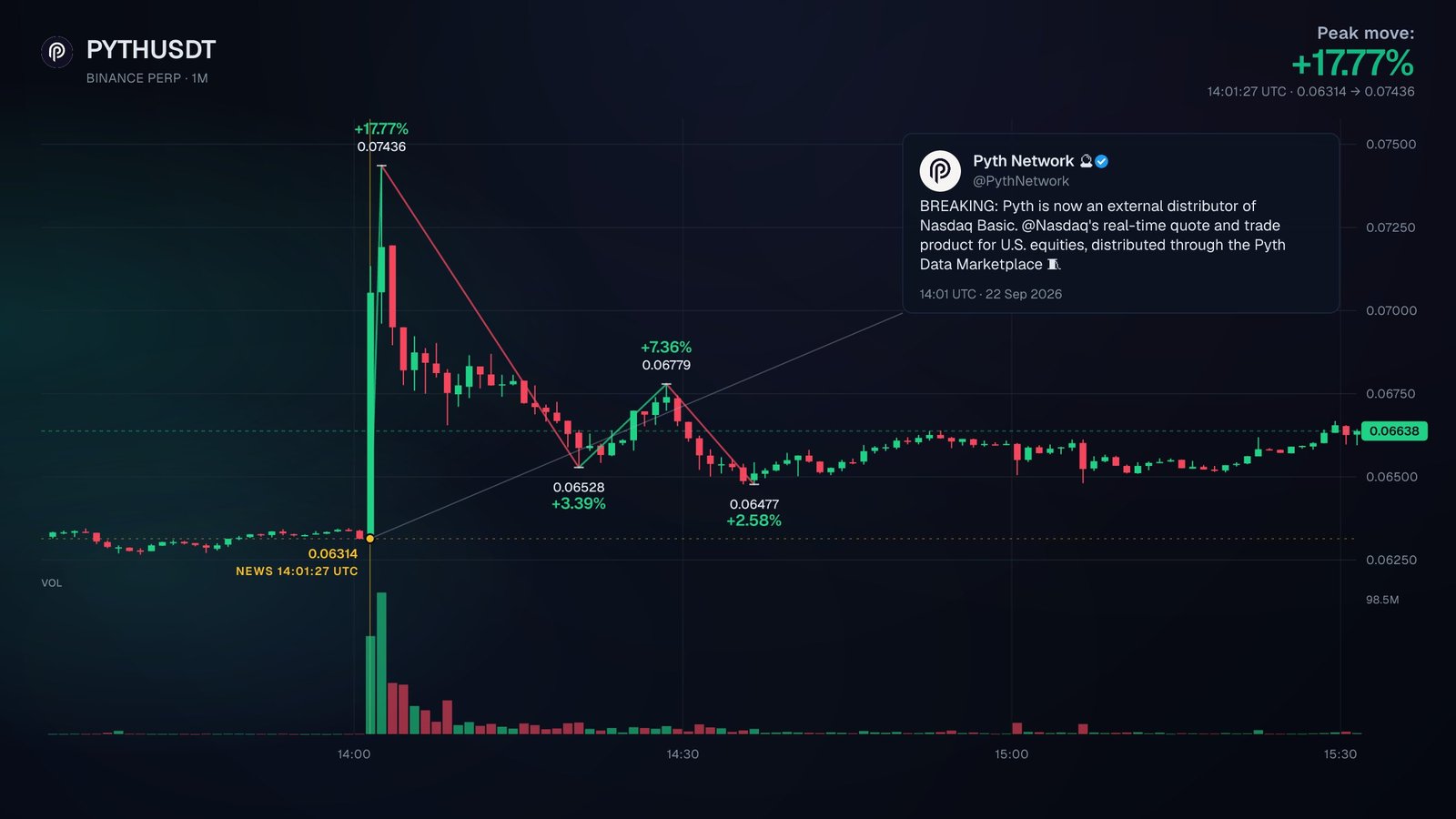
On 22 September, Pyth announced that it had become an external distributor of Nasdaq Basic, Nasdaq’s real-time US equity quote and trade product. The announcement connected Pyth directly with a major financial-data provider. Pyth’s release
$PYTH spiked after the announcement, then gave back much of the initial rally. Traders buying near the first reaction and those entering near the spike high faced very different price paths afterwards. Recognising the catalyst mattered; the entry price and the decision about when to exit shaped the trade.
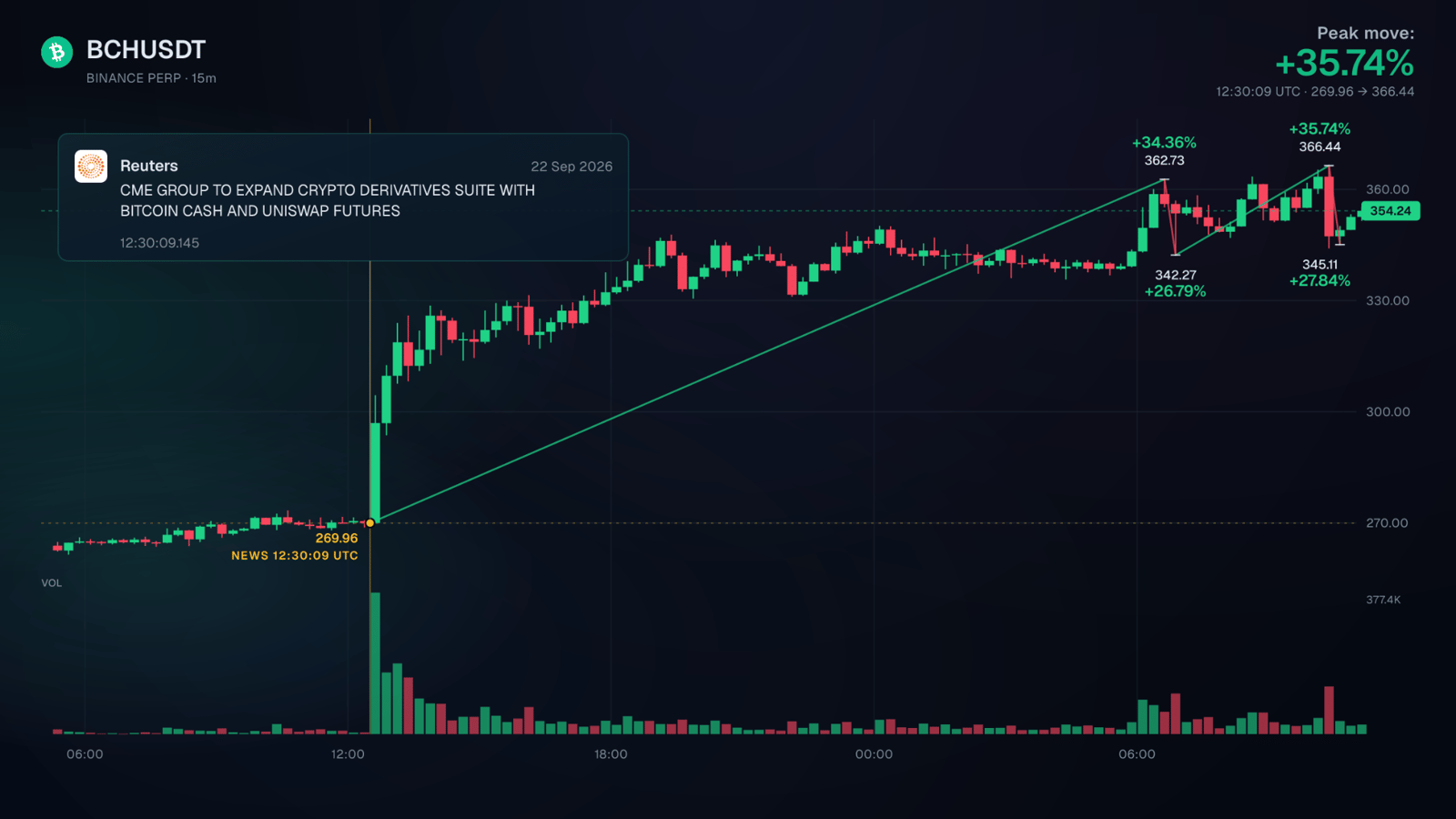
The CME announcement that day showed a different pattern. CME said it planned to launch Bitcoin Cash and Uniswap futures, subject to regulatory review. One headline named two assets directly, giving traders a clear starting point for deciding which markets to watch. CME's release
$UNI’s first rally retraced almost to its starting price before a later advance. $BCH continued building on its initial move, with pullbacks along the way. One headline produced two different paths. Missing the first reaction did not automatically end the opportunity, but a later entry still required judging the remaining potential against the price and risk available at that point.
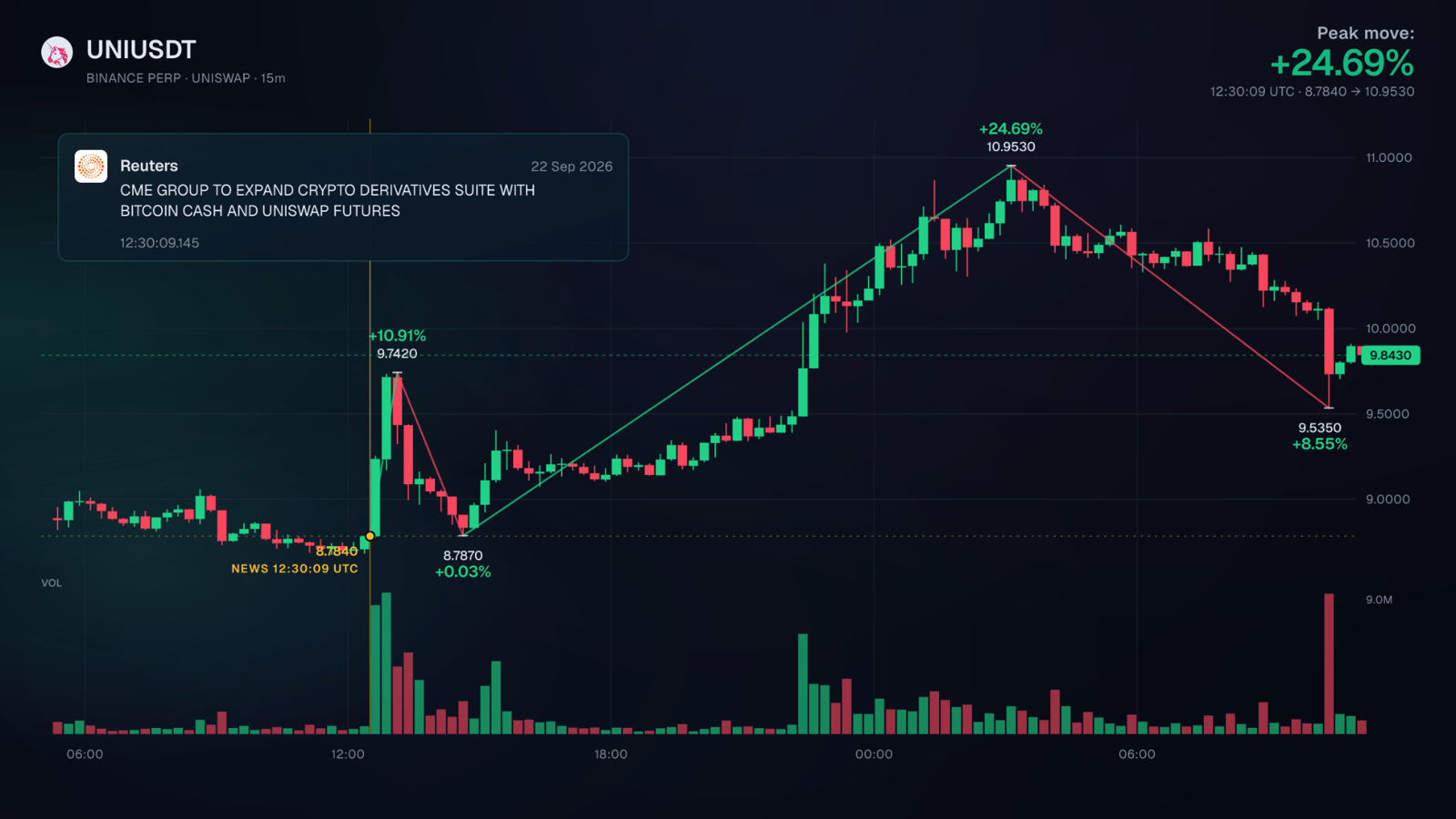
Speed matters in both patterns. A short-lived spike leaves little room for hesitation. A larger, sustained repricing can leave room for later participants, but an earlier response gives a trader more choice over where to enter and how to manage the position.
Trading access matters alongside timing. On Friday 18 September, Anthropic announced its Accenture partnership just after the regular US close. The partnership concerned independent evaluation of frontier AI models, giving the announcement a direct connection to Accenture’s AI business. Anthropic's release
$ACN rallied, pulled back and then made a higher high within the displayed after-hours window. The reaction unfolded while the regular US share session was closed, making post-market access essential for a trader wanting to act during that period.
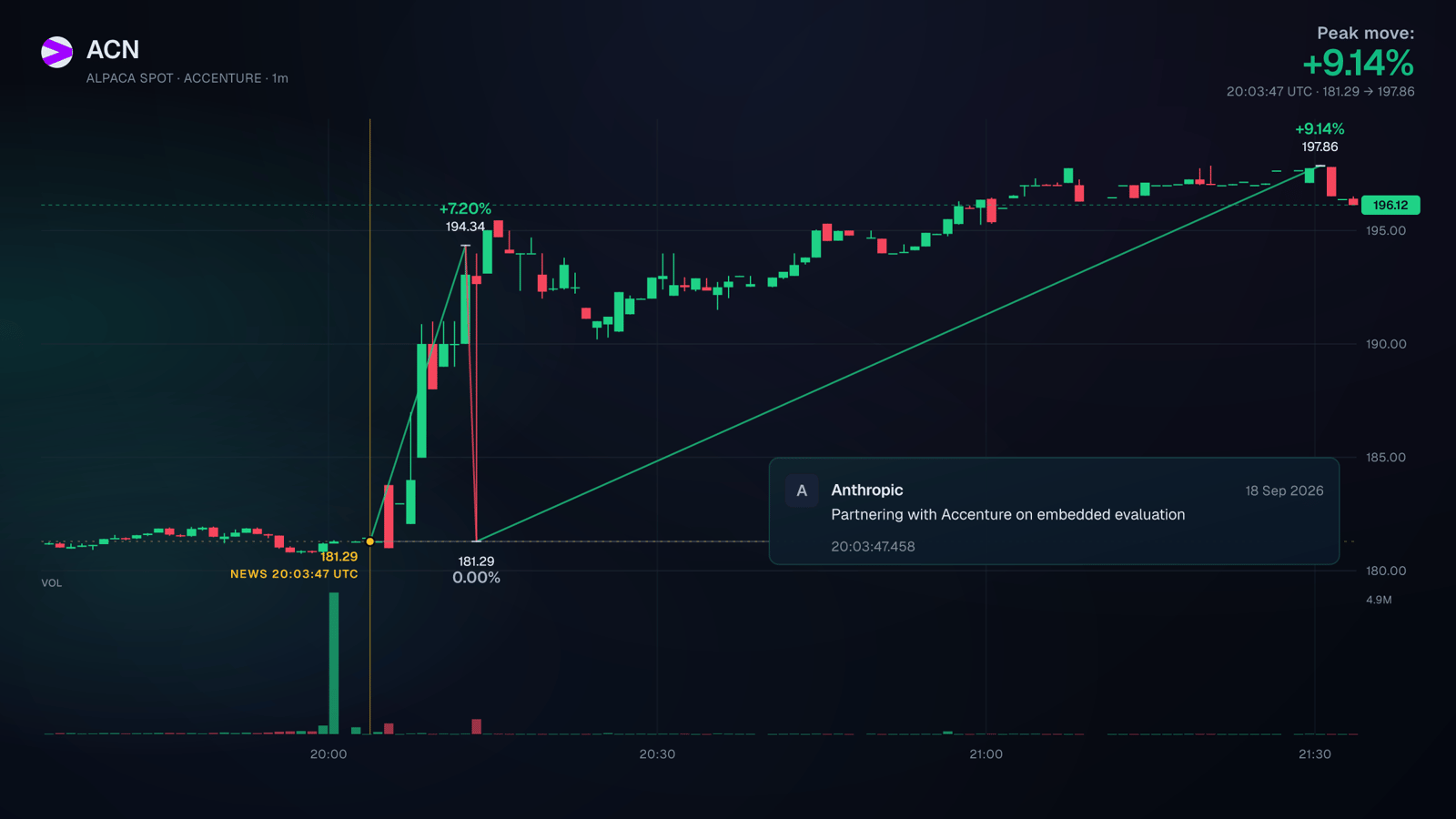
A trader needed access to the relevant session to act on it. WIRE users with a connected Alpaca account can buy US shares during the post-market session. For supported assets, Hyperliquid perps provide another route to trading outside regular US hours. Choosing the route requires knowing which instrument is available and whether its liquidity is suitable for the intended trade.
That preparation is part of trading news well. Familiarity with a company or protocol makes it easier to recognise what an announcement changes. Knowing the available markets avoids searching for an instrument while the price moves. Preparing position size and order inputs reduces the decisions that need to be made under pressure.
Judgement remains essential. A positive headline may contain restrictive terms, repeat information already known or arrive after a substantial run-up. The trader still has to decide whether the information is new, whether it changes expectations enough to matter and whether the available entry offers an acceptable trade.
This is where the distance between news and execution becomes a practical product question.
A trader may understand the announcement immediately, then spend valuable time moving between a news feed, a chart and a separate trading platform. Finding the market, entering the size and checking the order all happen while counterparts are already acting.
WIRE brings the news feed, charts, trade panel and position monitoring into the same terminal. Traders can prepare their execution inputs, assess the reaction and place an order through a supported venue with fewer hand-offs between tools. Once in the position, they can follow incoming information alongside the price and their exposure.
The purpose is to reduce avoidable delay around a decision the trader makes. Market access, liquidity and execution conditions still determine what can be traded and at what price.
The Hyperliquid example captures the point. A clear catalyst can produce a move large enough to accommodate traders who arrive after the first reaction. The Pyth example shows how quickly a favourable headline can become a difficult entry once the price has spiked. Both reward preparation, fast interpretation and control over execution.
The move may last seconds or hours. Getting the news sooner and being ready to act gives a trader more choice over the entry. What happens after that still depends on the price paid and how the position is managed.