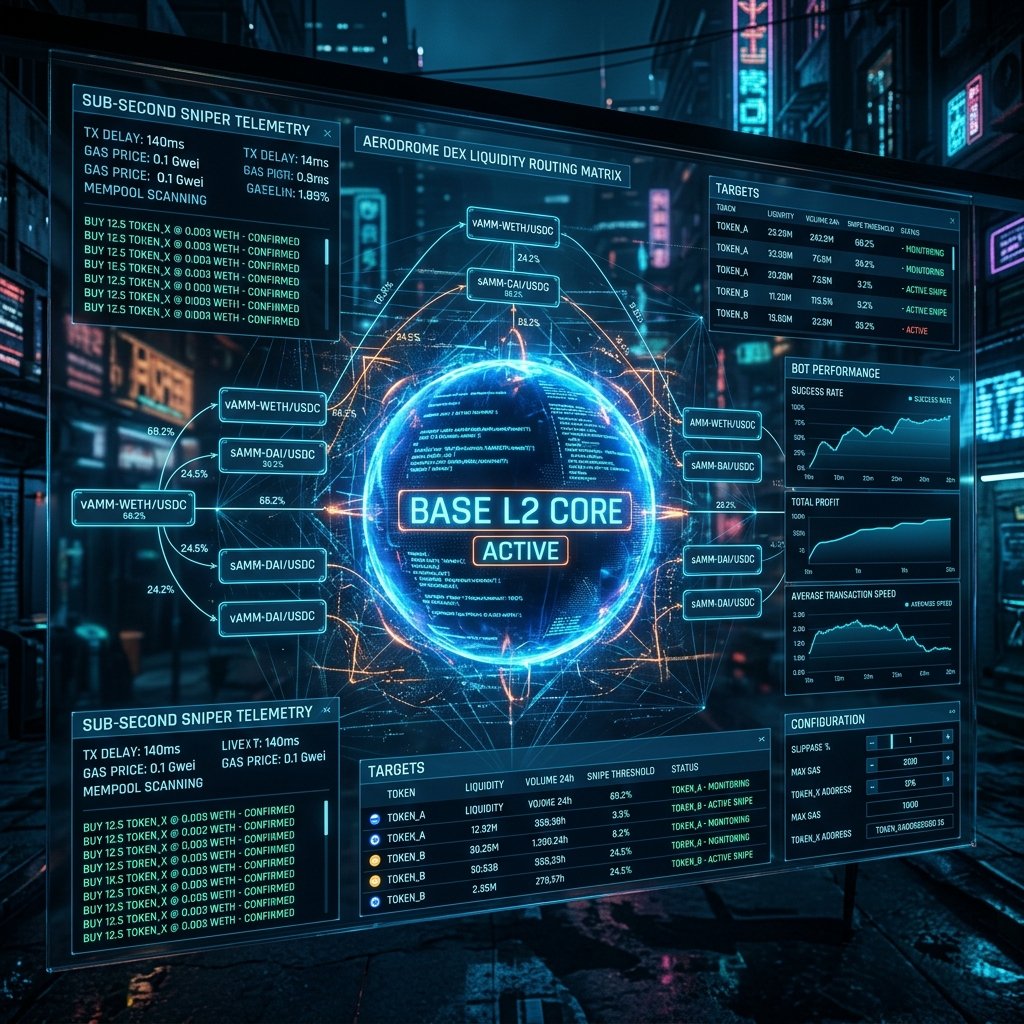
Sub-Cent Execution on Base L2: OP-Stack Sequencer Priority and Aerodrome Arbitrage
Base has solidified its position as the premier Layer-2 ecosystem by transaction volume. Backed by Coinbase and built on the OP-Stack (Optimism Superchain), Base combines Ethereum security with sub-cent gas fees and sub-second block times.
For high-frequency arbitrageurs, Base represents a high-yield environment. With premier decentralized exchanges like Aerodrome Finance capturing deep concentrated liquidity, price dislocations across Uniswap v3 forks and Aerodrome slipstream pools occur dozens of times every minute.
1. The OP-Stack Sequencer Architecture
Unlike Ethereum Layer-1 where a decentralized builder network (Flashbots, Titan) operates private bundle auctions, Base operates with a centralized sequencer:
-
Transactions are processed First-In, First-Out (FIFO) with respect to sequencer arrival time, subject to priority gas fee bidding.
-
Blocks are minted every 2 seconds, but state updates stream continuously via sequencer feeds.
-
Transaction costs frequently average under $0.005, making high-volume, low-margin triangular arbitrage viable.
2. Aerodrome Slipstream Arbitrage
Aerodrome's Slipstream incorporates concentrated liquidity AMM math similar to Uniswap v3, paired with ve(3,3) token incentives:
-
Rapid liquidity imbalances between volatile pairs (e.g. AERO/WETH, DEGEN/WETH) create recurrent basis spreads.
-
A searcher monitoring WebSocket event streams can detect a trade on Uniswap Base, route through Aerodrome Slipstream, and settle back into WETH within a single L2 block.
3. RPC Latency Optimization on Base
Because Base uses sequencer FIFO ordering, network latency to the sequencer endpoint is the single most critical performance variable:
-
Public RPC nodes add 50–150ms of overhead.
-
Running a dedicated Base node (
op-node+op-geth) colocated in AWSus-east-1(where the Coinbase sequencer infrastructure primarily resides) cuts socket latency to < 5ms.
4. Production Bot Setup
Ready to capture sub-cent arbitrage on Base? Explore the Base Sniper Bot on MEVBOT.TOP for full L2 WebSocket streaming adapters, multi-pool routing contracts, and automated slippage management.