

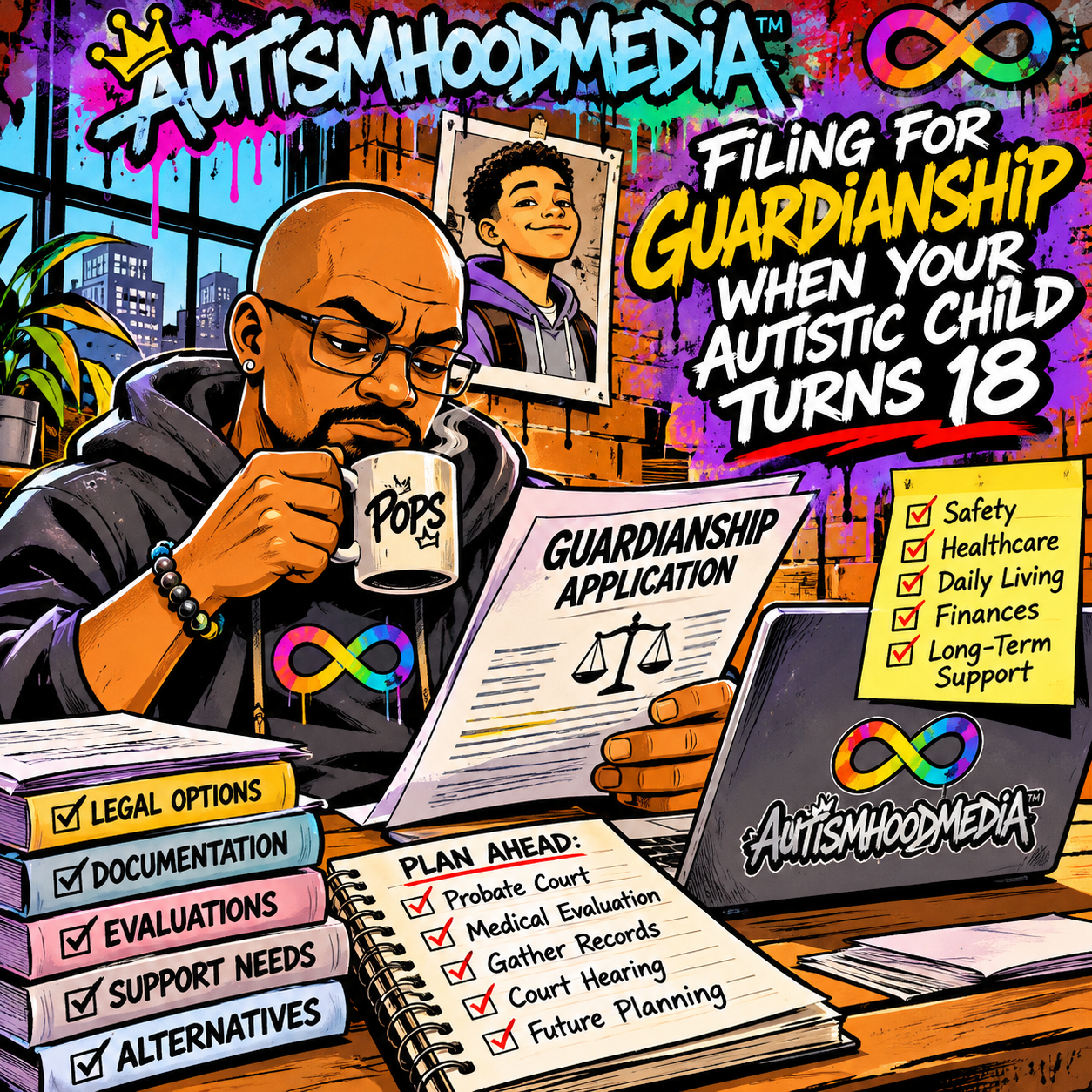
When Your Autistic Child Turns 18: Understanding Guardianship and Protecting Their Future
A parent’s guide to navigating adulthood when your child still needs lifelong support
There is a milestone every parent eventually faces: their child turning 18.
For many families, it’s an exciting time filled with new opportunities, independence, responsibilities, and the beginning of adulthood.
But for parents raising autistic children with significant developmental and intellectual support needs, that birthday can bring a whole different set of concerns.
Because something important happens legally when your child turns 18.
They become an adult.
And that means parents are no longer automatically authorized to make medical decisions, access certain records, communicate with providers, or handle legal matters on their child’s behalf.
Even when that child still depends on their parents for nearly everything.
For families like ours, this is something worth preparing for long before the birthday arrives.
First, let’s understand something about autism and guardianship.
Not every autistic individual needs a legal guardian.
Autism is a spectrum, and support needs vary tremendously from one individual to another.
Some autistic adults can manage their finances, understand complicated decisions, maintain employment, live independently, and make their own healthcare choices.
Others may need occasional assistance.
And then there are individuals with significant developmental support needs who may not have the ability to understand important decisions, recognize certain risks, communicate their needs consistently, manage money, or protect themselves from situations that could put them in danger.
These individuals may need a much higher level of ongoing support.
For parents in that situation, guardianship may become an important consideration.
This isn’t about taking away someone’s independence simply because they’re autistic.
It’s about recognizing their individual abilities, understanding where they need help, and making sure there are appropriate legal protections in place when they cannot safely manage certain responsibilities themselves.
What exactly is guardianship?
Guardianship is a legal arrangement established through the court system.
A judge appoints someone, often a parent or close family member, to make certain decisions on behalf of an adult who has been legally determined to lack the capacity to make those decisions independently.
Depending on the type of guardianship, responsibilities may include:
-
Healthcare and medical decisions.
-
Personal care and safety.
-
Housing and living arrangements.
-
Coordination with service providers.
-
Important legal and personal matters.
-
Financial management, when a guardianship of the estate is appropriate.
There are different types of guardianship, including limited guardianship and full guardianship.
A limited guardianship gives authority over specific areas where assistance is necessary, while a broader guardianship provides more extensive decision-making authority.
The goal should always be to provide the necessary protection while preserving as much independence and personal choice as possible.
Why parents should start preparing before age 18
One of the biggest mistakes families can make is waiting until their child’s 18th birthday to start researching their options.
This transition deserves planning.
Think about everything you’ve handled throughout your child’s life.
You’ve attended medical appointments, worked with therapists, communicated with schools, managed medications, coordinated services, handled finances, and helped navigate everyday situations.
You’ve probably learned things about your child that other people might not recognize immediately.
You understand their communication style, triggers, limitations, abilities, routines, and the situations where they need additional supervision.
But when your child turns 18, those responsibilities don’t automatically carry over into legal adulthood.
You may need permission to access certain medical information, communicate with educational institutions, or make decisions that previously fell under your parental authority.
That’s why starting conversations around age 16 or 17 can be helpful.
Don’t wait until everyone is scrambling to figure things out.
How do you begin the guardianship process?
The process varies depending on where you live, but if you’re in Ohio, here are some important starting points.
1. Contact your local Probate Court.
Adult guardianship is handled through the Probate Court in the county where your adult child resides.
Ask about the application process, required paperwork, filing fees, and local procedures.
2. Obtain a professional evaluation.
Ohio requires an expert evaluation as part of the adult guardianship process.
A qualified medical professional must provide information about the individual’s condition and ability to make decisions and care for themselves.
An autism diagnosis by itself does not establish legal incompetence.
The court must consider the individual’s actual abilities and circumstances.
3. Gather supporting documentation.
Start organizing relevant information, including:
-
Medical and developmental records.
-
Psychological or cognitive evaluations.
-
Existing diagnoses and treatment information.
-
Documentation of daily living support needs.
-
Information about communication abilities.
-
Records describing supervision and safety concerns.
-
Information about the individual’s ability to understand and manage important decisions.
The purpose isn’t to create a list of everything your child cannot do.
It’s to provide an accurate picture of their abilities, challenges, and support needs.
4. Complete the guardianship application.
You will need to complete the appropriate court paperwork, identify the proposed guardian, and explain why guardianship is being requested.
The court may appoint an investigator to evaluate the circumstances and determine whether guardianship is appropriate.
5. Attend the court hearing.
The court reviews the application, supporting information, professional evaluation, and other relevant circumstances.
The judge determines whether guardianship is appropriate and what authority should be granted.
Remember, the court must consider less restrictive alternatives before appointing a guardian.
What if your child doesn’t need full guardianship?
This is where things become especially important.
There are alternatives that may provide the support your adult child needs without requiring a full guardianship.
Depending on their abilities, these may include:
-
Supported Decision-Making: Your adult child chooses trusted people to help them understand decisions and communicate their preferences.
-
Healthcare Power of Attorney: Allows someone to make certain healthcare decisions when the individual is unable to do so.
-
Financial Power of Attorney: Allows someone to assist with financial matters when the individual has the legal capacity to authorize it.
-
HIPAA Authorization: Allows designated people to access medical information.
-
Representative Payee: Allows an appointed person to manage Social Security benefits on behalf of the beneficiary.
-
FERPA Authorization: Allows parents or other designated individuals to access educational records when applicable.
These options have different legal requirements, and some require the individual to understand and voluntarily authorize the arrangement.
A disability attorney or qualified legal advocate can help families determine which options are appropriate.
Guardianship doesn’t mean your child stops having a voice.
This is something I believe deserves special attention.
Even when an autistic individual requires a legal guardian, their preferences, interests, feelings, and choices should remain part of everyday decision-making.
Guardianship should never become an excuse to stop encouraging independence.
If your adult child can choose their clothing, favorite foods, activities, entertainment, or how they want to spend their free time, those choices matter.
If they communicate that they don’t like something, that matters too.
Being a guardian doesn’t mean controlling every aspect of someone’s existence.
It means accepting additional responsibility while continuing to respect the individual you’re supporting.
The objective should always be safety, dignity, quality of life, and as much independence as their abilities allow.
A personal perspective: Preparing Sheamus for adulthood
As a parent, watching your child approach adulthood brings a lot of emotions.
You spend years helping them navigate a world that doesn’t always understand how they communicate, process information, learn, or experience everyday life.
And then suddenly, you’re expected to transition from being their parent and primary decision-maker to recognizing that legally, they’re an adult.
With Sheamus approaching 18, these are conversations and responsibilities that become increasingly important.
He has his own interests, preferences, personality, and growing independence.
We encourage him to participate in everyday activities, learn practical life skills, understand money, make choices, and experience more of the world around him.
But we also recognize that his developmental support needs are significant.
There are areas of life where he still requires considerable assistance, supervision, and guidance.
And that’s okay.
Preparing for guardianship isn’t about giving up on his independence or putting limitations on what he can accomplish.
It’s about understanding his needs as an individual and making sure that the appropriate protections and support systems are available as he enters adulthood.
As parents, we won’t always be here to handle everything.
That’s a difficult reality, but it’s one worth thinking about.
We have to plan for the future, not just the next birthday.
A few things parents should remember
-
Start researching guardianship and alternatives before your child turns 18.
-
Speak with your child’s medical providers about evaluations and documentation.
-
Contact your county Board of Developmental Disabilities.
-
Learn about adult Medicaid, SSI, service coordination, and available community programs.
-
Explore supported decision-making and other less restrictive alternatives.
-
Consult an attorney familiar with disability and guardianship law.
-
Keep encouraging your child’s independence wherever possible.
-
Remember that every autistic individual has different abilities and support needs.
Final thoughts: Adulthood doesn’t mean the support stops.
One of the biggest misconceptions about adulthood is that turning 18 suddenly means someone is ready to handle everything independently.
That’s simply not reality for every individual.
Some young adults need continued support with everyday living. Others need assistance with communication, finances, healthcare, safety, and important life decisions.
And some need a combination of all those things.
Parents shouldn’t feel guilty for investigating guardianship when their child’s circumstances genuinely call for it.
They also shouldn’t feel pressured into pursuing guardianship when less restrictive alternatives would provide the necessary support.
There is no one-size-fits-all answer.
What matters is understanding your child’s abilities, respecting their individuality, and making informed decisions that protect their future.
Our children don’t stop needing support because they turn 18. Their needs don’t disappear because the calendar changes.
And for those of us raising young adults who will need lifelong assistance, preparing for that next chapter is one of the most important things we can do.
At Autismhoodmedia, we believe awareness means talking about the real stuff, too. Not just the milestones, celebrations, and accomplishments, but the difficult conversations, legal responsibilities, and realities that families face behind closed doors.
Because preparing for adulthood is also preparing for the future.
Autismhoodmedia — Real Life. Real Families. Real Awareness.