
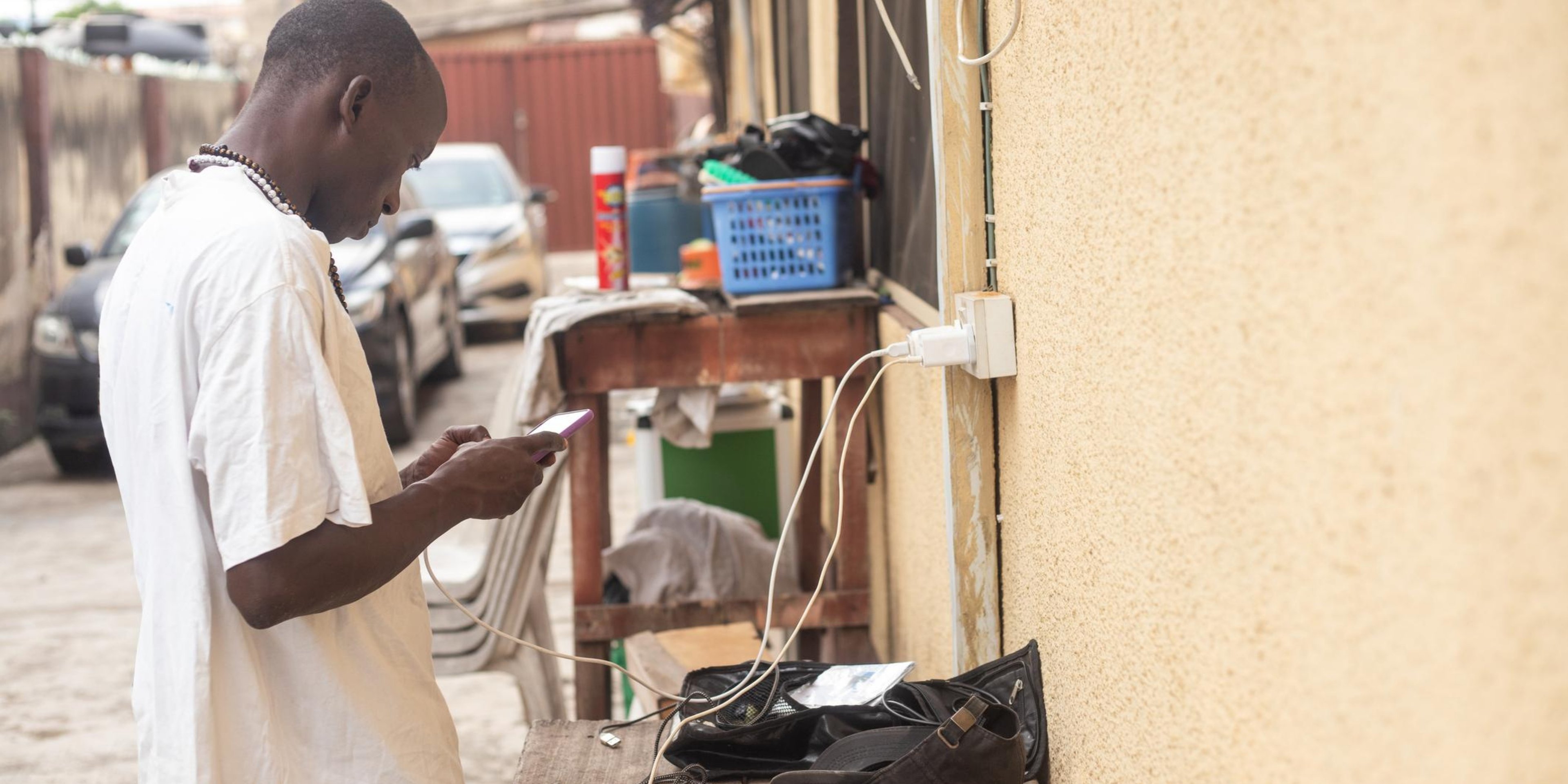
Most digital voting tools don’t fail in theory.
They fail in environments like mine.
A few weeks ago, I attended a Shutter Network Space on ZK passports and decentralized governance.
The conversation was sharp.
The builders were serious.
The technology was genuinely exciting.
But something kept bothering me.
Nobody was talking about what happens when the user does not have reliable internet.
Nobody was asking what happens when the voter does not have an international passport.
Nobody was asking what happens when the device in their pocket does not have an NFC chip.
After the Space, I connected with Jordi Pinyana, co-founder of Vocdoni.
I shared the African infrastructure gap and the concern that most digital voting tools are being designed for environments that do not represent most of the world.
His response surprised me.
He said it was an internal critique they had already been having.
He invited me to test three of their platforms from Lagos, Nigeria and report back with real findings.
So I did.
What follows is an honest account of what I found.
Not a verdict on the protocol itself.
A ground-level report on how these implementations perform in one of the most constrained environments they will ever face.
Everything you are about to read happened on a standard Android smartphone using 4G mobile data in Lagos, Nigeria.
No WiFi.
No high-end device.
No fiber connection.
This is not a special setup.
This is how most people in Lagos access the internet.
This is how most people across West Africa build their digital lives.
Nigeria has over 220 million people.
Mobile internet penetration is high. But connectivity is inconsistent, bandwidth is limited, and most users rely on mid-range to budget Android devices.
If a governance tool cannot work in this environment, it cannot work where governance matters most.
That was the test.
Two of the three platforms tested, app.davinci.vote and asktheworld.davinci.ninja are MVP implementations built on the DAVINCI protocol.
They are not production-ready systems.
The findings below reflect that context.
Where limitations appear, they are reported at the level of:
- Current implementation.
- Application design choices.
- Real-world infrastructure constraints.
Not as a verdict on the underlying protocol’s potential.
This distinction matters.
Because even at the MVP level, design decisions reflect assumptions about users, and those assumptions determine who can and cannot participate.
Web3 wallet users. Vote creation requires gas. Voting is gasless.
The first platform tested was app.davinci.vote.
Users connect a wallet, organizers create votes, and participants cast them on-chain.
The first friction point was gas.
Creating a vote requires ETH on Arbitrum One in the current deployment. While not an intrinsic limitation of the protocol, it introduces real complexity in practice.
Acquiring ETH requires:
- Bridging.
- Multiple transactions.
- Technical knowledge.
For most African organizers, this is a meaningful barrier.
Voting, however, is gasless.
This is a strong design decision.
It shifts cost away from the voter, critical in cost-sensitive environments.
Observed Issue
Initial vote creation returned a persistent error:
“Invalid metadata hash format.”
The issue was reported and fixed by the team.
After the fix, vote creation worked smoothly.
User Feedback
Three Web3 users in Lagos tested the platform.
Voting was easy and fast
Minor wallet confusion was resolved
Main concern was real-world deployment.
Where would this actually be used?
The platform works for Web3-native users.
The barrier is not usability, it is ecosystem readiness.
ZK passport verification via Self.xyz. Requires NFC.
This surfaced the most significant constraints.
The promise:
Verify eligibility without revealing identity.
No coercion.
No exposure.
In theory, powerful.
In practice, two constraints emerged.
1. Wallet Compatibility
MetaMask showed as connected but was not reflected in-app.
Switching to Zerion resolved the issue.
Likely an integration issue, but relevant in environments where MetaMask dominates.
2. NFC Hardware + Document Assumptions
The verification flow requires:
NFC-enabled smartphones
NFC-chipped identity documents
Barriers observed:
My device does not support NFC (common locally)
A participant had NFC but used a non-chipped national ID
Result:
Zero successful verifications.
What This Actually Means
This reflects a limitation of the current implementation, not the protocol.
But it reveals a clear mismatch:
The required hardware + documentation combination is not common enough in this environment.
That is not a bug.
It is a design assumption that does not hold under these conditions.
Web2-friendly. Email/SMS identification.
This is the most accessible product
Mobile Experience
During initial testing, the platform did not load on mobile browsers.
Chrome and MetaMask browser returned blank screens.
Access required switching to desktop mode.
On retesting, it loaded successfully.
This suggests the issue may have been device-specific or temporary.
However:
On a standard Android device in Lagos, the mobile experience proved unreliable.
In a mobile-first environment, that matters.
Desktop Experience
Functional but slow on 4G.
Vote creation was smooth.
Optional National ID field is a strong design choice.
Voter Experience
One participant voted successfully
Process was simple and intuitive
One participant was excluded
Their details were edited before vote creation.
The system confirmed the edit.
But once live, their credentials failed.
No error.
No warning.
Silent exclusion.
Important Context
This may be a reproducible issue or an edge case.
Further testing is required.
But the outcome is clear:
When it happened, there was no visibility.
In governance systems, silent failure is not a minor issue.
Across all platforms:
• Bandwidth is a constraint
All platforms slowed under Lagos 4G conditions.
• Wallet compatibility matters
Integration issues can exclude users.
• Hardware assumptions matter
NFC requirements limit accessibility.
• Mobile reliability is critical
Desktop fallbacks are not viable in mobile-first regions.
• Organizer complexity is high
Bridging and setup require technical knowledge.
Africa is not a test market.
It is where governance has some of the highest stakes.
Take the 2023 Nigerian presidential election.
There were over 93 million registered voters.
Turnout was around 27 percent.
The winning president was elected by fewer than 9 million votes in a country of over 220 million people.
The reasons are well documented:
• Coercion
• Logistical breakdowns
• Lack of trust
• Rational fear
This is the environment governance tools claim to improve.
Vocdoni is one of the few protocols actively trying to close that gap. This report is a contribution to that effort.
But improvement only happens if systems work under real conditions.
Not ideal ones.
Real ones.
Africa is the stress test.
- Low bandwidth.
- Limited hardware.
- Uneven documentation.
- High stakes.
If governance tools work here, they work anywhere.
If they do not, they are not finished.
We are not waiting for better theory.
We are waiting for systems that actually work.
And we are willing to help build them.
BABZI
DeFi Governance Researcher
Lagos, Nigeria
X - @Babzi_web3 | paragraph.com/@babziweb3@gmail.com
Research conducted on the ground in Lagos using real users and live environments.
Findings shared with the Vocdoni team prior to publication.