
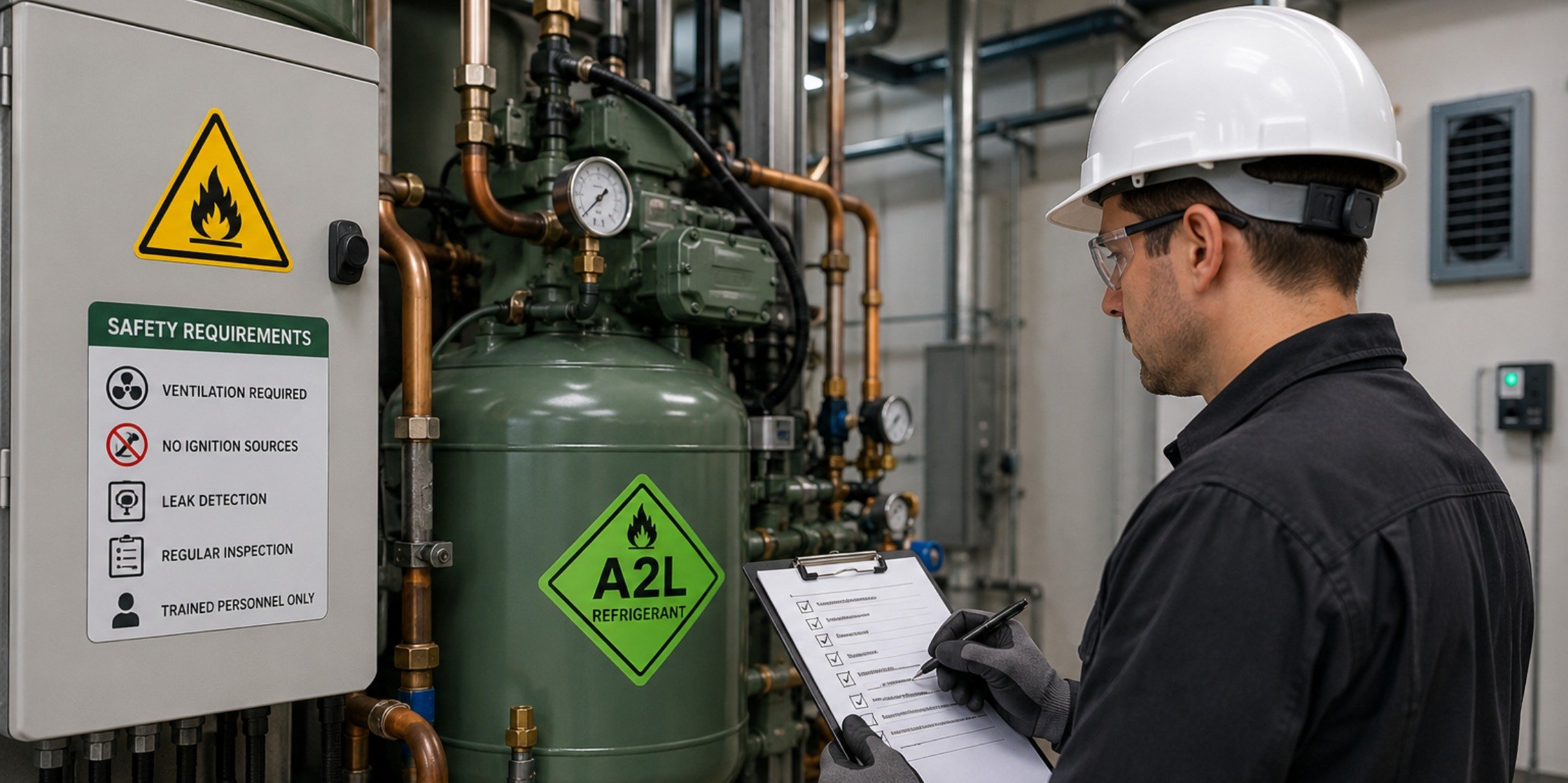
Federal and defense infrastructure upgrades are bringing existing Environmental Protection Agency mandates and requirements for enhanced physical security into closer alignment. The phase out of refrigerants with high Global Warming Potential (GWP) is no longer on the horizon; it is the new reality.
For designers, builders, and managers of Sensitive Compartmented Information Facilities (SCIFs), the phased transition has significant impacts on the engineering of secure perimeter penetrations.
The conflicting issues of complying with new EPA requirements and ICD 705 concerning physical security are eased by understanding SCIF perimeter security penetrations, the new refrigerants, and the HVAC design. For new SCIF construction or any HVAC system retrofitted with A2L refrigerants, a high-pressure, certified dielectric refrigerant line break is essential to maintain ICD 705 compliance.
The EPA AIM Act officially set the phaseout of R-410A in motion beginning January 2025. As a result, in 2026, mildly flammable A2L refrigerants such as R-454B and R-32 are now the accepted standard for all newly manufactured direct expansion (DX) HVAC systems.
For secure facility programs, any SCIF design, construction, or modification projects will have A2L equipment. The engineering teams will need to develop plans to meet new regulations, as you cannot use designs based on R-410A and expect to have equipment or approval, as A2L is now part of the current supply chains.
While the chemical characteristics of the refrigerant moving through the pipes may change, the same is not true for the foundational security principles that stem from ICD 705. Under ICD 705, there is no allowance. All metallic elements that cross the secure perimeter shall have a dielectric break to eliminate TEMPEST (compromising emanations) and other unwanted forms of electrical contact across the SCIF wall.
The challenge lies with MEP engineers and how they interpret and implement the requirement. The introduction of A2L refrigerants affects operating conditions of the system, such as:
Working pressure profiles
Constraints of material compatibility
Line isolation mechanics
The requirements of ICD 705, Chapter 5, for metallic line isolation, remain absolute. However, the physical means of achieving that isolation must be assessed for chemical and pressure compatibility.
Due to a designation of Class 2L mildly flammable, A2L refrigerants must be handled more carefully in compartments similar to SCIFs that are secure, windowless, and have limited access. Advanced ventilation systems, constant leak detection, and integrated safety features must now be incorporated into these systems.
The design of an SCIF adds extra layers of complexity to routing these lines. Think of a typical split system AC. The design requires isolation to be provided on both the liquid and suction lines.
Traditional plumbing design does not come close to the requirements of this task. A2L systems are routinely operated above 600 psig. The solution must withstand chronic thermal cycling without breaking the integrity of the refrigerant loop.
Historically, field teams addressing dielectric isolation have opted for plumbing unions that are commercially available and designed for water. This creates a concerning single point of failure in an A2L loop. Water-rated dielectric fittings are not designed to withstand chemical and physical stresses from modern synthetic oils and refrigerants.
Without proper dielectric isolation, exposed copper piping creates a TEMPEST risk; RF signals can propagate across the secure boundary, compromising classified information. Most of the older engineering standards were made in the era of R-410A, and there is a significant gap for ongoing projects. Installation practices are failing to address the structural requirements for the mounting of high-pressure A2L systems.
The design teams have to incorporate certain requirements in their SCIF HVAC design specifications in order to receive project approval and minimize costly alteration requests.
Verify Equipment Compatibility: Ensure all components of the fan coil units, condensing units, and VRF components are approved and rated for use with A2L refrigerants.
Provide Dedicated Dielectric Breaks: Factory-tested high-pressure dielectric breaks must be provided on both suction and liquid refrigerant lines.
Ensure Correct Break Placement: Non-conductive breaks should be placed within 6 inches of the ICD wall.
Specify Certified Isolation Components: Isolation fittings should be UL-listed, or equal, and certified to withstand the pressures and chemicals associated with A2L refrigerants.
Plan Routing and Access: Refrigerant lines should not be run through classified areas when possible. Isolation of refrigerant lines should be actively managed, and access panels should be provided for maintenance of leak detection systems.
Prior to pushing a facility forward for Accreditation, Site Security Managers and commissioning agents should ensure compliance with the following technical checklist.
Component Checks: All expansion valves, line sets, and joining components must be verified for A2L service.
Pressure Rating: Check that the installed dielectric breaks are rated for high-pressure refrigerant, and not for water utility pressures.
Distance Checks: Check that the dielectric break is positioned within the six-inch (6”) interior of the secure wall.
Testing of Safety and A2L Sensors: Perform a loop test on the A2L sensors. Check the execution of the automated system for an emergency shutdown and ventilation (exhaust) system.
Regulations Check: Check all documentation in the field against elements of the ICD 705 and the UFC 4-010-05 (DoD Minimum Antiterrorism Standards for Buildings).
Transfer of Operations: Ensure the safety of the maintenance staff on the facility's low-GWP systems.
The use of A2L across the DoD, the intelligence community, and across federal civilian agencies is happening now. HVAC systems are being modernized due to facility life cycle management and new construction. This has created a challenge between security needs and the high-pressure requirements for refrigerant systems.
A2L adoption is now a fixed reality in regulation. Project teams that understand the modern requirements of refrigerants and the requirements of secure facility design and incorporate that knowledge during the early building design and planning stages will avoid schedule slippage and the accreditation delays caused by the potential of failed pressure tests.
Early engagement ensures the facility will meet federal requirements for sustainable design and environmental performance without compromising the security of the asset.
Mildly flammable A2L refrigerants that comply with ICD 705 compliant HVAC present a unique challenge to design and engineering. The use of these refrigerants means that the requirements for mechanical systems become significantly more complex than standard HVAC systems and standard design applications.
In the design and planning stages of secure facilities that meet modern environmental requirements and accreditation requirements, engineering teams must incorporate the use of high-pressure, dielectric breaks.
Reconciling the issues of security isolation and high-pressure fluid dynamics enables the engineering and design teams to protect the critical assets from the client while ensuring the facility remains operational and unreactive to the threats that it faces.