

Two degens. One protocol. If they both stake, they win. If one sells, the other bleeds. If both sell? It’s over.
The game is OlympusDAO and it was invented by an anon dev named Zeus in March 2021. It’s a coordination experiment, wrapped in economic theory, disguised as a ponzi and worshipped like a cult.
This is the story of (3,3).
At its core, Olympus was trying to fix one of DeFi’s biggest weaknesses: mercenary liquidity.
Most protocols at the time were bleeding incentives. They offered high APYs to attract liquidity providers, only for that capital to flee the second rewards dropped. Liquidity was rented, not owned.
Olympus flipped this with two main innovations:
Protocol-Owned Liquidity (POL): Instead of paying users to provide liquidity, Olympus acquired and owned its own liquidity. This gave the protocol control over its trading pairs and price stability, making it less vulnerable to protocol hopping yield farmers.
(3,3) Game Theory: A meme-ified strategy to align incentives. If everyone stakes, everyone wins. If someone sells, it hurts the group. The idea was to create a positive-sum game where cooperation paid.
The goal? A decentralised, algorithmic reserve currency backed by a treasury of real assets. OlympusDAO as the central bank of DeFi.
Olympus built its economy on three pillars:
Bonding: Users sold assets (like DAI or LP tokens) to the treasury in exchange for discounted OHM, which vested over 5 days. Olympus used this to accumulate valuable LP tokens and build up its Protocol-Owned Liquidity.
Staking: Users who staked OHM received rebases, freshly minted OHM distributed proportionally. The more you staked, the more you earned. If everyone staked, the pie grew. If people didn’t stake, their tokens were diluted.
Rebasing: The supply of OHM expanded regularly, inflating the token supply to reward stakers. It was inflation by design. The thesis was that as long as the treasury kept growing, the inflation was sustainable.
The community turned this into a meme: (3,3). You stake (3), I stake (3), we both win. But if I sell (-3), your staking loses value. It was crypto game theory on steroids.
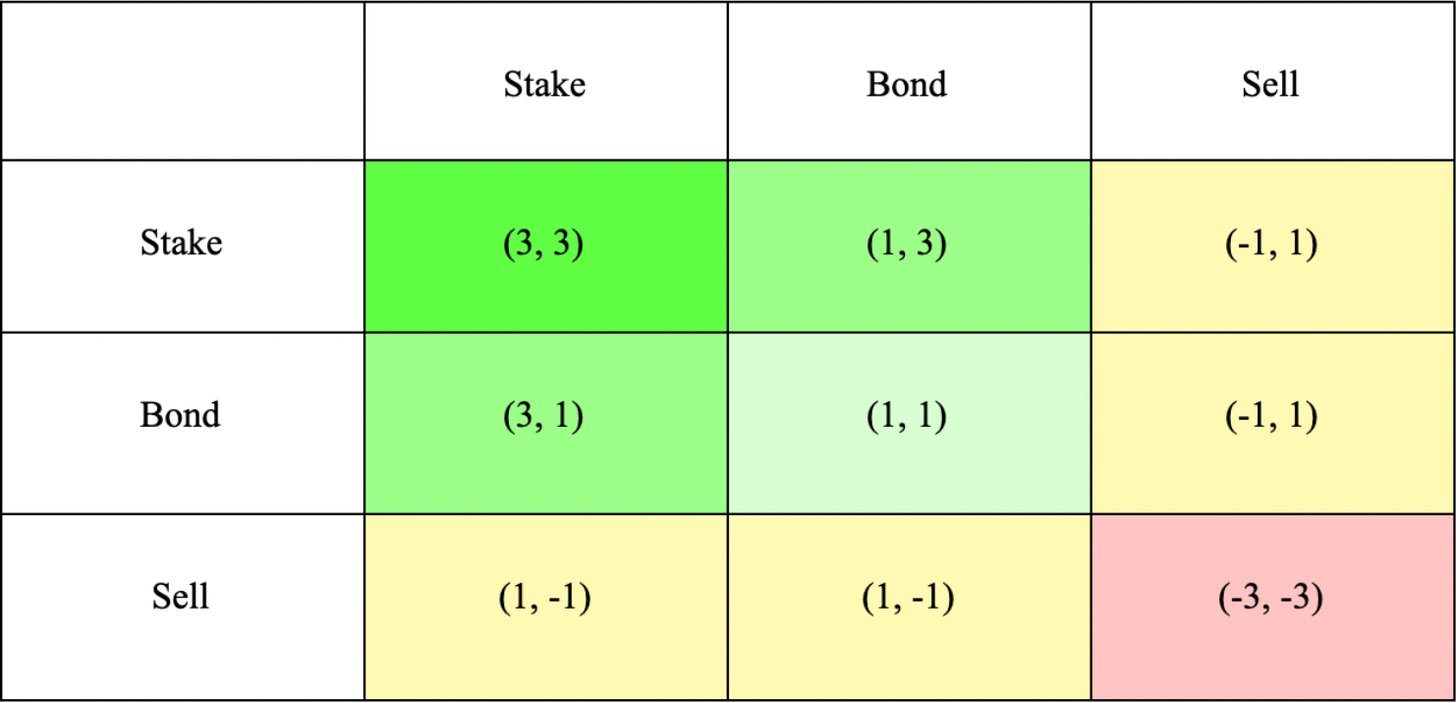
Treasury grows. Stakers stack. Price goes up. Twitter goes wild.
New believers join the cult and the cycle repeats.
💡 Why Was Olympus So Promising?
Novel token design with game theory at its core
Meme marketing of (3,3) went viral
Strong narrative: “The Decentralised Central Bank”
The innovation of Protocol-Owned Liquidity
Cult-esque community of Olympians
At its peak:
Treasury: $800M+
OHM Market Cap: $4.3B
Staking APY: >7,000%
Olympus wasn’t just about printing tokens. It was about belief. It created an identity for participants. (3,3) became one of the first memes tied to a token to dominate crypto Twitter.
Forks exploded. TIME on Avalanche. KLIMA on Polygon. Everyone wanted to be the next Olympus.
| Protocol  | Chain     | Launch  | Status                     |
|-----------|-----------|---------|----------------------------|
| Olympus   | Ethereum  | Mar  '21| Active, now OHM 2.0        |
| TIME      | Avalanche | Sep  '21| Collapsed (Sifu scandal)   |
| KLIMA     | Polygon   | Oct  '21| Active (carbon credits)    |
| HectorDAO | Fantom | Late '21| Soft rug, liquidity issues |But belief only holds as long as the price goes up.
Q4 2021: The Fed hints at interest rate hikes
Crypto risk appetite faltered, and OHM’s price began to stall.
OHM emissions outpaced bonding demand
As OHM’s price fell, bond discounts became less attractive, who wants to buy discounted OHM when it might be cheaper tomorrow?
This discouraged bonding, slowed treasury inflows, and broke the flywheel Olympus relied on.
Price dropped. Confidence cracked. (3,-3) became the new meme
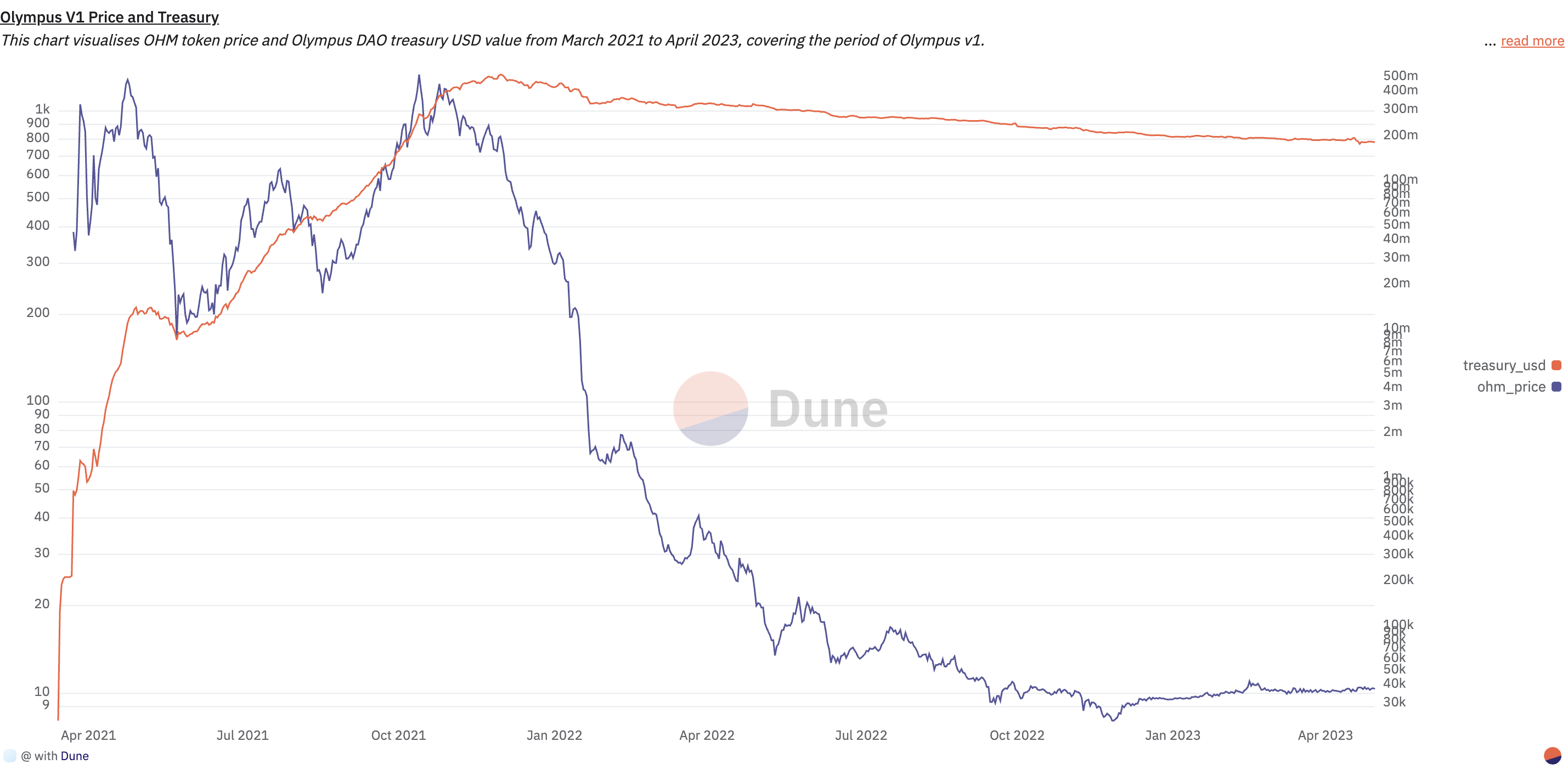
Reflexivity turned against Olympus in November 2021. People staked because the number went up. When it didn’t, they ran. And since rewards were inflationary, selling caused dilution and further selloffs. A feedback loop in reverse.
💡 TIME (Wonderland)
Olympus fork on Avalanche, late 2021
Same (3,3) mechanics
Key figures: Daniele Sesta and Sifu (aka Michael Patryn, QuadrigaCX co-founder and known fraudster)
When Sifu’s identity was exposed, trust collapsed and so did the price
Olympus had deeper problems too:
Its treasury was mostly idle, not yield-generating.
That meant it couldn’t reliably offset the dilution from rebases. This accelerated the death spiral once price momentum flipped.
Rewards were paid out in newly minted OHM with no intrinsic value
The entire model relied on perpetual inflows to function
Olympus taught DeFi a few hard lessons:
(3,3) works... until incentives shift
Protocol-Owned Liquidity is a powerful idea, but needs more than a meme
Rebases are dangerous if not tied to actual value creation
Emissions must be justified by real utility or yield
Despite the implosion, Olympus left a mark. It broke the mental model of rented liquidity. It made game theory legible to crypto natives. And it showed how powerful a community can be, until it turns on you.
And somehow, Olympus didn’t die.
It evolved.
Part 2 drops soon. We'll look at Olympus 2.0, the comeback nobody asked for but everyone can learn from.