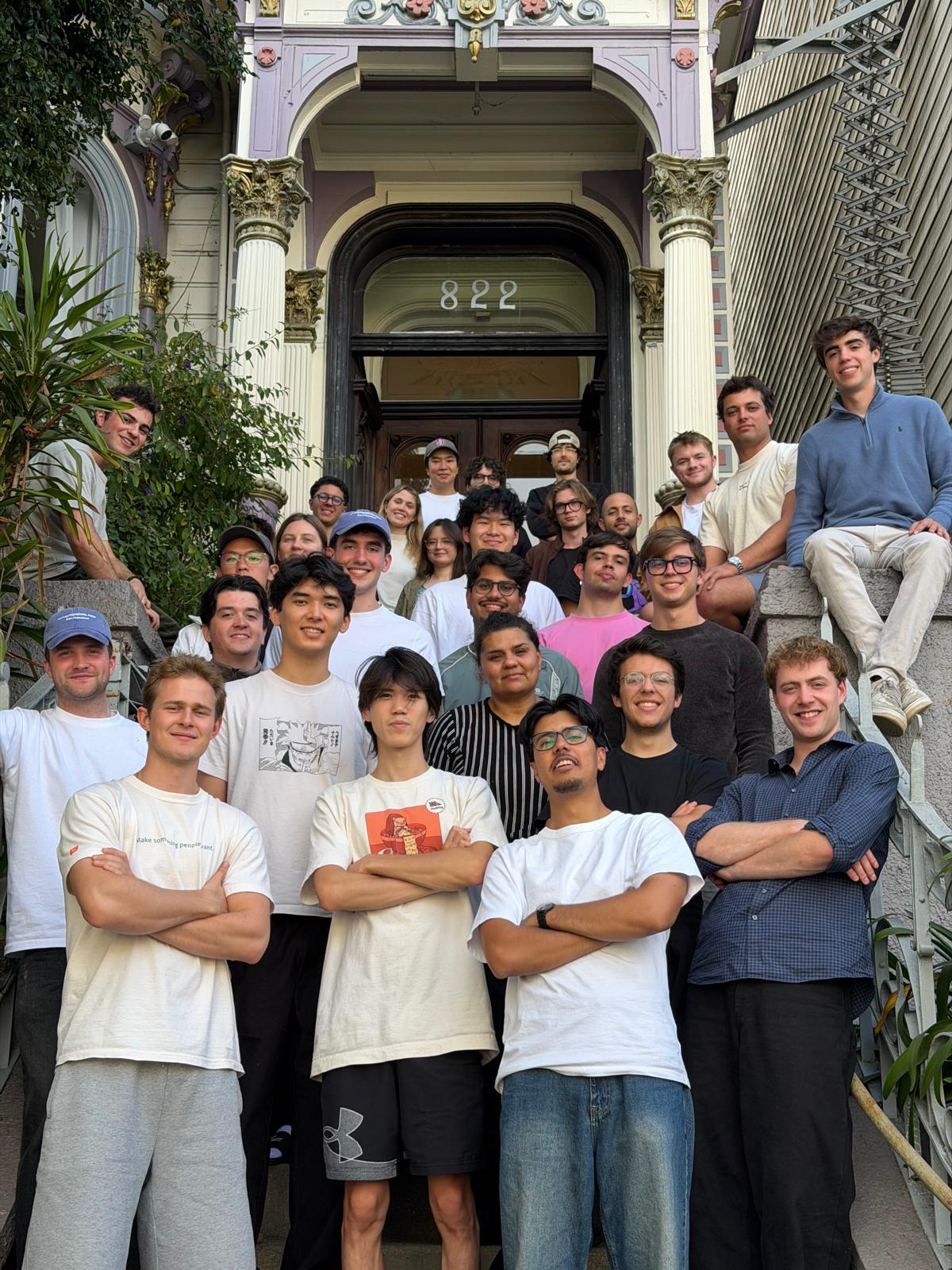
I’m writing this at the SF airport, heading home after two months at The Bridge. It feels like the perfect moment to share a bit about my Bridge journey: for those considering joining and wanting a glimpse, for those curious about what it feels like, and for those who have been side by side with me all this time.
I didn’t really know what I was applying for or what I was heading into as I boarded the plane to SF. The program was new, the website was high-level, and I had never been to the US. But what was the worst thing that could happen?
Still, three things were clear:
The Bridge was run by Entrepreneur First, the place where Aztec (the company I previously worked for and deeply admire) kicked off.
I had a lot to learn from the people running it, as I saw during the interviews and selection days.
It looked like it could help me build a company, the thing I was already betting my life on.
Before coming to The Bridge, I spent almost a year running solo. I tried working with three different people, but the thing about a cofounder is that they should either be absolutely fantastic, or you can do it better solo. And no matter what I did, I couldn’t find an absolutely fantastic one. At some point, I asked absolutely every single person I knew, and it didn’t help.
So I came to Selection Days ready to build solo. I was gonna give it a chance, but what were the odds I would find an absolutely fantastic cofounder? And then… maybe I was lucky, maybe things compound over time, or maybe bringing together people ready to drop everything and start a company right here, right now actually works. I met an absolutely fantastic cofounder at Selection Days. I left the London office thinking, “Well… I think we can build a great company together.”
At the same time, I kept my expectations low. I still came to SF ready to build solo, but with a lot of hope that this cofounding tandem was gonna work out. Because together, it felt like we could do 10x what I could do alone. And it just felt right.
We started with two kickoff days full of sessions from David: how to understand whether a market is good, a framework for choosing cofounders, etc. All mixed with 66 people trying to introduce themselves, their interests, and what they wanted to work on. My cofounder and I had kept working together since Selection Days, but there were still a lot of unknown unknowns on the table.
By the end of the two kickoff days, I had learned:
The names of five people
That there was this super cracked cyber guy
That was it. Naively, I assumed everyone felt approximately the same. So I made a bet with Djahit that he couldn’t name 40 people. He could. I had to buy him ice cream.
The first few weeks were very hectic. My state of mind most of the time was: What the hell is going on? What are we doing as a team? What am I doing with my life? How does this house work?
For example, it was hard to grasp who EF was to me. A friend? A VC? A weird hybrid of both? At The Bridge, every participant has a TI (Talent Investor), a person who found you and helps you make the most of the program and your potential. At my first personal check-in, I hardly said anything to Maxim and Elian. It felt so confusing: they wanted me to share how I felt and what was going on, but they were also a VC, so I should probably tell them only good things?
But personally, I believe in trust and authenticity, and whenever I followed them before, it worked out. So the next day, I sent Maxim a message saying that I felt like I had done my check-in the wrong way (whatever that means) and would be happy to have another one. At the second one, I said things as they felt: it feels like when your mom says, “Tell me everything, I won’t tell anyone,” but five minutes later, the whole family knows.
Somehow, step by step, I decided that my strategy for the program would be to trust the EF team. If I helped them get to know me, they would know best how to help me. And tbh, I didn’t regret this choice.
People were shuffling all the time. They started working together, broke up, and started working with other people. Everyone followed Slack for news about team formations. Rumours travelled through the house 24/7. Several people left the program within the first two weeks. My roommate ordered a pile of different hardware electronics from Amazon. Someone signed an LOI in the first week. I stopped being able to keep track of what time it was at home and broke up with a human with a very beautiful soul I was dating. Things felt hectic, but excitement kept spiking again and again.
On my first day in SF, I walked around feeling so happy and excited, even more than the day before uni, when you don’t really know what it is gonna be about but know it can definitely change your life. I felt so happy and excited that it was almost embarrassing.
EF gave us a framework for choosing what to work on and iterating fast. The problem is that, on the one hand, there are so many exciting things to work on. On the other, you want to leverage your background as much as possible. We worked in two-day sprints, trying to figure out what long-term belief we wanted to chase and how to land it in a product relevant today to a large enough number of people.
Previously, I had been working solo on security, while my cofounder Ludo had been working on statistical analysis. But after some thinking and experiments, neither gave us enough conviction that it could become really huge. So we abandoned our comfort zone and decided to test a hypothesis around solving something in DIY retail. Neither of us had ever dealt with this industry. We tried to brute-force the outreach, but the results were so miserable that it was low-key unclear how we were gonna learn anything about our customers if we couldn’t talk to them.
We took a step back and asked: what do we actually love, and what do we believe in? Both of us really love building awesome things and learning about the awesome things other people are building. And when I say “love,” I mean it.
So we decided to run discovery on how product teams at companies we love and admire approach product discovery and development in the current state of the world, where every day brings a new technology, model, or protocol for agents, from agents, or between agents. Within the next week, we completed our first 50 interviews. That gave us our first point of certainty: we would build for product teams that want to build not just good, but truly awesome products under high levels of uncertainty. But the amount of unknown unknowns was still huge.
Frankly speaking, the amount of unknown unknowns is still huge. But as David guided us during one of our first check-ins, in every sprint, you want to clarify just a few of them. So one by one, we learned to crack them, one unknown unknown per sprint.
I knew a lot about building startups. I had worked for five years across three different startups at different stages, very hands-on, and, like many of us, consumed a ton of books, blogs, and podcasts. But building companies in SF is different, and there are no books about it. The SF recipe is: just go and figure it out. Now. Full stop.
It took us some time to understand what the next step should be and how to decide whether to move one step forward or one step back.
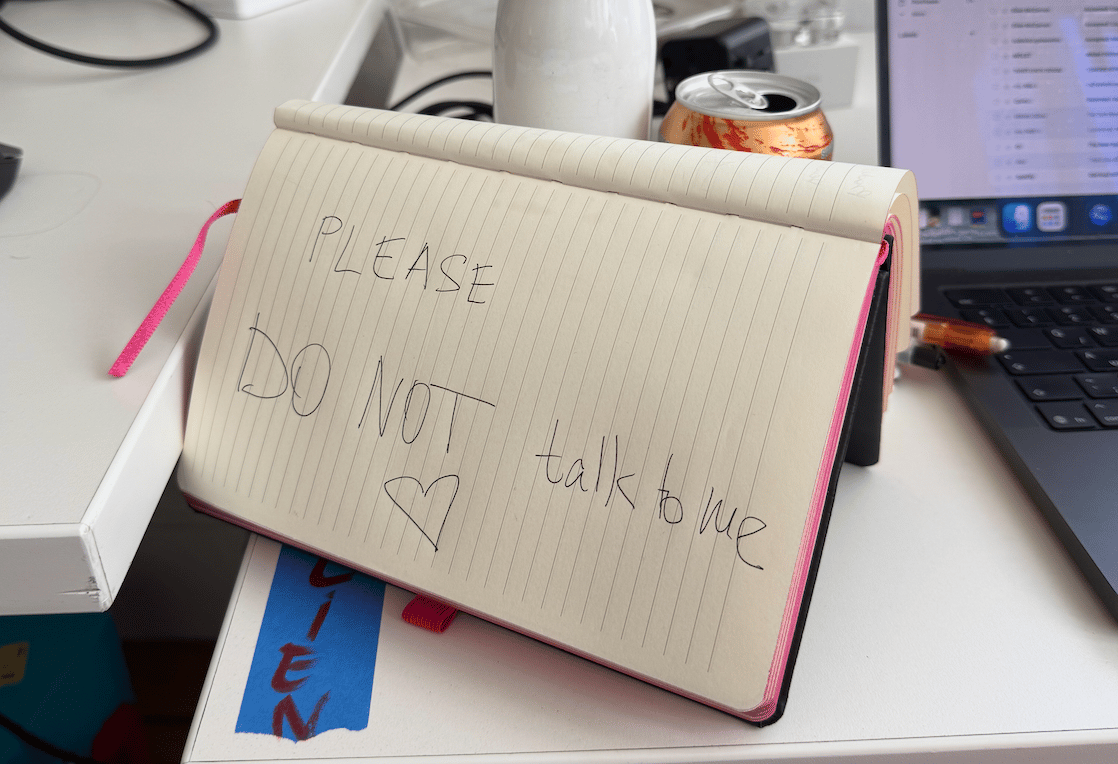
The EF team was there, helping us figure things out almost 24/7. One day, we called David at 7:30 a.m. for advice: we had just discovered that one huge company, trading at $80B, was also building something for the problem we were going after. Did it mean we should abandon it?
In the “European” mindset, people often try to find a problem no one else is solving. But the SF mindset is more like: You are doing it? Cool. It means there is a market for it. I’ll do it 10x better. Alice told us this during a Q&A call before The Bridge kickoff, but then I actually felt it myself.
So instead of abandoning the problem because a behemoth had decided to solve it too, we started a sprint: talk to a dozen people actually using it and figure out how they use it, what they love, and what they hate. It was also when we learned that, if you run outreach funnels properly, you can get a 40–50% response rate. Within three days, we had an answer for how we were gonna be different and why it was gonna be 10x better.
In week four, David said during standup that, by then, discovery would start paying off and we would begin seeing visible traction. But to be honest, for us, it happened only in week six. In week four, we still had too many unknown unknowns left for things to click. Between weeks four and six, we refined our value proposition and ICP no fewer than four times. At the end of week six, we had our mock IC and, tbh, it wasn’t that great. It still felt like there was something there, but it wasn’t clear what.
While looking for the right trio of problem, value proposition, and ICP, you want to reach the point where it looks like a duck, talks like a duck, and walks like a duck. Because then it’s probably a duck.
Our advisors were a huge help in unlocking this click. By that point, we had enough data points. It was a question of how to piece them together. In two days, we had seven check-ins and advisory sessions, and then… it clicked.
How do you know it clicked? Conversion from the ICP on a particular value proposition reaches 100%. This is what David told us during one of the first sessions: to grow really fast, you need at least eight out of ten potential customers to convert. And this is what happened when it clicked.
After iterating between weeks four and six, we were confident about our ICP. The last piece was to put the value proposition in a way that left simply no reason to say no. To do it properly, we had to reverse-engineer the value chain. But for that… we first had to discover that there was such a thing as a value chain. Not that this is secret knowledge, but somehow I had never had clarity on how to do it.
The Bridge could be a Netflix reality show, and believe me, it would be a popular one. It could also be a Harvard social experiment. Living in one house with 60 young founders, you become really close.
To describe The Bridge crowd, I would say this: incredible track records, quite weird people, wildly ambitious, hardworking af, and somehow really sweet and kind. Idk how EF scouts all these folks, but being in this crowd feels like pushing the bar higher every day while surrounded by support, faith, and good vibes.
Co-living is funny, weird, and everything in between. You go through so much together: ups and downs, uncertainty, and little wins. You talk a lot, sit side by side, and eventually become friends and each other’s believers.
At first, it felt like everyone was so different. But along the way, you slowly, slowly vibe more and more. You get to know each other, share life stories, laugh, play sudoku, and go for a hike on the weekend. Eventually, those differences blend together.
To put it mildly, it was a challenging experience. There were a lot of ups and downs. There was a night when I didn’t sleep because of the high level of uncertainty. There was a week when the vibes in the house felt down. I didn’t really manage to get out of SF, see some nature, and touch grass. I didn’t exercise enough, had to fight imposter syndrome, and ate way too much ice cream.
But I touched a lot of grass at Mission Dolores Park, randomly quit drinking coffee (I can’t really explain it), and built up the muscle of knowing: “We’ll figure things out no matter what.”
Sometimes you try really hard on your own, but to take it to the next level, you need the right opportunity. The Bridge felt like that “right opportunity.” On the first day of the program, I felt really lucky to be there. And now, while writing this note, I still feel very lucky.
The right environment matters more than we think. Not the best one, not the largest logo, but the right one: the one that encourages you to think bigger, run faster, and is there whenever you need it. This is exactly what the EF team was for us during The Bridge.
With a lot of gratitude and love for every single person who crossed the bridge this summer, and for The Bridge and the EF team,
Lisa <3
P.S. Feel free to reach out if you’re considering applying to The Bridge and have any questions I could help answer.