
There’s something MAGICAL about collecting a physical item.
It's something you can hold in your hands and say “it’s mine,” something that marks a moment in your life, something you can bond over with friends and strangers alike, something with a story behind it, and one day, something you can pass down to your children.
Humans have collected many types of collectibles over the years, ranging from historical memorabilia to the most prestigious fine art pieces to the latest Pokémon TCG release.
Whether you’re a kid or an adult, you waited for that item, saved up for it, and likely even traded other items for it. Perhaps, it was something that was gifted to you. At the end of the day, you’re emotionally attached to it, because it’s a part of your life in some shape or form.
But things are different in 2026.
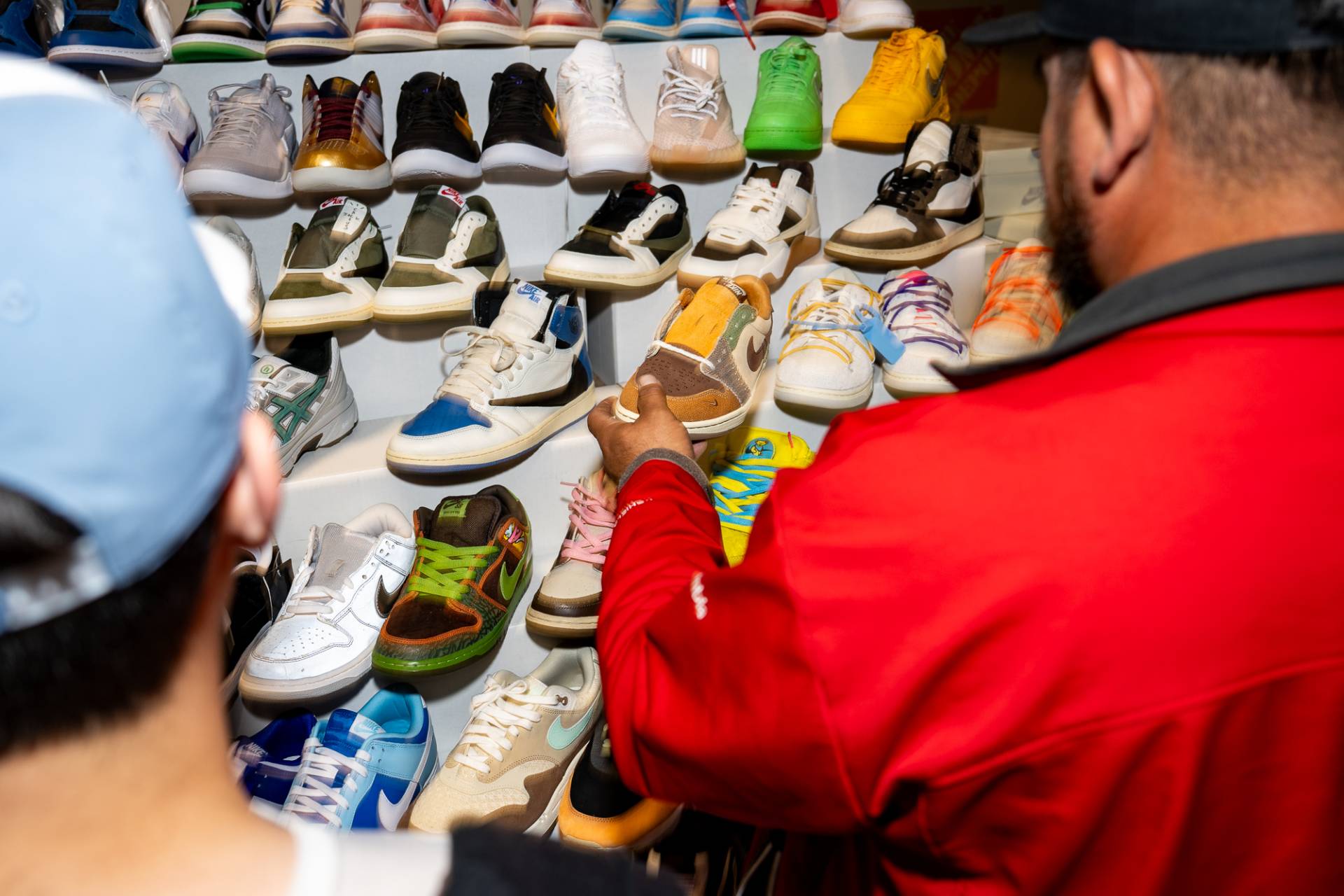
On one hand, financialization has moved the market from collecting to trading/scalping (sneakers being a prime example). On the other, the world has gone digital: instead of owning things, people now subscribe to services that give them access to libraries of movies, music, games, and more. There are other variables at play too, such as social media hype cycles (e.g. the Labubu meta), a rise of cost of living and other expenses, and a surge in scams (e.g. counterfeits or AI-generated fakes).
Collecting isn’t exactly like it once was. However, this doesn’t change the fact that we desire to OWN tangible assets. Look at vinyls, for example. Gen Z has led the revival of the vinyl market, buying records not just to collect but to actually listen to.
The world is changing fast, and collecting needs new technology to rebuild and elevate the experience across the board.
You’ve had digital. You’ve had physical. But have you ever had the best of both?
As someone who has built in this sector, I'm excited to show you why RWAs will change the future of collecting.
Alexis Ohanian 🗽 on X (formerly Twitter): "Americana is building the next step for Web3. Global provenance of things that exist in the physical world is huge and before @AmericanaNFT, there was no way to do it. For the first time ever, brands big and small can have their authenticated products on-chain. pic.twitter.com/EVKTOQB2nU / X"
Americana is building the next step for Web3. Global provenance of things that exist in the physical world is huge and before @AmericanaNFT, there was no way to do it. For the first time ever, brands big and small can have their authenticated products on-chain. pic.twitter.com/EVKTOQB2nU
What are RWAs?
Known as “Real World Assets,” they’re digital tokens that represent and are directly tied to physical assets that exist outside the digital realm.
Let’s keep it simple: when you buy the digital token, you’re actually buying the physical item. And when you sell the token, you’re selling the item too. Think of them as twins that can’t be separated, they move together.
> Examples of physicals can be literally any item, including categories such as cards, vinyls, art pieces, luxury goods, and even real estate.
Side note: RWAs also include traditional financial assets like stocks, bonds, U.S. Treasuries, and commodities like gold (that’s a story for another time; this piece focuses on physical collectibles).
Real World Assets will change the world for how collectibles are bought, sold, traded, verified, and even owned.
Let’s make it easy. Picture this:
Let’s say you want to buy a Rolex Rainbow Daytona. This watch costs around half a million dollars on the secondary market, a disgusting price for most people.
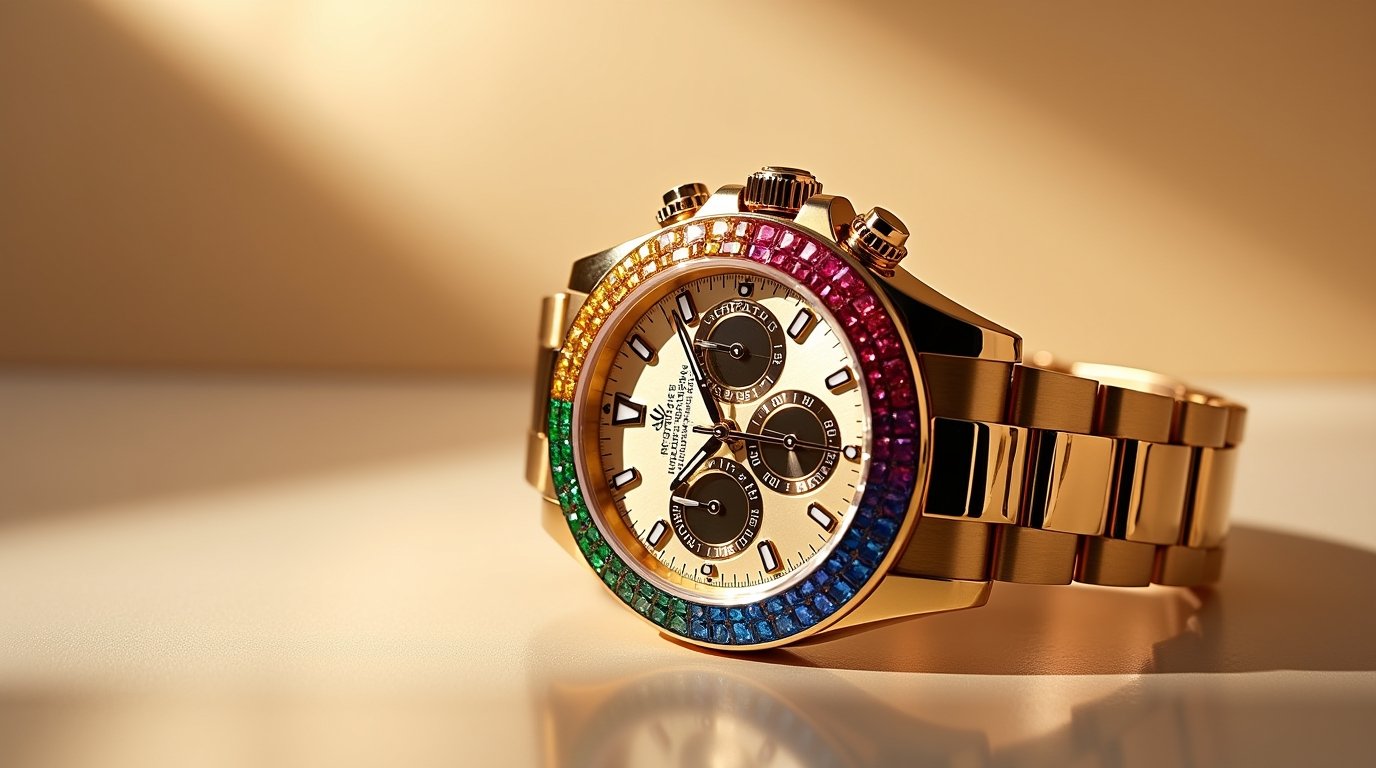
With RWAs, your watch is tied to a single token with its own unique ID (think of it as the official documentation). That ID can never be edited or duplicated, making the token itself virtually impossible to fake.
Without physical papers from the original manufacturer or third-party trusted appraisers & experts to verify that the item is legitimate, you can’t be sure who owned it or whether Rolex actually made it.
By tokenizing physical items, verifying authenticity becomes significantly easier, fraud becomes harder to pull off, and items become more financially appealing on the market.
Additionally, every transfer is recorded permanently for anyone to see, from fresh out the factory to its current owner. This makes the difference between a house on your wrist and losing it entirely.
Now imagine that watch was previously owned by a celebrity like Michael Jackson. That provenance alone would significantly raise its value. Through tokenization, the history of an item is permanently and publicly stamped onchain.
Let’s say you buy the watch. Once the purchase goes through, the token representing it is transferred to your digital wallet, making you the official owner. But the watch isn’t in your hands. Weird, right?
Not really.
The watch is stored safely in an insured, climate-controlled vault run by world-renowned custodians like Brink’s or Crozier Fine Arts. Depending on the company, vaults may be located in different regions around the world, so your item can be safeguarded close to where it’s needed.
As the owner, you can choose to KEEP it in the vault, or you can REDEEM your token and have the watch shipped straight to your front door. White-glove service type beat.
If you later want to sell it again, you can send it back to the vault. There, it goes through an authentication process to make sure its condition and value still hold up. It’s then vaulted once more, and a token is issued to your wallet in its place.
Vaulting also unlocks something you couldn’t do before: fractional ownership.
Let’s say you own the watch, but you want to make some money back while keeping part of it. You can sell fractions of it to other buyers who want a share of the same high-value item.
While the physical watch stays secured in the vault, you split multiple tokens to various buyers, each representing a fraction of the watch.
Many buyers can’t afford the full price of a Rainbow Daytona, which is worth around half a ticket. However, they can afford a fractional share (e.g. $50,000) and benefit as the item’s value grows, similar to owning a stock.
And if you want the physical watch on your wrist, you’ll need to buy back every other fractional share from its owners.
As a watch connoisseur and the owner of an extremely expensive timepiece, you’d want to benefit from more than just the investment increasing in value.
You can curate your collection digitally and show it off publicly. Collectors used to keep their collections private for safety reasons. But with RWAs, you can show off everything you own online while the physicals remain safely vaulted (unless you’ve redeemed them and had them shipped to your door).
You can also connect with fellow Rainbow Daytona owners. With RWAs, owners can instantly find and connect with collectors like them anywhere in the world.
What if Rolex wanted to find Rainbow Daytona owners and give them exclusive perks not accessible to the public? With blockchain technology, a creator, whether an individual artist or a brand, can instantly confirm that you and every other owner are legitimate, and then send information or exclusive drops directly to your wallet.
Lastly, owners can attend special events. Maybe Rolex wants to host a private event just for Rainbow Daytona owners, offering a first look at the next generation of Daytonas. Events like these, from luxury drops to pack openings and box breaks, bring collectors together online, creating shared experiences that used to be available only locally.
Let’s say you want to sell your watch for a $100K profit.
What used to take weeks to settle now takes seconds. Someone in Shanghai wants your watch and makes the purchase.
The moment you sell the item, the money is IMMEDIATELY yours. You now have an estimated $600K balance sitting in your account.
The best part? You don’t pay the disgusting fees that traditional marketplaces and auction houses charge. They’re leeching the hell out of you.
Simultaneously, a portion of every resale goes directly to the creator, helping build lasting relationships with collectors. Royalties are rare in the collectibles world, and through this system, many artists could keep earning from their work for years to come.
What if you don’t want to sell your watch, but to get money out of it? You can actually take out a loan and borrow against it. Agree to the terms, pay the money back on time, and the watch stays yours!
Now that you have a $600K balance, it’s time to once again go shopping for some grails.
Let’s say you’re in the market to purchase Andy Warhol’s “Marilyn (F. & S. II.22)” for $160K.
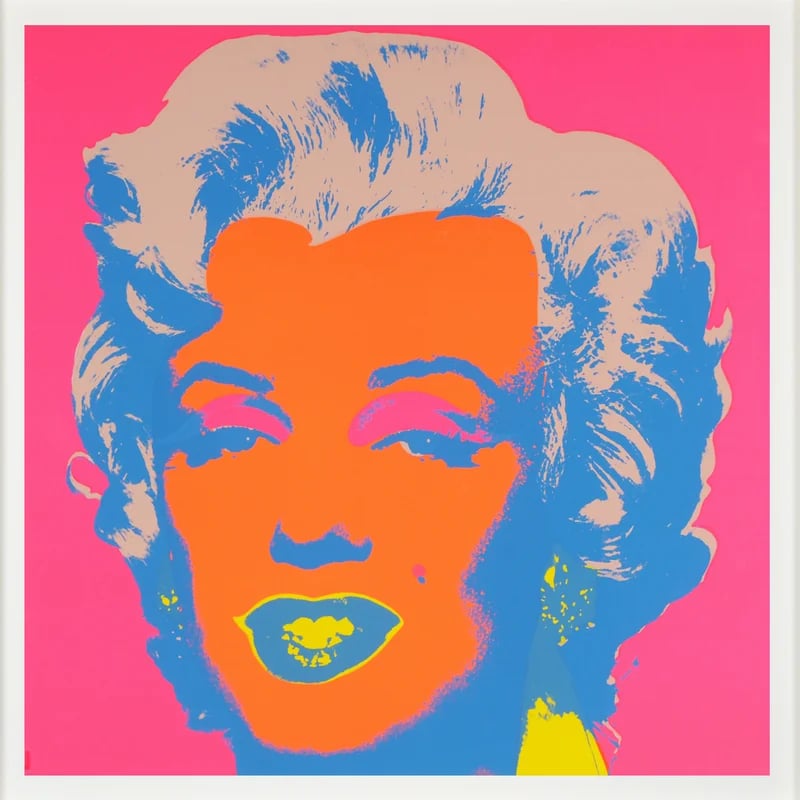
With the blockchain, you can know every detail about this screenprint. Every sale is public.
You can see not only the provenance I mentioned earlier, but also every buy, sell, and trade, real-time prices driven by market demand, how many offers are on the table and for how much, and other analytics that help you avoid overpaying or underselling.
Real, raw data.
You’ve now seen this new tech’s proof of work, but none of it happened overnight. In fact, the idea of putting RWAs onchain goes back further than you think.


Vintage gems, Poncho Pikas, & more heat


To understand the true potential of RWAs, we have to understand their history.
The idea of putting RWAs on the blockchain (aka onchain) goes back further than you think.
> In 2012, eToro CEO Yoni Assia published “bitcoin 2.X (aka Colored Bitcoin),” a proposal to “color” specific bitcoins by tracing them back to an original transaction. Assia envisioned Bitcoin as more than a new digital means to transact money, but as a new standard where RWAs could be tokenized on the Bitcoin blockchain, such as property, company shares, or commodities.
Imagine buying real estate on the blockchain (which is crazy in itself), in 2017?!
> Facilitated by Propy, a blockchain real estate platform, TechCrunch founder Michael Arrington's 2017 purchase of an apartment in Kyiv, Ukraine, was paid for in ETH. This was one year before the ERC-721 standard was finalized, after which NFTs became the new standard for tokenizing assets 1:1.
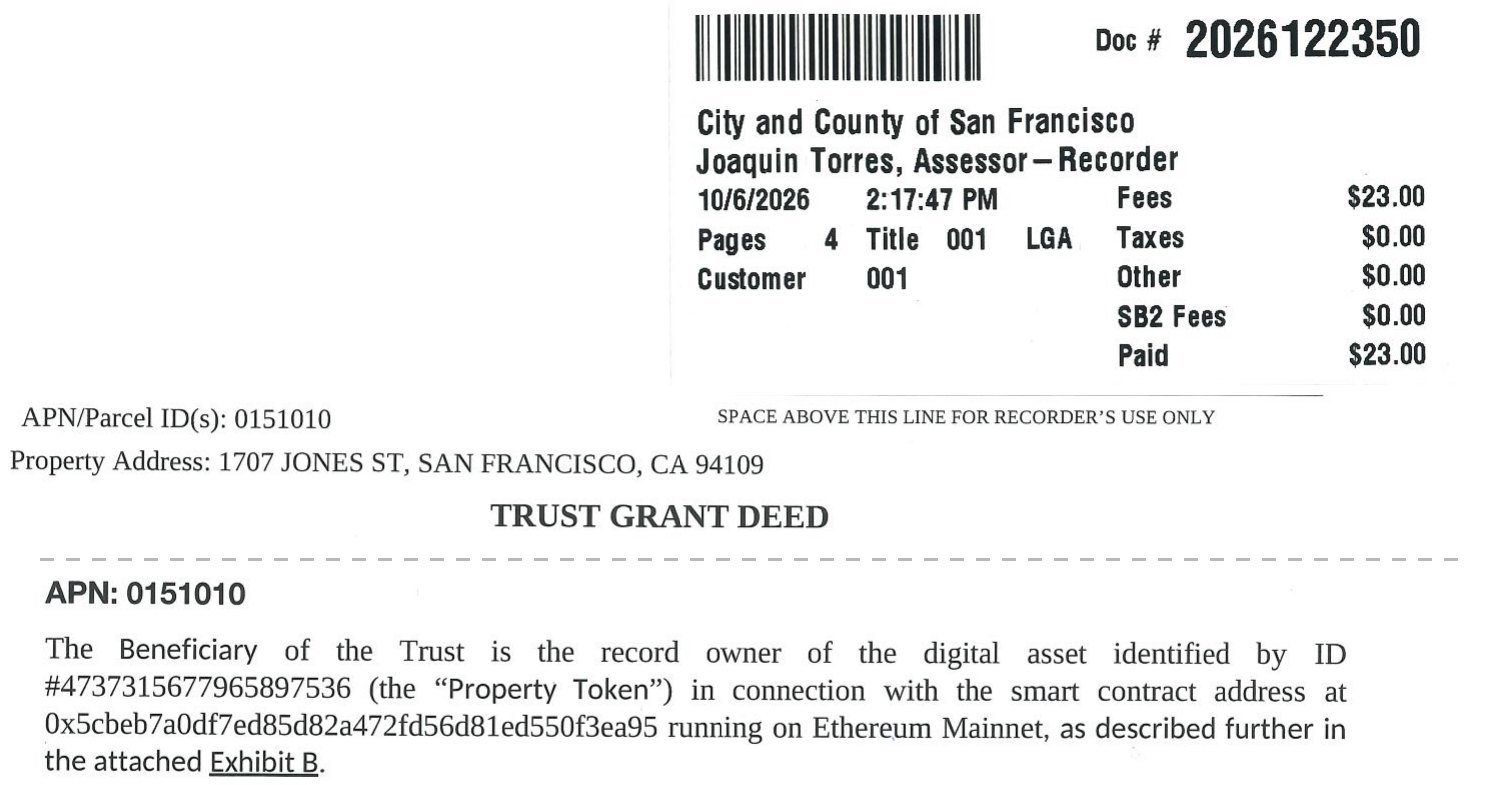
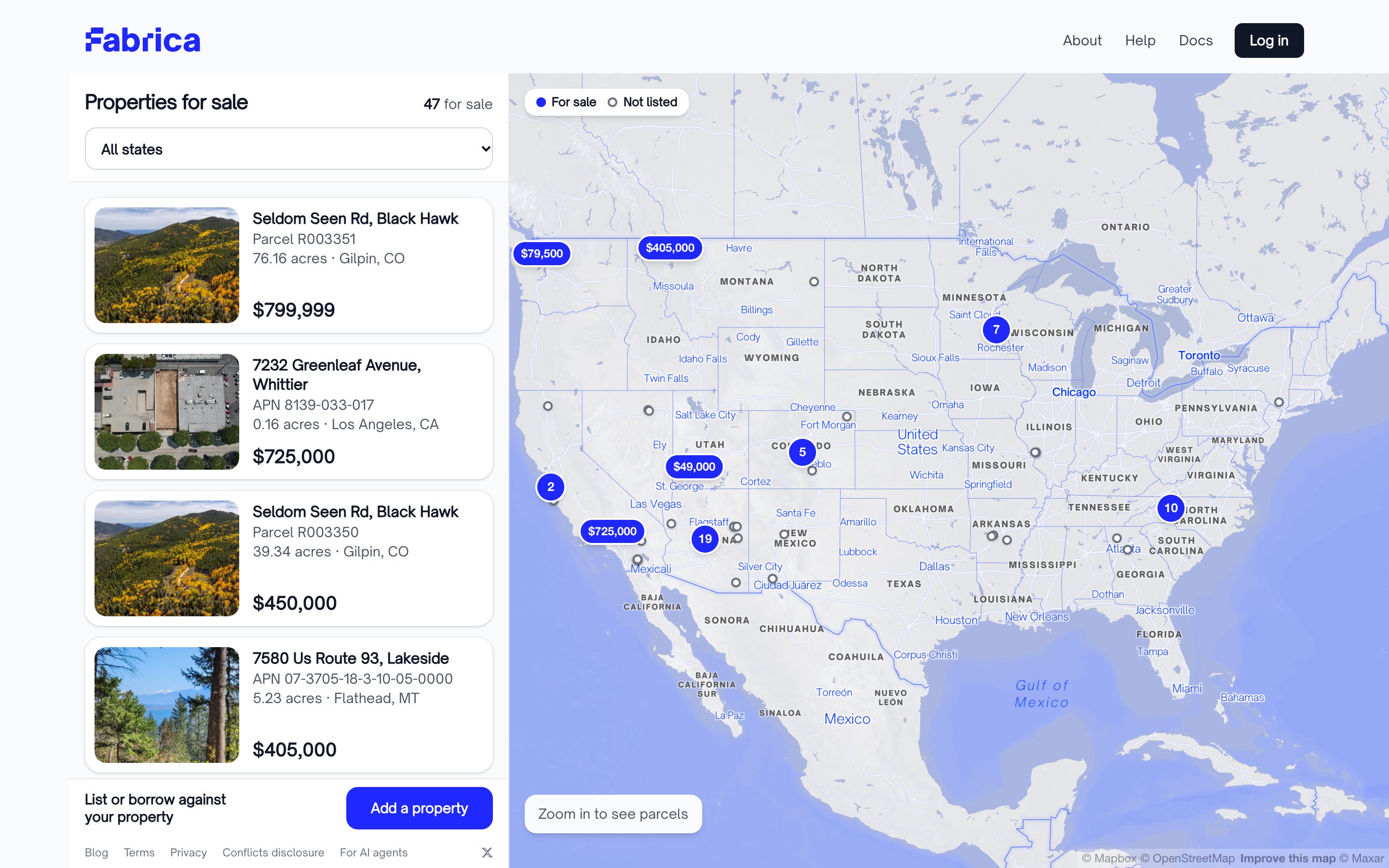
> In 2018, Fabrica, founded by Federico Pomi, tokenized its first property as an NFT. Via tokenization, each property is placed into a new trust that holds its legal title, and an NFT is the minted to represent ownership as the trust. TLDR: own the NFT, own the property.
> As NFTs became the norm, companies began using the technology to tokenize assets beyond real estate. Arianee (2018) issued NFT "digital passports" for luxury goods: permanent digital identities that prove an item's authenticity and record its history. Nike (2019) patented "CryptoKicks," a system in which buying a physical pair of sneakers would also give you a digital twin token proving their authenticity and ownership.
Now we’re entering the fun arc.
> In 2021, Damien Hirst released "The Currency," a collection of 10,000 physical paintings tied to NFTs. Owners could choose to burn the physical and keep the digital, or vice versa. In the end, 5,149 kept the physicals, while 4,851 chose the NFTs. A year later, the 4,851 matching paintings were burned live at London's Newport Street Gallery.
> During the 2021 NFT bull run, RTFKT, a young startup that paired digital sneakers with physical twins, was acquired by Nike in December, arguably the biggest and boldest acquisition in the space at the time.
> That same fall, Dolce & Gabbana partnered with UNXD on Collezione Genesi, a collection that paired physical garments with digital twins. It sold for about $6 million, a record for fashion NFTs at the time.
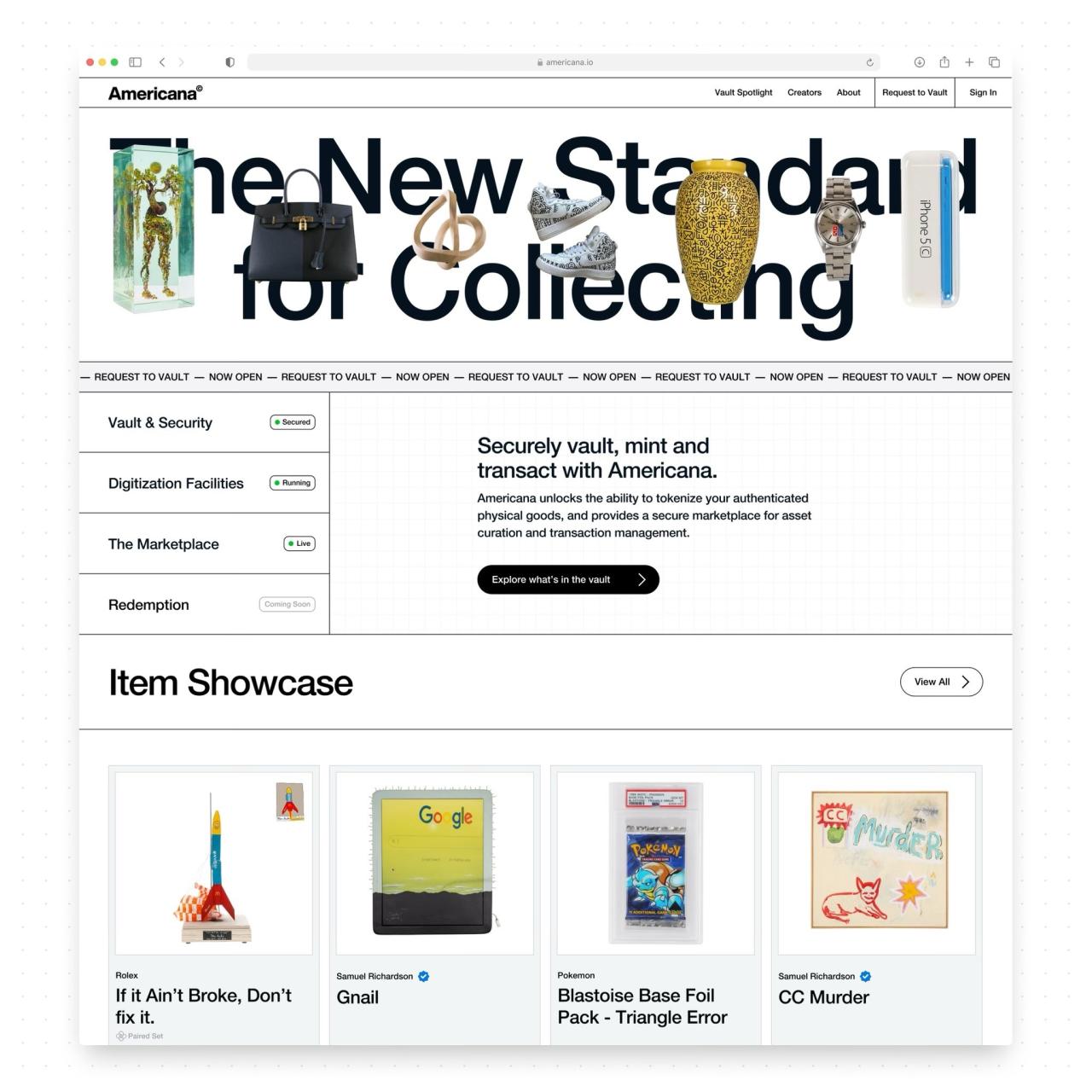
> Courtyard and Americana Technologies were both founded in 2021, looking to capture the collectibles’ market share. Courtyard vaulted graded cards and issued them as NFTs on Polygon, while Americana envisioned tagging goods through the NFTA Universal Chip. In 2023, Americana opened its vault to the public, letting collectors store a range of high-value items: 1/1 art, rare watches, jewelry, and more. Also founded in 2021, IYK focused on creating digital experiences with real-world perks. Rather than vaulting items, it doubled down on NFC chips, embedding them into everything from apparel to liquor bottles. Major brands like Adidas and Johnnie Walker signed on. Together, these three companies helped pioneer the current era of RWAs.


> In 2022, Tiffany & Co. launched NFTiff. 250 passes were sold at 30 ETH ($50K at the time), accessible only to CryptoPunk holders. Owners of the NFTiff pass could redeem for a Tiffany pendant that was custom designed based on the traits of the Punk. The drop brought a total of $12.5 million.
> Although Americana sunset operations in 2024, the torch passed to new startups with a similar vision. Alongside Courtyard, Beezie and Collector Crypt took the industry by storm, expanding across multiple blockchains and leaning heavily into trading cards, a market now hitting record numbers thanks to deep liquidity in the TCG space. A wave of smaller platforms, including Phygitals, RIP.FUN, and Mnstr, are following close behind. Even OpenSea, one of the world’s largest NFT marketplaces, has embraced the trend, expanding support to bring tokenized card collections onto its platform.


Every era had a vital part to play. Colored Coins proved the idea, digital passports proved authenticity, digital-to-physical luxury drops proved demand, and vaults proved you could actually trade the item.


But history only tells part of the story. To understand what it took to get here, and what’s ahead, you’ll have to hear it from the ones who built it brick by brick.
Tap the arrow to view their lore.
Fede Pomi, Founder & CEO of Fabrica (est. 2018)
I grew up in Milan. As a teenager in the nineties I wrote software for the Commodore Amiga. It sold on CD-ROM across Europe and I wrote for the Amiga magazines on the side. Some of it is still online, which is the best and worst thing about the internet.
In 2000 I founded Milano Tonight, later tonight.eu, a city guide built on reviews by people who had actually been to the place. I ran it for about ten years without investors. It grew to sixteen cities in Europe, years before Yelp came to Italy, and ended up preinstalled on Samsung phones.
Then three years at Vodafone Italy running innovation, which brought me to California to scout startups for the group. I liked it here, left the corporate world and went back to building. I live in San Francisco with my family. Since 2018 the company has been Fabrica.
Fabrica started with a frustration of my own. When I bought a house in San Francisco I went through the whole thing: escrow, title search, title insurance, a notary, wires, weeks of waiting. I was coming from Italy and expected something modern. It was the opposite. So I started nerding out on how property actually changes hands in the US, and the answer was: on paper, through intermediaries, the way it did a century ago.
The idea was simple to say and hard to do. Put the title in a legal trust, give the trust a key, and make that key a token on Ethereum. Whoever holds the token controls the trust that holds the title. Move the token and the land changes hands. No new deed, no escrow. The county record stays true because the trust still holds title.
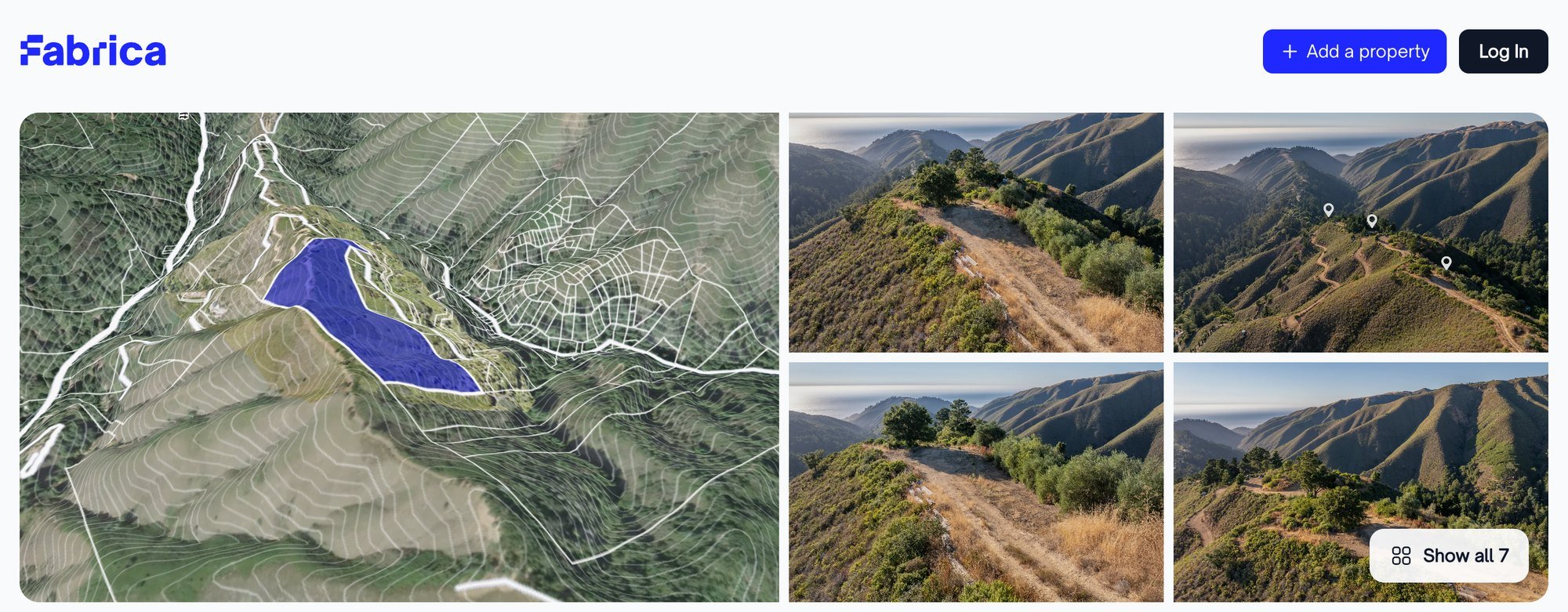
We started with houses and quickly moved to land. Land is a huge asset class in the US, worth more than ten trillion dollars including the land under buildings, and it's the hardest kind of property to sell quickly or borrow against. Many lenders won't touch vacant land at all. That is where the change matters most, so that's where we started.
The mission in one line: make land ownership programmable.
We started early, earlier than most people thought made sense. We put the first property token onchain on June 15, 2018. Back then "NFT" meant CryptoKitties to most people, and a real parcel of land with a county deed behind it sounded like a joke. The conviction came from the structure, not the market. A trust is one of the oldest tools in property law. A token that controls a trust is just a new way to name the beneficiary. Nothing about that needs a judge, a new law or anyone's permission. If the legal part worked, the rest was engineering, and I knew we could do the engineering.
What kept me going was that it kept working. Deeds got recorded. California's tax counsel looked at it. Title insurers wrote policies on properties that had gone through the structure. People borrowed against their land and paid the loans back. Every one of those was a small proof that the thing was real, and each one made the next step easier. The hard part was never the token. It was making the legal wrapper boring enough to trust, county by county, version by version.
Seven years later, those small proofs have added up. A few I'm proud of:
More than 580 property tokens minted on Ethereum since 2018, real parcels across the US, each one held in its own trust with a deed recorded at the county.
A rules engine that covers 3,000+ US counties, because every state and many counties record property differently. We hold 20+ regulatory licenses. Operations across all 50 - states, with varying degrees of functionality.
In 2022, California State Board of Equalization Tax Counsel stated in writing that "a transfer of the digital Token is, in substance, a transfer of the underlying real property itself." It was an informational analysis for property-tax purposes, not a ruling, but it was the first time a tax authority put that sentence on paper.
Properties that went through the Fabrica Trust structure have been covered by title insurance, including a policy underwritten by First American.
Since 2023, people have borrowed against their land on Fabrica, from individual lenders and from a DeFi lending pool, and repaid. On a default the token moves to the lender under the loan terms, and the property goes with it, with no court involved.
The trust agreement is open source, every version public on GitHub, so any lawyer can read exactly what a token holder owns.
And this October I put my own home in San Francisco on Fabrica, where I live, with its mortgage in place. The county recorded the deed and the token was issued the same day, on the same contract as the land.
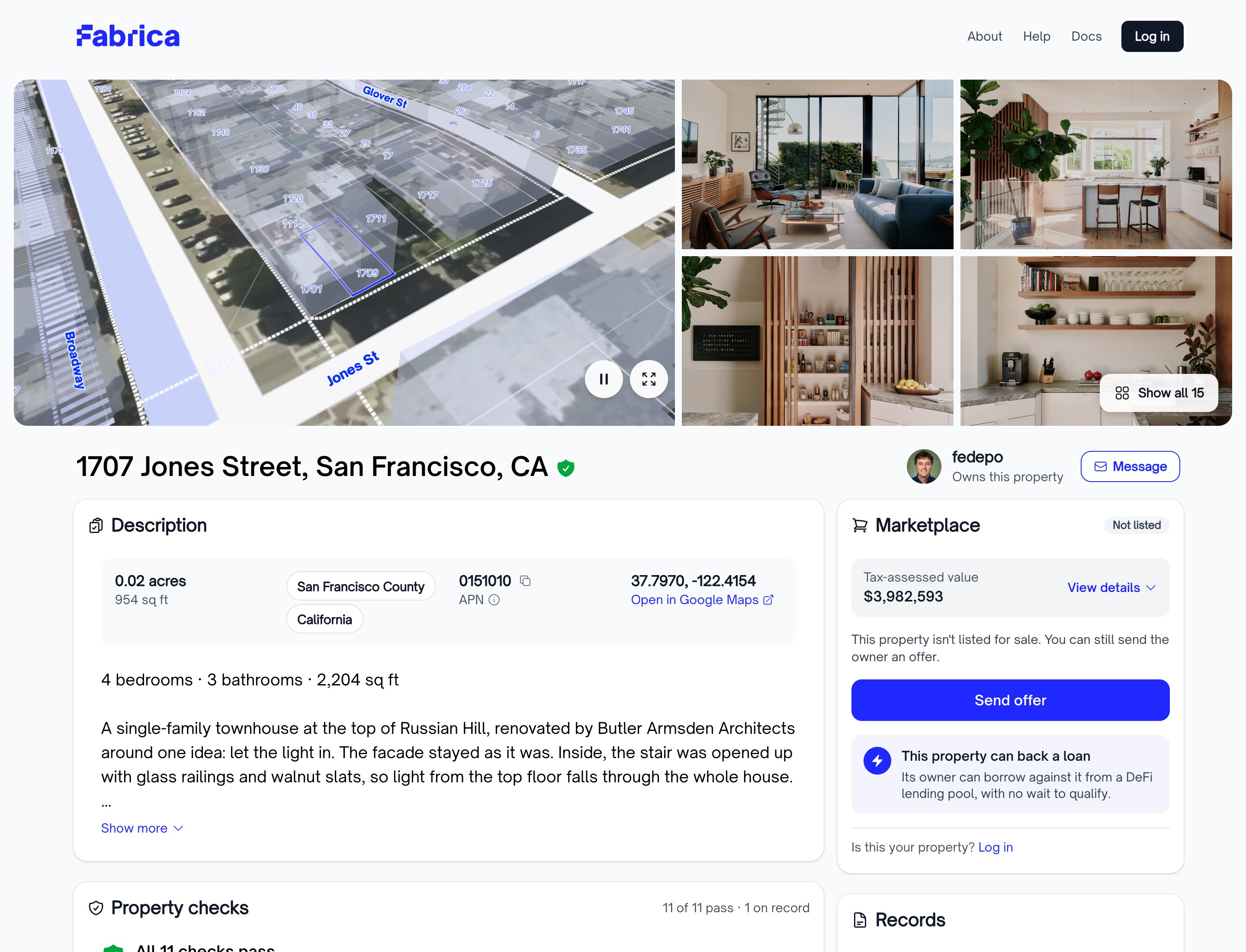
People sometimes ask where land fits next to cards and watches. I'd argue it might be the ultimate collectible. Land is the original scarce asset. Nobody is making more of it, every parcel is unique, and it doesn't wear out, fade or get lost in a move. A quarter acre in the Arizona desert has a boundary and a legal description that have been on file at a county for a hundred years. In that sense it is the ultimate collectible: scarce, specific, permanent, and it's already been catalogued by the state.
Here's where it overlaps with what the collectibles people are doing. A Fabrica token is a standard ERC-1155. It sits in your wallet next to your cards and your art, and it trades on OpenSea or any marketplace. You can send it to a friend. You can lend against it. You can hold it in a Safe. From the outside it behaves exactly like any other NFT.
Where it differs is what's behind it. A graded card in a vault needs the vault, the grader and the custodian to keep being honest. Land doesn't need a vault. The county is the vault, and it's been running for centuries. We don't hold anything. If Fabrica disappeared tomorrow the trust, the recorded deed and the token all keep working, and any lawyer can deed the property back out.
The other difference is that land does things. You can walk on it, camp on it, build on it, borrow against it, pass it to your kids. It also comes with obligations, like property tax, and real legal consequences when it changes hands. That's the trade: a collectible that is also a piece of the world.
A lot of RWA companies from the last cycle are gone. We're still here, and I think it comes down to a few choices. We tokenized the asset, not a claim on it. A lot of projects tokenized shares of a property, or a loan against it, or the cash flow from it. Those are securities and they drag everything that comes with securities. We put one whole property in one trust and gave it one token. That's ownership, not an investment product.
We retrofitted property law instead of trying to replace it. The deed is still a deed. The county still keeps the record. No new law had to pass and no government had to say yes.
We picked land. Houses have tenants, mortgages, maintenance and a dozen things that can go wrong for the buyer. Raw land has none of that, so the structure could be tested on something simple.
We designed it to work without us. No admin keys over anyone's property, no custody, an open-source trust agreement, and an exit any owner can take on their own. That made it easier to trust, which is the whole game.
And honestly, I kept it alive through the crypto winter with my own money, because I thought the structure was right and the market just wasn't there yet. It still took longer than I wanted.
None of it came easy. The hardest lesson: being early feels the same as being wrong for a long time, and you only find out which one it was at the end. We built a serious legal and licensing stack before anyone was asking for it. That stack is now the moat, and it took seven years. In the middle it just looked like cost.
If I started today I'd find the use before the infrastructure. Lending turned out to be the reason people actually bring land onchain: an owner with a paid-off parcel who wants to borrow against it, or a land trader who needs capital between buying and selling. Once I saw that, everything got clearer. I would have gone looking for those ten people in year one and built only what they needed, then widened. We did it the other way around.
Also: the tech was the easy half. I knew that in theory. It took a few years of county recorders to really believe it.
As for where this is all heading: Everything with a record will have a token, and the token will be the record people actually use. Treasuries and gold are already there. Land is next, because it's the largest asset class that still runs on paper rails, and the one that benefits the most from an upgrade.
Collecting changes when the thing you collect can do work. Today a collectible mostly sits there and you hope it goes up. In five years I think people will collect places the same way they collect cards: a creekside acre in Nevada, a lot in a town they love, a piece of desert near a park. They'll hold them in a wallet, lend against them when they need cash, and pass them on without a lawyer. Land is one of the few collectibles that can also be a down payment, a campsite or a backup plan.
The other change is agents. Our AI interface already lets an agent find any US parcel, read its deed and trust, and check it. The next step is agents acting for their owners inside limits the owner signs: watch a county, bid within a budget, refinance when better terms appear. Collecting will get a lot more active when your agent can do the looking.
If you're building in this space right now, here's what I'd tell you. Pick an asset the law already knows how to move, and work inside that law. Every project that needed a new law, a government partner or a court to agree with them is gone.
Tokenize the thing, not a fraction of it. Fractions are securities, and securities are a different business with different rules.
Make it work without you. If your users lose everything when your company goes away, you have a product, not an asset. Write the exit into the structure from day one.
Find the use. A token nobody needs is a collectible in the bad sense. Find the ten people who need to borrow, sell or move the asset and build for them.
Be boring where it matters. Nobody trusts a deed because it's exciting. The hard part of RWAs is making the legal wrapper dull enough that a title insurer, a county clerk and a lender all nod and move on. That takes years and there's no shortcut.
One last thing. If anyone reading this owns land, you can add it on Fabrica from the map, see what it could borrow, and nothing is charged until it's first sold or borrowed against. Owners deed the property into their own trust and keep full control.
If you build agents, our MCP server is public and read-only, no key needed. Point your agent at any US address or parcel number and see what it finds.
And the whole story, with the numbers and what we don't claim, is at https://about.fabrica.land. We put the honest answers up front, including that the structure hasn't been tested in court. I'd rather people read that than take my word for it.
Jake Frey, Founder & CEO of Americana (est. 2021)
I'm Jake Frey, a designer who's been part of the tech scene since 2009. I had the opportunity to help lead the first wave of e-commerce and mobile apps. I grew up out in the woods in Pennsylvania, a long way from the tech world I'd eventually work in.
After more than a decade in tech, I founded Americana in 2021 with a simple idea: make blockchain technology more tangible. NFTs were taking off, but the technology behind them felt confusing and complex, and most of the focus was on digital assets. We wanted to explore whether that technology could work for real-world assets, things people already understood to be valuable. The idea was that connecting blockchain to physical objects could make the technology more accessible and useful to collectors.
Turning that idea into a company meant raising money. Raising Americana's seed round during the 2022 bull market was a wild experience. I've always liked the idea that if you want to make a dent in the world, you have to be prepared to hit the same spot for a long time. That's what fundraising felt like: I kept showing up and making the case, even when it seemed like no one was paying attention. Then I got a phone call from Alexis, and the rest was history.
From there, we started off with chips. The chip was our first attempt at making physical items part of the digital ownership experience. As we tested different ways to bring people onto the platform and grow while delivering real value, we realized that high-value items needed more than a digital link. Collectors needed confidence in an item's provenance and authenticity, and assurance that it was safe. The chip alone couldn't provide that, which made vaulting an important part of the model.
Then came the vault, and opening it felt great. We had our own membership token, and a lot of people were excited to use the platform. We were moving quickly to get Americana ready for consumers while the market was still in a bull run. As we began opening it to the public, though, the broader market started to shift.
The item I'm proudest of was a gold bar. One of Americana's first transactions involved someone buying an NFT tied to a physical gold bar entirely on-chain. They owned it immediately and could redeem it or sell it later at a higher price. It was an early example of the experience we wanted to create: making a real-world asset available through a simple digital transaction. I was also proud that we got to vault collectibles with a lot of culture and history behind them.
Artists were always at the center of what we were building. Our goal was to give artists who create physical work access to something digital artists were beginning to have: royalties from resales. We wanted artists to keep participating in the value their work created over time, while giving collectors a new way to connect with and support the people behind the work.
Looking back, it's clear we were onto something. I'm proud that Americana was among the first to bring real-world assets on-chain, including gold, art, and Pokémon cards. We were exploring what tokenized ownership of physical collectibles could look like before the broader market was ready for it.
There's a saying that the first person through the wall gets hurt. Being early didn't mean our timing was right: the market took a sharp downturn just as we were bringing the platform to the public. Still, it's been exciting to see interest in and adoption of real-world assets grow since then.
As for what's next, I'm optimistic. I expect to see much broader on-chain adoption. The fundamentals still matter: authenticity, provenance, and security are essential when you're collecting valuable things. But the technology will become less visible. People may not even realize they're buying something on-chain; they'll just make a purchase and own it instantly.
That instant ownership was a big part of Americana's vision. There's something satisfying about clicking "buy" and getting what you ordered quickly. Amazon made 24-hour delivery feel almost magical. With an on-chain purchase, ownership can transfer the moment you click the button. We thought that was pretty cool.
And for anyone innovating in this space today, build for the future, and preserve your capital. One of our mistakes was building too much around the market as it existed at the time. When sentiment shifted, the market changed its mind quickly. Focus on the long-term problem you're solving, and make sure you have the runway to keep solving it through the cycles.
Andrea Miele, Co-founder & CEO of Beezie (est. 2022)
I'm Andrea Miele, co-founder and CEO of Beezie. My connection to collecting started with my dad. We would go to garage sales and swap meets looking for comic books, old coins and cards. I still have binders of basketball cards with his instruction: "Don't trade unless you check with Dad." That experience introduced me to the excitement of discovery and finding something other people might have overlooked.
I began my career in high-tech healthcare, building teams and helping make complex systems easier to understand. I entered crypto in 2015 and started exploring blockchain more deeply in 2019. What interested me was what it could make possible for consumers. In 2021, my co-founder and I began developing a smart contract around buyback offers. That work became the foundation for Beezie.
From the very beginning, we were focused on one problem. Beezie started out as a smart contract with buyback values based on an item's secondary market value. This was back in 2022-ish. It was a liquidity problem that we set out to answer.
It's been a long road since then. We launched when there were only 3 platforms tokenizing TCGs. No one had product-market fit and not many believed in the vision. We've survived failed chains, black swan events, bear markets, when the deck was always stacked against us. To be here, continuing to expand and grow on the core vision, with much of the same early team, is what I would say I'm most proud of.
Along the way, we've learned a lot about where to build. Today, we are consolidating Beezie on Solana, bringing our Claws, marketplace and collectibles together and phasing out Base through a planned migration. The decision is about the ecosystem around the product as well as the technology.
Looking back, I would have liked to launch on Solana earlier. What matters is whether the environment helps us reach the people who want the experience and makes it easier for them to participate. For collectors, the chain should support the experience rather than become another thing they have to navigate.
Where we build is one question, but what we offer is another. We never wanted to limit Beezie to a single category. People care deeply about different things, and there is a much broader opportunity around physical goods than trading cards and collectibles alone. We see the opportunity as much larger and have said so from the start. We're starting to see other platforms follow suit.
Luxury is a useful example. Someone who is not interested in cards may be very interested in a particular bag, watch or piece of jewelry. Our first luxury drop selling out in under an hour gave us an early indication that the experience could translate. The important part is understanding what that customer values and building an experience that fits them.
And to anyone building in this space right now: Collaborate with other builders that share your ethics and visions. Start with the consumer and the thing they actually want. Make sure the technology solves a real problem for them. Don't give up. Staying the course is more than half the battle. Build a network and on the hardest days, know you're not alone on the road. CUT OUT THE NOISE.
Now that you’ve heard the industry experts, it’s my turn.
From 2021 to 2024, I worked under CEO Jake Frey at Americana as Community Manager. It was my first introduction to RWAs, and from the moment I laid eyes on it, I understood the vision. From the ground up, we built a true community of collectors eager to tokenize their physical assets.
And we were on a generational run.
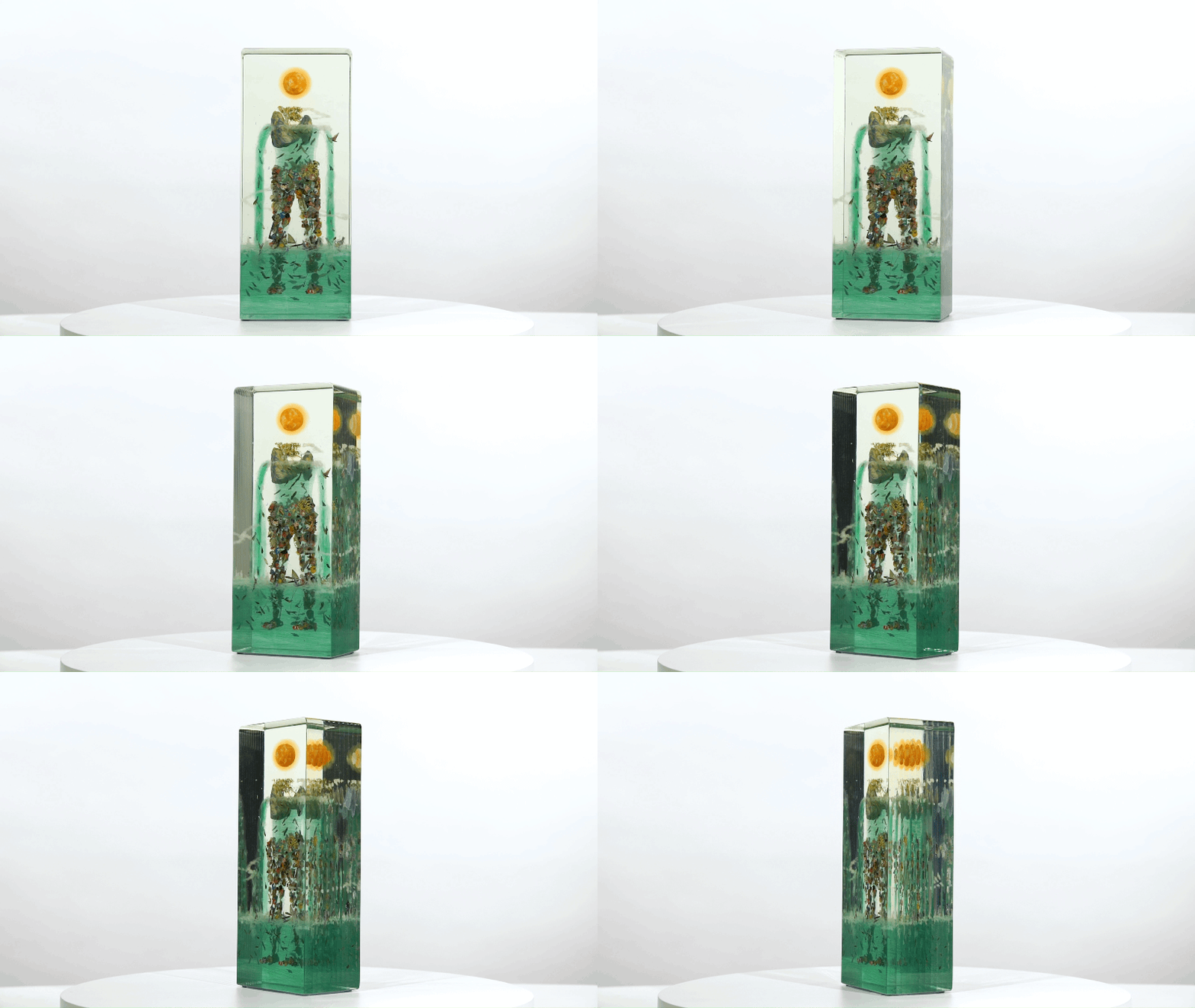
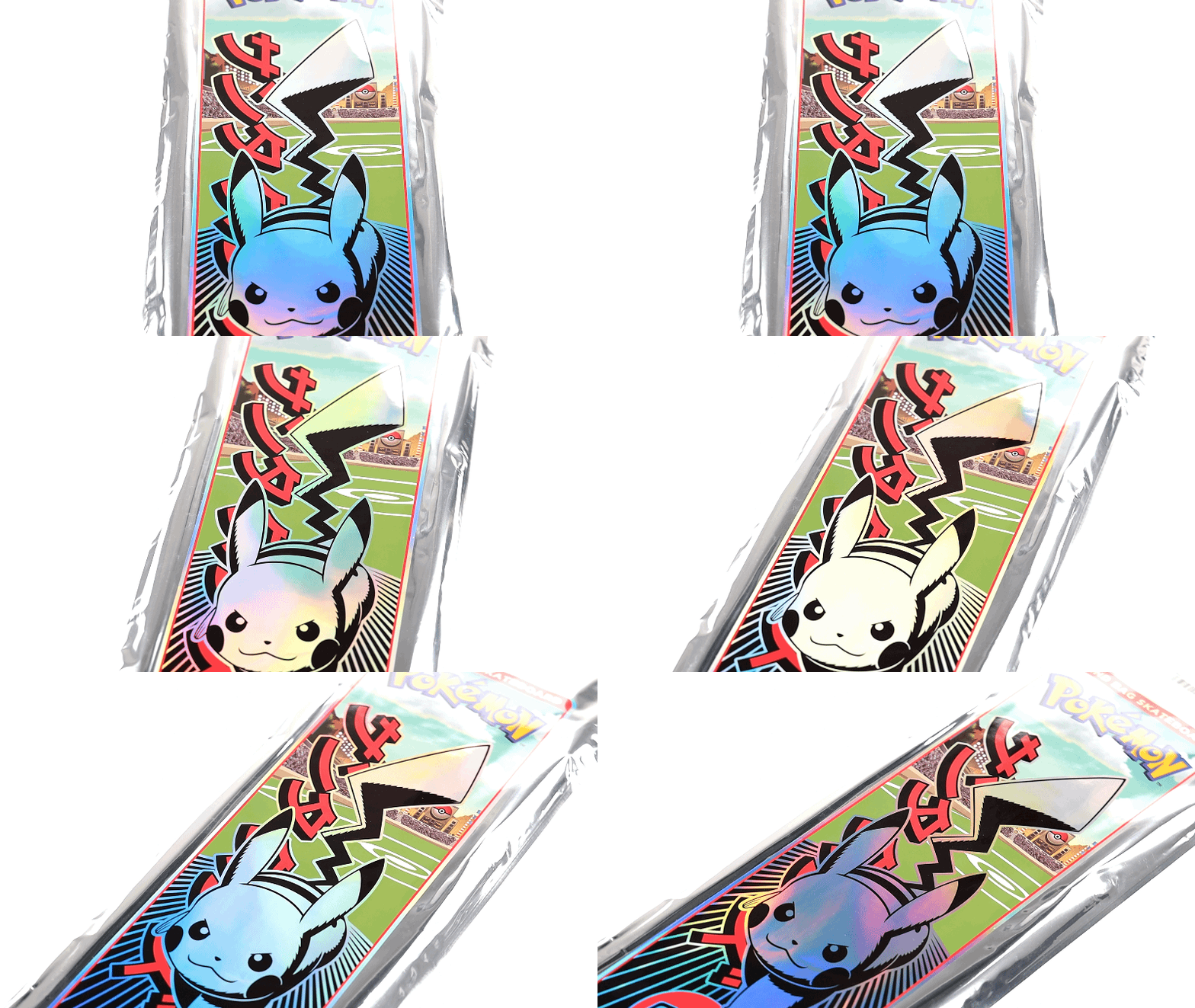
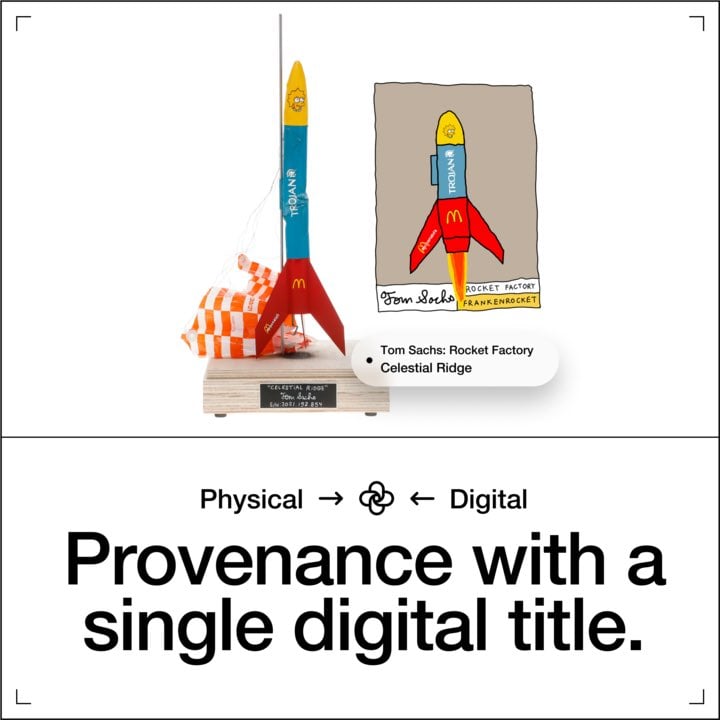
When we opened the vault to the public in 2023, it was groundbreaking. We onboarded a range of verified artists like Dustin Yellin, Tom Sachs, Vinnie Hager, Danny Cole, and Grant Yun, along with the Biz Markie collection and more. The vault also held a variety of items, from sealed iPhones and PSA-graded Pokémon cards to limited-edition Pokémon x Santa Cruz blind bag skateboards and 1 oz Valcambi Suisse fine gold bars.
Americana also designed one of the first technologies that let an existing digital collectible be paired with a physical item. The two were wrapped together in a single token, making it easy to buy, sell, or trade both at once.
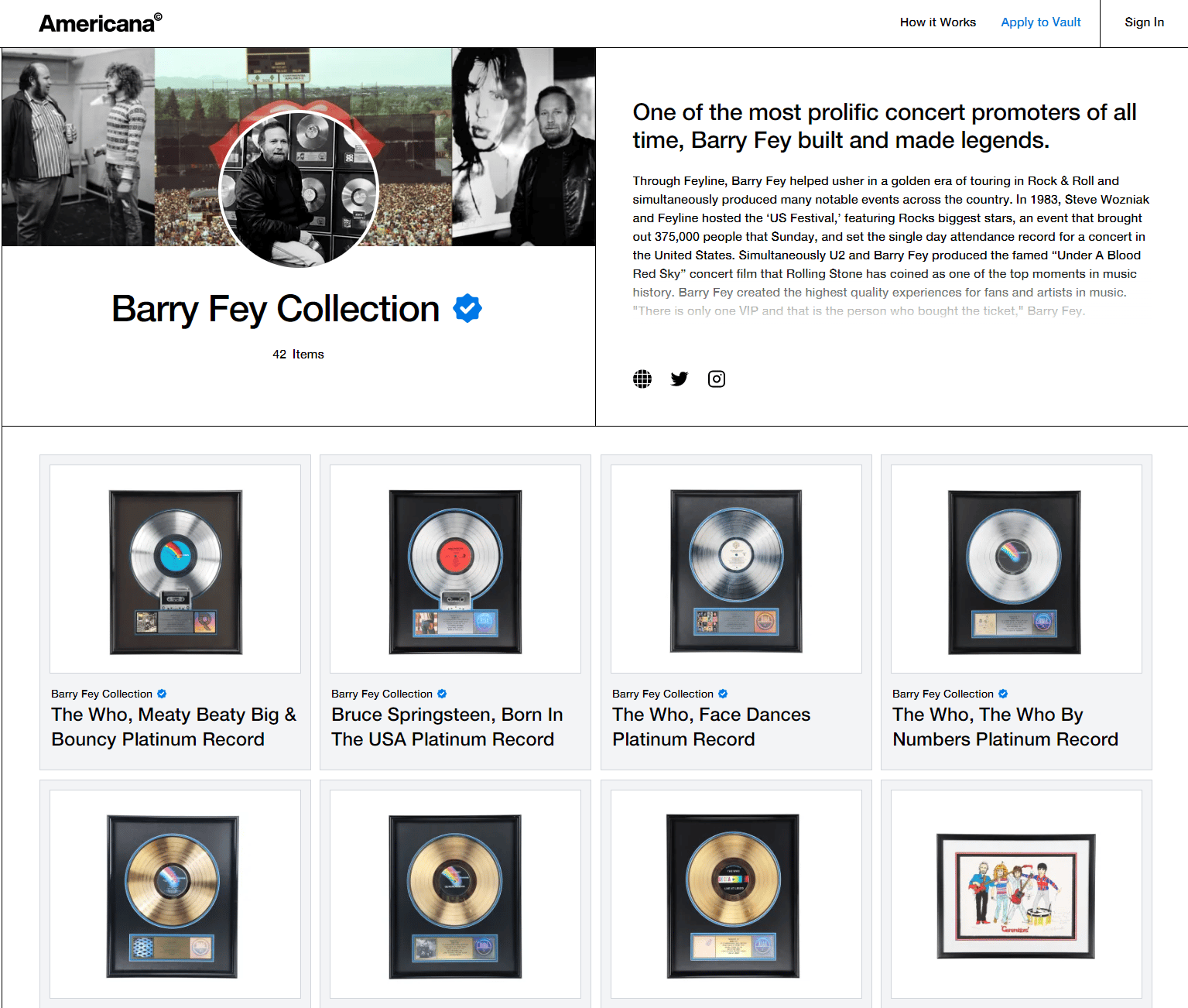
I had the opportunity and honor of bringing the Barry Fey collection onchain, a partnership that had been in the works for a long time. What had been stored away, unseen for decades, was now visible to the public, and available to purchase.
We were even in talks about tokenizing the Jackson-Strong collection, a vault of artwork created by Michael Jackson and artist Brett-Livingstone Strong in the ’80s. It included pieces of Jackson’s personal history, like the hoop and ball Michael Jordan used to teach him basketball at Strong’s private aircraft hangar, and what the collection described as the original pop art portrait that inspired Andy Warhol’s famous piece, which sold at Christie’s for over $190 million. I would know: I was the one facilitating the partnership. Every piece carried decades of history, exactly the kind of provenance RWAs were built to protect.
I spent a lot of time dreaming up the idea of tagging museum pieces with chips and bringing them onto the Americana platform, where visitors could learn more about the artist or the work. It would have created an unbelievable experience for museumgoers. And if a museum wanted to sell a piece but keep it on display in its own space, we had the capability to make that happen. We wanted to bring the entire world of luxury onchain.
So you could imagine how hard it was to find out that Americana was sunsetting its operations. Still, my vision for RWAs hasn’t wavered. I truly believe the world will be tokenized. And if the technology we had just a few years ago already feels outdated, imagine how much more we can do today.
In fact, a friend of mine recently released technology that lets NFTs be stored and transferred through Apple Wallet and Google Wallet. For years, these companies kept that access off-limits to developers. But now, there’s been an official breakthrough.
Over the next decade, I truly believe RWAs WILL become the new standard of collecting. It’s inevitable.
So.
Which grail are we collecting next?
Thank you so much for taking the time to read my article! I hope you’re just as excited about the future of collectibles as I am.
If you enjoyed this article, be sure to subscribe!