
Hello fellow Clickstars!
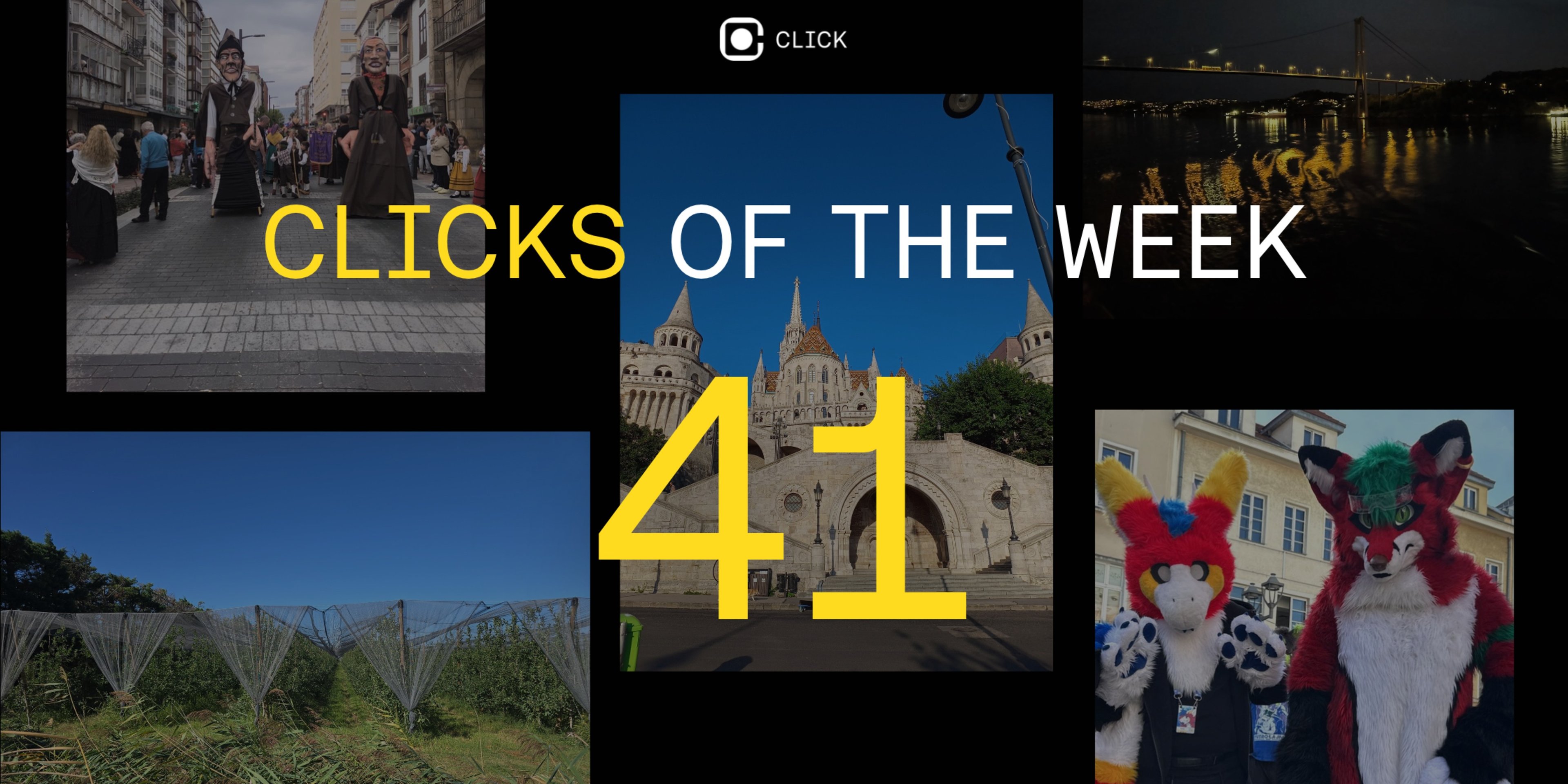
This week's Clicks cross five countries through five scenes that could hardly be more different. Above the Byfjorden in western Norway, a suspension bridge scatters its lights across the dark water like a ribbon of gold. In Budapest, the white turrets of Fisherman's Bastion frame a Gothic spire and a roof of patterned tiles. In Cantabria, two towering giants lead a street procession of dancers and children in traditional dress, while in the French Vaucluse an apple orchard rests under a canopy of anti-hail netting. Finally, in the old streets of Gliwice, two handmade fursuit characters prove that imagination is best when it has room to walk around.
Our journey begins on Monday with THOMAS0682, who watches the lights of a bridge dissolve into a Norwegian fjord at night. Clickstar carries us into Tuesday with a sunlit climb up Castle Hill, before a fellow Clickstar reaches the middle of the week with a parade of giants through northern Spain. On Thursday, MOI2233 leads us into a quiet Provençal orchard, and TORROCUS closes the week in Gliwice, where two original characters step out of the sketchbook and onto the pavement. Each scene was captured with Click Camera and signed into the Trust Network, creating a verifiable record of the moment it entered the archive.
Throughout the week, the team handpicks Clicks to promote the different feeds and Clickstars on social media, like X and Instagram. They get a tip from Nodle for their contributions to the network, Click archive and creativity - if you want to get highlighted by the official accounts, keep on Clicking, yours might be next!
Link your Click app profile to your Nodle app by using the same seed phrase in both apps, set up a username, and claim your clk.eth or nodl.eth handle - this makes it easier to get in touch with your fans and receive tips!
Support the network and its creators by following the official accounts, sharing, liking and commenting on the posts. Your support is crucial to the network's success!
This week, the archive grew. It now has a total of 80,704 certified media. All of these were added to the chain. Week by week, contributions from around the world strengthen Nodle - the first Trust Network empowering creators and enterprises through its Android and iOS apps.
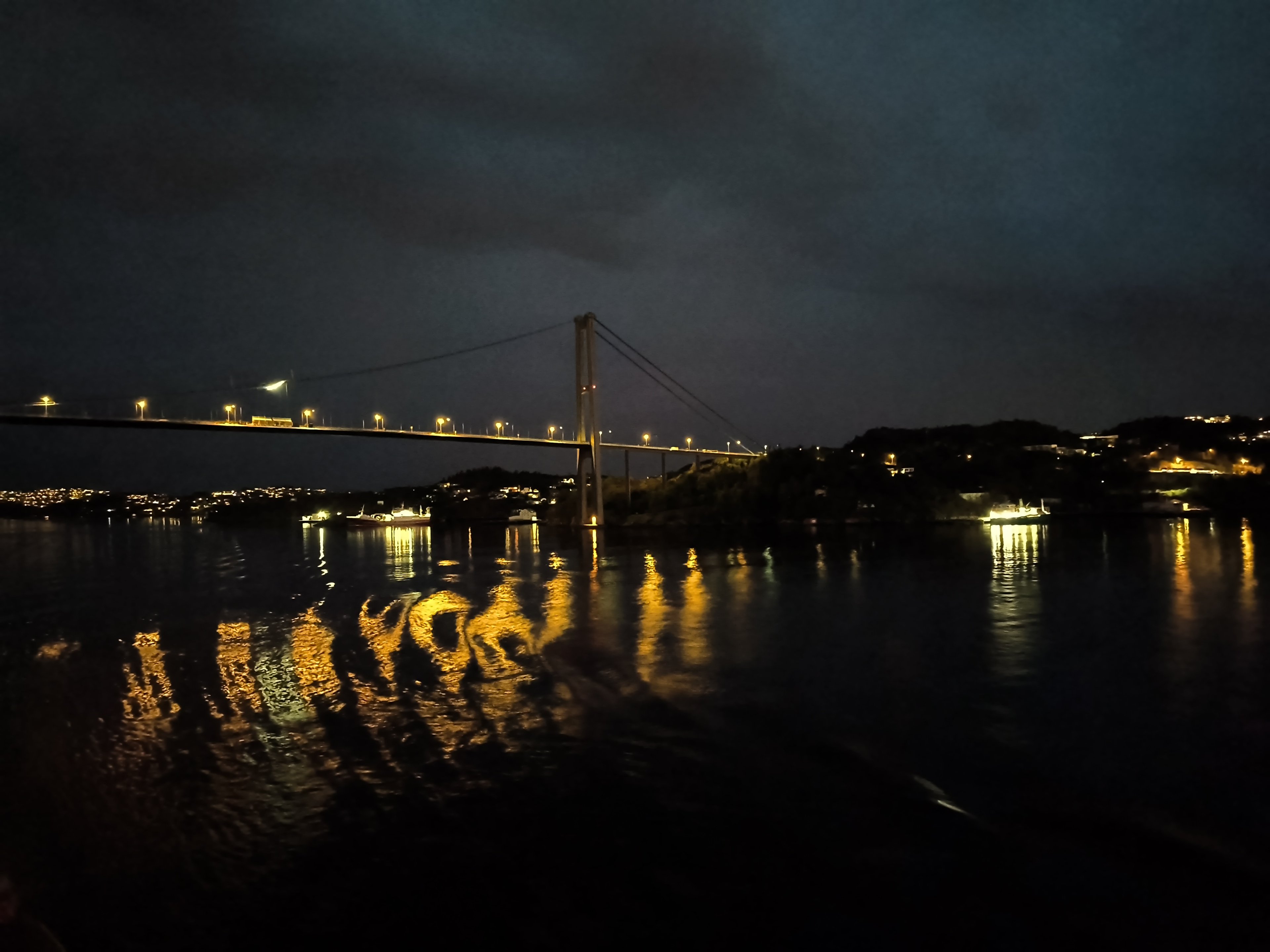
Where: Loddefjord, Vestland, Norway
Feed: Architecture
Social links
X: https://x.com/clickdeepreals/status/2107146092018077836
Instagram: https://www.instagram.com/p/DeHnfCggDSa
THOMAS0682 begins the week on the water, where a long string of lamps stretches across the Byfjorden beneath a heavy night sky. The Click shows Askøy Bridge, or Askøybrua in Norwegian, a suspension bridge linking Bergen with the island municipality of Askøy. A single tower rises against the clouds, a few moored boats glow near the shore and the lights of the hillside homes twinkle in the distance. Its 1,057-metre length and 850-metre main span once made it Norway's longest-span suspension bridge, and it remains among the country's largest.
The bridge was built between 1989 and 1992 and opened on 12 December 1992, ahead of schedule. Until then, the ferry between Kleppestø and Bergen was the essential route across the fjord, and the last car ferry crossing marked the end of an older island-to-city routine. Even the island's name points to its landscape, as Askøy is usually read as the "ash tree island", a green and hilly place that lies right next to Norway's second-largest city.
That is why the view means more than its lights suggest. The bridge did not simply shorten a trip. It connected Askøy to Bergen by road and changed journeys to work, school, shops and family visits for generations of residents. It remained a toll crossing until 2006, when it was paid off and the toll booths disappeared.
The Click was made at the beginning of October, when western Norway moves decisively into darker evenings and Bergen, a city famous for its rain, turns indoors. The Bergen International Film Festival was due to begin on 14 October 2026 with documentary, fiction and short film screenings across the city, an annual reminder that autumn darkness here is as much a setting for culture as for reflection.
There is also a quieter ritual in the bridge's story. For decades the crossing meant ferry timetables, quayside waits and vessels gliding through the fjord. The bridge replaced that pause with an unbroken roadway, but the water below still keeps the old geography visible. In this Click, the golden lamps smear across the surface like brushstrokes and almost draw a ferry route back onto the fjord. Monday opens with a reminder that a good bridge connects two shores without erasing the water between them.
Where: Budapest, Hungary
Feed: Monuments
Social links
X: https://x.com/clickdeepreals/status/2107542329712095740
Instagram: https://www.instagram.com/p/DeKdDUHjuxG
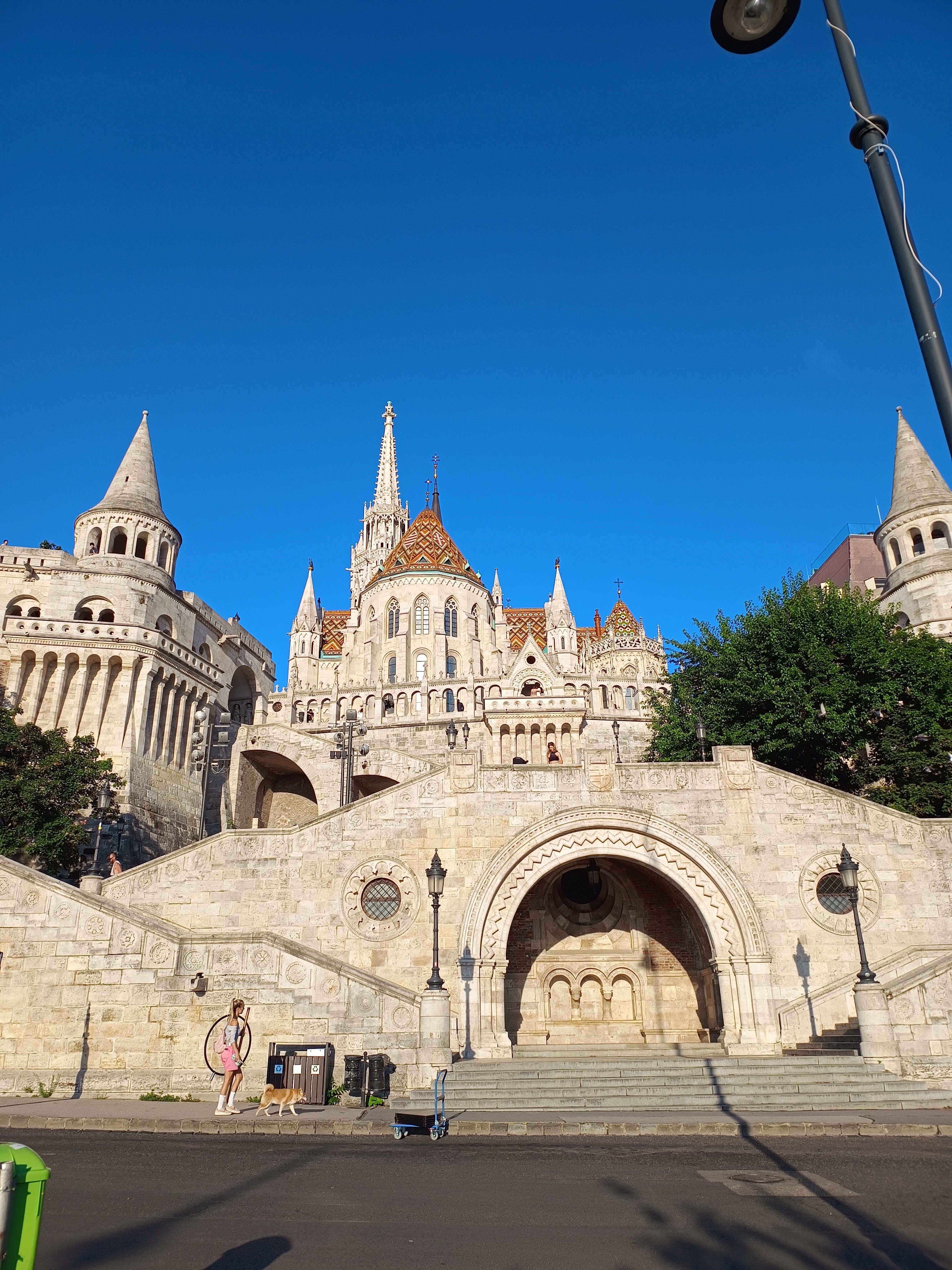
This Clickstar carries the journey into Tuesday with a view from the street up to Fisherman's Bastion (Halászbástya) and Matthias Church, formally the Church of Our Lady, on Castle Hill in Buda. The arched gateway, the broad stone staircase and the cone-roofed towers belong to the bastion, while beyond them rise the church's Zsolnay-tile roof and ornate Gothic spire. At the foot of the steps, a woman with a hoop and a golden dog pass through the morning light, giving the monument a wonderfully human scale.
The bastion was built between 1895 and 1902 and designed by Frigyes Schulek as a Neo-Romanesque lookout and decorative setting for the church rather than as a working fortress. Its seven turrets represent the seven Magyar chieftains traditionally associated with the Hungarian settlement of the Carpathian Basin in 895.
The name carries older Buda lore. One tradition says the medieval stretch of wall here was defended by the fishermen's guild, while another links it to the former riverside neighbourhood known as Fishermen's Town. Either way, the "bastion" was conceived as a memorial to the medieval city and never fired a shot.
Matthias Church is far older. It was founded in the 13th century after the Mongol invasion, turned into a mosque under Ottoman rule and reworked several times. Its popular name honours King Matthias Corvinus, whose raven emblem still appears in Buda's heraldry and who married Beatrice of Naples here in 1476. Schulek's 19th-century restoration gave the church much of its sharp Neo-Gothic character, and its glazed roof tiles come from the Zsolnay factory in Pécs. Franz Joseph and Empress Elisabeth were crowned here in 1867, so the church holds medieval Buda, Ottoman occupation, Habsburg ceremony and modern Hungarian nationhood in a single silhouette.
The timing of the Click adds another layer. It was made on 20 September 2026, the morning after a free outdoor concert by the South Tyrolean Männerchor Völs am Schlern at the pavilion near the bastion. A place built as stone scenery for history had just become a stage for live voices above the city.
The Castle District has long moved between defence, devotion and performance. It was badly damaged in the Second World War and rapidly restored, and since 1987 it has belonged to Budapest's UNESCO World Heritage-listed Danube panorama. Tuesday's Click catches the gentler modern rhythm of the hill, with arches made to evoke the past, a dog walker passing beneath them and a city that carries on below.
Where: Las Rozas de Valdearroyo, Cantabria, Spain
Feed: Festivities
Social links
X: https://x.com/clickdeepreals/status/2107883304510792132
Instagram: https://www.instagram.com/p/DeM4BVhjtZb
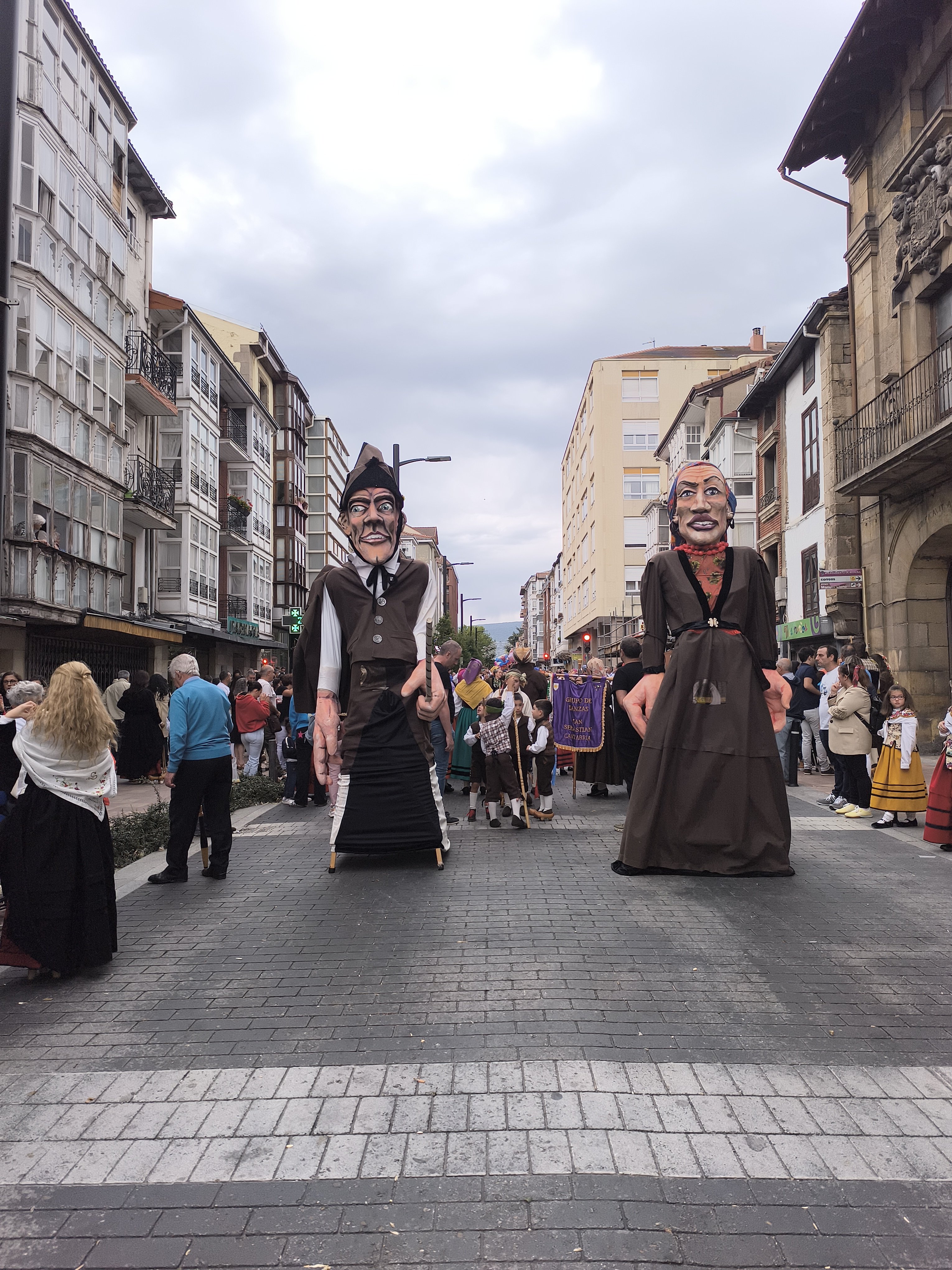
At the middle of the week, another Clickstar introduces two towering gigantes leading the way down a paved street lined with glazed Cantabrian balconies. One is a stern man in a hat, waistcoat and walking stick, the other a woman in a long brown dress and headscarf. Behind them, a purple banner identifies the Grupo de Danzas San Sebastián de Reinosa, one of the local groups keeping Campoo's dances, pandereta traditions and regional costume alive, while small children in miniature costumes follow in the giants' shadow.
The scene belongs to Día de Campoo, the closing celebration of Reinosa's San Mateo festivities. It takes place every year on the final Sunday of September and has been celebrated since 1954. It was recognised as a Festival of Tourist Interest in 1977, growing from a tribute to rural families who, after the summer's agricultural work, came into Reinosa to celebrate together.
The giants are part of the festival's public theatre, walking beside dancers, piteros playing pipe music, rabelistas performing on the traditional bowed rabel and residents wearing the distinct dress of the Campoo valleys. Like giants across northern Spain, they are usually carried from the inside by a bearer, which is why they sway so gracefully above the crowd. Heritage here is not displayed behind glass but made to move down the street with the people.
The date, 27 September 2026, was the Día de Campoo itself and the final day of Reinosa's 2026 San Mateo fiestas. The programme included rural sports, the Concurso de Rondas Campurrianas, a Campoo Mass at San Sebastián parish, rabel performances, a pasacalles of piteros, music and the annual cart competition.
This year carried an unusual twist. Restrictions linked to contagious nodular dermatitis meant that the traditional oxen could not pull the decorated carts, so the carts became stationary displays in Parque de Cupido instead of travelling their usual route. The celebration adapted rather than stopped, and the rondas, giants, musicians, costumes and communal gathering still filled Reinosa with the sound of Campoo.
For nearby Las Rozas de Valdearroyo, a municipality on the Ebro Reservoir within the Campoo-Los Valles region, the festival is part of a larger shared cultural landscape. This is high country close to the source of the Ebro, Spain's longest river by flow, shaped by mountain farming, livestock, folk song and borderland history. Ancient routes between the Cantabrian coast and Castile, Roman traces around Julióbriga and villages that still gather around fairs, processions and local food all belong to it. Wednesday's Click shows a valley that knows how to keep its traditions walking, with or without oxen.
Where: Entraigues-sur-la-Sorgue, Vaucluse, France
Feed: Nature
Social links
X: https://x.com/clickdeepreals/status/2108265377939501356
Instagram: https://www.instagram.com/p/DePl1rqDlNB
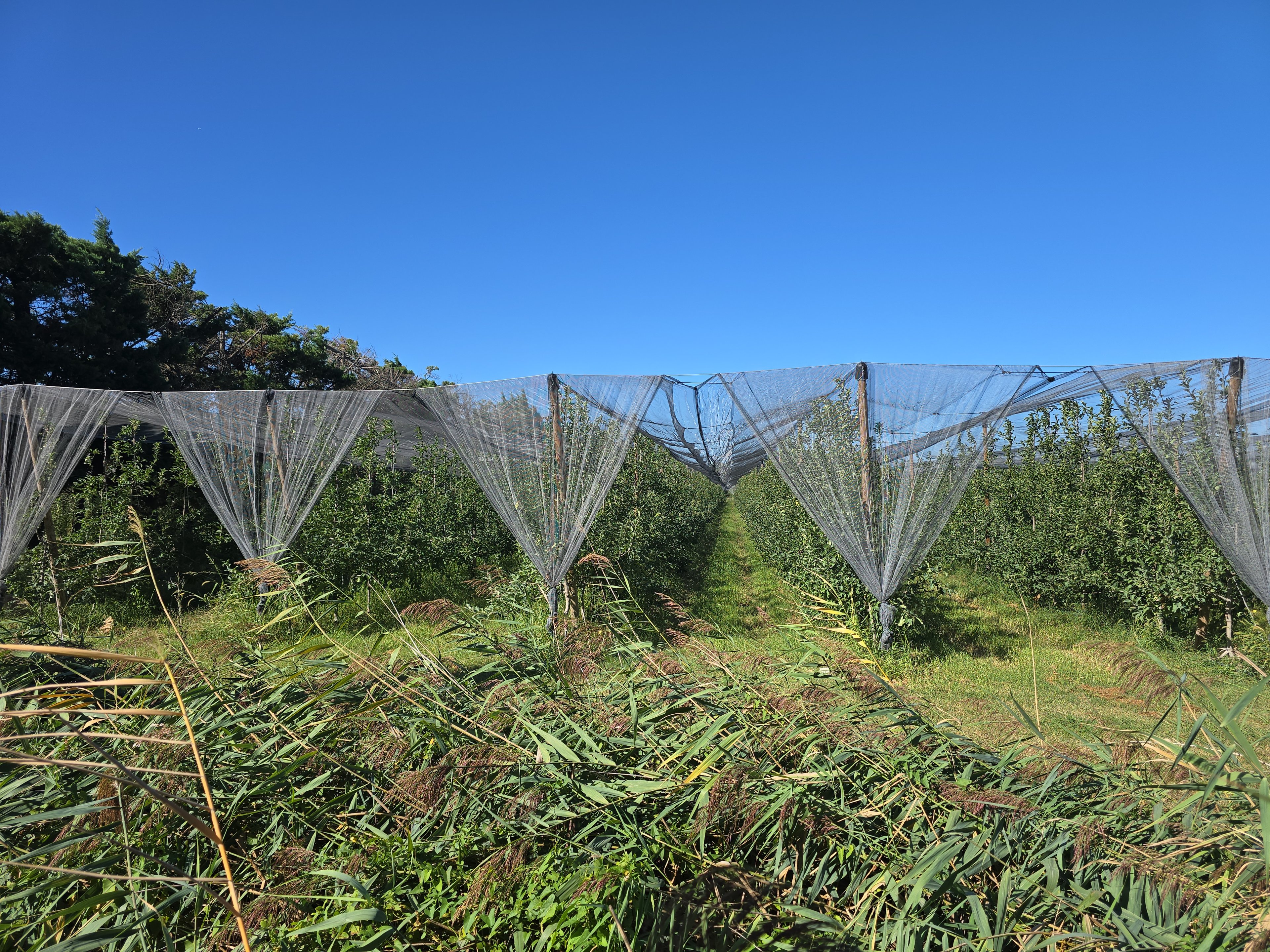
MOI2233 guides Thursday into a quiet corridor of green under a deep blue sky. The Click appears to show an apple orchard covered by anti-hail netting, which hangs in loose folds from poles and cables above the rows, almost like sails. The netting leaves the trees room for light and air while creating a barrier against hail, wind and violent rain, hazards that can mark fruit or strip leaves just before harvest. In the foreground, a thicket of tall reeds sways at the edge of the rows.
Those reeds are a small piece of regional lore. Giant cane has traditionally been planted around Provençal fields as a windbreak against the mistral, the cold, dry wind that can blow for days and shapes how farmers lay out their land. The orchard therefore tells a story of protection from both sides, with reeds against the wind from the north and nets against the storms from above.
The setting fits Entraigues-sur-la-Sorgue especially well. The town lies on a fertile plain shaped by the Sorgue's waterways, where market gardening and fruit production have long been central to the local landscape. Vaucluse is often called one of France's great orchard regions, and a family organic apple farm works across Entraigues, Althen-des-Paluds and Pernes-les-Fontaines, tending around 40 hectares of apple trees.
The September date places this Click in the heart of the apple season. Local producers harvest successive varieties from August into spring, while nearby growers sell apples, pears, plums, peaches, nectarines, quinces and juices directly from farm shops and regional markets. What looks like a quiet green corridor is a working landscape at one of its busiest moments.
Water has always been part of the area's agricultural memory. Entraigues sits where the Sorgue meets the Ouvèze, and its name comes from inter aquas, "between waters". The springs and channels of the Sorgue powered mills, irrigated fields and helped turn the land around Avignon, Carpentras and L'Isle-sur-la-Sorgue into a patchwork of orchards, vegetables and market gardens.
The Click also falls just after one of the town's recurring late-summer gatherings, the artisanal, commercial and industrial fair on the first Sunday of September, with a flea market and a local organic-wellbeing salon. Later in the month, the final night market turns the old town into an evening meeting point for food, craft and conversation. Thursday's orchard shows where much of that social calendar begins, in the growers and the patient work behind a regional table.
Where: Gliwice, Poland
Feed: Events
Social links
X: https://x.com/clickdeepreals/status/2108621871004745976
Instagram: https://www.instagram.com/p/DeSHzLMjhYF
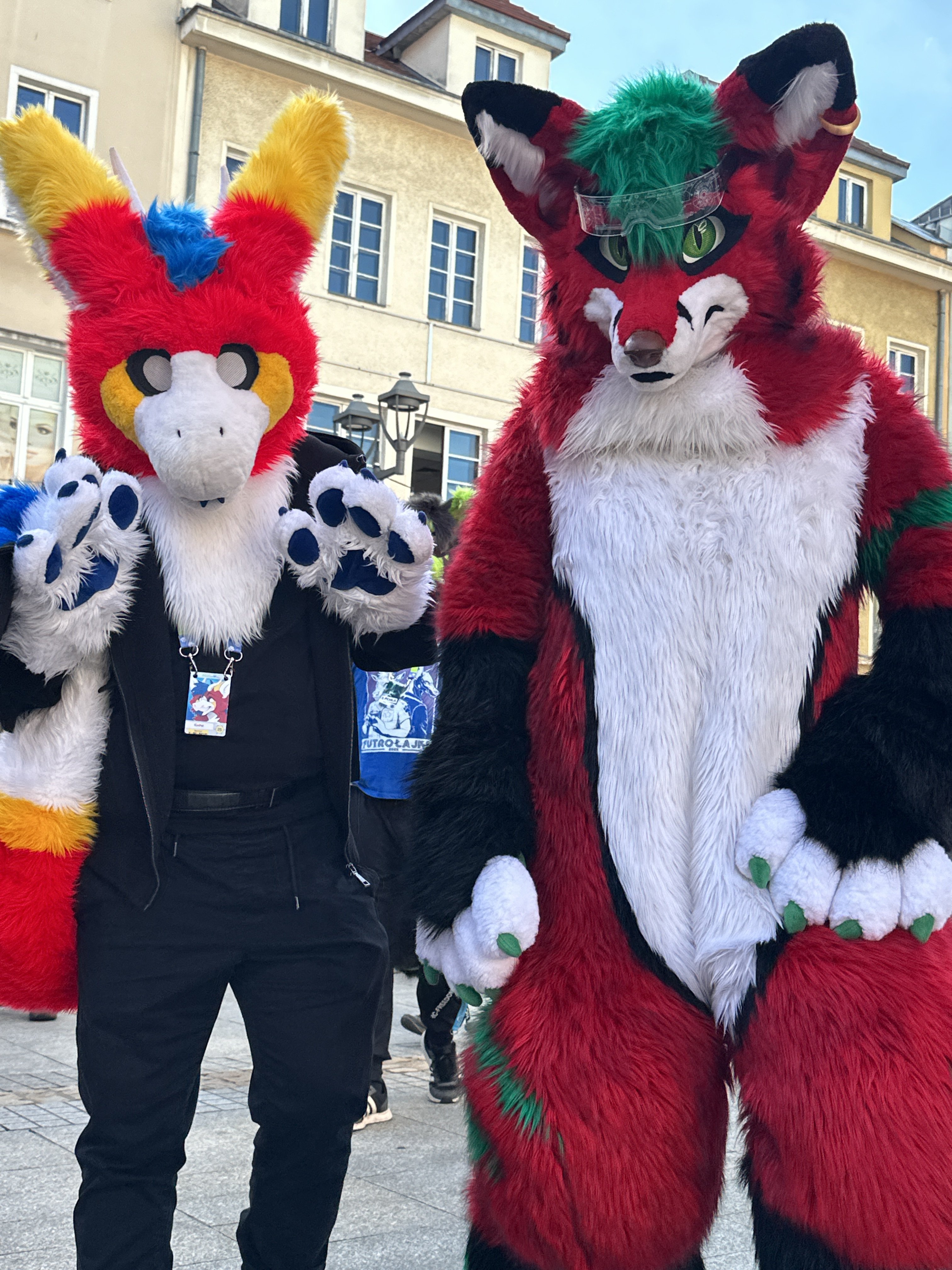
TORROCUS closes the week with two fursuits, full-body costumes based on original anthropomorphic animal characters. One is a gryphon with a bright red face, feathered yellow ears, a blue crest and a bold yellow muzzle. The other is a red-and-green canine with a green mane, oversized paws with green claws, sculpted facial features and custom goggles. Their materials, colour plans and expressive heads reflect a craft that combines illustration, character design, sewing, foam work, synthetic fur and performance.
The details make the scene especially personal. In furry culture, characters are called fursonas, imaginative avatars with their own names, species, palettes and visual stories. The gryphon's wearer carries a convention-style badge on a lanyard, and while the fursuit is only one way to take part, it turns a drawing into something that can wave, pose, dance and meet the public at street walks and conventions.
The Polish community has been building a visible creative infrastructure. The association OwO describes its mission as promoting furry subculture through art, costume-making and other artistic activity, while supporting openness, understanding and acceptance. The Click shows that idea in its most immediate form, with two handmade identities sharing a pavement, each designed to be recognised at a glance.
The exact event attached to the Click cannot be independently confirmed from reliable public listings, so it is best not to name a specific Gliwice convention. The timestamp, just after midnight on 30 September 2026, does fall in an active autumn season for European furry events, with fursuit walks, small local meets and larger conventions. A passer-by in the background wears a blue shirt that appears to carry the Futrołajki logo, a hint of the national scene, but not enough to tie the scene to a specific event.
Futrołajki is Poland's recurring national furry gathering, founded in 2021. Its 2026 edition, titled Futrołajki: Apocalypse, was scheduled for 11-15 November in Kielce, bringing the Polish community together around costumes, art and social activities.
Gliwice gives the Click a fitting backdrop. Behind the characters, pastel facades and old street lamps belong to a city centre that grew around a medieval market square, shaped by Silesian, Polish, German and industrial history. This is also the city of the Gliwice Radio Tower, a 111-metre wooden structure from 1935, so the town has long been a place where technology and imagination meet. Friday closes the journey with creatures that exist because someone decided an idea deserved a body, and with a street that makes room for them.
This week began with THOMAS0682 on the Byfjorden, where the golden lamps of Askøy Bridge turned a dark October night into a ribbon of light. A Clickstar then led us up to Budapest's Castle Hill, where a bastion built purely to be beautiful stood against a flawless blue sky. At midweek, a fellow Clickstar caught the giants of Día de Campoo in Reinosa, proving that a festival can adapt when the oxen cannot pull the carts. MOI2233 took us into a Vaucluse orchard where reeds and nets stand guard against wind and hail, before TORROCUS brought the journey to a colourful close in Gliwice, where two fursonas turned an old Silesian street into a stage.
Together, these Clicks show how much can be contained in a single frame. A bridge can replace a ferry timetable with an unbroken road, a monument can be built to honour a city's memory, a street festival can keep a valley's traditions walking, an orchard can show how farmers work with wind and water, and a costume can give an imagination a body. Each photograph remains faithful to the scene its Clickstar encountered, with its origin preserved through Click Camera and the Trust Network.
Want to be featured next? Keep Clicking, keep signing and keep showing the world what authentic looks like - one capture at a time.
Now, go relax and enjoy your weekend!
And help us spread the word about Click. Encourage your friends and family to submit their Clicks too - it is becoming a destination for authentic, verifiable media from around the world. Every contribution strengthens the archive and helps remarkable local stories reach new audiences.
Before we forget!

Did you know that you can submit your favourite photos to ClickAI? It will provide helpful feedback on how you could improve your next shots. Simply log in to www.clickapp.com with your Click Camera through WalletConnect, select your image and click the AI✨ button below it.
With the latest update to the Nodle app, you can also submit your favourite Clicks to the AI agent directly through the app's chat interface. Less friction, more opportunities!
You can also reach out to the featured Clickstars through the Nodle app's private, decentralized chat, powered by XMTP. Send them a kind note to thank them for sharing their Click, or support their creativity with a tip. The app combines end-to-end encrypted messaging with the ability to send value directly inside a conversation, making it easy to connect with and encourage the creators behind the week's stories.
You can then enter your Click in the AI contest for a small entry fee and have the chance to win if the AI's evaluation is favourable. Curious? Try it today!
Did this catch your attention?

Explore our blog post, Click: Beyond the Filter, to discover how the app powers the ecosystem behind the Trust Network. Click lets creators capture media, swipe to sign and authenticate it on the blockchain, and then share the authenticated content anywhere.
Happy Clicking - we can't wait to see what you share!