
Nye's Digital Lab is a weekly scribble on creativity in an age of rapid change.
This week I'm looking at who actually decides what the robots on your street are allowed to do, and why that's a job opening.
Essay # 105
On October 1, 2013, HealthCare.gov opened its doors. Four point seven million people showed up. Six of them managed to buy insurance.
Not six thousand. Six.
The lazy take is that government can't do technology. That's not really correct, though. The site was built by 33 companies on 60 contracts, led by a firm whose piece of the job roughly tripled in cost before anyone saw it work. The final bill came in around $1.7 billion. Federal procurement was designed to purchase aircraft carriers, and a website got bought like one.
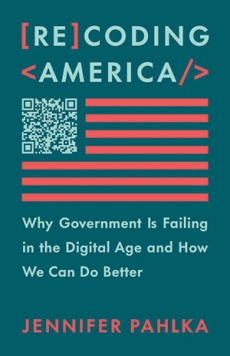
A handful of engineers from Google and a few startups flew in, got nicknamed "the tech surge," and within months the site was enrolling millions. Jen Pahlka was deputy CTO of the United States at the time. She watched a team of about a dozen developers rebuild most of the marketplace in a fraction of the time, and she went on to write Recoding America, the book I'd hand anyone who wants to understand why government software is the way it is. Her point is simple.
Government doesn't lack talent or money. It lacks a connection between the people who write the policy and the people who have to make it run.
Washington took the lesson to heart for about a decade. 18F and the U.S. Digital Service were created in 2014 to put real builders inside agencies. In March 2025, 18F was eliminated in a day and the Digital Service was folded into DOGE.
Um. Whatever you think of that, the federal chapter of civic tech is closed for now.
But, I don't think that's where the interesting work was going to be anyway!
The next wave of civic technology isn't a website. It moves.
In May, food delivery robots showed up on the sidewalks of San José. By July the city was writing rules for them. Miami Beach already had rules:
8 miles an hour, and no idling on the sidewalk for more than 30 minutes. In February, the association of city transportation departments put out a guide for mayors with a title that says it all: Robotaxis Aren't Coming, They're Here.
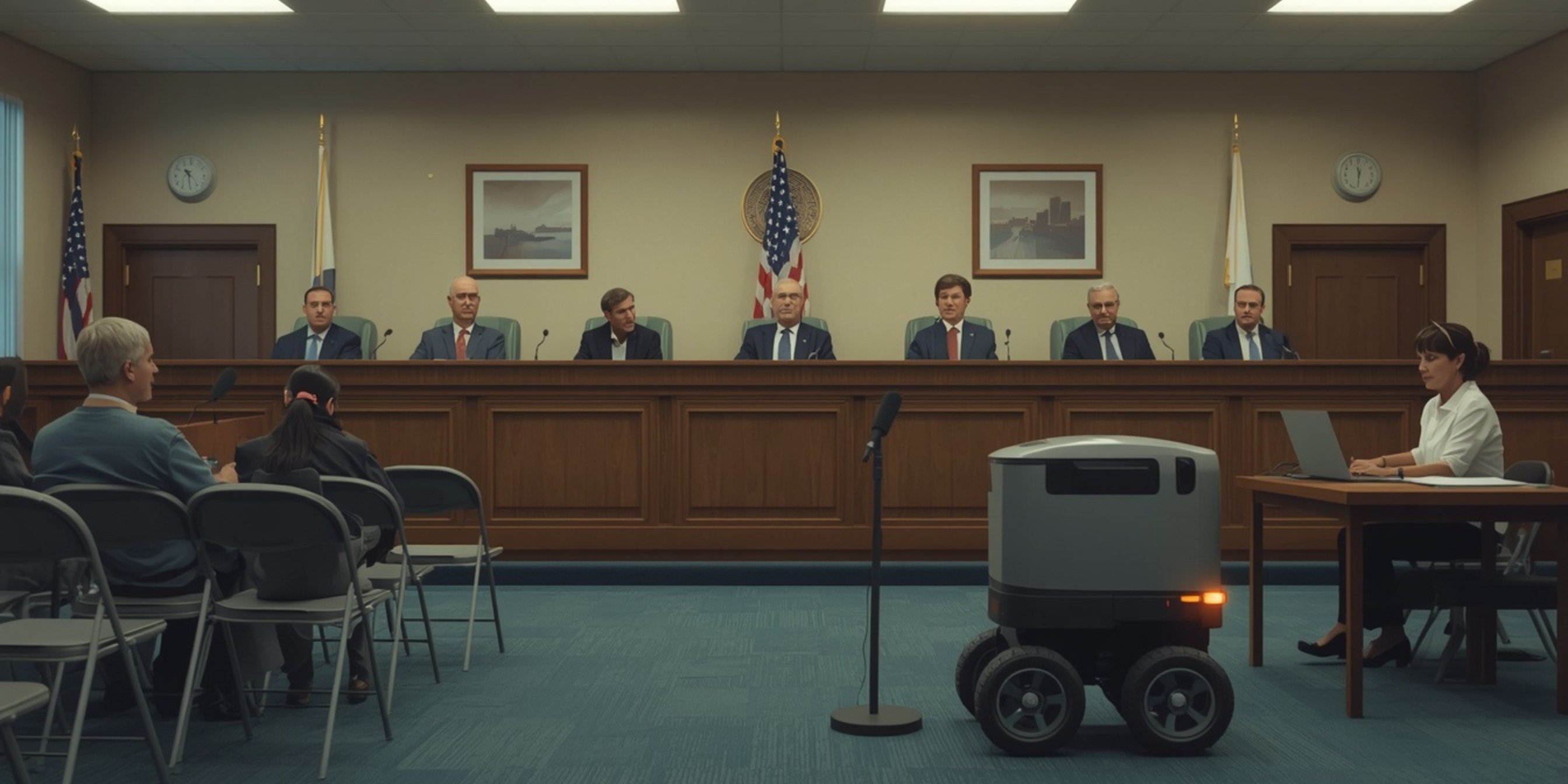
This is not Congress. Not a federal agency. A city council, on a Tuesday night, with a microphone is making local decisions about robot deployment.
An autonomous system doesn't interact with "society." It interacts with a curb. A crosswalk. A permit counter. A 911 dispatcher. These are a local government domain, and there are 91,438 of them in the United States! Each one buys its own software, writes its own ordinances, and answers to the people who live there. When a robot does something dumb on Broughton Street, nobody calls the Department of Commerce.
They call city hall.
And it isn't just the robots. The AI is already inside the building.
The decisions that shape how machines behave around people are being made in rooms with folding chairs. And the truth is that most of those rooms don't have a technologist in them!

Here's my point.
There's a big, established industry that builds technology for the federal government. Deloitte, Booz Allen, Accenture. It runs about $40 billion a year, and it's built to staff a 500-person program for five years, because that's what the federal market pays for. Fair enough. It also means those firms have no reason to chase an $18,000 pilot in a town of 40,000.
That leaves 91,000 local governments to whoever shows up.
Government Technology's list of the top 100 companies selling to states and cities has an average company age of almost 19 years.
It's a slow, relationship-heavy market where incumbents stay forever, which means the ones who get in and stay get paid for a very long time. OpenGov started selling budgeting software to cities in 2012 and sold to Cox Enterprises in Atlanta for $1.8 billion. Ten years ago venture capital treated govtech like a charity. I'm not so sure that's the case today.
So what is a civic technologist?
Someone who can read a council agenda and a model card. Who knows how a permit actually moves through a building. Who can explain to a fire chief what a robot's log says, and explain to the people who built the robot what the fire chief needs. It's a product job, a policy job, and a neighbor job at the same time, and almost nobody is training for it, in Washington or at most universities.
Robots are moving down my street, and the people deciding what they're allowed to do are a short walk from where I'm sitting. That's not a problem. That's the job opening!
Make it Happen.
This essay was researched with generative models, then written and revised by a human tapping on a keyboard.
Nye Warburton is an artist and educator from Savannah, GA.
For more information: nyewarburton.com
Private and Public Networks, Part 2 — Roads, parks, and the case for public networks in the age of AI.
Merge Before You're Merged — Your major already merged with three others. The org chart just hasn't been told yet.
The World Is Now Different — My reflections on my time in Austin at SXSW Edu.
In the order they appear in the essay.
HealthCare.gov and the federal story
GAO, HealthCare.gov: Ineffective Planning and Oversight Practices Underscore the Need for Improved Contract Management (GAO-14-694, July 2014) — https://www.gao.gov/assets/gao-14-694.pdf
"Only 6 able to sign up on healthcare.gov's first day, documents show" — NBC News, Nov 2013 — https://www.nbcnews.com/politics/politics-news/only-6-able-sign-healthcare-govs-first-day-documents-show-flna8c11509571
"Six People Signed Up on Day One" (4.7 million visitors) — HealthDay, Nov 2013 — https://consumer.healthday.com/internal-medicine-21/misc-insurance-news-424/six-people-signed-up-on-day-one-of-federal-exchange-website-681769.html
Cato Institute on the HHS Inspector General report (60 contracts, 33 companies, $1.7B) — https://www.downsizinggovernment.org/failed-healthcaregov-launch
Paul Smith, "The 10-year anniversary of the HealthCare.gov rescue" — https://www.pauladamsmith.com/blog/2023/10/the-10-year-anniversary-of-the-healthcare.gov-rescue.html
Jennifer Pahlka on her year in Washington and Marketplace Lite — Government Technology — https://www.govtech.com/data/How-Will-Jennifer-Pahlkas-Year-with-the-Feds-Impact-Code-for-America-Operations.html
Jennifer Pahlka, Recoding America: Why Government Is Failing in the Digital Age and How We Can Do Better (Metropolitan, 2023)
"Musk's DOGE fires US federal tech team that built free tax-filing site" — Reuters via RNZ, March 2025 — https://www.rnz.co.nz/news/top/543486/musk-s-doge-fires-us-federal-tech-team-that-built-free-tax-filing-site
18F alumni site — https://18f.org/
Robots, cities, and who decides
NACTO, Robotaxis Aren't Coming, They're Here: A Practical Guide for Cities (Feb 2026) — https://nacto.org/wp-content/uploads/Robotaxis-Arent-Coming-Theyre-Here-NACTO-2026.pdf
"San Jose to develop rules for delivery robots" — Local News Matters, July 2026 — https://localnewsmatters.org/2026/07/27/san-jose-to-develop-rules-for-delivery-robots/
"Robot Delivery Is Booming and Cities Want Their Cut" (Miami Beach rules) — PYMNTS — https://www.pymnts.com/?p=4122297
US Census Bureau, Government Organization Summary Report: 2022 & 2025 (91,438 local governments) — https://www.census.gov/library/publications/2026/econ/govtorg2225.html
"Polimorphic Announces $18.6 Million Series A Led by General Catalyst" — Business Wire, July 2025 — https://www.businesswire.com/news/home/20250709269358/en
"Peregrine Technologies raises $250 million Series D at $6.8 billion valuation" — O.G. Venture Partners, June 2026 — https://www.og-vp.com/news/peregrine-technologies-raises-250-million-series-d-at-6.8-billion-valuation
The market outside Washington
"Deloitte Cuts Darken Outlook for US Government Consulting Work" ($40B federal consulting market) — Bloomberg Government — https://news.bgov.com/esg/deloitte-cuts-darken-outlook-for-us-government-consulting-work
"Government Technology's 2026 GovTech 100 Highlights a Market Ready to Scale" — e.Republic, Feb 2026 — https://www.erepublic.com/company/press/government-technologys-2026-govtech-100-highlights-a-market-ready-to-scale/
"Cox Enterprises to buy software firm OpenGov for $1.8B" — StateScoop, Feb 2024 — https://statescoop.com/?p=62395
"Peachtree City approves $18,000 pilot for AI resident-engagement service after live demo" — Soar civic portal, Feb 2026 — https://cpo.soar.com/articles/7422091/Peachtree-City/Fayette-County/Georgia/Peachtree-City-approves-18000-pilot-for-AI-resident-engagement-service-after-live-demo
"San Jose City Council Makes GovAI Coalition a Nonprofit" — Government Technology — https://govtech.com/artificial-intelligence/san-jose-city-council-makes-govai-coalition-a-nonprofit
"How should cities use AI? This Atlanta suburb may hold the answer" (Mableton) — AJC, March 2026 — https://www.ajc.com/business/2026/03/how-should-cities-use-ai-this-atlanta-suburb-may-hold-the-answer