
Nye's Digital Lab is a weekly scribble on creativity in an age of rapid change.
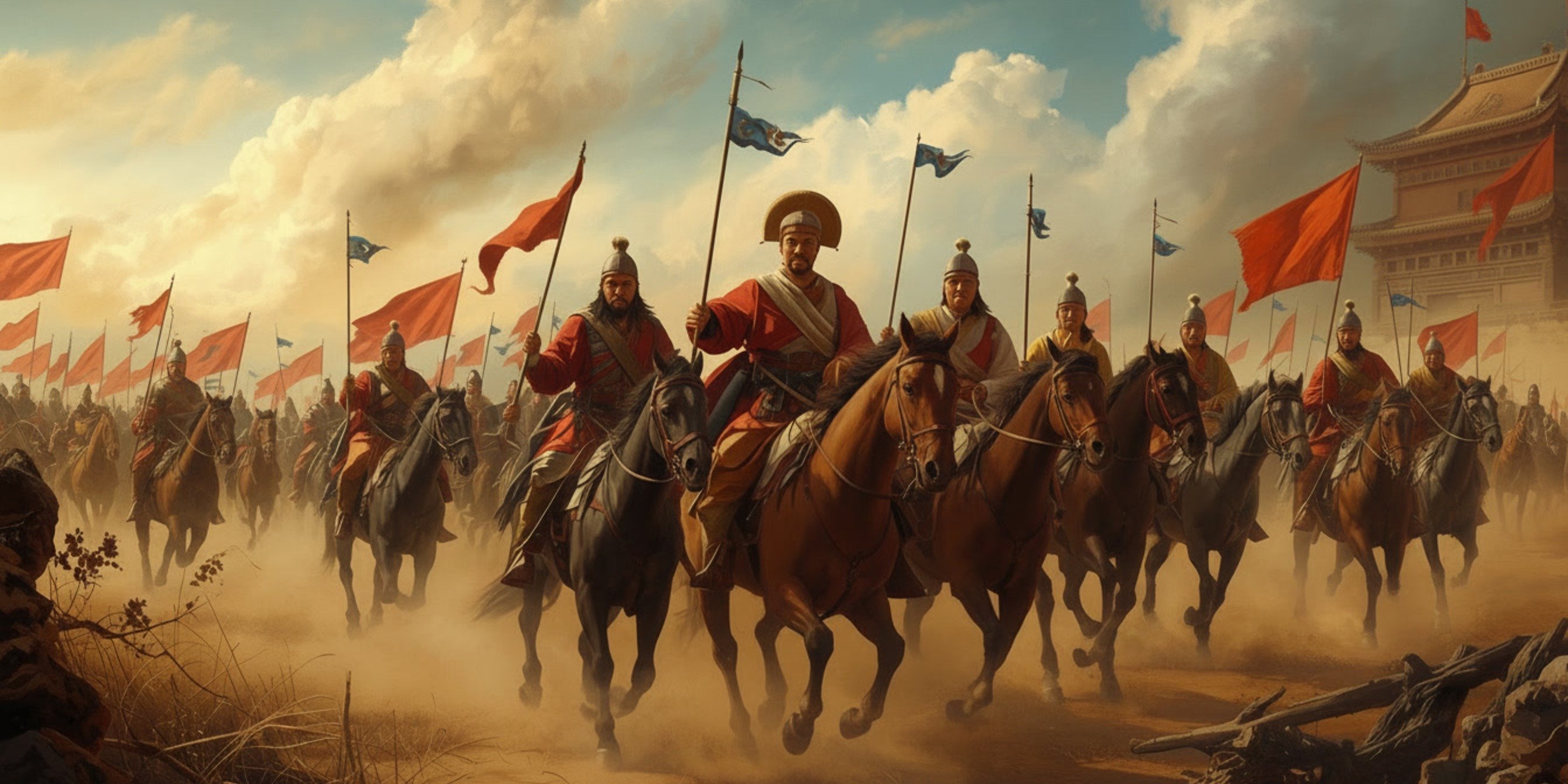
This week I'm rereading my favorite book about the most successful network builder in history. And, he was also a conqueror.
Hollywood has a clear opinion on Genghis Khan.
He is the barbarian. The horde at the gate. In 1956, John Wayne played him in The Conqueror, which tells you how seriously the film industry took the history.
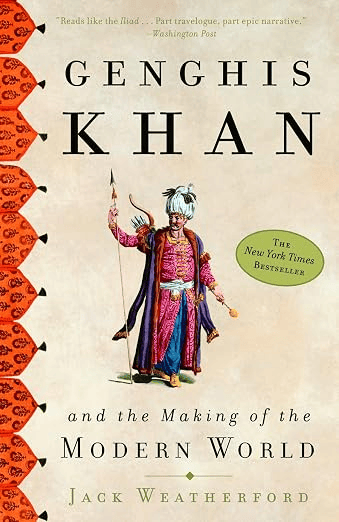
I accepted the fur-clad barbarian for most of my life. Then I read Jack Weatherford's Genghis Khan and the Making of the Modern World. It completely changed my thinking. I've read it at least four times since, cover to cover.
Weatherford is an anthropologist who spent years in Mongolia working through The Secret History of the Mongols, a text hidden from outsiders for centuries. His argument is simple. The Mongols did not just destroy the old world...
They connected the new one.
The cost was enormous. Cities that resisted were destroyed. The death toll was staggering, and some think Weatherford is too generous to his subject. I think that's fair. He writes about the Khan in a near-romantic tone.
But I can't stop thinking about this book, because it asks the questions I deal with every day.
How do you build something connected out of people who don't know each other?
How do you move and mix ideas across great distance?
Temujin, the boy who became Genghis Khan, started with nothing.
His father was poisoned by a rival tribe when he was about nine. His own clan then abandoned his mother and her children on the steppe to die. He was captured and enslaved as a teenager. His wife was kidnapped.
On the steppe, kinship was everything. Your family decided your rank, your allies and your future. Temujin's family had failed him.
So he built his organization on a different rule.
He promoted people for skill and loyalty, not bloodline.
His generals included former herders and the sons of blacksmiths. One of his best commanders, Jebe, had shot Temujin's horse out from under him in battle. Temujin hired him!
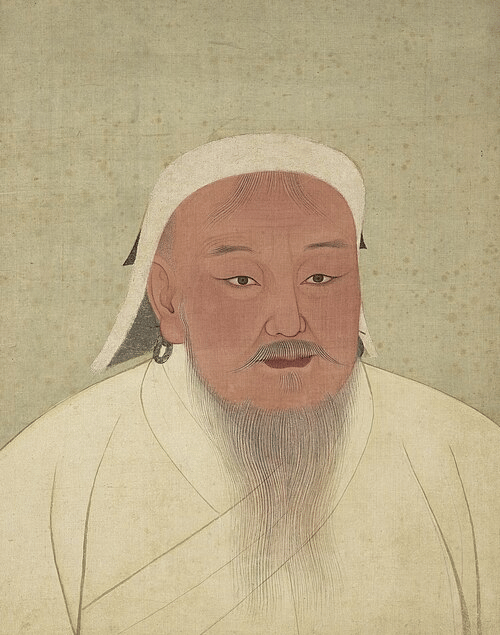
When he united the tribes in 1206, he broke the old tribal structure apart. He organized people into units of ten, a hundred, a thousand and ten thousand, and he mixed the lineages together. He abolished inherited aristocratic titles.
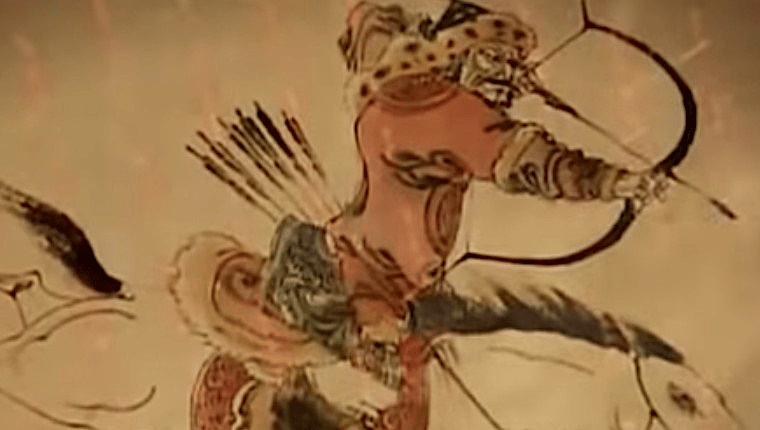
Those small units didn't wait for orders. They got an objective from the Khan, not a route. Mobile, self-directed, carrying the best tools the empire had. It looked less like a medieval army and more like organized piracy: hit the target, take what's useful, move on.
He did not inherit a network. He designed one from the ground up.
Every year I meet students who believe they have no path into technology because they don't have the right background. No computer science degree. No connections.
Listen up. Temujin didn't have the right background either.
I love this insight.
Weatherford points out that the Mongols made no technological breakthroughs. They founded no religion. They wrote few books. They did not weave cloth, cast metal or bake bread.
What they did was move things.
When the Mongols took a city, they sorted the population by skill. Engineers, doctors, translators, metalworkers and scribes were kept and put to work, then sent wherever the empire needed them. German miners ended up in China. Chinese doctors ended up in Persia. Chinese and Persian engineers built the siege weapons that the Mongols, a cavalry army, had no idea how to build themselves.
Wait, let's stay on siege weapons for a second.
Picture a walled city that thinks it's safe. The horsemen can't get over the wall. But the Mongols didn't just add the catapult to their arsenal. They loaded it with clay pots full of burning liquid. The pots shatter inside the walls, and fire runs everywhere. They were literally launching terror over the walls.
The Mongols didn't invent the fire pot. They didn't invent the catapult. They collected the greatest hits of siege warfare from every army they beat, and used them better than the people who came up with them. They adapted faster through the fastest technological shift of their time.
Weatherford argues that this mixing drove the change. Chinese gunpowder, Muslim flamethrowers and European bell casting combined into one new weapon: the cannon. And it didn't stop at weapons. Printing, the compass, gunpowder and paper money all moved west along Mongol trade routes.
In computer graphics, nobody invents everything. The work is combining tools made by other people into a pipeline that produces something new.
Good teaching is the same. We put game developers, designers, AI students and roboticists in the same building. Most of what we teach was invented somewhere else.
The value is in the combination.
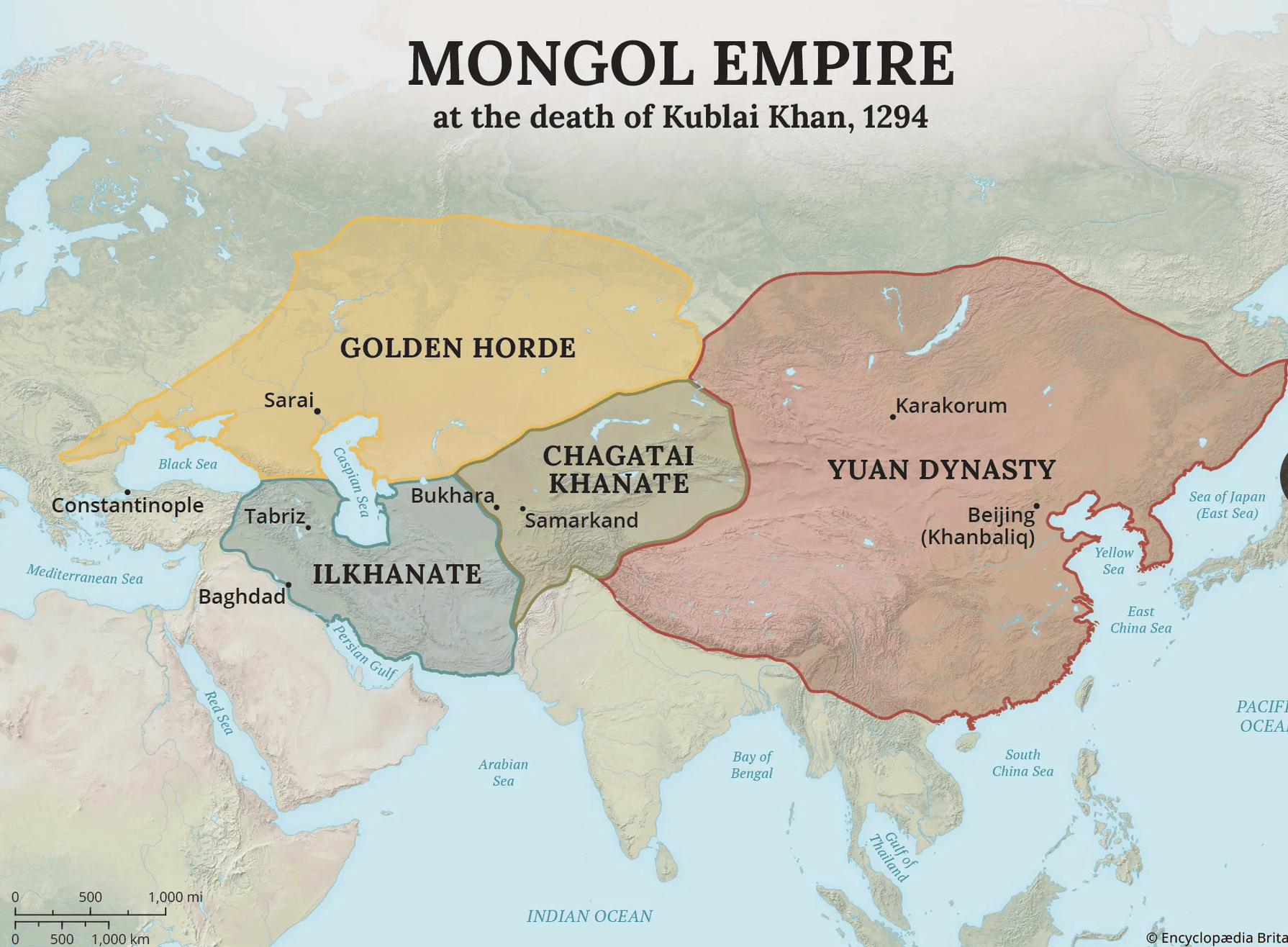
The Mongols understood that a network needs rules and roads.
They built the yam, a relay system of stations stocked with fresh horses. A message could cross the empire faster than anyone would manage again for centuries. Merchants could use it too.
They wrote a common law that applied to everyone, including the Khan himself. They guaranteed immunity for envoys. They valued teachers (what?!?) and the education of their young. They exempted doctors and priests from taxes. They protected merchants on the roads. Under Khubilai Khan, they pushed paper money across China.
And they declared religious freedom. Buddhists, Muslims, Christians and Taoists all worked inside the same government. Genghis Khan did not care what you believed. He cared whether you were useful and loyal.
The Mongols did not make the goods.
They made the system the goods moved through.
I write about distributed networks a lot. What I take from this is that openness is not the same as having no structure. The Mongol system was open because the rules were clear and the same for everybody.
That is a network protocol.
In the 1300s, plague spread along the same trade routes that had carried silk and paper. The roads that built the system now carried the disease. Trade stopped. Travel stopped. The relay stations emptied. The blood of the organization stopped flowing.
The empire depended on movement, trade, combination and, yes, creative chaos. Without them, the Mongol territories lost contact with each other, and one by one they fell or were absorbed.
Then came the opposite reaction. The societies that followed closed their borders and blamed outsiders. The Ming dynasty in China turned inward. Europe turned on its minorities.
I believe we're seeing the same instinct now. AI scares people. Many institutions respond by walling things off. Close the models. Restrict the tools. Protect the pedigree!
I understand it. I also think it's a mistake.
I am not recommending Genghis Khan as a role model. He killed a lot of people, and I'm not really into the "killing a lot of people" thing.
I am, however, recommending the book, because it changed how I think about network design.
Find talent where others aren't looking.
Promote on skill, not titles.
You don't have to invent the technology, but you do have to connect the people who can use it.
Collect the greatest hits and regularly update your workflow.
Write rules that are the same for everyone, and for god's sake... keep the roads open.
My students are going to work in a world where AI and robotics are remaking every creative industry. They won't all be inventors. Most of them will be the people who carry an idea from one field into another.
The Mongols did that job better than anyone, eight hundred years ago.
Thanks for reading.
Make it Happen.
This essay was created from a series of verbal improvisations, combined with research and writing from a personal database. It was revised with a variety of open- and closed-source generative models.
Nye Warburton is an artist and educator from Savannah, GA.
For more information: nyewarburton.com
Genghis Khan and the Blockchain — The first time I reached for the Mongols, in 2024. Units of ten as a blockchain metaphor.
Education by Mission Command — Rome versus the horde. Name the objective, not the route, and trust the person on the ground.