
Written by sasorivirgil
After weeks of research and struggling to meet the demands of clients, hundreds of thousands of digital workers across Nigeria are subjected to torment as they wait for extended periods, which can last up to two weeks, to access their payments. This is just the beginning of their ordeal.
Once payment lands, high transfer fees and rate slippage cut their earnings by nearly 30%. By then, the pay the freelancers received would have undervalued the quality of the service they delivered.
Nigeria’s freelancer payment channels are controlled by legacy providers, inefficient middlemen, and unpredictable foreign exchange conversion, each of which consumes earnings, adds friction, and hinders the true potential of a booming sector.
What Nigerian freelancers need now is a system where cross-border payments are as instant and simple as sending an email, with no delays, no surprise deductions, just fast, secure, programmable money. That is precisely what Finternet has to offer.
This report breaks down how Finternet, powered by Solana’s ultra-fast blockchain infrastructure, can unlock this future for Nigeria’s freelance economy.
We’ll dive into the current state of digital work, the pain points stifling growth, and how Finternet can become the trusted payment layer for Africa’s new generation of global talent.
Over the last decade, Nigeria’s financial infrastructure has experienced exponential growth, as both traditional banks and emerging fintech companies have developed systems to keep pace with the country’s rapidly expanding population.
Presently, the country has more than 20 commercial banks, with some of the most well-known being Zenith Bank, Access Bank, and First Bank. Through NIBSS (Nigeria Inter-Bank Settlement System), users process over 200 million instant transfers monthly. However, the majority of users are based in cities and towns.
To address the lack of financial services in rural areas, the Nigerian fintech industry has developed platforms that facilitate more convenient and efficient money management, primarily through mobile phones. Those who do not have access to internet services are also not left out; some fintech companies also employ the services of local shops acting as small banks called agents. The top fintech companies in Nigeria are Paystack, Flutterwave, and Moniepoint.
Paystack offers a platform that enables businesses to accept online payments, while Flutterwave simplifies the process of sending and receiving money globally. Moniepoint also created an app that helps make banking easy for small businesses and individuals.
Currently, Moneipoint processes over 800 million transactions, totalling more than $17 billion in value every month.
Nigeria's online freelancers have also become a big part of the economy. According to the World Bank, in 2023, there were approximately 17.5 million online gig workers across Nigeria, Kenya, and South Africa, with a significant portion of this number comprising those from Nigeria.
These freelancers receive payments through international payment platforms such as Payoneer, PayPal, and Geegpay, and then use regular bank transfers once the money is deposited into a local or international bank account.
As of January 2025, Nigeria had approximately 107 million internet users, which represents a 45.4% penetration rate. Despite the widespread 4G coverage, about 60% of Nigerians with access to 4G do not use mobile internet services, according to the GSMA.
Commercial banks offer mobile banking apps for smartphone users and simple USSD codes for those without smartphones or stable internet access. At the same time, Paystack and Flutterwave support both local and international payments on their platforms.
With OPay, Moneypoint and other similar apps, people can pay bills, recharge airtime, and transfer money. Kuda is known as a “digital-only” bank, meaning it has no physical branches. These services are popular among young people and small business owners.
Despite the progress made in the traditional banking and fintech sectors, several challenges remain, including high fees for cross-border payments, slow settlement times, restrictions on receiving foreign currencies, and limited compatibility between different payment platforms.
Cryptocurrencies have also gained popularity among young demographics for facilitating more seamless international transactions. According to a 2024 report by Chainalysis, Nigeria ranked second worldwide in crypto adoption, with about $59 billion in cryptocurrency transactions between July 2023 and June 2024. 85% of these transactions were under $1 million, indicating a high adoption rate amongst individuals and small businesses.
Stablecoins, such as USDT and USDC, account for approximately 43% of the country’s total crypto transaction volume, as they protect users' money from the falling value of the naira. The Securities and Exchange Commission (SEC) estimates the Nigerian cryptocurrency market's value to be over $400 billion, with projections reaching $52.5 trillion by 2028.
In 2021, the Central Bank of Nigeria (CBN) imposed a ban on commercial banks and financial institutions from dealing in or facilitating cryptocurrency transactions, citing concerns about the rise in money laundering, terrorist financing, and inadequate consumer protection.
However, the restrictions were not well received by the population, and people found a way to bypass the limitations set by the government. In response, the Central Bank of Nigeria introduced the eNaira, a government-backed digital currency, in October 2021.
The eNaira was designed to offer a secure and regulated alternative to cryptocurrencies. However, adoption has remained slow due to low awareness, limited use cases, and concerns about public trust.
The SEC has also attempted to regulate the cryptocurrency market. In 2024, the commission announced its policies to implement tighter regulations on digital asset trading platforms. In early 2025, the Nigerian federal government announced a partnership between the CBN and the SEC to regulate cryptocurrency exchanges operating within Nigeria.
Currently, cryptocurrency platforms are required to register with the SEC and comply with its anti-money laundering policies, consumer protection regulations, and tax guidelines to operate in Nigeria.
The major stakeholders in the fintech sector are Moniepoint, Flutterwave, Paystack, OPay, Kuda Bank, PiggyVest, Fairmoney, Interswitch, PalmPay and Paga.
On the government side, the CBN sets regulations and fosters innovation in the banking sector, and the SEC regulates digital assets.
Telecommunication companies, such as MTN Nigeria, Airtel Nigeria, Globacom, and 9mobile, are also stakeholders. They provide the internet and mobile services needed for digital banking and online work.
In the freelance economy, global platforms such as Upwork and Fiverr connect Nigerian freelancers with clients worldwide. These platforms depend on secure digital payments, which is where fintech firms step in again. There’s also Asuqu, a Nigerian platform that helps freelancers find work within the country, making it easier for locals to earn online.
Despite Nigeria's rapidly evolving digital landscape creating a solid foundation for the adoption of Fintech tools, infrastructure deficits, particularly in rural areas, hinder widespread internet access.
Only about 6.6% of the rural population has access to online services with "good" quality and functionality. Additionally, the devaluation of the Naira has led to increased smartphone prices, limiting access to digital services for many Nigerians.
On the brighter side, Nigeria boasts a vibrant tech community. In 2023, the number of software developers in the country grew by 45.62% to approximately 872,162. This surge is supported by initiatives such as the 3 Million Technical Talent (3MTT) Programme, launched by the government to train and equip young Nigerians with digital skills.
The National Talent Export Programme (NATEP), launched in 2023, aims to create one million jobs over five years through talent export, with a particular focus on the information technology (IT) sector.
In 2023, the number of people working in blockchain in Nigeria grew by 81% compared to the previous year. There are also strong communities, such as Superteam Nigeria, Solana AllStars Nigeria, and Nigeria Blockchain Devs, which teach thousands of young Nigerians how to build on the Solana blockchain, use Rust (a programming language), and create smart contracts.
These developments indicate that Nigeria not only has the potential to adopt Finternet tools but also to contribute significantly to their development.
Nigeria has the largest freelance workforce in Africa. According to a 2022 Payoneer report, the country ranks among the top 10 nations globally with the highest number of freelancers. Nigerian freelancers frequently offer services in various fields, including writing, web and software development, design, digital marketing, and virtual assistance, thereby making a significant contribution to the global gig economy.
However, many Nigerian freelancers struggle with international payment and restrictions imposed by banks and platforms. For example, PayPal is restricted in Nigeria. As a result, many rely on third-party accounts, agents, or dollar cards to manage their payments, adding complexity to the process.
Additionally, digital wallets are not connected, meaning freelancers often have to manage multiple accounts across different platforms, which makes it hard to keep track of their earnings. This fragmented system creates more hurdles for freelancers, limiting their ability to budget, save, and invest effectively.
Additionally, freelancers often have limited access to multi-currency wallets, which makes it challenging to manage payments in different currencies.
High remittance fees, often reaching up to 15%, further reduce the amount freelancers can earn. Exchange rate volatility also presents an additional layer of challenge. The value of the Naira constantly fluctuates, making it difficult to predict the exact amount freelancers will receive when paid in foreign currencies. Many turn to black-market exchanges in search of better rates, creating even more instability.
If introduced, Finternet would address the issues with cross-border payments and settlement problems by introducing a quick and low-cost payment system for various digital currencies.
To tackle the challenge of payment delays, freelancers could tokenize their invoices on a shared ledger and sell them to investors for upfront payments.
A Finternet-based system would also introduce a universal loyalty network for freelancers. Clients could reward freelancers with a native token, which would be recognized on various freelancing platforms. This native token will help freelancers unlock better job opportunities and access financial services, and also incentivize participation and fostering a stronger community.
Freelancers' skills and experience could also be stored as non-fungible tokens (NFTs) on a shared ledger. This would enable freelancers to have portable and verifiable credentials, thereby reducing the need for repeated background checks and fostering trust.
Finternet could offer decentralized escrow services through smart contracts. This would ensure secure and transparent transactions between freelancers and clients, without the need for traditional middlemen.
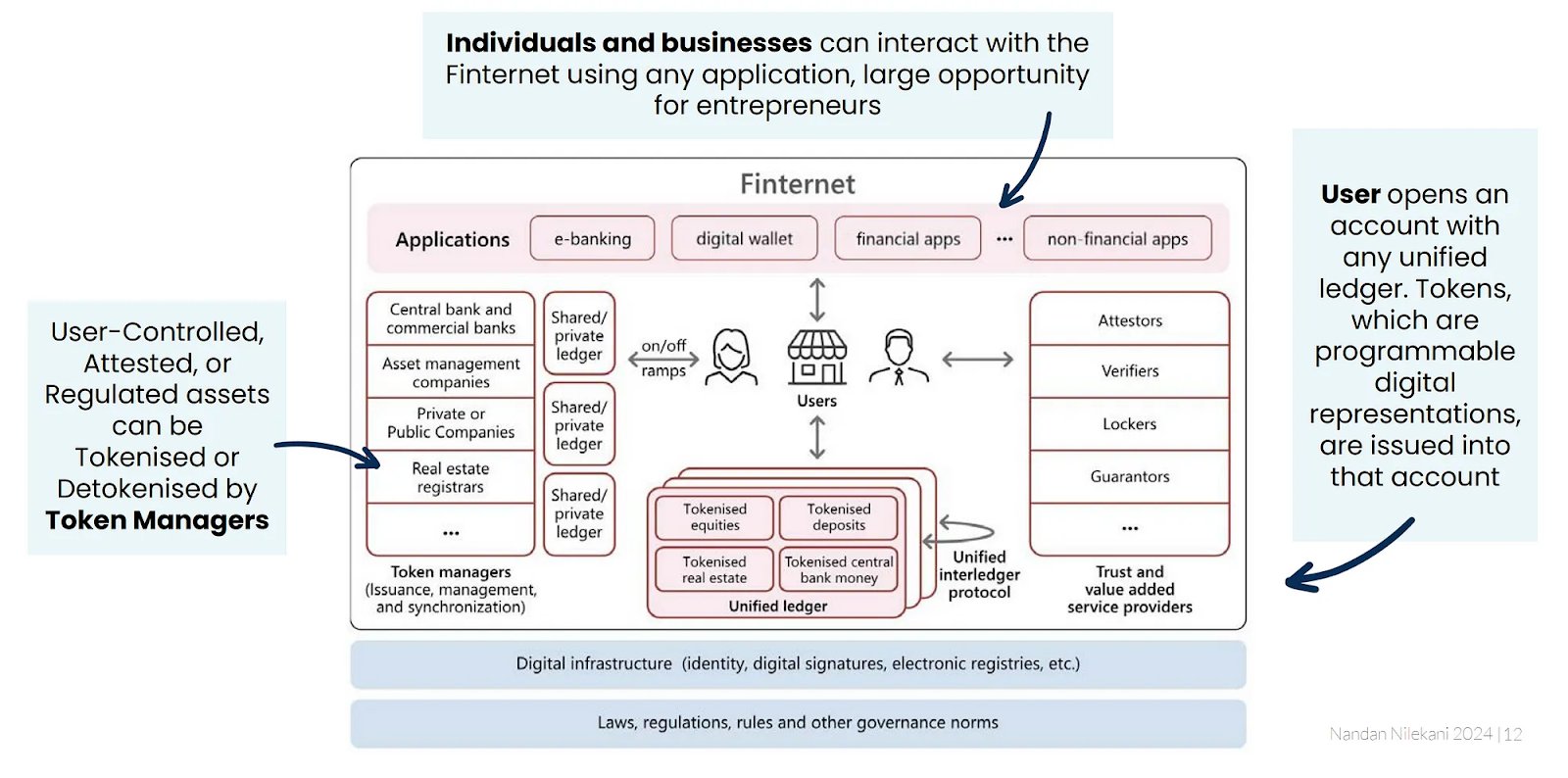
Source: Nandan Nilekani’s Presentation at the Peterson Institute for International Economics event on “A vision of the future financial system”, Washington DC, 19 April 2024.
There are currently over 5 million freelancers in Nigeria, and this number is expected to grow to 10 million by 2027. As more people turn to freelancing, the need for better financial infrastructure becomes increasingly urgent.
Google Trends and data from various platforms indicate a steady increase in searches for terms such as "how to get paid online in Nigeria" and "PayPal alternatives." This shows that many Nigerian freelancers are struggling to find reliable payment solutions.
For a Finternet-enabled platform to work in Nigeria, the platform must first obtain a Payment Service Provider (PSP) license from the Central Bank of Nigeria to legally operate in the country.
The platform must also comply with the Nigerian Data Protection Regulation (NDPR), which is designed to protect the personal data of users. This is crucial in maintaining trust and ensuring the privacy of freelancers and customers.
Additionally, the platform must match the Anti-Money Laundering (AML) and Know Your Customer (KYC) standards. These regulations help prevent fraud and illegal activities, ensuring that all users are properly verified and that financial transactions are safe.
To ensure smooth operations, the platform will need to collaborate with approved settlement providers and custodians. These partners help process payments and manage funds securely, which is vital for maintaining a reliable financial ecosystem.
Finally, engaging with regulators early through programs like sandboxes or pilot approvals can make the adoption process easier. These programs allow platforms to test their services in a controlled environment before full-scale launch, ensuring they meet all necessary standards and regulations.
Finternet needs to have secure and reliable APIs (Application Programming Interfaces) that enable smooth communication between various systems, such as payment gateways, banks, and freelancing platforms, to operate in Nigeria.
Secure payment rails are also essential for safe and seamless financial transactions. These payment rails will need to support both local and international payments, allowing freelancers to receive funds from clients worldwide while adhering to security standards to prevent fraud and ensure the safety of users' funds.
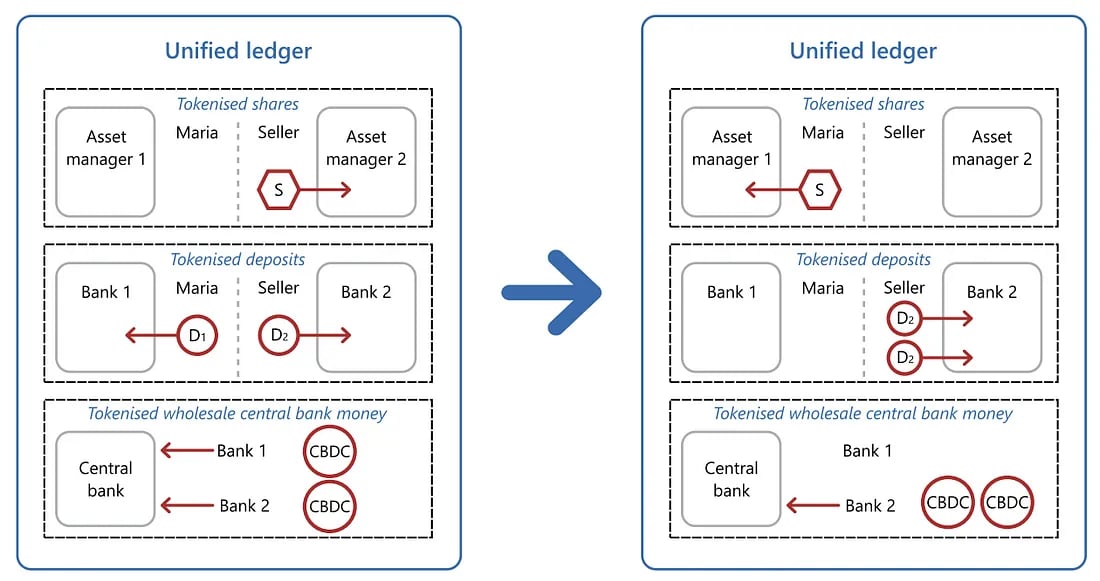
Source: Bank of International Settlements 2023
A digital ID system will also be necessary to verify users and ensure compliance with KYC and AML regulations. This system will help streamline the onboarding process, making it easier for freelancers and clients to verify their identities without the need for manual checks.
Lastly, partnering with cloud infrastructure providers such as AWS, Azure, or local data centers will ensure the platform has the scalability and security needed to handle large volumes of transactions and protect users’ sensitive data.
Pilot Program: Begin by testing the system with 1,000 freelancers in Lagos and Abuja, two major cities in Nigeria. Partner with a local freelance platform, such as Terawork and Asuqu, to make this process easier. The goal is to understand how the system works in real-life scenarios, gather feedback, and address any issues that arise early on.
Integration Phase: Following the successful completion of the pilot, the next step is to integrate the system with digital tools that freelancers already utilise. This includes Wallets like MetaMask and Trust Wallet, Digital banks like Kuda, Moniepoint, or Carbon, and Global payment APIs like Stripe, PayPal, or Paystack.
This is to test how easily freelancers can receive payments, store tokens, and access financial tools through a single system.
Expansion Phase:
Once the platform is stable and trusted locally, scale up by partnering with global freelancing platforms, introducing the internet platform in other countries where freelance work is growing fast, and offering tools for businesses that hire freelancers to manage payments, contracts, and reviews easily.
Advocacy and Education:
To make the system successful, teach freelancers how it works through free online courses and workshops on using the tools, providing assistance with understanding legal rules such as taxes and anti-fraud measures, and highlighting the benefits of the platform. Additionally, build support communities where freelancers can ask questions and share tips.
Challenges | Solution |
Regulatory uncertainty | Early engagement with CBN, sandbox entry |
Trust issues | Transparent data handling, consumer education |
Platform resistance | Incentivize partnerships through revenue sharing |
Infrastructure gaps | Use a cloud-native, modular design for low-resources settings |
Existing Competitors
1. Payoneer
Helps freelancers get paid from clients around the world
Problem: Payments can take days to arrive
Problem: Charges high fees (for currency conversion, transfers, etc.)
Many freelancers lose part of their earnings due to these fees.
2. Wise (formerly TransferWise)
Known for fast international transfers and low exchange fees
Problem: Not fully connected to local banks, wallets, or mobile money systems
Problem: Lacks features like smart contracts, token rewards, or loyalty tools
Mostly useful for one-time transfers, not long-term freelance needs
3. Local Fintechs (like Kuda)
Focus mostly on payments within one country
Problem: Not built for freelancers working with international clients
Problem: Don't support multiple platforms or blockchains (no cross-platform or cross-border integration)
Hard for freelancers to manage foreign payments, identity, or invoice financing
1. One Unified Experience
Everything in one place: payments, ID, invoices, reputation, rewards
No need for multiple apps or accounts
Freelancers receive faster payments, build their profiles, and manage their work more easily.
2. Full Interoperability
Works across platforms like Upwork, Fiverr, and local sites like Terawork
Connects smoothly to wallets, digital banks, and mobile money
Freelancers can move their reputation and money from one platform to another without starting from scratch.
Compatible with different blockchain networks and payment systems
3. Better Exchange Rates & Instant Payments
Uses tokenized currencies and blockchain tools to reduce costs
Offers instant payment settlement with much better rates than banks or traditional systems
Saves freelancers money while giving them quick access to their funds
4. Built for Growth
Adds tools like invoice financing, smart contracts, digital ID, and token-based rewards
Helps freelancers get better jobs, earn trust, and even access loans or insurance in the future
Scales easily from 1,000 users to millions, including small businesses and creative workers
Risk | Likelihood | Impact | Mitigation |
Regulatory pushback | Medium | High | Precompliance reviews, sandbox testing |
Currency fluctuations | High | Medium | Multi-currency wallets, hedging tools |
Cybersecurity threats | Medium | High | End-to-end encryption, regular audits |
User resistance | Low | Medium | Training, community support |
In the first year, the goal is to bring 50,000 freelancers onto the platform. Onboarding will occur through local partners, online campaigns, workshops, and freelancer communities.
One of the biggest improvements will be in payment processing time. Currently, many freelancers wait 3 to 7 days to receive payment after completing a job. With Finternet, payments will be almost instant, processed in just a few seconds using blockchain and token-based tools.
Another major benefit is the sharp drop in transaction fees. Freelancers today lose 10% to 15% of their earnings to fees charged by platforms, banks, and payment services. With Finternet, those fees will drop to less than 2%, meaning freelancers can keep more of what they earn.
The platform also aims to establish connections with at least 10 major partners within the first year. Integration will occur with freelancing platforms, digital banks, crypto wallets, and fintech apps to make it easier for freelancers to transfer money, access credit, and establish a financial history.
To measure the level of satisfaction among freelancers with the system, Finternet will conduct surveys and Net Promoter Score (NPS) checks regularly, every few months.
Nigeria is a thriving community of freelancers, with millions of people working online in various fields, including writing, design, and programming. However, they face challenges with receiving payments in foreign currency, high fees, and the need to manage their finances across multiple apps. The lack of easy, connected tools hinders their progress and makes saving or investing particularly challenging.
This is where Finternet comes in — a powerful, connected network that enables faster, cheaper, and safer cross-border payments. It can help freelancers get paid quicker, manage money in any currency, earn rewards through tokens, and store their work experience as digital credentials. With smart contracts and shared digital tools, it eliminates the need for intermediaries, helping freelancers grow financially.
Nigeria is already halfway there — and with Finternet, it could go all the way.
Freelancing and Digital Workforce
World Bank – Online Gig Work in Sub-Saharan Africa
https://thedocs.worldbank.org/en/doc/072814bbbb56aebd4db387154c3df3a5-0460012023/original/Working-Without-Boarders-Online-Gig-Work-OVERVIEW.pdf
Payoneer – Top Freelancing Countries
https://blog.payoneer.com/freelancers/top-10-freelancing-countries/
Internet Access and Connectivity
DataReportal – Nigeria Digital 2025 Report
https://datareportal.com/reports/digital-2025-nigeria
Statista – Nigeria Internet Usage
https://www.statista.com/statistics/183849/internet-users-in-nigeria-since-2000/
The Guardian Nigeria – Connectivity Gap
https://guardian.ng/business-services/81-of-nigerians-lack-meaningful-internet-connectivity/
Wikipedia – Internet in Nigeria
https://en.wikipedia.org/wiki/Internet_in_Nigeria
Fintech & Payments Infrastructure
Moniepoint – Transaction Volumes and SME Impact
https://www.moniepoint.com/news/how-moniepoint-supports-small-businesses-in-nigeria/
Flutterwave – 2023 Year in Review
https://www.flutterwave.com/ng/blog/flutterwave-2023-year-in-review/
Statista – Banking Industry in Nigeria
https://www.statista.com/topics/9747/banking-industry-in-nigeria/
Statista – Nigeria Import and Export Statistics
https://www.statista.com/statistics/1118914/nigeria-value-of-imports-and-exports/
Statista – Nigeria Trade Volume
https://www.statista.com/statistics/1109018/nigeria-balance-of-trade/
BusinessDay – FX Transfer Delays & SME Impact
https://businessday.ng/technology/article/speed-affordability-top-priorities-for-africas-cross-border-solutions/
Cryptocurrency and Blockchain Adoption
Chainalysis – Sub-Saharan Africa Crypto Adoption 2024
https://www.chainalysis.com/blog/subsaharan-africa-crypto-adoption-2024/
CBN – VASP Guidelines (2024)
https://www.cbn.gov.ng/Out/2024/FPRD/VASP%20Guidelines%202024.pdf
https://nairametrics.com/2023/12/22/cbn-lifts-ban-on-crypto-transactions-introduces-guidelines-for-vasps/
SEC Nigeria – Statement on Digital Assets
https://sec.gov.ng/statement-on-digital-assets-and-their-classification-and-treatment/
Developer Talent and Infrastructure
OKX x LinkedIn – Blockchain Talent Report
https://www.okx.com/academy/blockchain-talent-report
TradingView – Blockchain Developer Growth in Nigeria
https://www.tradingview.com/news/cointelegraph:595bb5462094b:0-nigeria-s-blockchain-future-depends-on-local-talent-experts-say
Regulatory and Policy Landscape
CBN – Digital Financial Services and Financial Inclusion Report
https://www.cbn.gov.ng/Out/2024/RSD/Digital%20Financial%20Services%20and%20Financial%20Inclusion%20in%20Nigeia%2C%20Milestones%20and%20New%20Direction.pdf
SEC Nigeria – Digital Asset and Sandbox Guidelines
https://sec.gov.ng/statement-on-digital-assets-and-their-classification-and-treatment
https://sec.gov.ng/regulatory-sandbox/
NIBSS – Nigeria Inter-Bank Settlement System
https://nibss-plc.com.ng/about/
Trade and Remittance Statistics
World Bank – Nigeria Trade and Remittance Data
https://data.worldbank.org/country/nigeria
World Bank – UK–Nigeria Remittance Corridor
https://remittanceprices.worldbank.org/en/corridor/United-Kingdom/Nigeria
World Bank – Internet Users in Nigeria (% of Population)
https://data.worldbank.org/indicator/IT.NET.USER.ZS?locations=NG