
The following is Methods of Prosperity newsletter 137. It was originally deployed January 29, 2026. As of October 8, 2026, original subscribers have received up to Methods of Prosperity newsletter no.173: Samuel Irving Newhouse Sr. (1895–1979).
Methods of Prosperity newsletter is intended to share ideas and build relationships. To become a billionaire, condition yourself to think like a billionaire. That’s the agenda of this newsletter. Methods of Prosperity studies remarkable people in history who demonstrated what to do (and what not to do). Let me know how I can help you out. For more information about the author, please visit seanallenfenn.com/FAQ.
“We don’t underwrite to hope. We underwrite based on critical factors for success under our control.”
– Robert F. Smith
Most entrepreneurs chase freedom by building something new (a product, an app, a “vision”).
It’s often before they have repeatable execution, distribution, or financial leverage.
Not Robert F. Smith.
He pursued wealth by becoming a systems-driven operator. Then he applied his skill to become a disciplined buyer.
How?
By focusing on enterprise software where outcomes are more engineerable.
This is the anti-startup mindset.
Reduce your dependence on luck, virality, perfect timing, or one breakthrough.
Hope is not a strategy.
Enterprise software tends to have contractual, recurring revenue.
Which makes it easier to finance, forecast, and improve. That’s why he talks about software contracts as being “better than first-lien debt.”
“Software contracts are better than first-lien debt… [they] will not pay the interest payment… until after they pay their software maintenance or subscription fee. We get paid our money first.”
He never chased the next consumer rocketship.
He focused on structures that prioritized collecting cash.
A typical founder is the “source code.” Smith built a repeatable process.
One with standardized input.
That gives you standardized output.
So performance can scale beyond one person’s heroic effort.
Advertisement:
Opulence is Sean Allen Fenn’s follow up to 2022’s Surplus. We have plenty of music, and that’s the beauty of it. We’re on the cusp of a new era of technological abundance. This is the soundtrack.
Out Now Wherever You Stream Your Music
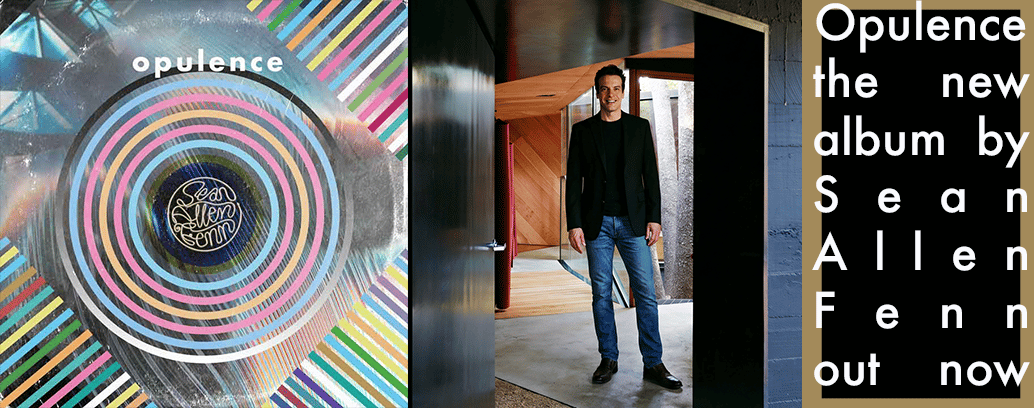
Robert F. Smith is the founder, Chairman, and CEO of Vista Equity Partners. It’s a global private equity firm. One that’s focused on enterprise software and technology businesses. He founded Vista Equity Partners in 2000 as a technology-focused private equity firm. It’s based in Austin, Texas.
Smith oversees the firm’s investment strategy, governance, and investor relations. He sits on key investment and management committees. Vista manages more than $100 billion in equity assets. As well as a portfolio of over 90 enterprise software and technology-enabled companies.
Smith earned a chemical engineering degree from Cornell University. He worked in engineering and R&D, receiving multiple U.S. and European patents. He completed an MBA with honors at Columbia Business School in 1994. He joined Goldman Sachs in mergers and acquisitions. There he focused on technology and software deals. He advised on more than $50 billion in transactions with firms. Such as Apple, Microsoft, Texas Instruments, eBay, and Yahoo.
Smith left Goldman Sachs in 2000 to launch Vista Equity Partners. He targeted value creation in enterprise software through operational and strategic improvements. Vista and Smith have received multiple industry honors. Vista is a top-performing private equity firm. “Game Changer of the Year”. That’s how Private Equity International described Robert F. Smith in 2017.
His estimated net worth is around $10 billion as of 2025. His philanthropic activity includes work through his Fund II Foundation. As well as support for education, civil rights, and African American cultural initiatives. He served on the board of Robert F. Kennedy Human Rights and was its Chairman from 2013 to 2020.
He warns against the following error:
When status narratives replace skill, and speed replaces strategy.
“Rule number one: You need to know that nothing replaces actually doing the work. Whenever a young person tells me they aspire to be an entrepreneur, the first question I ask them is why. For many they think it’s a great way to get rich quick. I’m going to write an app, build a company, make a few million dollars before I’m twenty five. Look, that can happen. But frankly, that’s awfully rare.”
– Robert F. Smith (to the Morehouse College class of 2019)
Most people treat money like a mood: “If I feel confident, I’ll be rich.”
Not Robert F. Smith.
He knows that wealth is the byproduct of controllables stacked over time.
Advertisement:
Owning a home now costs $52K more per year than renting. Families are stuck as forever renters. We’re seizing this shift. Buying 100+ unit assets in growth markets.
Few get in.
Accredited investors can gain access at Inveresta.com.
We’re improving quality of life at scale for hard working families.
This is not an offer, solicitation of an offer, to buy or sell securities. Past performance is not an indication of future results. Investing involves risk and may result in partial or total loss. Prospective investors should carefully consider investment objectives, risks, charges and expenses, and should consult with a tax or legal adviser before making any investment decision.
Based upon what I’ve learned from paying attention to Robert F. Smith, this is what I would do:
Remove all emotion from underwriting (this is not easy).
The reality is we use emotion to make decisions. Our brain tricks us into making emotional decisions and then rationalizing them.
When emotions run strong, our brains don't weigh pros and cons like a computer. Instead, we often feel an intuitive pull or aversion first.
Emotions, gut reactions, past associations, or automatic biases are driving our reactions.
And then our conscious mind steps in to construct a logical-sounding story. One that justifies the choice we’ve already leaned toward. That’s post-hoc rationalization.
Recognizing this pattern is actually empowering. We catch ourselves building a fancy justification castle around a gut feeling.
That’s when we ask: "Is this reasoning leading me, or am I reverse-engineering it to protect how I already feel?"Freedom comes from reducing dependence (never be needy).
This is esoteric: Don’t assign too much importance to a goal. Why? Being dependent creates "excess potential".
This energetic imbalance attracts opposing "balancing forces" to restore equilibrium.
Reduce importance to neutral levels, treating desires as preferences, not lifelines.
The person who isn’t desperate always wins.
No deal is better than a bad deal. Read “Marc Rowan Calls the Private Credit Shots.”The rich don’t chase outcomes; they design systems that make outcomes probable.
What I love about Robert F. Smith is his operational/system mindset. When you focus on systems instead of goals, you focus on what you can control.
Avoid outcome bias.
It’s a cognitive bias in which people judge the quality of a decision based on its eventual outcome. It doesn’t matter if it turned out good or bad. Instead, judge the quality of your decision on the soundness of the reasoning. As well as on the quality of information. At the time you made the decision, what was your process?
In other words, we retroactively rate a decision as “smart” or “good” if it led to a positive result.
Even if we miscalculated the risk.
We didn’t use a clear reason.
It could have been a good result based on incomplete information.
In practice, we often have to make decisions based on incomplete information anyway.
But we rate the same exact decision as "foolish" or "bad" if luck turned against it and produced a negative result.
This ignores that many outcomes involve chance and uncontrollable factors.
As well as randomness beyond the decision-maker’s control.
Systems over vibes
“Financial performance of a company is just a trail in the sand of the operational performance.” “The more standardized the input, the more standardized the output. You have to design your system, and you have to believe in it.”
I like you,
Sean Allen Fenn
PS: The purpose of wealth is freedom. You can have financial freedom, but not by yourself. That’s why we’re building our core group of people. It’s a financial fitness community to help each other achieve financial freedom. Whatever method of prosperity you choose, don’t go at it alone. You can now join our Methods of Prosperity community on Telegram here:
Advertisement:
Are you seeking new perspectives and fresh ideas? Do you have a willingness to explore new possibilities? Stay ahead of the curve and make the most out of emerging opportunities. Your guide on this journey is Sean Allen Fenn, host of Hidden Secrets Revealed Live (HSRL). Recorded live every Wednesday on 𝕏 .
