
The world of cryptocurrency has always been a double-edged sword, offering the promise of decentralized financial freedom on one side, while harboring the dark reality of unregulated fraud on the other. Recently, the digital asset landscape was rocked by a devastating event that left thousands of investors counting their losses: the massive Dexrp Scam.
Pitched as a revolutionary Decentralized Exchange (DEX) built on the Ripple Ledger (XRPL), DeXRP and its native token, DXP, promised to reshape the future of digital trading. Instead, it became a cautionary tale of deception. Based on comprehensive investigative reports and coverage from Sundul, this article delves deep into the anatomy of the Dexrp scam, how investors were lured in, the mechanics of the fraud, and the critical lessons business professionals and the general public must learn to navigate the treacherous waters of cryptocurrency investments.
To understand how the Dexrp Scam became so massive, one must first understand the psychological and technological bait used to hook investors. According to the initial marketing materials heavily promoted across crypto forums and social media, DeXRP was marketed as the ultimate decentralized exchange for the XRP ecosystem.
The project claimed it would solve the traditional problems of decentralization—namely, high gas fees and slow transaction times—by leveraging the inherent speed and efficiency of the XRP Ledger. The developers promised a hybrid model combining Automated Market Makers (AMM) with a traditional order book, ensuring ultra-low fees through dynamic auctions.
At the center of this ecosystem was DXP, the platform's native utility token. The pitch to early investors was intoxicating: buy DXP during the Initial DEX Offering (IDO) at a fraction of a cent (reportedly around $0.005 to $0.010), and watch your investment multiply exponentially when the token officially listed on major exchanges at a projected price of $0.35. They promised staking rewards, governance voting rights, and a deflationary mechanism. The narrative was meticulously crafted to trigger the ultimate investor vulnerability: the Fear Of Missing Out (FOMO).
A legitimate-looking digital footprint is the first requirement for any modern Crypto Scam. For DeXRP, this hub of deception was DEXRP. According to the breakdown provided by Sundul, the website was designed with a sleek, professional user interface that mimicked top-tier decentralized finance (DeFi) platforms.
Dexrp.org featured complex roadmaps, whitepapers filled with technical jargon that sounded revolutionary but lacked substantive architectural proof, and a countdown timer to the "explosive" exchange listing. The website also showcased fake partnerships and fabricated audit badges, falsely reassuring visitors that the project's smart contracts had been verified by leading blockchain security firms.
For the average retail investor, and even for seasoned business professionals looking to diversify corporate treasuries into digital assets, DEXRP.ORG looked incredibly convincing. The site integrated a seamless Web3 connection, allowing users to connect their crypto wallets easily and swap their stablecoins or XRP for DXP tokens. The user experience was so frictionless that it masked the underlying reality: funds were flowing directly into developer-controlled wallets with no actual liquidity being locked for the project's future.
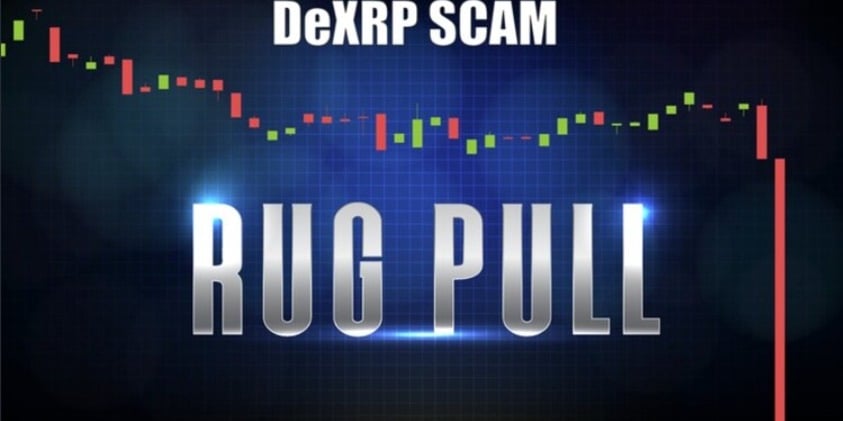
The execution of the Dexrp Scam was a masterclass in modern digital fraud, commonly referred to in the industry as a "rug pull." However, it was executed with a level of sophistication that managed to bypass the initial skepticism of many investors. As detailed by Sundul, the scam unfolded in several distinct phases:
1. Aggressive Community Building and Astroturfing
The perpetrators did not just rely on organic growth; they manufactured it. They flooded platforms like Binance Square, Telegram, and X (formerly Twitter) with paid influencers and bot accounts. These accounts constantly shilled the DXP token, creating fake charts indicating "whale accumulation" and spreading baseless rumors about imminent tier-1 exchange listings. This artificially inflated community sentiment created a feedback loop of hype.
2. The Presale Illusion
During the presale phase, investors were encouraged to buy DXP directly through DEXRP. To create artificial scarcity and urgency, the developers capped the token supply and created tiered pricing the earlier you bought, the cheaper it was. Investors were told their tokens would be "vested" or locked for a short period to prevent a massive sell-off upon listing. In reality, this lock-up period was simply buying the scammers time to accumulate more funds.
3. The Liquidity Drain
In a legitimate DeFi project, funds raised during a presale are paired with the native token and locked in a smart contract to provide trading liquidity. In the case of DeXRP, the developers exploited backdoor functions hidden within their smart contracts. Instead of locking the liquidity, they systematically siphoned the USDT, Ethereum, and XRP that investors had deposited, moving it through cryptocurrency mixers to obscure the transaction trail.
4. The Disappearance
The final blow came just hours before the highly anticipated "official listing." Without warning, DEXRP went offline, displaying a simple "server error" or "domain not found" message. Simultaneously, the project's official social media channels were deleted, and the Telegram groups were muted. The developers vanished into the digital ether, leaving investors holding millions of worthless DXP tokens that could not be sold or traded anywhere.
The scale of the financial hemorrhage caused by the Dexrp Scam is staggering. According to the investigative reporting by Sundul.com, preliminary estimates suggest that investors globally lost tens of millions of dollars.
The victims were not just inexperienced retail traders. The sophisticated nature of the project's whitepaper and the professional facade of DeXRP.org managed to deceive institutional investors, small business owners, and seasoned crypto veterans. Many individuals poured their life savings, retirement funds, and business capital into DXP, swayed by the promise of staking returns that outpaced traditional financial instruments.
Sundul highlighted several tragic testimonials from victims who had taken out loans or leveraged their existing portfolios to buy into the DXP presale. The sudden collapse of the project resulted in a total wipeout of these funds, underscoring the severe real-world consequences of a Crypto Scam. This event has sent shockwaves through the XRP community, damaging the reputation of legitimate developers building on the ledger and prompting calls for stricter regulatory oversight.
For business professionals, wealth managers, and corporate investors, the Dexrp Scam is a vital case study in risk management. As digital assets increasingly intersect with traditional finance, corporate entities are exploring DeFi for treasury management, yield generation, and cross-border settlements.
The DeXRP scandal highlights a critical vulnerability in corporate due diligence. Traditional financial metrics such as cash flow analysis, corporate governance structures, and historical earnings do not seamlessly apply to decentralized projects. When assessing a digital asset or DeFi protocol, business professionals must adapt their analytical frameworks.
A key takeaway is the danger of "Information Asymmetry" in the crypto space. The developers behind a project hold all the technical cards. If a business professional cannot personally read and verify the open-source code of a smart contract, they are entirely reliant on third-party audits. As seen with DEXRP, these audits can be easily fabricated. Therefore, corporate involvement in crypto requires either in-house blockchain technical expertise or partnerships with verified, highly reputable Web3 security firms.
Furthermore, the collapse of DXP illustrates the severe liquidity risks inherent in low-cap or newly launched tokens. Unlike traditional equities, where regulatory bodies can halt trading or investigate anomalies, the decentralized market operates 24/7 without a safety net. When a rug pull occurs, the liquidity drops to absolute zero instantly, making recovery impossible.
The catastrophic fallout from the DXP project provides a clear blueprint of the red flags investors must watch for. To prevent falling victim to the next major Crypto Scam, the general public and professional investors should adhere to the following strict guidelines:
1. Verify the Team (Avoid Anonymous Founders)
While pseudonymity is a core tenet of crypto culture (e.g., Satoshi Nakamoto), investing large sums of money into a project run by anonymous avatars is a massive risk. Legitimate projects aiming to handle millions in liquidity usually have public-facing teams with verifiable LinkedIn profiles and histories in the tech or finance sectors. The DeXRP team remained entirely faceless, hiding behind generic usernames.
2. Scrutinize the Audits
Never take a "Certified Secure" badge on a website at face value. DEXRP featured multiple fake security logos. Investors must find the name of the auditing firm, visit that firm's official website independently, and search for the specific audit report for the token (like DXP). Read the report to see if there are any "critical vulnerabilities," such as the owner retaining the ability to pause trading, mint infinite tokens, or drain the liquidity pool.
3. Beware of Unrealistic Guaranteed Returns
In finance, risk and reward are directly correlated. The promises made by DeXRP guaranteed 10x to 50x returns, massive staking APYs, and risk-free passive income are the hallmark of a Ponzi scheme or a rug pull. If a project promises returns that vastly outperform the broader market without a clear, sustainable, and mathematically sound revenue generation model, it is almost certainly a scam.
4. Analyze Tokenomics and Liquidity Locks
Before investing in a presale, demand transparency regarding tokenomics. A massive red flag for DXP was the disproportionate amount of tokens controlled by the developers compared to the public float. Furthermore, legitimate projects lock their liquidity pool tokens using third-party smart contracts (like Team Finance or Unicrypt) for a set period (usually 1-2 years). If the developers can withdraw liquidity at any moment, your money is not safe.
5. Look Past the Marketing Hype
Scammers use psychological manipulation. They will pay influencers to post charts claiming a token is the "next Bitcoin" or the "savior of the XRP ecosystem." Do not rely on Twitter or Telegram sentiment as due diligence. Base your investment decisions on the technological utility, the repository activity (like GitHub commits), and the actual adoption of the protocol.
6. Test the Infrastructure
Often, scam websites are poorly coded beneath their glossy exteriors. Links in the footer might lead nowhere, the "Whitepaper" might just be a plagiarized document from another successful project, and the social media accounts might have thousands of followers but zero actual engagement (a sign of purchased bot followers).
The Dexrp Scam stands as one of the most sobering reminders of the dark side of decentralized finance. By weaponizing the legitimate technological appeal of the XRP Ledger and wrapping it in a sophisticated digital illusion via DeXRP, the architects of the DXP fraud managed to orchestrate a massive theft that devastated both retail and professional portfolios.
As reported by Sundul, the fallout from this event continues to unfold, leaving a trail of financial destruction and unanswered questions. For the cryptocurrency industry to achieve mainstream, institutional adoption, it must find a way to balance the ethos of decentralization with mechanisms that protect users from malicious actors.
Until that balance is found, the responsibility lies squarely on the shoulders of the investor. Whether you are a business professional looking to diversify corporate assets or an individual exploring digital finance, rigorous due diligence, technical skepticism, and emotional discipline are your only defenses against the ever-evolving threat of a Crypto Scam. Let the story of DeXRP serve not just as news of a financial tragedy, but as a mandatory educational prerequisite for anyone looking to navigate the future of money.