
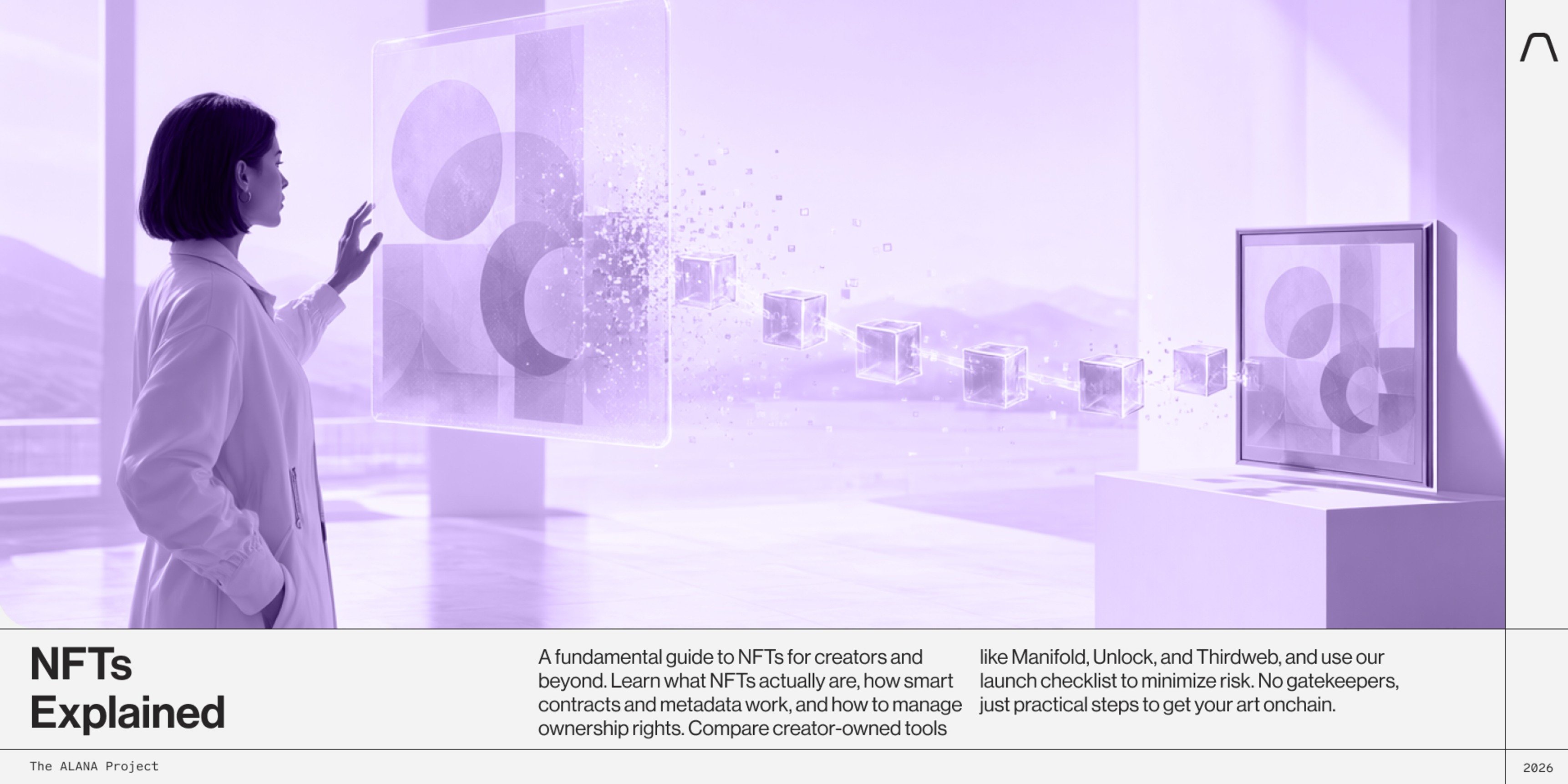
When I first heard about NFTs, my only thought was: FINALLY!
Finally, something that lets me sell digital art to a global audience, without gatekeepers and with a direct relationship with my buyers.
At the same time, another thought came in instantly: How do I get started?
I sold my first NFT in 2019 for about ~5k USDC, which means it is not comparable economically to today, but neither is how easy it is to bring your art onchain these days.
This article is a fundamental guide that can easily hold new information for creators who have had previous experience with dropping their art or services through NFTs. It is also a guide that explains what NFTs are, how they work under the hood, and the different options creators can choose from these days. So let's hop into the juicy bits.
NFT stands for non-fungible token. If you haven't read our previous guide on token standards, you might want to consider giving this one a read now:
A fungible item, so not an NFT, is interchangeable with another of the same kind. You can generally exchange one dollar for another dollar. A non-fungible item, such as an NFT, has an identity that makes it distinct: much like an art piece or a signed concert ticket of your favorite musician in the real world, but with more transparency and a public record.
Another important fact about NFTs is that they are not limited to art at all. They can be subscription services, memberships, concert tickets, access to a computer game or virtual space and beyond. The limit is set by your imagination in a sense and it would be wrong to think that NFTs = art only.
An NFT, like any other token on a blockchain, is in the end based on a so-called "smart contract." Smart contracts are tiny self-executing programs deployed on blockchains. For an in-depth read, I recommend this article on the ALANA blog:
Smart contracts therefore strictly follow the rules written into their code. NFT contracts use common standards so wallets and other applications can recognize and interact with the tokens.
On Ethereum, ERC-721 is a widely used standard for individually identified tokens. ERC-1155 can manage multiple token types, including unique items and editions, within one contract. The question of onchain royalties can be hardcoded by using the ERC-2981 standard. This one allows royalty information to be embedded directly into the token’s metadata, making it readable by any wallet or marketplace that checks for it.
In a nutshell, you can compare token standards to illustration files. You can save the same file as an SVG, a PNG, or an Adobe Illustrator file. The visual looks the same, but the underlying rules differ. The same goes for NFT token standards.
When a creator mints a token, they call the contract to create or register a token ID. The contract updates the blockchain state, and the transaction becomes part of the chain’s record. When the token is transferred, the contract updates the holder. This makes the token’s movement publicly verifiable without relying on a marketplace’s private database.
The media itself may be stored elsewhere, often on IPFS (Interplanetary File System), such as Pinata Cloud. The token can contain or refer to metadata, and that metadata may point to an image, song, document, or other file hosted offchain or through a decentralized storage network. This distinction is easy to miss: a blockchain can preserve the token record while a separate host or link that serves the media changes, disappears, or becomes inaccessible.
So an NFT is not, by itself, the artwork, a copyright certificate, or a guarantee that a file will remain available forever. It is a blockchain record with its own identifier and rules, often connected to other data. This brings us to ownership rights.
“I own the NFT” is a useful statement about control of the token. It does not answer every question someone might mean by "I own the art." The artist may retain, for example, the original copyright. In the real world, the difference might be between the original art and a signed lithograph, which means a collector may have permission to display the work under a license. The token might include commercial rights, or it might not. Those rights come from the creator’s terms and applicable law, not from the token standard alone.
It helps to separate a few layers here:
the token itself
the underlying creative work
the legal rights attached to that work
the access to the file or service that comes with the token
These four elements can move together if the creator designs them that way, but they aren't the same thing!
For creators, this distinction creates room for clearer agreements. A token can be linked to a license or explain what a holder may do, such as display an image or use a piece of music in a specific context. The terms should be written in plain language, available to buyers, and consistent with the creator’s legal obligations.
Code can enforce some actions, but it cannot make an unclear promise clear.
There's no black-and-white answer here. Depending on your needs, the answer to which platform or service to use, or even "writing" your own contract, can vary tremendously. Platforms offer convenience, but they also carry risks beyond your control, while launching your own contracts comes with different risks to consider. The good news is that all of them are usually manageable if you consider them carefully.
Answering the checklist questions will automatically give you an answer as to which service or platform might be the best fit for you. I have tested most of them, and they've all done a lot of work to improve their services over time. I will leave out classic platforms such as OpenSea and similar ones. Not because they are "bad," but because they don't represent creator freedom, which we believe is more important than ever for creators. Let's go:
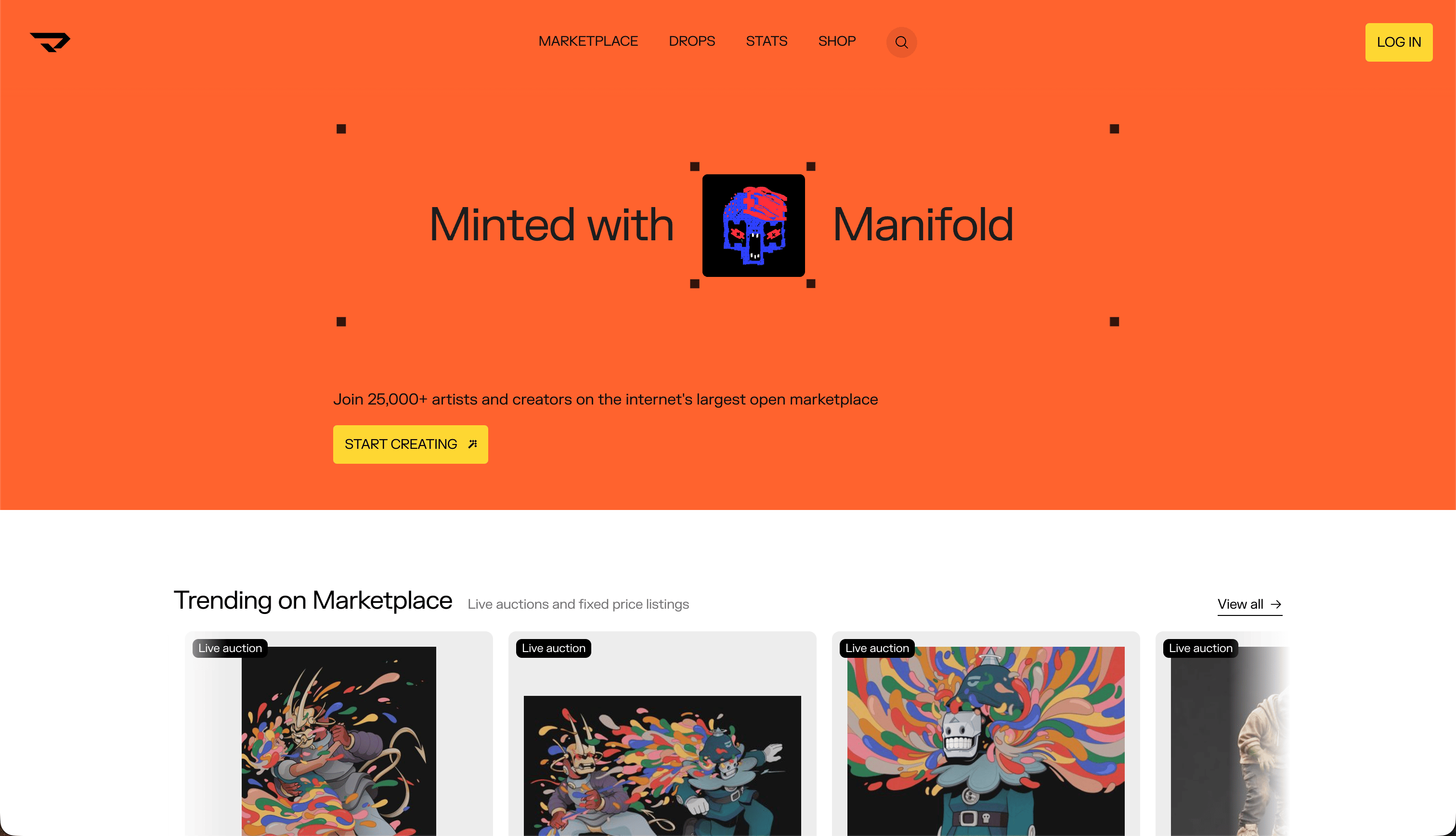
Manifold Studio is built around creator-owned contracts and on-chain publishing. Its tools support one-of-one works and editions, with mint pages and developer tools for custom experiences. This suits creators who want their own contract rather than issuing tokens solely within a marketplace. You still need to review the chain, transaction costs, product settings, and any platform terms before launching. Depending on the contract, an NFT launch can cost a lot before you even sell one piece!
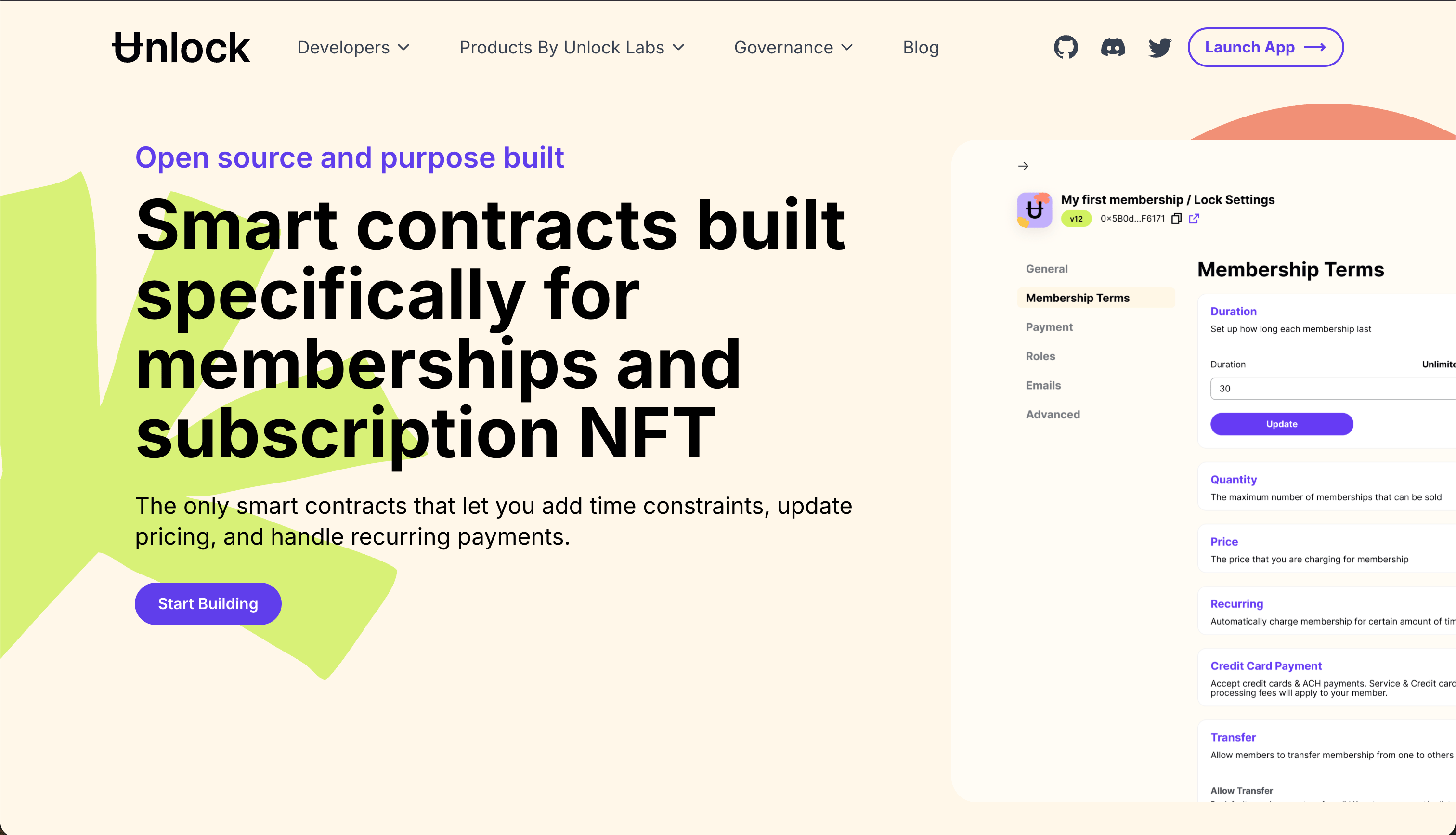
Unlock Protocol is a great fit for NFTs used as memberships or subscriptions. Its "Locks" are smart contracts that mint "Keys" and include features like expiration and access management. The protocol is open source and includes a dashboard and developer tools. That flexibility supports paid access to events, content, or community spaces, but it also means you need a plan to deliver those benefits and maintain the services that verify a membership. The contracts are easy to edit, which is a standout feature I haven't seen in any other tool suite.
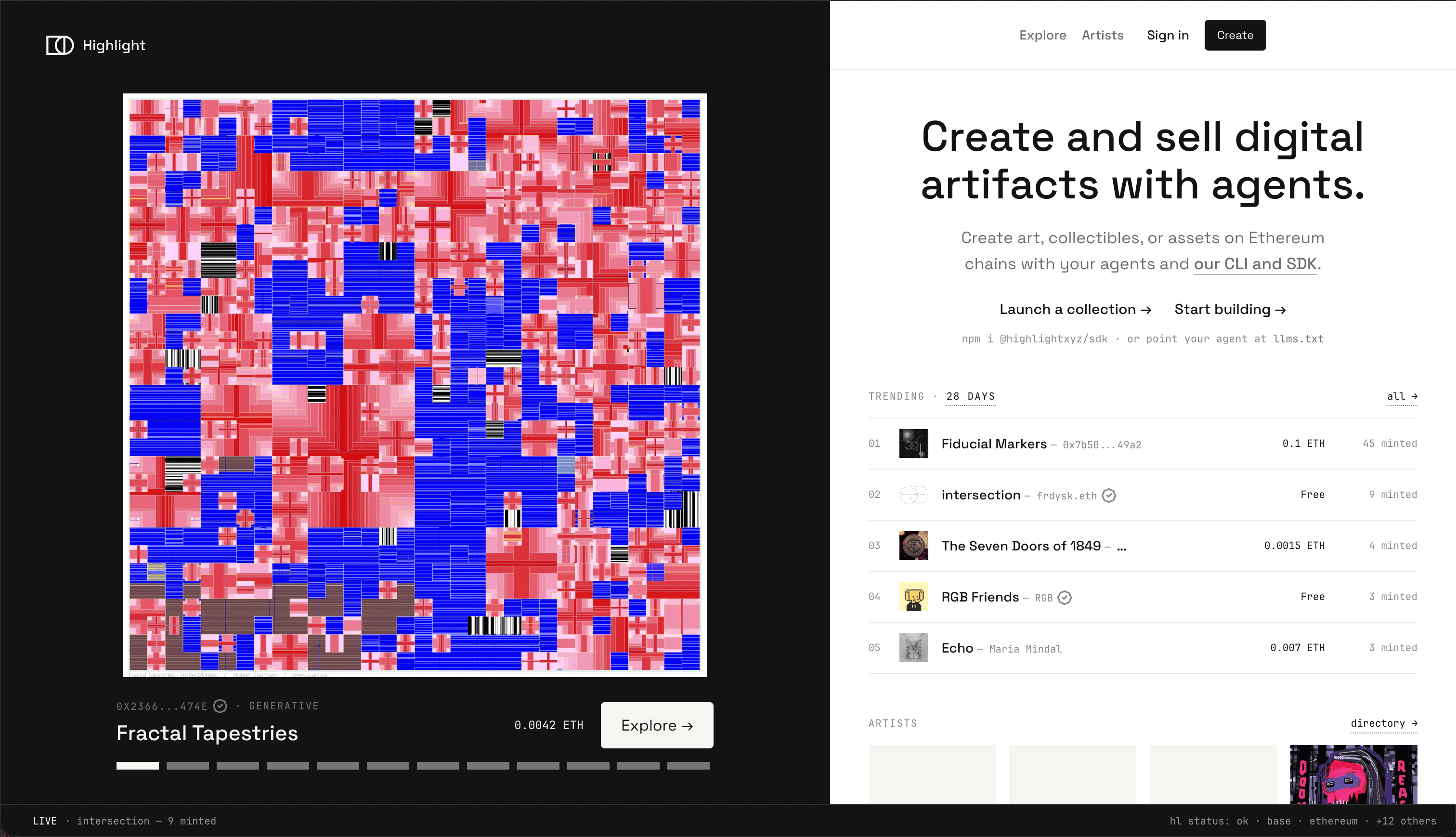
Highlight is another active option. Its current creator tools focus on collections and releases, from editions to generative work, and use its CLI and SDK. That can be useful for creators who want more control over a custom collection or workflow, though it is more developer-oriented than a simple storefront it comes with its own unique features worth exploring.
Thirdweb has been around the longest, to the best of my knowledge, and provides deployable NFT contracts and a dashboard, CLI, and SDK. Its NFT Drop contract supports features like allowlists and staged claims, which suit larger or more structured drops. This route gives creative builders more configuration choices, but it requires the creator to make more decisions about contract settings, network, funds, and administration than the others listed previously.
Zora offers tools and contract standards for publishing and collecting NFTs, along with a newer social token product that differs from an NFT. Check which Zora product you are using: its current Coins documentation describes tradable creator and post tokens, while its legacy NFT documentation covers NFT minting. A coin is not a substitute for an NFT with defined access or rights, so be aware of that.
Remember that the above options are not interchangeable, and "open" does not mean that every part is decentralized. A token may live on a public chain, but its mint page, hosting, or membership checks may depend on a company’s infrastructure. Before choosing, run through your checklist!
Start with the purpose of your NFT. Is this a collectible, an edition, a membership, a ticket, a certificate, or a subscription service? Match the token format to your community goals. A 1/1 art drop requires a different approach than an open membership or a soulbound (non-transferable) pass. Decide upfront whether tokens should be tradable, locked, or expiry-based, and ensure your supply and contract settings align with how you want your audience to interact with your work long-term.
Write the rights and terms before you mint. Say what the buyer receives, whether copyright stays with you, what uses are allowed, whether the token can be transferred, and how any promised access works. Put those terms somewhere buyers can read before signing, such as the metadata and the page you sell through.
Choose a chain and wallet with your audience in mind. Confirm that the platform supports the chain you want, that you can safely manage the wallet and recovery phrase, and that you understand how fees are paid. If you can, keep launch funds separate from a wallet you use for everyday activity. If the contract is supposed to be managed by more than one person, consider an institutional multi-signature wallet such as https://safe.global/.
The chain itself comes with its own decision array since for most creators, deploying on a Layer 2 network like Base, Arbitrum, or Optimism is the smarter and more cost-efficient choice: it keeps your work on an Ethereum-secure chain while dropping gas fees to fractions of a cent, making minting more accessible to your audience.
If you need to think cost-efficient but you want to choose a platform that supports pre-minting instead of minting on demand, prioritize platforms that offer lazy minting (or gasless minting). This means the token isn’t permanently recorded on-chain until a buyer purchases it, saving you from paying upfront gas fees and significantly reducing financial risk. It is comparable to on-demand but not exactly the same.
Compare platforms and contracts. Check who deploys and controls the contract, whether you can export or use the contract elsewhere, which settings can be changed later, and how sales proceeds and any creator earnings are handled.
Prepare the media and metadata. Decide where the original files, preview files, and token metadata will live. If using IPFS, content addressing does not by itself guarantee that someone will keep the data available; arrange pinning or other durable hosting and keep your own backups.
Set a price and supply you can explain. Estimate network fees and platform charges, and do not base the project on future resale royalties or a particular market price. If the platform offers a test environment, use it. Otherwise, test the collector journey with a small, low-stakes release or a trusted reviewer before announcing a larger drop.
Finally, tell people what to expect. Share the official mint link, contract details when available, price, supply, rights, and any access conditions. Explain which wallet and network are needed, how to spot fake links, and where updates will appear. Give people a way to participate without rushing into a transaction they do not understand.
I hope this covers everything I've ever asked myself before launching an NFT for my own use or for ALANA's. I tried to be thorough on purpose because, if done wrong, an NFT launch can reflect badly on you as a creator.
NFTs are infrastructure, not a shortcut around the hard parts of creative work or the work needed to build a creator's recognition. This means NFTs don't guarantee an audience, a resale market, a specific price, or income. A smart contract may publish royalty information, but that doesn't mean every marketplace or transfer will enforce creator royalties.
The token may outlive the website or marketplace that first displayed it, but its image or metadata can still rely on external storage. If the hosting arrangement fails, the token can remain visible onchain while the linked content is missing. Long-term access depends on where files and metadata live, who maintains them, and whether backups exist.
There are also practical risks to consider, such as wallets being compromised, transactions being difficult to reverse, and smart contracts containing errors or behaving differently than a buyer expects
These and more are all reasons to design carefully, not reasons every creator should avoid NFTs. If the token solves a real problem for your audience and the terms are plain, a small, well-tested release is a more useful start than a complicated launch built around speculation. Use the above checklist to plan your NFT launch and consider all risk aspects to avoid unforeseen outcomes.
An NFT is a portable, verifiable entry in a shared digital register. It can connect a creative project to provenance, access, and/or rules that an application can check. It can take something exclusive and expose it to a much wider audience.
I think NFTs are an amazing invention that creators can and should take full advantage of! The tricky part is figuring out what is the "right" route for your NFT sale, not if you should use the technology. That said, even physical items can benefit from an NFT-based certificate, for example, jewelry pieces.
That said, happy creating, and reach out to us on Telegram if you need help or just want to chat to someone who has done this before.
Happy Week, ALANA Adventurers!
This article was authored by Stella, a DAO member of The ALANA Project.

Find The ALANA Project on: