
When an exploit is unfolding, the team under attack needs people it can reach. Before anything goes wrong, it needs an incident plan, reliable threat intelligence, and clear rules for emergency help. Security Alliance (SEAL) works across those moments. We supported five SEAL initiatives and the main wallet of SEAL itself through our Ethereum Security QF round. We are telling their story together because they address connected security needs.

SEAL isn't one initiative. It's a group of volunteer security professionals that have been involved deeply in security and have realised that in order to be effective, there must be action at every step of the process for launching a product, a protocol or a piece of infrastructure that secures value. Therefore, SEAL operates different initiatives and groups especializing on the security actions that must be taken at every point.
They are most known for SEAL 911 , which connects teams under an active exploit with volunteer responders. Its public activity log offers a window into that work, though it isn't fully complete due to indicents that have not been publicly disclosed. Closely related to SEAL 911, SEAL Intel shares threat information with defenders; its SDK is public.
But arguably, incident response is just a bandaid for when things have already gone wrong. Preparation should come first, so SEAL Frameworks publishes guidance and best practises on operational security, wallet management, incident response, and other risks. SEAL Certifications develops standards for operational security beyond code audits. SEAL Safe Harbor gives protocols a way to set the terms for whitehat intervention before an exploit.
These 5 initiatives have their own teams, and there is an overarching SEAL multisig that can help fund these and future initiatives. Together, they made the 6 SEAL-related projects in Round 1. We also fund the SEAL multisig and the SEAL 911 Multisigs via ETH streams, outside of Round 1, as the first funding action that TheDAO Security Fund implemented.
SEAL publishes extensive information about the incidents that they deal with, in weekly summaries in their blog.
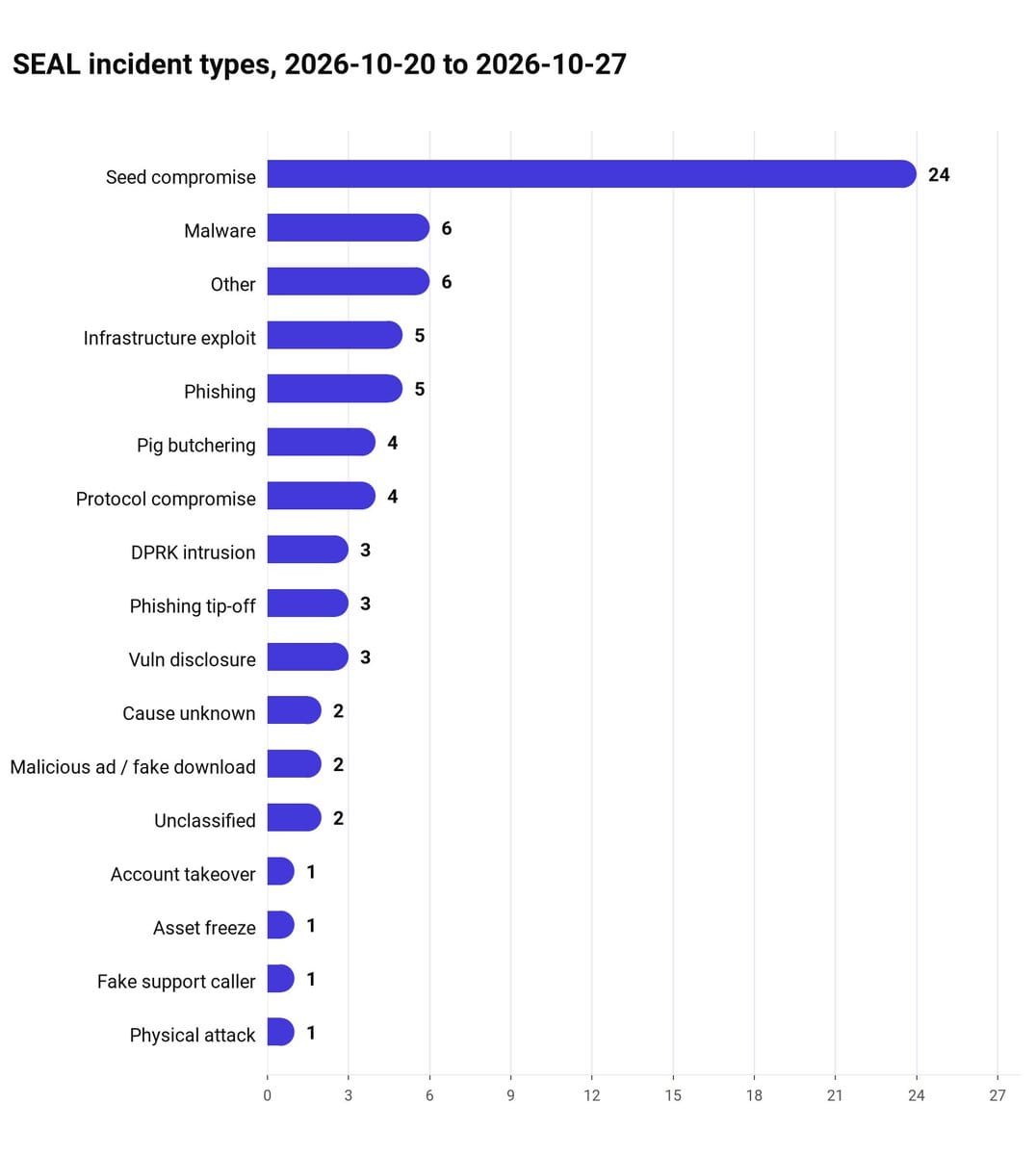
Being at the frontlines puts SEAL in the position to issue weekly security advisories:
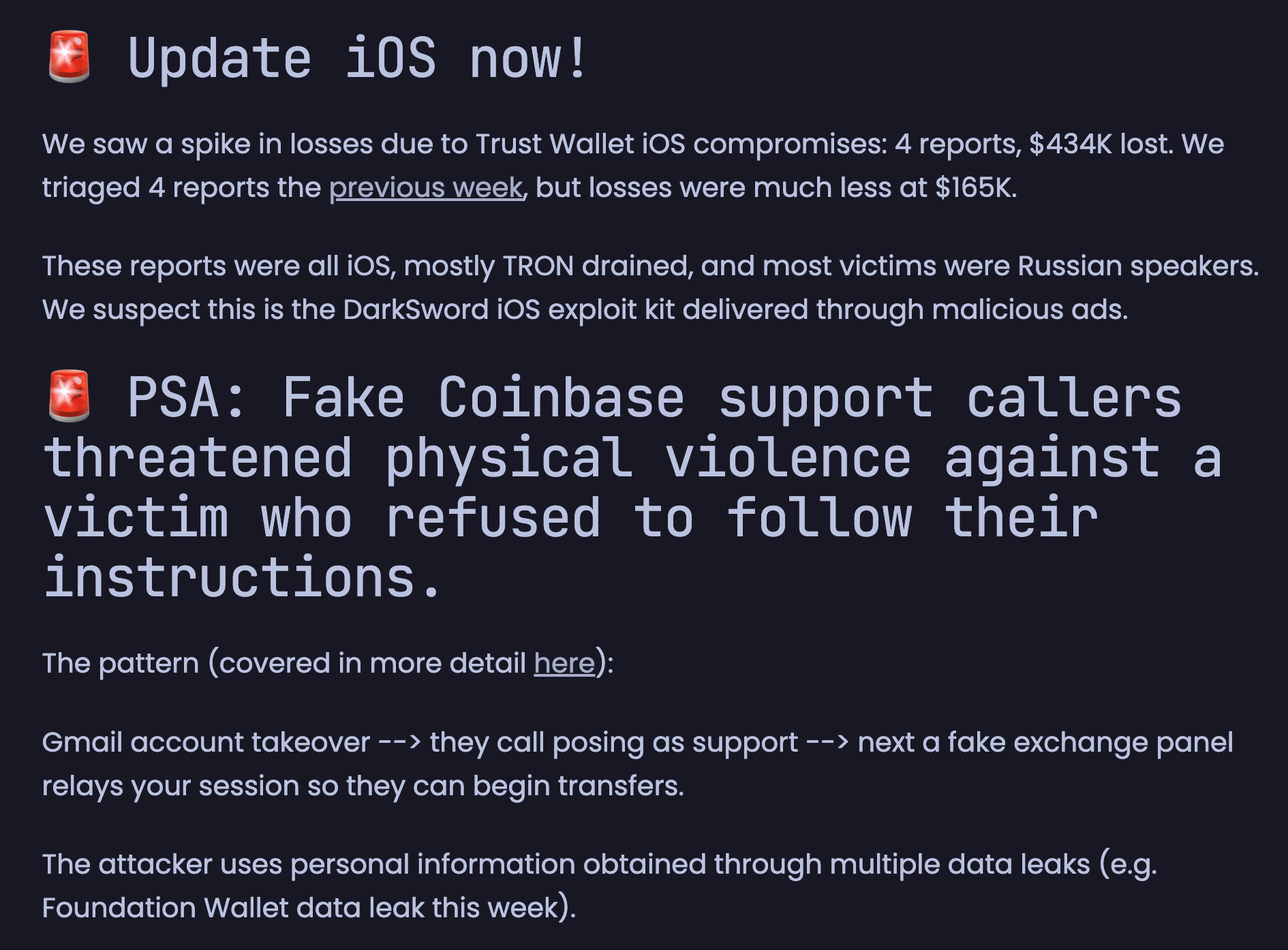
There is no lack of evidence that SEAL is THE reference team for incident response:

 Incident Update
We continue to work on the DSF Finance incident. Today, we'd like to share several important steps we've taken together with independent experts and specialized organizations.
Independent specialists have joined our efforts, helping us track asset movements

And some white hat hacks too, preventing bigger damage, coordinated with SEAL!

But of course, the other initiatives focusing on preventing the hacks have also thrived since the stream happened and since Round 1 ended.
Among them:
Seal Certifications is now outside of the pilot phase and operating fully. Their purpose is to assess the readiness of protocols and teams across (1) Multisig Ops, (2) Treasury Ops, (3) Incident Response, (4) DNS & Registrar, (5) DevOps & Infrastructure and (6) Identity & Accounts. TheDAO Security Fund's staking infrastructure was part of the pilot period for Seal Certs and got really good feedback from the team that was implemented to improve the resilience and security of the setup.
Launch of SEAL Labs, an collaboration program with external security experts to improve security across the ecosystem.
There are 2 streams to SEAL and SEAL 911 ongoing. Added to Round 1's funding, the total amounts to 363.47 ETH or around 715k USD.
Initiative | ETH sent | USD value |
|---|---|---|
SEAL 911 | 207.8974 | $413,136 |
SEAL | 86.8184 | $175,263 |
SEAL Frameworks | 21.8038 | $39,906 |
SEAL Certifications | 18.6892 | $34,592 |
SEAL Safe Harbor | 12.0986 | $22,145 |
SEAL Intel | 16.1582 | $29,427 |
Total | 363.4656 | $714,469 |
This is a sizeable amount, but it seems ridiculous when put next to the data on SEAL's work:
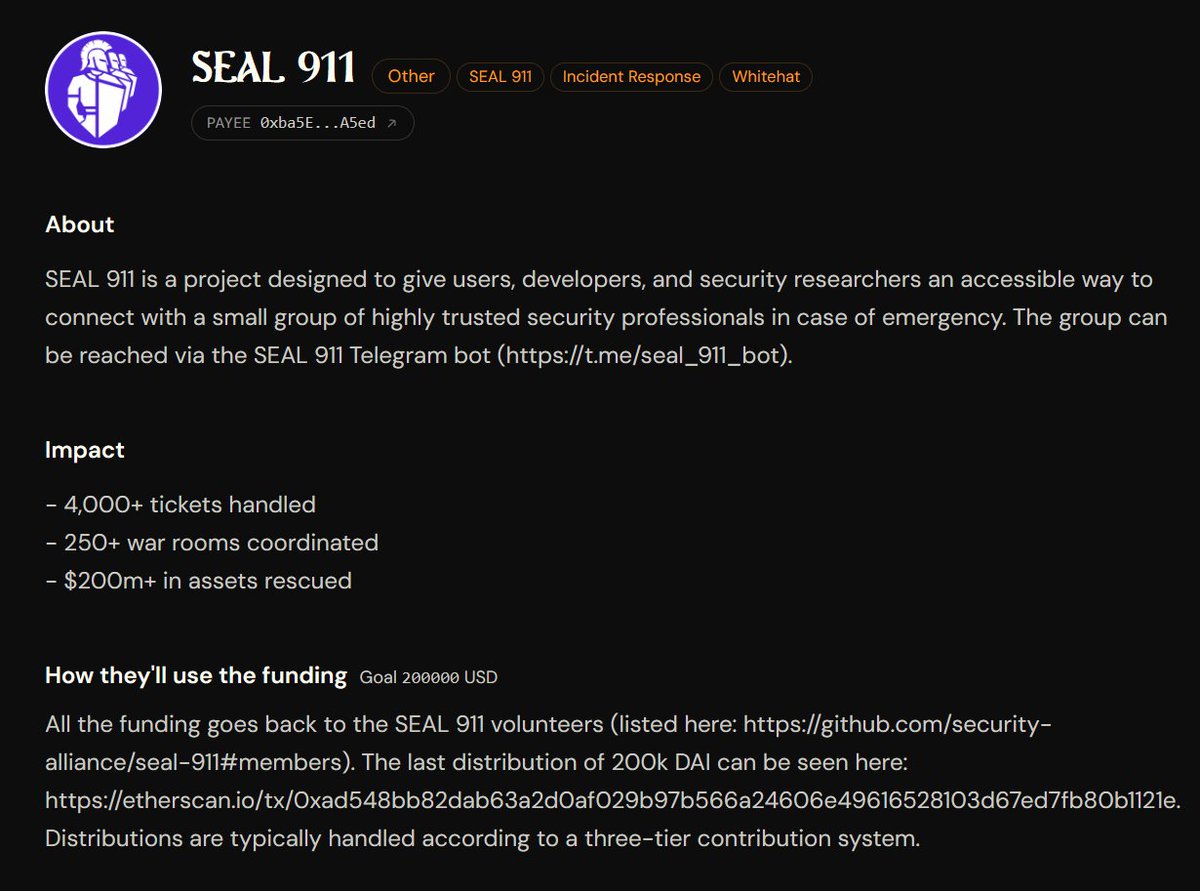
Beginning with SEAL 911's $200M+ in Assets Rescued, they have also handled 3,300+ Tickets, 200+ War Rooms Coordinated and 31 volunteers

- handled over 4,000 tickets incident tickets
- coordinated over 250 war rooms
- helped rescue more than $200 million
SEAL 911 is powered entirely by _volunteers_ and represents what a true public good can achieve. we're

Allocation window opens at 12:30 pm ET today (16 June) and will close at 11:30 pm ET on 30 June. You can allocate on: octant.app
This epoch marks a few big changes.
This is our first epoch introducing

SEAL Intel has published more than 300 threat reports and blocked 200k+ malicious domains
SEAL Frameworks has published 19 frameworks that any team can adopt
SEAL Certifications has tested with 25 protocols, has 18 other teams undergoing certification across 6 certification modules.
While it is hard to measure the exact impact, just the rescued amount number already looks like a great return on investment. For those working in security, their members are a staple in most war rooms, security channels and best practises efforts. We are absolutely convinced that Ethereum would be a much darker place without their work.
SEAL's initiatives are some of the 134 projects that participated in Round 1. The fund publishes all its allocations in a dedicated transparency page.
Here's a summary of the stats of the round:

And broadly, the fund has already distributed 1.9M for security on Ethereum in its first 9 months of existence:

If you want to help make Ethereum safer, ETHSecurity Initiatives Round is currently active.
You can now propose an initiative or pledge support for one. Explore what people are working on, help back the initiatives you believe in, or bring a new idea to the table.