
On this quiet Sunday, in the 166th chapter of his long journey, the weary Phoenix chose to fold its wings. Not because the fire in his chest had died, but because the embers of empathy needed careful guarding—so they would not be consumed by the relentless winds of daily life. Beneath a bright Sunday sky on the edge of a city that still carried the gentle breath of rubber forests, the teacher stood on his terrace. Water flowed slowly from the hose, kissing the leaves of the plants that had silently witnessed his struggles. Each drop brought refreshment, as if washing away the dust that had settled on his soul after days of burning himself in front of the classroom—sharing knowledge, listening to children’s stories, and carrying the quiet weight of the remaining mortgage on his family home.
He no longer saw his exhaustion as an enemy. It had become an old companion, gently teaching him the wise art of rest. Rest was never laziness. It was a sacred process of recharging, where the Phoenix’s wings folded in calm repose, its red-orange flame glowing softly within, preserving warmth without consuming itself. Tomorrow he would fly again for his students. But today, he remembered a simple truth: a teacher is also only human—flesh and bone, heart and spirit—that needs peace in order to burn more brightly.
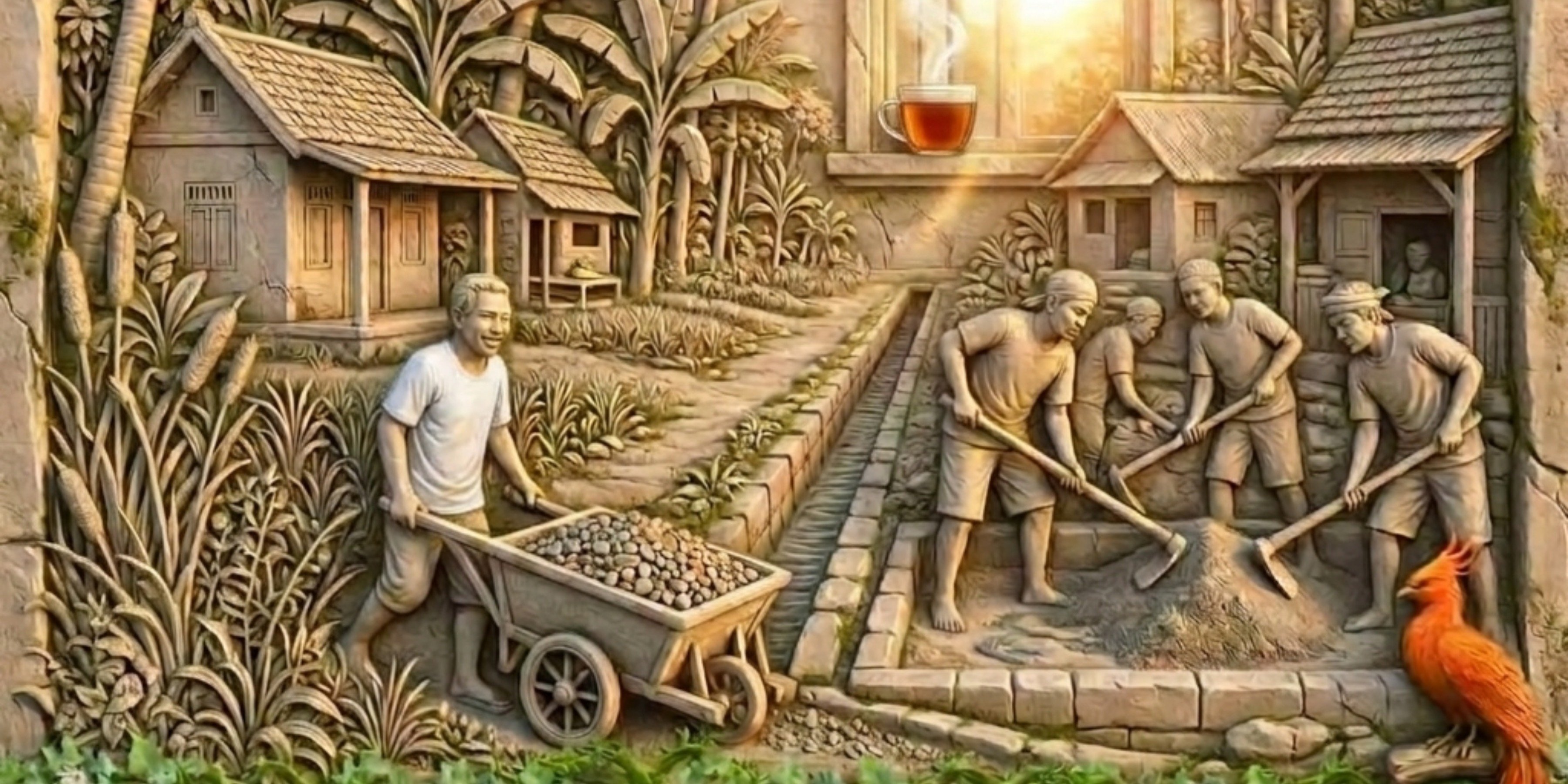
Soon, the call for gotong royong echoed through the neighborhood. He bathed, ate breakfast in grateful silence, and joined his neighbors. Under the scorching sun, he pushed a cart filled with small gravel stones. Sweat streamed down his face and back, and the soles of his feet were bruised by sharp rocks, yet a different kind of warmth bloomed in his chest. Every stone he lifted became a wordless prayer for his community. In the shared labor of building a small bridge over the drainage channel, he felt deeply that dedication was never limited to the classroom. True dedication was the quiet shadow of love, flowing into every part of life—from the blackboard to the sweat-soaked earth.
By midday, he returned home with a tired body but a lighter soul. He bathed again, changed into simple clothes, and walked alone to the mosque. His children were playing at their relatives’ house. This time, he offered his congregational prayer in peaceful solitude. Inside the cool mosque, his standing, bowing, and prostrating flowed like a long-held breath finally released. Prayer was never a rigid ritual for him—it was a gentle homecoming, an embrace from the Source of strength. In every sujud, he laid down his fatigue as a teacher, his worries as a father, and his hopes for his students. A quiet warmth crept into his heart, like embers lovingly tended. In that moment, he felt seen, held, and reminded that his journey was never walked alone.
After prayer, he shared lunch with his wife in a silence rich with affection. Their eyes met briefly, enough to carry a thousand unspoken words of gratitude. Then came the call from his mother, as usual, asking for water that had been blessed with prayer. He promised in his heart to visit, despite the searing heat outside.
When afternoon arrived, he rode the motorcycle with his wife to pick up the children. Their faces lit up with pure joy at the sight of their father—an instant balm for his weary spirit. They traveled together along streets gradually illuminated by twilight lamps. His shadow under the orange glow felt like a living painting: a man carrying his entire world on his shoulders, yet moving with quiet tenderness.
At his mother’s house, he found the woman who had once been his mountain of strength now lying frail. With hands full of love, he prepared warm water and recited prayers in a soft, trembling voice. Every word that left his lips was an ember of empathy—love that needed no announcement, only presence. This was service in its purest form: being a son when his mother needed him most.
Night fell. The duty to lead sholawat at the neighborhood mosque had to be released. There were deeper priorities tonight: protecting the flame within his own home from going out.
On the cool ride home, the shadows of dusk gave way to the passing lights of other vehicles. He stopped briefly to buy warm fried rice for his beloved wife. When he finally stepped through the door, small sparks of happiness glowed on his family’s faces. They gathered for dinner in a simple but complete circle. The children laughed softly, and his wife smiled with tired but grateful eyes. In those quiet moments, he felt a silent pride—as a father, as a husband, and as a teacher. He was not a flawless hero, only a human learning to balance the fire of dedication with the need to regenerate.
That night, as his head touched the pillow, the Phoenix inside his chest breathed slowly. Its wings remained folded in peace. The red-orange flame glowed dimly, yet it did not go out. Tomorrow he would rise again—with renewed energy for his students and an unwavering commitment to the Education Impact Fund that he continued to nurture even on his day of rest.
Because he understood: conscious rest is a sacred part of the journey. From ash to ember, from exhaustion to new strength. Only by folding his wings for a moment could he soar higher tomorrow, carrying the light of knowledge and empathy to the next generation that awaited him.
In that deep silence, the night wind from the edge of the city seemed to whisper gently: Your struggle is seen. Your love is felt. And these embers of empathy in the shadow of love will continue to glow—slowly, warmly, and eternally.
Explore the documentary art collection and support the mission by acquiring your NFT on OpenSea.
Lost in the narrative?
[Return to the story map]