
What does it take to move from learning Web3 to building Web3 infrastructure?
For Goodluck Emenike, it wasn’t a single “aha” moment — it was a pattern of frustration: complex tooling, fragmented infrastructure, and too many good ideas dying before they ever shipped.
In this 11th edition of our Coffee Chat series, we sat down with Goodluck to unpack his journey into Web3, the mindset shift from user to builder, and how experiences like the Transition Into Web3 Bootcamp and Web3Warri HackerHouse 2025 led to the creation of Orbit Launch — a platform designed to make deploying L3 chains simpler, more accessible, and discoverable using Arbitrum Orbit.
From hackathon validation to hard product trade-offs, this conversation offers a grounded look at what it really means to build Web3 infrastructure that lowers barriers and unlocks new builders — especially in Africa and emerging markets.
Let’s dive in!
Subscribe
Before Web3Warri HackerHouse 2025, I was a software developer and builder who had always been curious about Web3. I wanted to understand what blockchain could do beyond tokens and speculation. I played with smart contracts, studied how blockchains work, and explored different protocols — but I hadn’t yet built a real product.

What pushed me deeper into Web3 was the constant frustration I saw: the tools and infrastructure were still too difficult, fragmented, or inaccessible, especially for new builders. I met a lot of smart people with great ideas who couldn’t move forward because the technology was too hard to use or the infrastructure simply wasn’t there. That stuck with me, and I wanted to help build something that lowered those barriers.
So before Orbit Launch, I was mostly a learner — reading, experimenting, and prototyping. But mentally, I was ready to stop tinkering and finally build something real that others could use.
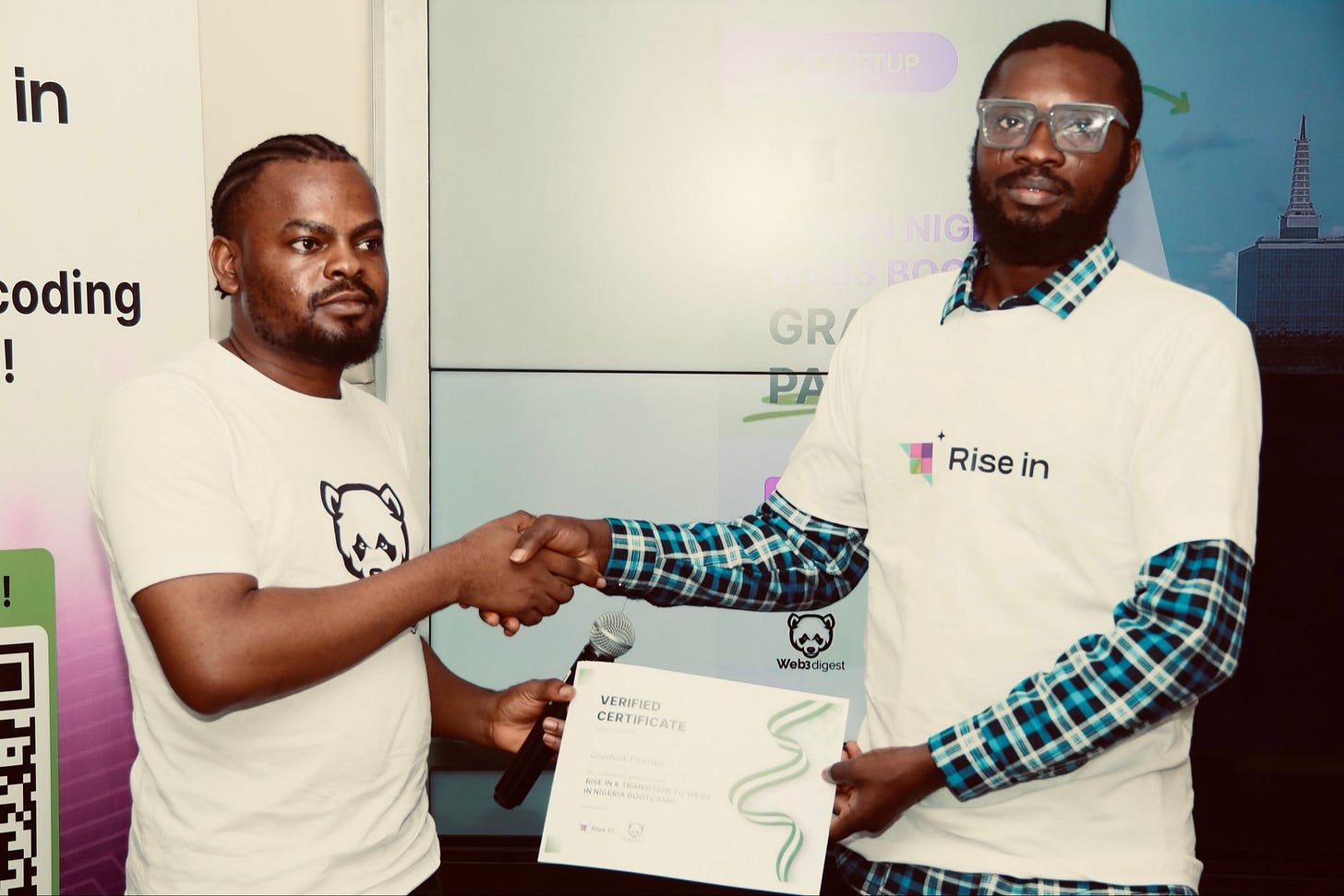
Events like the “Transition Into Web3 Bootcamp” and “Web3Warri HackerHouse 2025” were pivotal in shaping my understanding of Web3. The biggest changes for me were both technical and mental.
From curiosity to certainty:
Before the bootcamp, I had many questions:
“How do blockchains really work behind the scenes?”
“What does it take to deploy a chain?”
“Is this something I can actually build myself?”
The bootcamp clarified these things. I learned the fundamentals — how a chain works, what goes into deployment, security concerns, and architectural trade-offs. That knowledge turned abstract interest into a real skill.
Builder mindset vs user mindset:
Most people approach Web3 as users — to trade, invest, or use dApps. The bootcamp trained me to think like a builder:
“What can I create so others can succeed?”
“What tools or primitives are missing?”
Most importantly, the bootcamp made me build, experiment, break things, and write real code. That shift from “just learning” to “actually shipping” prepared me for the pressure of a hackathon, where we ended up building something real.
The bootcamp transformed me from someone curious about Web3 into someone ready to build tools for the ecosystem.
Subscribe
While exploring Web3, I noticed a recurring problem:
Even though frameworks like Arbitrum Orbit made it possible to launch new chains (L3s), the developer experience was still too complex, too manual, and accessible mostly to advanced builders.
During the Web3Warri HackerHouse 2025, I was selected as a team lead and randomly picked a number that matched the “Orbit Launch” project. It felt almost like fate — because this was something I had already been thinking about for a long time.
Here’s what stood out:
Deploying a custom chain (L3), even with Orbit docs, required deep technical knowledge, careful config, and infrastructure management.
For many developers — especially in regions with limited infrastructure support — this barrier is too high.
Many good ideas never become chains because the process is complicated.
There wasn’t a unified platform that combined deployment + registry + customization in a developer-friendly way.
I realized that if Web3 is going to scale, especially in Africa and emerging markets, we need tools that democratize chain deployment.
There was no single “aha!” moment — just an accumulation of pain points. As a team, we decided: “Let’s build something that bridges this gap.”
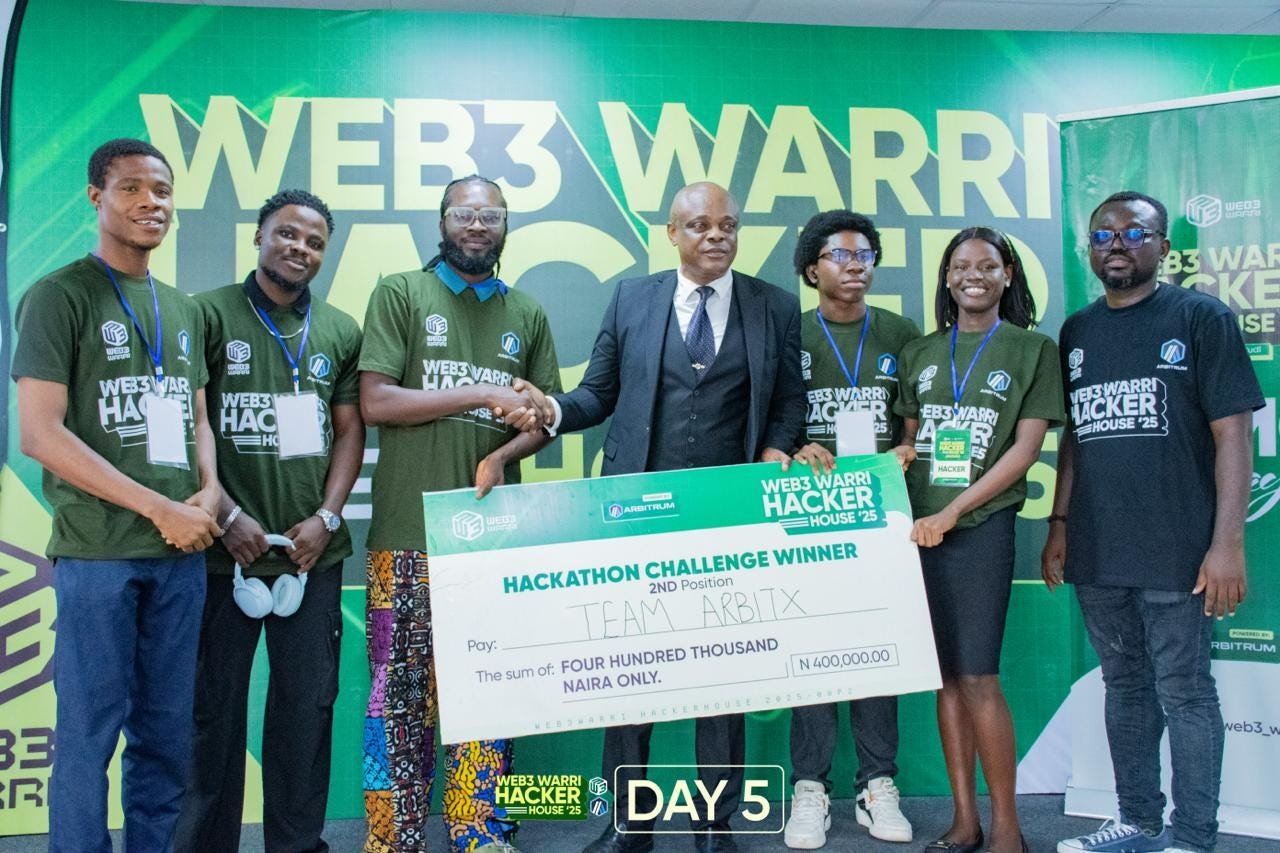
Winning 2nd place changed a lot — both for me and the product.
Validation of the idea: The judges and community saw that Orbit Launch solves a real pain point. That external validation boosted our confidence. We knew we weren’t building in a vacuum.
Momentum and commitment: Winning under hackathon pressure proved we could build and ship a real dev tool quickly. It shifted my mindset from “hackathon demo” to “real product.”
Attention & network: The win brought visibility. Developers, builders, potential collaborators — even media — started noticing Orbit Launch. That early attention is crucial.
Feedback that shaped the product: Multiple developers told me, “Deployment is one thing, but discoverability is just as important.”
Without a registry, many L3s would remain private or unknown. That feedback reinforced a core direction: Orbit Launch shouldn’t just be a deployer — it must include a registry/discovery layer.
That insight shaped the current product architecture.
Building a dev tool like Orbit Launch meant making hard trade-offs:
Simplicity vs flexibility: We could have offered full customization (sequencers, gas tokens, node options, etc.), but that would overwhelm less technical users.
We chose simplicity first: opinionated defaults and minimal configuration.
Security/robustness vs speed: A production-ready chain requires full infrastructure. But this was a hackathon MVP, so we accepted minimal infrastructure with plans to improve later.
Registry discoverability vs privacy: Not everyone wants their chain public.
We chose optional registry with a public index as the default.
What I’m happiest with:
Orbit Launch actually makes launching an L3 chain possible for more builders.
The unified “deploy + registry/discovery” approach gives it long-term ecosystem value.
Using Arbitrum Orbit as the backbone ensures security and interoperability from Day 1.
What’s working:
Community and hackathon-driven adoption.
Open-source transparency — public repo + clear docs.
Tutorials, quick-start guides, and templates.
Focus on emerging-market builders who benefit the most from turnkey chain deployment.
What’s still difficult:
Convincing teams that owning an L3 is worth maintaining.
Helping teams overcome fears around security and long-term sustainability.
Measuring meaningful usage (some chains are deployed but unused).
How we measure early PMF:
Number of actual L3 chains deployed via Orbit Launch.
Number of unique and repeat developers using the tool.
Activity on deployed chains (transactions, dApps, usage).
Community signals: bug reports, feature requests, forks, contributions.
Here’s the vision:
Hundreds or thousands of teams using Orbit Launch to deploy L3 chains for dApps, games, DAOs, and other ecosystems.
A vibrant network of interoperable L3s rather than one giant chain.
Mass adoption in Africa and emerging markets, reducing the infrastructure barrier for developers.
Orbit Launch becomes a standard infrastructure tool — open-source, community-driven, and multi-chain.
As a builder, I want to grow beyond hackathon wins — contributing to Web3 infrastructure, mentoring others, and nurturing developer communities.
Ultimately, the mission is simple:
To help transform Web3 from “VC-backed elites only” to a space where anyone with an idea and a laptop can build.
Stay plugged into everything happening in Web3. Join our community and follow every update as it unfolds.
Follow us on: Twitter · LinkedIn · Facebook · WhatsApp Channel