

This Week in All Things AI covers key developments in models, agents, tools, infrastructure, and policy curated from discussions in the All Things AI Telegram group.
If you follow AI for work, research, investing, or just to understand where the technology is heading, this weekly brief is a concise way to scan the most important launches, risks, and resources in a few focused minutes.
The week of 6th to 12th September 2026 brought advances in both AI performance and the tools that turn it into everyday work. DeepSeek introduced V4.1 Flash with native visual understanding and strong self-reported coding and agent benchmarks, while Inception’s Mercury 2.5 pushed diffusion-based language generation beyond 1,100 tokens per second. NVIDIA’s Sol-H3 demonstrated video generation faster than playback, and ChatGPT Images 2.5 and Eddie v4 expanded creative editing capabilities. Cursor Projects added another dimension: a persistent coordinator agent that manages subagents and ongoing work in the cloud. Alongside Hugging Face’s ML Intern and ChatGPT Work’s Data agent, it pointed toward workflows in which users delegate an extended task rather than prompt each individual step.
Making that delegation effective—and deciding where its limits belong—was a recurring theme. My Portable LLM Council offered a structured way to examine competing arguments before making a decision, while Spotify’s use of cheaper worker models and Tencent’s FlexKV showed how orchestration and infrastructure can make better use of compute. Discussions around GPU financing and rental economics questioned the durability of the assets supporting AI’s expansion, even as Harvey’s latest funding round reflected growing investment in professional applications. Meanwhile, allegations concerning OpenAI’s handling of researchers’ conversations brought privacy and research ownership into focus. Taken together, the week showed why progress needs to be assessed across several dimensions: what systems can do, how economically they can do it, and how confidently people can entrust them with valuable work.
The sections that follow walk through these items day by day, with short context and links so you can dive deeper into the pieces most relevant to your work or interest
Robert Scoble with a longish X article which links to many posts on what folks have been able to do GPT-6 Astra. It might interest and inspire you (modulo how much you can use within your plan's limits, lower reasoning levels of Astra stretch limits further).
FWIW, I had Astra Light review my recent Notion page and it dramatically edited it cutting the number of words on the main page by half and generating cleaner SVG diagrams and it's token generation speed is very fast for its intelligence.
When Jalapeno (OpenAI's custom silicon for inference) rolls out at scale, Astra and future versions are going to be running at Speedy Gonzales/Road Runner pace

Good, bad, ugly.
All from the AI community here on X (tens of thousands of posts read). x.com/i/article/2096…
GPU Financing Emerges as AI Infrastructure's Key Bottleneck
Eugene Ye of Wafer AI explained how AI builders chase Blackwell B300 GPUs and colocation space, but hit walls with lenders demanding huge down payments since used GPUs lack predictable resale markets. Unlike cars with established secondary values, GPUs get treated as worthless after depreciation, squeezing smaller players.
Efforts like Nvidia's partnerships with Apollo and BlackRock aim to unlock over $500 billion in capital, while companies like CoreWeave land big loans through customer contracts—yet many still rely on venture funding amid hopes for better liquidity tools.

Sharing some thoughts on compute markets, residual value, and where compute financing is heading.
Substack link in the comments. x.com/i/article/2096…
Introducing Portable LLM Council for business and technical decisions
Ever asked an AI for advice on a business or technical decision—and wondered whether it examined the tradeoffs or simply followed your framing?
I’ve put together Portable LLM Council, an open-source skill that gives your AI assistant a structured way to challenge a decision before recommending what to do.
It runs three rounds:
• Five separate advisors examine assumptions, fundamentals, overlooked opportunities, clarity, and execution.
• Five fresh reviewers assess the anonymized answers for strong arguments and blind spots.
• A chair weighs the reasoning and recommends a direction and one concrete first step.
You get a readable HTML report and a Markdown transcript, so you can inspect the arguments behind the recommendation.
Useful questions include:
— Should we launch a paid pilot or build the full product?
— Should our team focus on onboarding or acquiring more customers?
— Should we migrate a system gradually or replace it in one go?
These are starting questions, not complete prompts. Give the assistant relevant context—your objective, constraints, options, and evidence so far—or ask it to use what you’ve already discussed in the conversation. A few focused paragraphs are usually enough; the council needs something concrete to challenge.
The same skill works with native subagents for Claude Code—including local Code sessions in Claude Desktop—Codex, Cursor, Command Code, Grok Build, OpenCode, and Factory Droid. No particular model is required.
To install, ask your assistant:
“Read the installation instructions at https://github.com/goolamabbas/portable-llm-council and install the shared skill and the agent definitions for this harness in my personal installation locations. Back up existing copies before replacing anything, then verify discovery. Do not run a council yet.”
Your assistant may request approval for file changes. You may need to start a new session before it can verify discovery. Manual instructions and example prompts are also in the repository.
This is for decisions with meaningful tradeoffs. It uses more time and model usage than a normal answer, and agreement between agents doesn’t make a conclusion true. The value is in exposing assumptions, competing arguments, and questions worth investigating.
GitHub - goolamabbas/portable-llm-council: Pressure-test business and technical decisions with five AI perspectives, blind peer review, and a synthesized recommendation. One model-neutral skill with native subagents for seven AI harnesses.
Pressure-test business and technical decisions with five AI perspectives, blind peer review, and a synthesized recommendation. One model-neutral skill with native subagents for seven AI harnesses. - goolamabbas/portable-llm-council
If you try it, I’d welcome feedback—especially what it helped you notice that a normal AI conversation missed.
NVIDIA Speeds Up AI Video Generation Past Real-Time Playback
NVIDIA's Sol-H3 inference stack accelerates MiniMax-H3 video generation, producing five seconds of 1344×768 video with stereo audio in 1.653 seconds on an 8× B300 Blackwell system—beating real-time playback. Reactor partnered to release FastH3 via API, enabling developers to access it immediately without owning the GPUs, while open-source code under Apache 2.0 supports various configurations. Optimizations like dynamic sparse attention and fused kernels preserve quality and scale efficiently, paving the way for interactive, 24 FPS video systems

 Sol-H3: @MiniMax_AI H3 Video Generation Faster Than Playback

Five seconds of world. 1.653 seconds to infer.
We’re releasing Sol-H3, our fastest end-to-end MiniMax-H3 inference stack yet. On one 8× NVIDIA B300 Blackwell system, it generates five seconds of 1344×768 video


Stream 720p with audio at $0.007/second with first frame image support, faster and cheaper than ever.
Get started now by cloning our demo app: reactor.inc/fast-h3-demo-a…

https://www.reactor.inc/blog/fast-h3-sol-engine
https://nvlabs.github.io/Sana/Sol-Engine/Sol-H3/
NVIDIA's Jensen Huang Calls Compute Resources Rentable Assets Amid Surging Demand
Huang described the company's compute power as fungible, durable, and highly rentable—a productive asset generating revenue. This comes as demand stays hot for three-year-old H100 GPUs, now renting at $3.28 an hour, prompting neoclouds to lock AI firms into multi-year contracts to finance big purchases. Experts like Jessie Dong caution that future efficiency gains and potential customer failures could leave providers stuck with debt and underused hardware in a softer market. The conversation draws parallels to early commodity markets like grain and oil, questioning if compute will prove as sturdy an asset class.


Every depreciation schedule assumes a chip this old only loses value. The market is paying up for it instead.
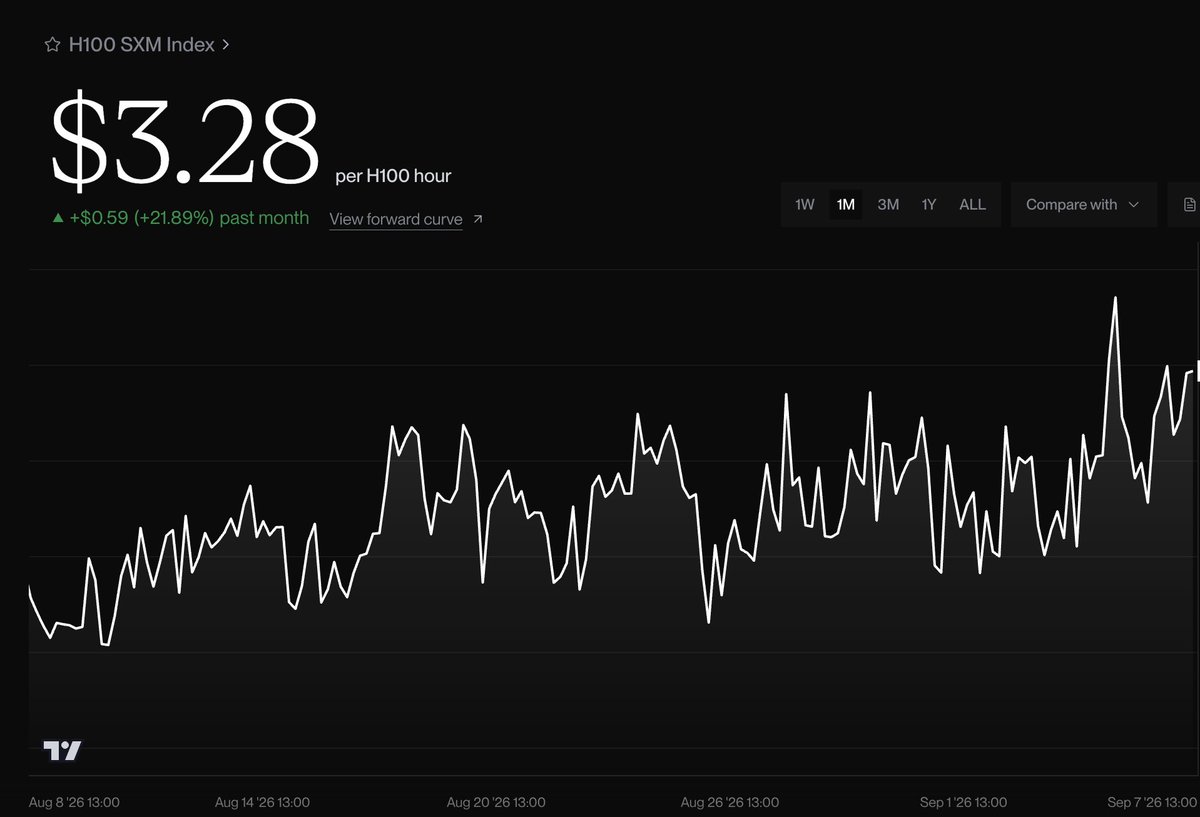

companies are signing long contracts because not getting enough compute is a risk. there's demand so of course neoclouds are buying lots of gpus

In response Alex wrote
Without context, Jensen's statement is misleading. The depreciation for a 2023 bought H100 alone is around 1.5$ per hour.
The current spot market price from mid-tier cloud providers is 1.20$ a GPU/hour, ie. being rented at a loss.
Compute is not behaving like a commodity, too stock and hype dependent.
Also conveniently not mentioning that H100 rental prices are down more than 60-70% in the last 2 year.
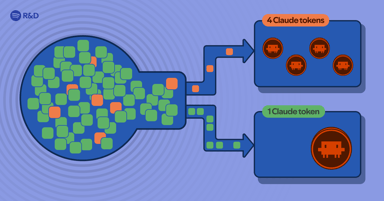
A Claude Code plugin called shunt and two declarative agents running on Portal by Spotify. That's all it took to stop burning frontier model tokens on file reads and boilerplate generation. The grunt work routes to a cheaper worker model. The frontier model only handles problems worth its price.
90% token reduction on bulk reads. No new infra. The agents are public and the plugin is open source.
Portal by Spotify cut my Claude Code token usage by 90% | Spotify Engineering
Most of what an AI coding agent does for me isn't thinking. It's I/O.
via Alex
NYU released a statement claiming that OpenAI stole a millennium prize discovery through scanning and monitoring a fields medalist's ChatGPT chat and then advertised the discovery as an "autonomous" discovery.
Never feed anything of value into a remote model.
Read the full statement here: https://cims.nyu.edu/~tristanb/statement.pdf
OpenAI announces ChatGPT Images 2.5 with faster generation, higher fidelity for natural images, consistent details in edits, and comment-based controls to modify specific elements without full regeneration.
New Sketch feature lets users draw directly in ChatGPT by typing "@ Sketch" to visually convey ideas that are hard to describe in text alone, alongside templates for common formats like posters and merch.
The model update deploys today to all ChatGPT, Work, and Codex users across platforms while adding API models GPT-Image-2.5 Flare for improved speed and GPT-Image-2.5 Sunburst for precision in detailed creative tasks.


Introducing new image models in the API, with sharper detail, stronger style adherence, and more control over edits.


via Alex
Here the OpenAI statement on the NYU allegations: https://openai.com/index/navier-stokes-solution/
Pretty sure this will end up in a lawsuit.
OpenAI claims that they did in fact only start on the research to solve the millennium problem after (after Sep 1st) having been informed that the NYU professor was close to a solution, they deny that the verbatim chat logs were accessed but hint at the fact the same chat logs may have been used for training data.
In other words, OpenAI trained an internal model specifically on the professor's work and deployed over several 10,000 agents in 1 week to burn 300 billion tokens to win over a human that had dedicated their life on solving this problem.
Inception announces Mercury 2.5 as the largest and most capable diffusion LLM yet, delivering a 40% intelligence increase over Mercury 2, 1,107 tokens/sec inference speed on NVIDIA GPUs, and 260K token context.
The accompanying video contrasts traditional autoregressive LLMs (sequential like typewriters, tying up GPUs) with diffusion-based processing for greater parallelism, enabling low-latency uses like real-time voice agents under 170ms TTFT.
The model is available immediately on Inception API, OpenRouter, and Baseten with launch discounts; early tester feedback notes faster performance and better tool calling confidence.

It offers a 40% jump in intelligence over Mercury 2, and runs over 1,100 tokens/sec on widely-available @NVIDIAAI GPUs.
It’s available today on our API, @OpenRouter, and @Baseten.
Contact us

Introducing Mercury 2.5 - Inception
Mercury 2.5 is the most capable diffusion LLM on the market. It runs at 1,107 tokens/sec and offers a 40% increase in intelligence over Mercury 2, comparable to cost-optimized frontier models.
Tencent AI's post promotes FlexKV, an open-source multi-level KV cache system from their TACO team that offloads cache to CPU, SSD, and remote storage to handle long-context LLM inference without frequent re-prefills.
It solves GPU wait times on cache hits via layer-by-layer restoration, prefetching, and asynchronous I/O, while using a distributed RadixTree for cross-node prefix reuse and lossless compression to boost effective capacity.
FlexKV integrates directly under engines like SGLang, vLLM, TensorRT-LLM, and Dynamo, with claimed gains of 70% lower TTFT and 16% higher QPM; full details and repo at github.com/taco-project/FlexKV.

The community's having a KV cache moment. Here's the corner we work in:
In long-context serving, a cache hit can still leave the GPU waiting for data. When KV lives outside GPU memory, how you bring it back matters. That's the problem we set

Reve did a strategic partnership with OpenAI, under which the research team has joined OpenAI aka license and acqui-hire. It's not clear at least to me if their work went into GPT Image 2.5 or if todays launch was a means to announce it


To my cofounders @Taesung, @cantrell, @jwatte, @laserlikemike and everyone
Now officially posted on Deepseek's website
DeepSeek plans to officially release the V4.1 Flash model around September 10, 2026 (Beijing Time). After extensive internal and external testing, V4.1 Flash has comprehensively surpassed V4 Pro across all key metrics, including performance, cost, speed, and task completion time. In keeping with our commitment to user responsibility, following the official launch of V4.1 Flash and prior to the release of V4.1 Pro, all requests to the Pro model will be routed to V4.1 Flash and billed at Flash's price. If you encounter any issues during your comparative testing between V4 Pro and V4.1 Flash, please do not hesitate to reach out to us with your feedback. Thank you for your support!
We will adjust the pricing for the Flash series effective from 12:00 Beijing Time on September 10, 2026. During off-peak hours, the unit price will be $0.003 for input cache hits, $0.15 for input cache misses, and $0.6 for output. Peak-hour prices will be double the off-peak rates. Please plan your usage accordingly.
Harvey Raises $550 Million at $15.6 Billion Valuation
The legal AI startup raised $550 million in a round co-led by Lightspeed Venture Partners and Diffusion, boosting its valuation from $11 billion to $15.6 billion. With over $400 million in annual recurring revenue, Harvey now serves 80 percent of the top 100 law firms, 20 percent of the Fortune 500, and half of the Fortune 10, while token usage has surged 20 times since January. The funds will expand proprietary AI models, hire engineers, and let law firms build their own custom intelligence, including scaling to thousands of GPUs after releasing the advanced Harvey Tenet model.

We're using this funding to help law firms, in-house legal teams, and professional services build and own their intelligence.

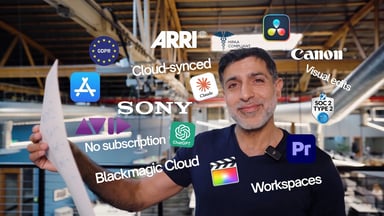
Shamir Allibhai whom I shall be hosting on a roundtable on Sep 21/Sep 22 [depending on your timezone] let me know about the release of Eddie v4.
The blog post below has the various details of feature updates in this version and also has 2 embedded Youtube videos including one with Youtuber Jordan Orme [1.1M subscribers] demoing Eddie's features to other professional video editors
Eddie v4: The Most Powerful AI Assistant Editor in the World | Eddie AI
Eddie v4 watches your rushes, syncs your cameras, writes the music, sources the b-roll, and hands the finished cut to Premiere, Resolve, Avid or Final Cut as a real project file. See it first at IBC 2026.
PS: I look forward to having as many members participate in the round table. This will be recording and made available via the archives of my previous roundtables
via Alex
Another mathematician has come out accusing openAI of breaking their own terms and conditions by using "opted out" chats for training data: https://mathstodon.xyz/@andreasthom/117240535270608201
Willow Voice is doing $100k giveaway of dictation microphones plus free months of their AI voice-to-text service targeted at SF startups to encourage office adoption.
The attached video features CEO Allan Guo and GTM lead Jesslyn Teo demonstrating Willow's accurate dictation that works across apps, even with soft speech, in professional settings.
Engagement requires commenting "Voice-maxxing" for setup, positioning the product as enabling faster workflows by letting users "work at the speed you talk."

We’ll outfit your office with mics + months of Willow free.
Whisper into your mic. Willow writes for you. Work at the speed you talk.
Comment “Voice-maxxing” and we'll set you up.

PS: I'm personally all-in on Wispr Flow primarily because of early adopter discounts and some referral bonuses which means that I'm effectively paid for a few months more I've tried Willow Voice and it's a good product with recent improvements moving it up several notches
Hugging Face aka NVidia says that one shouldn’t need to be an ML expert to have an ML idea.
They have launched ML Intern in HuggingChat, an AI agent in HuggingChat that automates end-to-end model training by combining the platform's papers, datasets, pre-trained models, benchmarks, storage, and compute resources
The release positions the tool as making specialized model training conversational and accessible like vibe-coding apps, with user control over budget, steps, and outputs for reproducible artifacts.
Start with a conversation. Finish with deployable artefacts.

the pieces were already available on
 : papers, datasets, pre-trained models, benchmarks, storage and compute
what was missing was an agent to put them together and run the whole process
that’s why

HuggingChat - Chat with AI models
Making the community's best AI chat models available to everyone

Jay Yu of Pantera Capital with a very well articulated X article on 'The Rise of Compute Markets' where he states the following
Compute and datacenter spend is a trillion-dollar category, yet GPU buying still runs through group chats, OTC brokers, and bilateral deals.
Compute is early in financialization; like electricity it is bound by SKU, time, and location, but may become a commodity like power or oil.
Markets may follow a Hardware-Vendor-Cluster analog of power’s Grid-Operator-Node, with winning benchmarks tied to liquid physical settlement and more basis risk.
Neoclouds are the structural short for GPUs; on-tap platforms and apps are the long; NVIDIA acts as a compute central bank.
Physical settlement has the durable moat; indices, cash-settled exchanges, and financing vehicles follow; fullstack players and token-plus-metal hedges may win as compute becomes an asset class.

Team Deepseek takes no prisoners 🤯 with the launch of DeepSeek-V4.1-Flash with stellar self-reported benchmarks.
Will be interesting once Artificial Analysis releases their benchmarks.
Available with extended usage for limited period within OpenCode and Command Code harnesses. Also available in v0.1.5 and above of the Deepseek Harness
DeepSeek-V4.1-Flash is a 552B-parameter MoE model with asymmetric Causal Encoder-Decoder architecture, using only 8B active parameters for input and 16B for output, plus native visual understanding.
It achieves leading results on agentic and coding benchmarks such as Terminal-Bench 3.0 (30.0), DeepSWE v1.1 (74.2), CyberGym (88.1), and Automation-Bench (54.8), outperforming V4-Pro and competitors like Kimi, GLM, and Claude.
Live on DeepSeek API as deepseek-flash with lower pricing effective today, dramatically reduced KV cache for cost savings, and phasing out V4-Pro, with open-source inference support planned.
 Introducing DeepSeek-V4.1-Flash: smarter, faster, more efficient.
 Introducing the smallest model in our new architecture family, with native visual understanding. Designed for greater capability, faster inference, higher throughput, and scaling to larger models.
1/6


6x usage on $10/mo GOAT for a week.
$60 usage. 154K requests. 7.8B tokens.
GOAT plan is the best AI coding plan.
Available in all plans and API.


与模型训练深度结合的实验性的 Agent Teams 功能也期待尝鲜试用。
DeepSeek Harness 团队仍在开放招聘中,欢迎加入我们,一起打造
OpenAI announces a new Data agent in ChatGPT Work that lets enterprise users query connected company data sources via natural language to generate answers, interactive dashboards, and actions.
The video demo shows practical use cases like analyzing product launch metrics (e.g., "Dash XV" sneaker sales), pulling context from Snowflake/Tableau/Teams, and creating visualizations that answer "why" questions beyond basic reports.
Integration features include adding a Data Plugin, connecting existing data tools, and sharing AI-generated insights directly in team channels with ChatGPT mentions for collaborative workflows.


Now everyone can put data to work
Meet the Data agent in ChatGPT Work. Connect company data, uncover insights, and build interactive dashboards with AI using natural language.
via Lisa Gu
https://www.instagram.com/reel/DdHVH_EpRRJ/?stkn=cnFoYXp3MjJ3cXdw
This is my losing video from the finals of the ai creative challenge last week in LA hosted by the one club for creativity and google. I’m letting the Internet be the judge. 👩🏻⚖️
It’s a 16 city tour, so apply if you want to compete!
Cursor Launches Projects for Multi-Agent Coding Workflows
Projects creates persistent threads where a main agent oversees subagents, shares memory across sessions, and handles tasks like monitoring pull requests or Slack. It runs on cloud computers for nonstop work and scales to thousands of agents for big jobs like app builds. Early users like Lauren (of pstack fame) call it a 'personal software factory,' reporting they merge far more PRs—up to six times as many for heavy users—thanks to better organization and speed.

Rather than creating a chat for every task, you work with a coordinator agent in a single, persistent thread.
Like @bot, your agent is always on, proactively manages work with subagents, and improves over time.


these all work in the cloud too, so you can
Rather than creating a chat for every task, you work with a coordinator agent in a single, persistent thread.
Like @bot, your agent is always on, proactively manages work with subagents, and improves over time.
Below is my personal website which aggregates links to many of my socials as well as the various content and community that I curate. Feel free to share this link to others who you think may find this content/community useful to them
The cover image of this newsletter via generated via the GPT Image 2.5 model within the Krea tool via the following prompt
a detailed digital painting of a beautiful white sci-fi city, ((intricate city detail)), straight lines, on a lush green landscape, intricate detail, two planets visible in the clear blue sky, fantasy art, trending on artstation, 8k, uhd