

This Week in All Things AI covers key developments in models, agents, tools, infrastructure, and policy curated from discussions in the All Things AI Telegram group.
If you follow AI for work, research, investing, or just to understand where the technology is heading, this weekly brief is a concise way to scan the most important launches, risks, and resources in a few focused minutes.
The week of 27th September to 3rd October 2026 brought stronger AI models alongside a growing emphasis on making intelligence faster, cheaper, and more useful in everyday work. Anthropic launched Claude Sonnet 5.5, OpenAI introduced GPT-6.1 Sol, and Google began a restricted rollout of Gemini 4 Argon to trusted testers, with efficiency and practical coding and knowledge work prominent across the announcements. Fireworks’ Ember-1 research preview pursued similar gains through shorter reasoning traces. A parallel wave of specialised decision models—including Cloudflare’s Clef, Liquid’s D1, Perplexity’s pplx-decider and Nace AI’s Drex 1.5—expanded the options for applications that need quick choices and confidence scores. OpenAI’s Decisions API entered limited preview, while its broader DevDay announcements centred on ongoing delegation and collaboration through Dots, Codex and ChatGPT Space. New speech models from ElevenLabs and Microsoft also targeted more natural conversations with less waiting between turns.
The systems around those models were equally important. Perplexity’s contextual embedding research focused on retrieving the supporting context needed to check an answer, while my updated research guide and Glamsterdam worked example explored choosing evidence providers separately from the models interpreting their results. Cloudflare’s work on agent identity, access and payments addressed how websites might serve AI users while sustaining the people supplying the information. At the infrastructure level, John Ousterhout’s Homa protocol illustrated how reducing waits for small network messages could improve GPU utilisation. Perplexity’s sandbox testing added a reminder that security depends on more than the model: no tested model escaped the virtual machine, but the researchers reported network bypasses affecting several agent runtimes.
The sections that follow walk through these items day by day, with short context and links so you can dive deeper into the pieces most relevant to your work or interest
Two new additions to the research guide and skill
I’ve updated the multi-provider-research skill and companion guide with guidance and practical examples for Perplexity Fast Search and Exa Agent Ultra—covering when to use each and how to get started.
If you missed the earlier edition, Separate Intelligence & Search explains how to keep your preferred AI assistant while giving it more choices for finding and reading information. The companion skill helps your assistant choose suitable research tools and check the evidence they return.
Perplexity Fast Search
The skill now prefers Fast Search for suitable routine Perplexity lookups, with standard search for difficult or ambiguous questions and unresolved evidence gaps. The guide explains the distinction and includes a copyable prompt which should handle both fast and standard search types.
Exa Agent Ultra
The skill and guide now cover Ultra for deeper research and comprehensive list-building, including budget controls, interpreting incomplete results, and when ordinary search is sufficient. There are prompt examples and a worked case study to explore.
The principle stays the same: choose the tools the question needs, without automatically running every provider or selecting the most expensive mode.
Get or update the skill
GitHub repository and installation instructions
Already using it? Back up your existing copy, then replace the complete skills/multi-provider-research folder with the latest version. Provider connections are configured separately.
Explore the new material
Perplexity Fast Search: guidance and comparison
When Exa Agent Ultra is worth using
If you try either, I’d love to hear what you researched and how it worked for you.
Fireworks AI announces Ember-1, its first specialized research model built on Kimi K3, focused on efficient reasoning by producing shorter traces that use roughly 40% fewer tokens.
A benchmark graph positions Ember-1 competitively on the Specialized Intelligence Index, balancing high avg@3 scores against low cost per task relative to models like Claude Opus 5, GPT variants, and others.
The post links to the model page and blog on fireworks.ai, promoting it as an advancement for scalable inference on open-weights models.

Built on Kimi K3, it produces shorter reasoning traces, using roughly 40% fewer tokens while maintaining top-tier quality.
fireworks.ai/models/firewor…


• For coding: fewer tokens at similar quality to Kimi K3
• 1M context, image input, tool use + ZDR
𝚏𝚒𝚛𝚎𝚠𝚘𝚛𝚔𝚜/𝚎𝚖𝚋𝚎𝚛-𝟷

Ember-1 from Fireworks now available on AI Gateway - Vercel
Ember-1 from Fireworks is now available on Vercel AI Gateway, a research-preview model for coding and agent workflows that reduces reasoning token usage.
Introducing Ember-1
Ember-1 is a new specialized model from Fireworks Research that delivers Kimi K3's quality with 40% fewer tokens.

ElevenLabs Launches Fastest, Most Emotive Text-to-Speech Models
The new models shine across more than 90 languages, with v4 leading independent benchmarks for quality and pronunciation at an Elo rating of 1,319. Co-founders Mati Staniszewski and Piotr Dabkowski explained v4 Turbo's edge in real-time chats, hitting 100-millisecond response times thanks to fresh research and a post-training stack. Voice cloning now works from just 10 seconds of audio, inline tags control emotions and effects, and early demos impressed with natural accents and expressivity. Pricing kicks off discounted at $22 for v4 and $11 for Turbo per million characters for two weeks.

Ranked #1 by Artificial Analysis.


- Extremely low latency (100 ms p50 TTFB for Turbo)
- By far the best voice similarity
- Outstanding quality (#1 on Artificial Analysis and on our own benchmarks)
It achieves all of this while being extremely reliable. Eleven v4
Ranked #1 by Artificial Analysis.

- v4: #1 quality TTS, 90+ languages, new level of expressivity & control
- v4 Turbo: fastest TTS, ~100ms TTFB, optimized for real-time conversations
Live now via API & all our products - at $22/$11 per 1M chars for 2 week!
Ranked #1 by Artificial Analysis.
Anthropic Launches Faster Claude Sonnet 5.5 Model
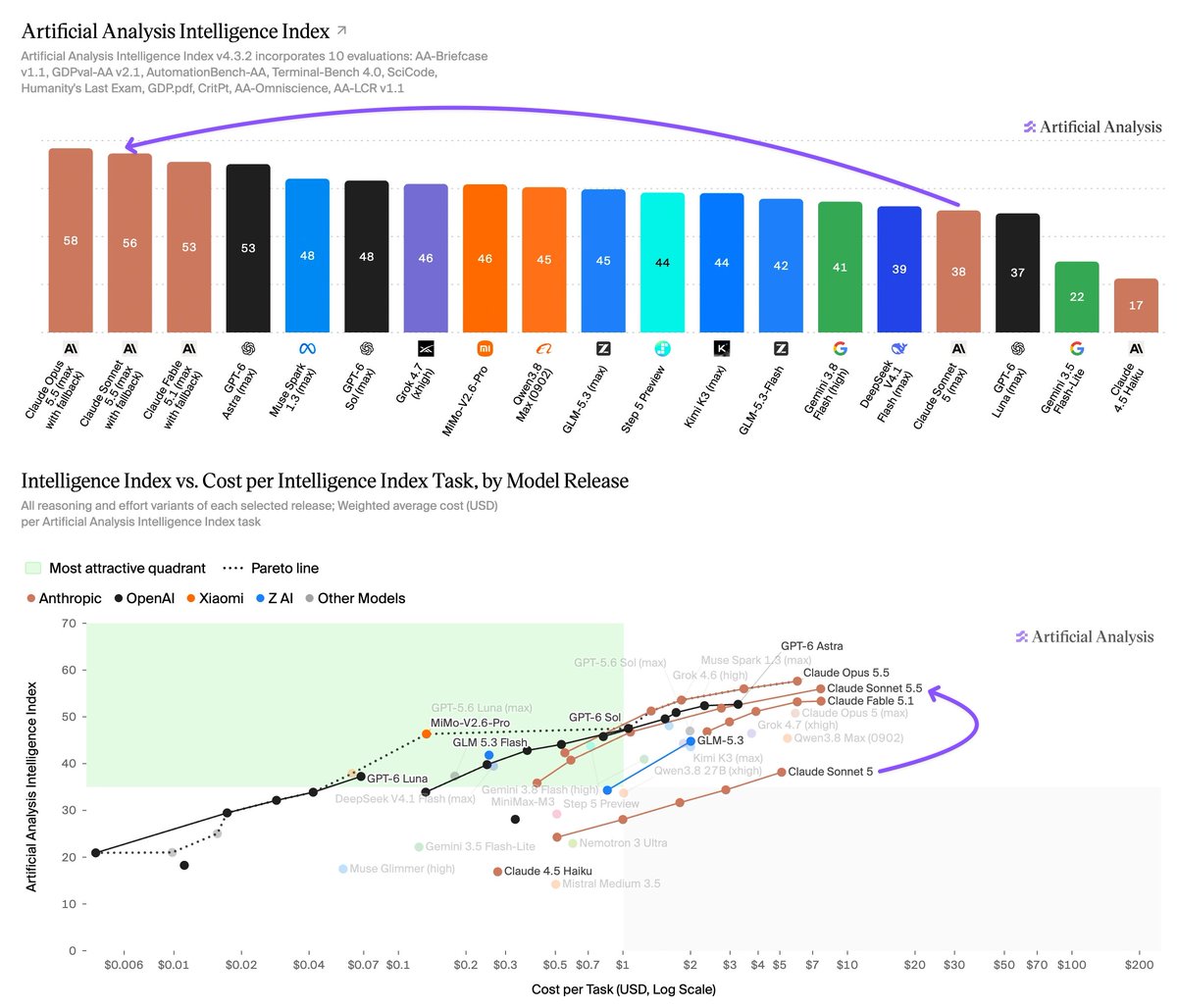
Sonnet 5.5 runs over 30% faster and costs up to 30% less than its predecessor for most tasks, priced at $2 per million input tokens and $10 per million output tokens but needing fewer tokens overall. It shines in agentic coding with a 70.6% score on Terminal-Bench 4.0—beating even Opus 5.5—plus gains in knowledge work, computer use, and chart recognition. Demos show it solving puzzles with multiple agents in seconds and fixing code tests effortlessly, making it ideal for everyday professional workflows. Anthropic plans to add Haiku 5.5 soon for high-volume needs.


Use it for well-scoped everyday tasks like fixing bugs and quickly iterating on features.


With max effort, Sonnet 5.5 gains 18 points over Sonnet 5 and to #2 on the Intelligence
AMD Acquires World Labs in $8.2 Billion Deal for AI Expertise
AMD announced on September 28, 2026, that it will acquire World Labs, founded in 2024 by Dr Fei-Fei Li and co-founders Ben Mildenhall and Justin Johnson, in an all-stock deal expected to close by year-end. The startup specializes in spatial intelligence models that perceive, generate, reason about, and interact with 3D environments for robotics and physical AI. Dr Fei-Fei Li will become AMD's executive vice president and chief scientist, reporting to CEO Dr. Lisa Su, while her team forms a new frontier research group. Both leaders emphasized how the partnership accelerates AI hardware and software for the open ecosystem, building on prior collaborations.


via Alex
Anthropic S1 Prospectus leaking to Reuters:
- 4B$ Revenue on 45B$ cost (GAAP)
- Non-GAAP loss at 8B$
- 2 customers make up 25% of revenue
just in June they announced 65B$ in ARR to end the year under 4B$ 😬. Last year revenue was estimated at 9B$ to now be revised to 0.3B$
EXCLUSIVE: Anthropic's IPO prospectus shows sweeping AI vision, surging costs
Anthropic is making a massive bet that AI will transform the global economy more profoundly than industrialization, electricity and the internet, according to its IPO prospectus seen by Reuters. But the cost to get there will be staggering.

via shrwn
In case you’re doing rounds trying Grok Bot, Muse… check out Fo by Wajo
Nice product demo by founder Shivani Poddar (former Jules Agent/Google DeepMind, Meta)

Today, I'm proud to introduce Fo to give personal AI something no lab ever has... Humans.
Other personal AI's pretend AI can do everything. Fo employs humans to do tasks that AI cannot.
- 2x better at real-world task completion (beats

Seems the first 1,000 signup gets unlimited access during alpha
PS. Google OAuth route asks for full perms. Perhaps utilize an alt account for EA/Chief of Staff work at first
Seems to not be geo-locked like Muse. Utilizes Messsges > iMessage to confirm phone number. Was able to via HK > US/650 area code number.
Though can also email and use browser for interactions with Fo
via Justin Pinter
Kling 4.
Up to 30secs. 4k HDR. Better sound effects. Better keyframing. And larger context window of 8,000 tokens
https://kling.ai/release-note/release-notes/Kling_4
OpenAI’s DevDay 2026 recap centres on AI taking on ongoing work, stronger developer tools, and team collaboration. Key announcements:
• Dots: Always-on agents that learn your priorities and handle ongoing responsibilities.
• GPT‑6.1 Sol: OpenAI claims near-Astra intelligence at one-fifth of its standard token prices, with stronger coding and computer use.
• Ultrafast: Premium inference offering up to 8× faster generation in Codex and 6× in the API, initially for Astra.
• Codex upgrades: Reusable cloud environments, voice-controlled CLI, improved code reviews, and Security Cloud for continuous vulnerability checks and fixes.
• New developer capabilities: Agents API computer use, OpenAI-powered agents running entirely in AWS, and a limited-preview Decisions API for classification and routing.
• Expanded plugins: Custom interfaces inside ChatGPT, easier creation and discovery, plugins in Sites, and event-triggered automations.
• Team collaboration: ChatGPT Space, collaborative Pages, shared tasks, Slack/Teams integration, meeting notes, and collaborative slides coming soon.
• Subscriptions and enterprise: Use eligible ChatGPT allowances in partner tools; new Pro 500 with 25× Plus usage; enterprise Marketplace and stronger privacy controls.
Availability varies by plan; some features remain previews or are forthcoming.
Looks like it's going be raining decisions model soon
OpenAI announces Decisions API, which returns predefined answers with confidence scores, similar to TypeSafe's Jev, in limited preview with no pricing details

Let's see if it shows up here in this OpenRouter table
https://openrouter.ai/models?output_modalities=decisions
New endpoints showing up in OpenRouter
https://openrouter.ai/docs/api/api-reference/alphadecisions/submit-a-decisions-request
https://openrouter.ai/docs/client-sdks/python/sdks/decisions/README
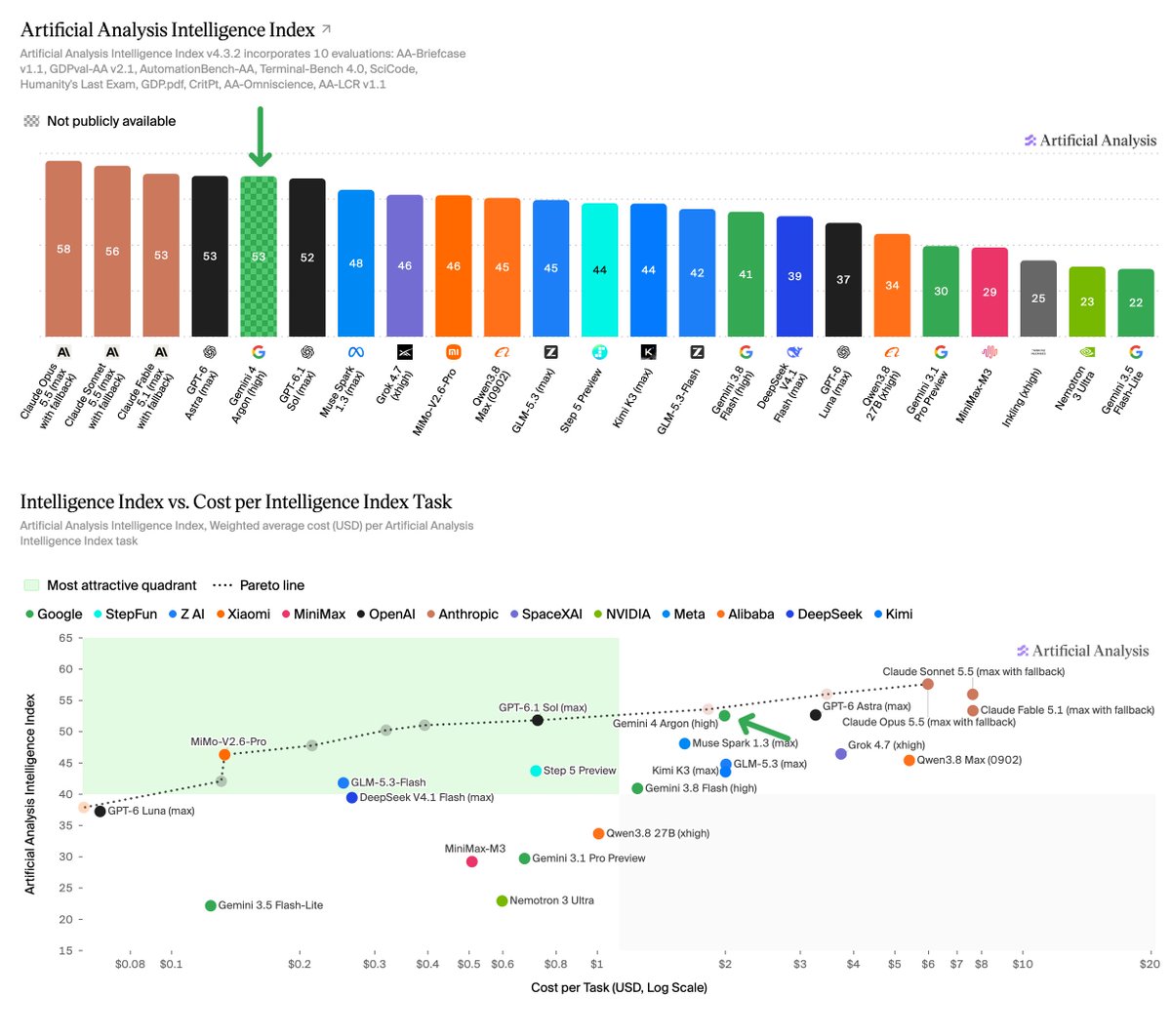
Google rolls out Gemini 4 Argon to trusted cyber defenders through Fairwind and says it is participating in the US government's voluntary pre-release process
We’ll continue to gather feedback from early testers as we iterate on guardrails before making Argon available to developers, enterprises, and consumers as soon as possible.
Argon will launch at an introductory price of $2 per million input tokens and $10 per million output tokens, with cached input tokens priced at 95% off input token price.

It’s built for complex workflows across coding, enterprise knowledge work, and cybersecurity defense – rolling out today to a set of trusted testers through our Fairwind Program.

Gemini 4 Argon is @GoogleDeepMind’s first proprietary
https://blog.google/innovation-and-ai/models-and-research/gemini-models/gemini-4-argon/
Tried to kill two birds with one stone here: understand Glamsterdam—an upcoming Ethereum upgrade aimed at increasing capacity, with changes to costs and compatibility—and use it as a worked example of separating AI intelligence from search.
🧠 Intelligence: Sol 6.1 in Codex and Grok 4.7 in Grok Build each researched and wrote a report. Claude Opus 5.5 then synthesized both, without new web research.
🔎 Search and evidence: Octen, Exa, Perplexity Search and authenticated X supplied the material for the two research runs.
The idea is to choose the models that interpret the evidence separately from the providers that retrieve it.
The guide includes findings, sources, prompts and methodology, with open questions flagged:
Feedback and corrections very welcome!
🤖 Cloudflare: The Internet now has a second audience — AI agents
Cloudflare argues that the web is undergoing a fundamental shift: websites are no longer serving just humans, but increasingly AI agents acting on their behalf. On Cloudflare’s network, daily requests from AI agents have grown by more than 1,700% over the past year, while more than half of Internet traffic is now non-human.
That creates an interesting economic problem. The traditional web worked because search engines crawled content and then sent humans back to websites, where publishers could monetize those visits. AI systems can instead consume the information and answer users directly — potentially leaving the original site with the cost of serving the content but little or no traffic or revenue.
Cloudflare thinks the answer isn't simply to block AI. Instead, websites need ways to distinguish search crawlers, AI training crawlers and agents actually acting for users, decide what each is allowed to access, verify who they are, and potentially charge agents for content, APIs or services. Cloudflare is building infrastructure around this idea, including cryptographic agent identity, Pay Per Use and an HTTP 402/x402-based Monetization Gateway.
Perhaps the bigger idea is that websites themselves may eventually become agent-native: Cloudflare's Markdown for Agents strips away human-oriented presentation, while WebMCP allows sites to expose actions directly to agents rather than forcing them to navigate interfaces designed for humans.
Worth reading — particularly if you’re interested in where the agentic web might be heading.
Cloudflare — “The Internet has a second audience”
A fairly long X article by Rohan Nayak, co-founder/CEO of Pocket FM which I've used the assistance of various AI tooling to summarise and present to you. I encourage members to read the X article in its entirity and make their own judgement even though I've tried to be careful and faithful with my summarisation.
Rohan Nayak’s argument is that general language models write badly because they are built to resolve a question, while fiction has to withhold, contradict, and keep someone listening. Pocket FM’s answer is Sherpa, a custom system for serialized stories, trained on what listeners actually finish.
He says the pivot to AI-written shows looked like it would kill the company for six months, then did the opposite. Within two years, he says, the system helped writers produce 161 blockbusters on Pocket FM, including one intellectual property he values at $100 million.
Some other claims in his article
Pocket FM can train on real listening, because it both makes and distributes the shows. He says the average user listens more than 150 minutes a day, about three times YouTube and about 50 percent more than Netflix.
Prompting, rolling summaries, and retrieval on existing models failed. By episode 100 he saw 10–20 contradictions, and the models could not answer questions that needed facts from several episodes.
Sherpa has three parts: a planner that assigns every scene a job and tracks unpaid-off setups; a Narrative World Model that stores who knows what, and from which chapter; and a prose engine where each character proposes an action, a critic rejects weak ones, and a narrator writes only the ones that make the page.
He still calls the system unfinished, and says the larger bet is a $1 trillion market in which writers can earn a living from stories that used to need a multimillion-dollar budget.

via Matt
New piece on different approaches to regulating the 19th century AI - electricity
https://m4ttl4w.substack.com/p/britain-tried-an-ai-pause-in-1882
It's raining decision models these days
Cloudflare has also released a Jev-like decision model called "Clef"
Liquid releases D1
Perplexity releseas pplx-decider-v1-27b
Nace AI just released Drex 1.5 — the first (and so far the only) decision model with a 128k context window.


today, we open sourced clef and clef-flash, our first homegrown models — both now available on @cloudflare workers ai!
demo / leaderboard: clef-evals.workers-ai-mle.workers.dev
blog: blog.cloudflare.com/clef-decision-…

Introducing Clef: our open-source decision models, and new RL fine-tuning platform
We are introducing Clef and Clef-flash, open-source decision models hosted on Workers AI for high-speed classification and agentic workflows. Also launching: a new reinforcement learning platform that allows developers to fine-tune decision models using their own data.


It's the first model to outperform Jev on @huggingface's Decision Index.
> wins on multilingual evals
> more robust against prompt injection
> handles longer inputs more effectively
> built for fast, structured decision-making in


It's a competitive decision model: send your app's state and yes/no, choice, or score questions, and get back typed answers with a probability for every option. Zero data retention.
$0.04/M input, $0 output, 65K context

D1 - API Pricing & Providers
D1 is Liquid AI's structured decision model, served as a System One endpoint. $0.04 per million input tokens, $0 per million output tokens.


It's powered by pplx-decider-v1-27b, our multimodal decision model trained to output a probability distribution over a fixed set of answers instead of text.
It costs $0.04/million input tokens and scores 85.71% across benchmarks.


128k is really good! You can send an entire contract or a video transcript and get a scored decision over the whole thing. You don't need to mess with chunking or

Drex, a small model that decides
Drex is a small model that decides. It returns a probability for every option in one forward pass, and Drex 1.5 tops the public Decision Index ahead of Jev 1.13.0 with under 10B parameters and 128K...
Pareto 26.10 Preview Delivers Top AI Performance at Low Cost
Pareto 26.10 Preview from The Unbiased Co. launched on OpenRouter with input at $0.80 per million tokens and output at $3.20—far below the prior version. This composite system runs multiple models in parallel, picks the best output, and supports 1M context, images, and tools for research, coding, and agents. Benchmarks show it hitting top scores like 51% on Terminal-Bench 4.0 at 34x lower cost than rivals, spotlighting a push for smarter value in AI.
A multimodal composite model for research, coding, and agentic workflows, with 1M context, text and image input, and tool calling.

-3x cheaper than 26.9
-faster + more reliable
-Frontier on Terminal Bench 4.0, DeepSWE v1.1, HLE, and GPQA-Diamond.
Our tiny team took a bunch of punches. Many of them (deservedly) hurt.
A multimodal composite model for research, coding, and agentic workflows, with 1M context, text and image input, and tool calling.
It basically combines multiple models behind one API response:
1. You send a request
2. Pareto runs several models to produce answers
3. It then evaluates the answers and selects the best
A multimodal composite model for research, coding, and agentic workflows, with 1M context, text and image input, and tool calling.
Microsoft Launches Top-Ranked AI Voice Models for Real-Time Conversations
The company released MAI-Transcribe-2-Streaming, which tops independent benchmarks with a 2.5% word error rate and results in just 0.13 seconds after speech ends. They also introduced MAI-Voice-2.1 for natural, high-fidelity text-to-speech in 23 languages and its faster Flash version for quick responses. CEO Mustafa Suleyman described the transcription model as the world's most accurate, running 55% faster and 60% cheaper than competitors, now available through APIs and partners like Vercel and OpenRouter to power voice agents in apps and call centers.

Accurate streaming transcription. Natural speech and less waiting between turns.
Build voice agents that keep the conversation moving!


55% faster and 60% cheaper than ElevenLabs.
Come build agents on our platform!
MAI-Transcribe-2-Streaming is @MicrosoftAI's new streaming Speech to Text

via Matthew Weigand
I think most here care more about the accuracy of your AI search than the average person. Perplexity continues to push the boundaries in this domain. Here is a short write up we published:
Most AI search finds the sentence with the answer and drops the sentence that makes it make sense.
A clause says the termination fee applies. The definition sits in another section. The AI cites something nobody can verify.
Perplexity Research and turbopuffer published a fix this week. A new embedding model that pulls the answer and the supporting text together, at no added cost per query.
turbopuffer tested it blind on 2,099 questions across 38,894 long documents.
Perplexity found the right answer 46% of the time. Voyage Context 4 found it 31% of the time. Perplexity also pulled more of the text needed to check it, 41% versus 36%.
Voyage still leads on finance and multilingual questions.
Every team I talk to can tell me which model writes their answers. Few have looked at what retrieves them.
Post:
Contextual embedding beyond the gold passage
A new training method, model, and benchmark for retrieving answers and their supporting context.

via Matthew Weigand
Perplexity shipped two other open releases this week.
The Perplexity Secure Intelligence Institute ran controlled escape attempts on SPACE, Perplexity's sandboxed agent runtime, using every major frontier model. No model escaped the VM. The team did find network bypasses that affect multiple agent runtimes and shared them with those vendors.
Report: https://lnkd.in/gVi8EnmH
pplx-decider is a frontier decision model trained in one weekend, with multimodality and long context. Use it on the API Platform or run it free from HuggingFace.
Model: https://lnkd.in/gXuPjJMx
Tavus unveils Griffin, the “first Human Interaction Model”, which it says passed the “video Turing test”, with 48% of users thinking it was human in live chats


By way of introduction: Tavus is a research lab focused on
Faster networks could help AI systems make better use of their GPUs.
John Ousterhout’s Homa protocol tackles a specific problem: small messages can get stuck behind large transfers, leaving GPUs waiting to coordinate their next step.
Ousterhout is a Stanford professor emeritus, creator of Tcl and Tk, and author of A Philosophy of Software Design. Tcl also underpins Expect, the automation tool created by Don Libes.
In his talk, he explains why this matters for inference and agentic workloads. Machines exchange small messages to check distributed caches or synchronize computation. As computation steps get shorter, those network waits can consume more of the available GPU time.
Homa prioritizes short messages, lets receivers coordinate incoming traffic, and uses priority queues in network switches to help small exchanges get through congestion.
In one mixed-message benchmark, Ousterhout reports about 13× lower short-message tail latency than TCP: under 100 microseconds versus over a millisecond. For inference systems limited by network coordination, shorter waits could mean better GPU utilization and higher token throughput.
Homa’s Linux implementation also has backports for Red Hat Enterprise Linux 8 and 9.5
▶️ Conference talk: the networking problem, Homa’s design, and the benchmark.
▶️ Interview: a conversational explanation of GPU waiting, Homa’s datacenter focus, and Ousterhout’s thoughts on software design in the AI era.
Implementation and RHEL backports:
https://github.com/PlatformLab/HomaModule
A useful question for teams serving AI across machines: how much time are your GPUs spending waiting for small network exchanges?
The diagram shows why a small message can leave GPUs waiting, then how Homa changes its path through a congested network.

A little behind the scenes: the Homa message and diagram were created with AI assistance.
I used my multi-provider research skill to gather sources through Octen, Perplexity, and authenticated X, then supplied the video transcripts for a closer reading. We shaped the explanation using Minto’s main-point-first structure and Andrej Karpathy’s suggestions for clearer writing and useful visuals.
My role is connecting the sources and ideas, asking questions, and refining what’s worth sharing. AI helps with research, drafting, and diagrams—all towards giving you succinct information with sources you can explore.
If you’d like to try this approach, these pages explain the pieces:
Separating intelligence and search — choosing your AI assistant and its research tools separately:
Choose Your AI. Choose How It Searches.
Choose your AI assistant and its search tools separately. A practical guide to connected research tools, with a simple path to your first task.

The practical research guide — providers, connections, and example prompts:
Choosing External Research Tools for AI Agents
A practical guide to choosing research tools, connecting them, and judging the evidence they return.
Minto — organizing an explanation around a clear point and supporting ideas:
Curated Skills — the wider collection, with examples and installation guidance:
Karpathy’s post — the inspiration for simpler writing and visual explanations:

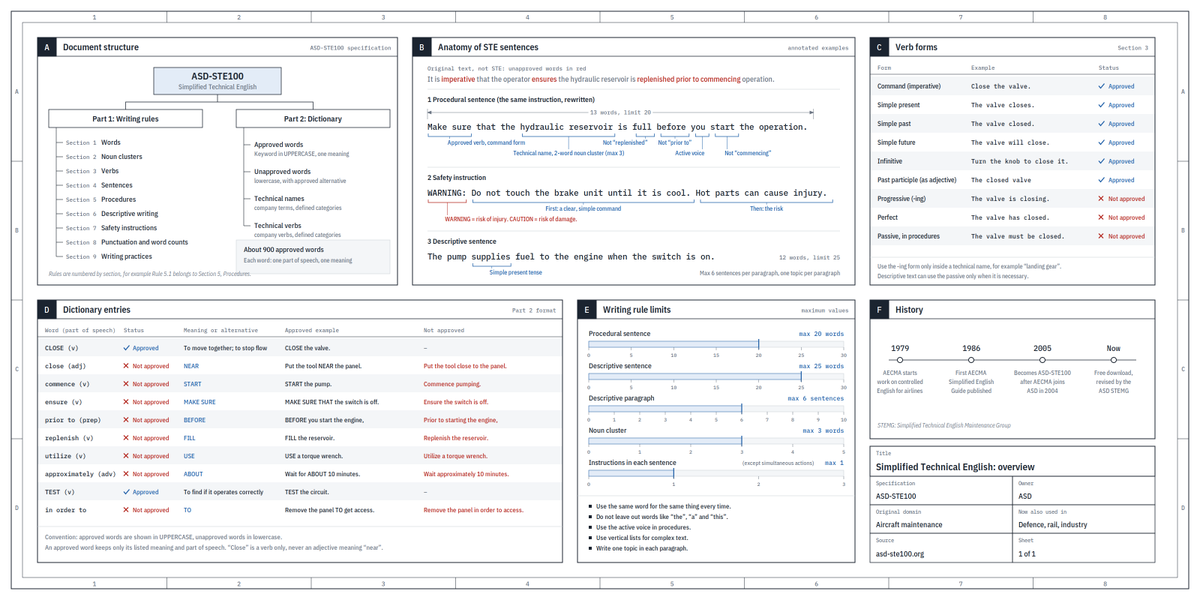
Writing. Something I've had success with: Ask your LLM to explain something in ASD-STE100, it's a controlled language specification originally developed for
For the skill files themselves:
https://github.com/goolamabbas/multi-provider-research
https://github.com/goolamabbas/curated-skills
Below is my personal website which aggregates links to many of my socials as well as the various content and community that I curate. Feel free to share this link to others who you think may find this content/community useful to them
The cover image of this newsletter via generated via the GPT Image 2.5 model within the Krea tool via the following prompt
a boat in the middle of the cherry blossoms, in the style of lush scenery, fairycore, cute and dreamy, pink and green