

In early blockchain legal studies, works such as "The Rule of Code" by Primavera De Filippi and Aaron Wright, or "Tomorrow's Lawyers" by R. Susskind, explored how blockchain's transformative potential could revolutionize legal activity within Web3.
Several years later, with the ecosystem's maturation and the arrival of trillions of dollars through traditional investors, major corporations, and the establishment of regulatory frameworks worldwide, legal practice has moved to the forefront of the blockchain environment.
From November 17-22, I was in Buenos Aires following some of the main discussions, debate groups, panels, and events focused on the potential for crypto development and adoption based on guarantees, security, and legal infrastructure.
Entity Onchain Legal Summit: Building the Boundaries Between Law and Code
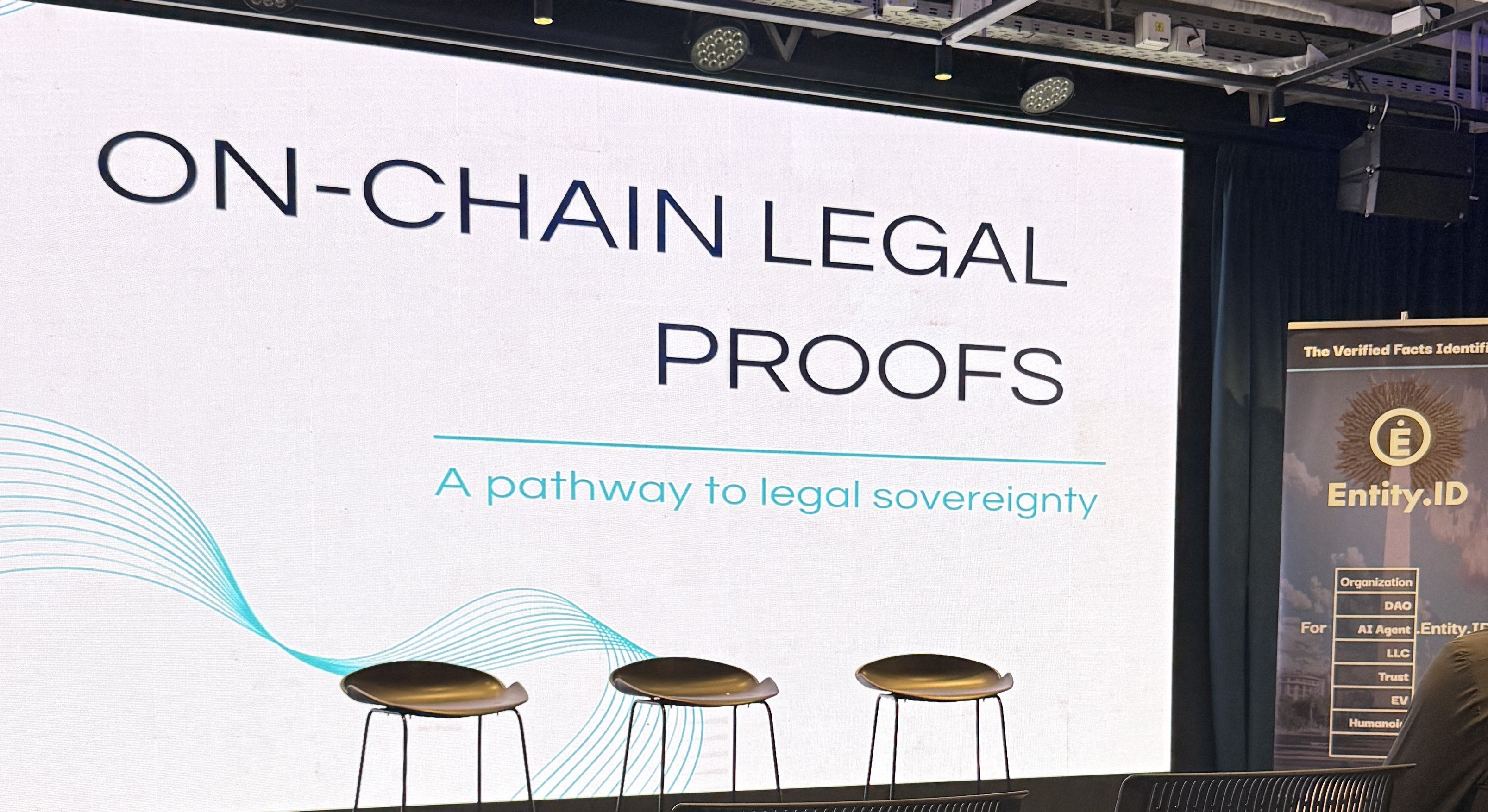
The Entity Onchain Legal Summit began one day before Devconnect, addressing legal innovation topics in the Web3 space, bringing together founders, legal experts, academics, and governance architects.
Throughout a full day of activities, the event explored uncharted territory: how to build legal architectures for entities that exist primarily on-chain, operate autonomously, and transcend traditional jurisdictional boundaries?
In discussions led by prominent figures and companies in the Web3 ecosystem, conversations about soft landing, the role of smart contracts, AI agents, and translating legal requirements into code and business models took center stage.
Solutions like RegistryChain enable on-chain company formation, building upon legal infrastructure compatible with the decentralization environment and its representative in the real world. With the DAO's growth and the operations across continents and jurisdictions, companies and investors must be conscious about how to express internal decisions, roles, benefits, and token issues to the external environment, considering the impact of taxes, regulations, and liabilities.
In panels such as "Building Sustainable Legal and Financial Structures for Founders", lawyers and legal experts debate about the relationship between jurisdiction, competitive advantages, and business models, highlighting the need for business models to address operational strategy and competitive advantages related to legal structure.
In the closing panel, "Agentic AI Meets Blockchain," Martin Moguillansky explored the requirements for creating on-chain legal proof systems, what architecture and elements are necessary for blockchain-based evidence to achieve legal validity and sovereignty
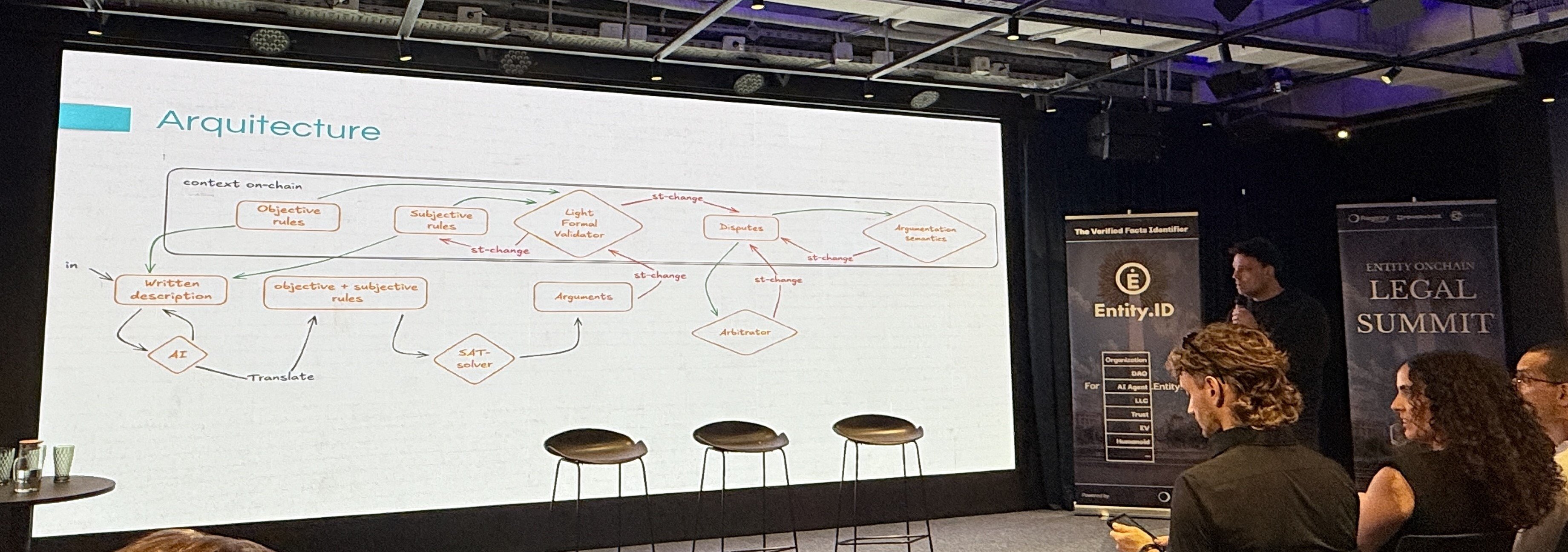
Sharing the panel, Husam Abboud (RegistryChain) and Han (Otoco) brought up current debates, translating the dystopia of the artificial intelligence revolution, robots, and quantum computing into the legal context. The practical implications are significant: founders can now structure entities that bridge on-chain governance with off-chain legal recognition, solving what was previously considered an intractable problem
Undoubtedly, the event signals the importance of the legal theme, bringing the context and relevance for the disruption in the crypto ecosystem.
Crecimiento Regulation Day: Institutional Recognition and Regional Leadership

Crecimiento Regulation Day highlighted Argentina's emergence as a regional hub for cryptocurrency regulation and demonstrated how public-private collaboration is reshaping the regulatory landscape across Latin America.
The presence of figures like Alejandro Cacace, Deregulation Secretary of Argentina's National Government, as the opening speaker, signaled official recognition of the sector's importance. Indeed, throughout the event, various national government personalities and authorities, such as legislators, presented their ideas and local perspectives on regulation.
In panels such as "VASPs' Role in Policymaking," leaders from relevant projects like Belo, Bitso, Bybit, and the Ethereum Foundation illustrated how virtual asset service providers are no longer passive subjects of regulation, but active participants in defining policy frameworks.
In a sense, the convergence between TradFi, fintechs, and Web3 found a meeting point where legal expertise must encompass traditional corporate structures, digital assets, and decentralized protocols.
Particularly, the panel on "Blockchain and Corporate Law," with Daniel Vítolo from IGJ (Argentina's corporate registry authority) and Ana de Iparraguirre, discussed legal architectures, demonstrating how even fundamental corporate law infrastructure is adapting to blockchain realities.

Among various points, the discussion about the potential emergence of new legal categories and subjects gained prominence in Daniel Vítolo's provocation: if legal persons are artificial subjects, why not speak of artificial intelligences as certain legal subjects, holders of goods, assets, responsibilities, and obligations?
Legal Tech Hub: Regional Regulatory Frameworks

The Floating Legal Hub was an incredible solution, where topics on law, regulation, and legal innovation were developed within various other hubs, bringing intersectional themes.
Regional leaders positioned themselves to map the diverse regulatory landscape in Latin America, debating the challenge of bringing the globally-operating Web3 reality to local regulations and jurisdictions.
As with other themes, Latin America's various fragmented regulatory approaches create challenges and opportunities, especially regarding cross-border transactions and operations involving asset transfers and tax, exchange, and market repercussions. The regional fragmentation means that Web3 companies operating across Latin America must navigate a patchwork of regulations, creating both compliance complexity and opportunities for regulatory arbitrage.
Among varied nuances on topics such as RWA, fintechs, and DeFi, Web3 regulation enriched discussions around how decentralized projects gain traction in the real world, with adoption, effectiveness, and legal foundation for operations, business, and solutions.
I had the opportunity and pride to participate in the panel on Web3 and regulation in Latin America, with high-level leaders and friends such as Teresa Carballo and Yazareth Sanchez, who brought updates on regulation and crypto asset use in Mexico, and Alison Berbetty, with news on the topic in Bolivia. Regarding Brazil, we discussed the Central Bank's recent resolutions on virtual asset services and future expectations for crypto operations in the local ecosystem.

The Ascendance of Legal Infrastructure
Throughout these various moments and others during Devconnect Argentina, a trend became evident that should grow increasingly as regulations on virtual asset use and Web3-built business models advance, as institutional adoption and investment expand.
As Web3 infrastructure becomes embedded in institutional finance, DAOs manage substantial treasuries, tokenized assets represent real-world value, and AI agents begin interacting with blockchain systems, legal infrastructure becomes critical infrastructure.
Specialized law firms, regulatory experts, and legal technologists working in this space are not simply applying traditional frameworks to new technology—they are architects of new systems.
New legal operating systems for autonomous entities; compliance frameworks for cross-border protocols; on-chain dispute resolution mechanisms; and conceptual foundations on how law operates in algorithmic, pseudonymous, and decentralized environments should be the trend.
For founders and builders, sophisticated legal guidance is no longer optional but essential for building sustainable and scalable Web3 companies. Legal due diligence and regulatory clarity are critical investment considerations.
From the regulators' perspective, collaboration with industry experts and specialized legal professionals reduces friction and is necessary to develop effective frameworks. And for the Web3 ecosystem as a whole, it means that legal innovation is not a constraint but rather an enabler of technological innovation.
In this sense, Argentina positions itself as a regional hub for such innovations, bringing together government authorities, legislators, industry leaders, and legal innovators in substantive dialogue, suggesting a model for how jurisdictions can foster innovation.
Devconnect Argentina made it clear: the future of Web3 is not code versus law, but code and law, architected together.