

Technology is not enough: My Experience in ZuVillage Georgia and reflections
Recently, I participated in ZuVillage Georgia, a popup village organized in the spirit of the first Zuzalu, initiated by Vitalik Buterin. Zuzalu was conceived as an experimental community—a space for participants to live, work, and collectively explore new forms of social interaction and self-governance (it is also called an experiment). Vitalik envisioned it not just as an event but as a way to rethink how we approach community governance, focusing on decentralization and pluralism. This concept deeply resonates with me, aligning with my goals over the past three years of working on Aspis Protocol: creating self-governing organizations and decentralized communities where decisions are made through consensus, not authority. [We are focusing on building the bloodlines of the organization where money is blood of organization or value that needs to be distributed and/or aggregated by the communities.]
However, my experience in ZuVillage highlighted some challenges that made me question the true commitment of the community to these ideals and reflect on how far we still have to go to achieve genuine decentralization.ч
At first glance, ZuVillage appeared to embody a community that could strike a balance between self-governance and shared interests. However, several incidents showed that the principles of pluralism and decentralization were under threat. A situation involving my friend revealed deep-rooted issues in the community’s governance approach.
My friend was expelled for breaking the rules, but the situation seemed unnecessarily harsh and disproportionate. The incident was quite trivial: his friend, who was staying in a neighboring hotel building not rented by ZuVillage, came by to drop off a hotel key card. This same person had attended the opening ceremony with the organizers' permission before. On this particular day, when he entered the space, there was no security at the entrance, so he waited at the reception, expecting his friend to meet him there. A simple, harmless action. However, one of the organizers noticed him, flew into a rage, and forcibly expelled both of them. My friend's bracelet was ripped off with such force that it injured his skin, all accompanied by public shouting and humiliation.
This reaction was disproportionate and, to me, highly inappropriate for a community meant to be a model of open and inclusive governance. Instead of discussing the situation or proposing a resolution, the organizers opted for forceful suppression. This not only undermined trust in the leadership but also polarized opinions among the village residents.
As the event continued, two more similar cases of expulsions occurred, each handled with a similar level of severity. In both situations, community members were removed from the village with the use of direct physical force. This kind of response struck a jarring note against the intended ethos of ZuVillage, which was meant to be a model for future societies based on cooperation, inclusivity, and decentralization, rather than a police state that harshly enforces privacy rules.
Realizing that this situation was spiraling out of control and understanding how it jeopardized the ideals of decentralization, I decided to act. Initially, I tried to engage directly with the organizers, advocating for a more inclusive approach and suggesting a discussion with the community members. However, instead of engaging in an open dialogue, my proposals were met with a wall of resistance and dismissal. Transparency in governance was compromised, and my attempts to create a space for dialogue were ignored.
Seeing the need for further action, I decided to directly reach out to the community. I prepared a letter detailing the incident and called on all residents to discuss how similar issues could be handled more appropriately in the future. In my letter, I emphasized the necessity of re-evaluating the governance system, creating transparent decision-making mechanisms, and allowing the community to challenge the organizers' decisions. I expressed my concerns about the current state of governance and urged everyone to participate in the discussion.
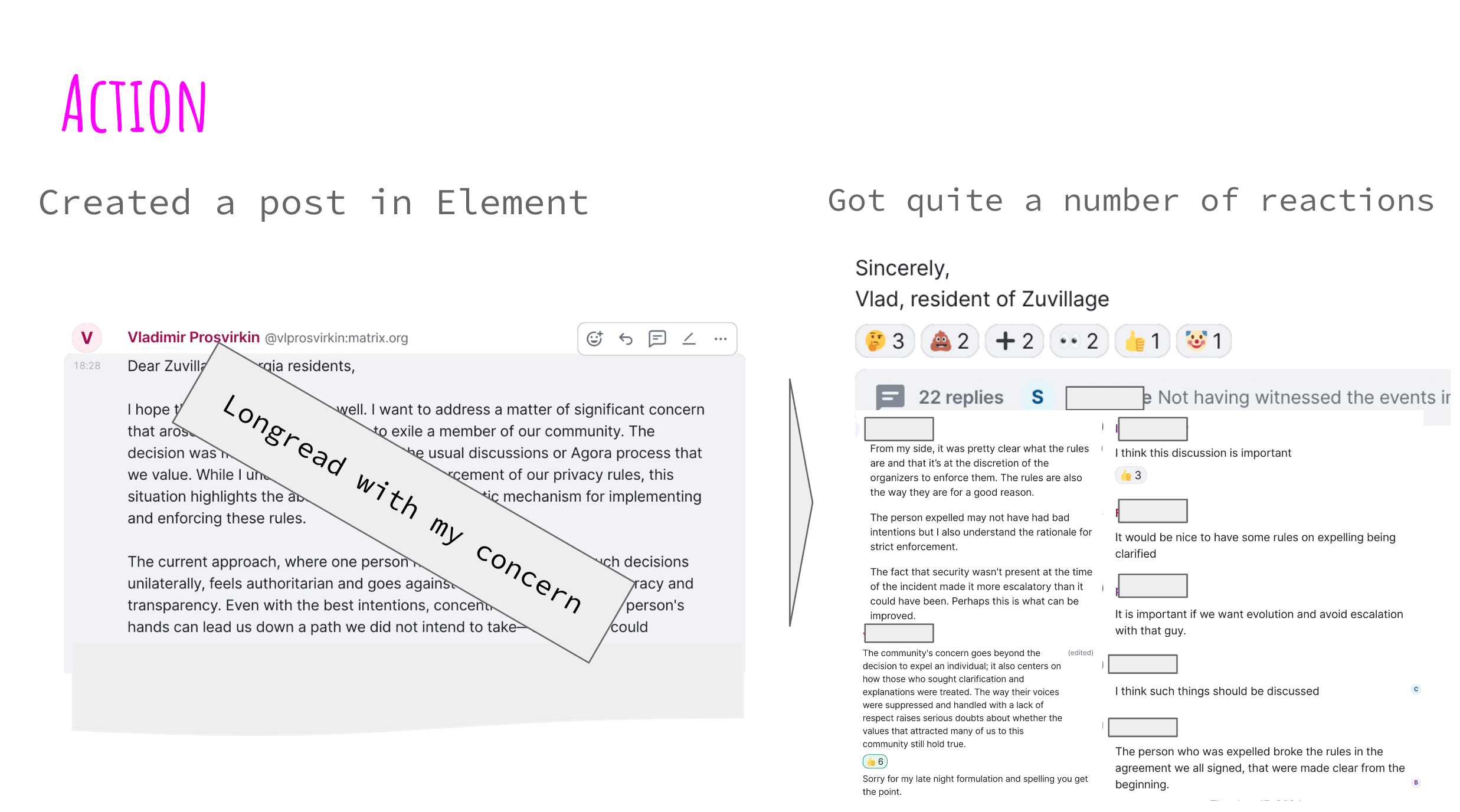
Despite these efforts, there was resistance from the community's leadership. A scheduled session to discuss governance was canceled, and no substantial change occurred. Yet, I believe these conversations are crucial for the well-being of any decentralized community, and I was determined to continue pushing for a more transparent and inclusive process.
Agora (Anonymous [should be] Platform for discussions in ZuVillages) also did not help and some people raised concerns that this platform is moderated and the comments are being deleted by moderators. Regarding the ZuPoll, this tool is simply not used for important matters and got a sweet polls like which cat is most cute with no real effect on the leadership or decision-making process.
At least I did my submission to hackathon (you can find link to my submission below this article), raised a concern and wrote this piece of content intended to question the current leadership practice:
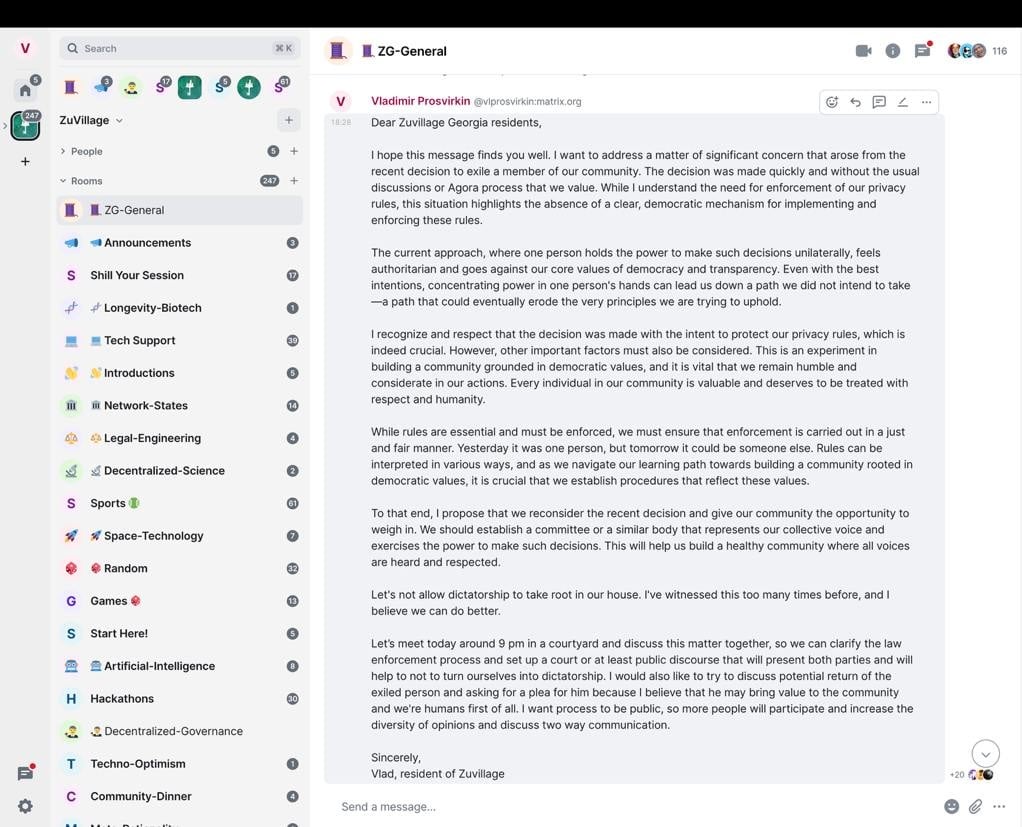
Following this post, more than 20 people gathered to discuss the incident and the broader implications for governance in ZuVillage. At this meeting, I opened the discussion with the following words:
Dear friends and neighbours,
First of all, I want to say that I genuinely appreciate all the efforts and achievements of the organizing team. The reason I organized this meeting is that I developed a relationship with the exiled person, and this situation has touched me on an emotional level.
Yes, My Friend broke the rules, but does that really mean we had to kick him out? I feel like we might have overreacted, especially since no one was actually harmed by what happened. Wouldn’t it have been enough to give him a warning and have a conversation about why these rules are important and why we all need to follow them? Sometimes, people just need a second chance to understand and do better.
I know some of you might think that rules are rules, and we all agreed to them. But let’s not forget that we’re all human. We have feelings, we make mistakes, and we can show compassion when it’s needed. I’ve talked to expelled person, and I can tell you this whole situation has been really hard for him. While I understand the need for discipline, I also believe that things like forgiveness, understanding, and compassion are just as important in making us better people.
I’ve lived through situations where one person had too much power, and it never ends well. When decisions are made by just one person without talking to others or hearing both sides, it starts to look a lot like a dictatorship. If we let that happen here, it could lead to a situation where only one opinion matters, and that’s not healthy for our community. We need to make sure that decisions like this are made together, as a group, so everyone’s voice is heard.
Let’s use this opportunity to rethink how we handle situations like this. Maybe we should have a group or committee that discusses these things and makes decisions together. This way, we can make sure that the process is fair and that we’re building a community where everyone feels respected and valued.
I spoke from my own experience, having lived in an environment where centralized power led to decisions being made without consultation or discussion. I have seen firsthand how such systems can devolve into authoritarianism, where a single perspective dominates and dissent is stifled. If we want to build communities that are genuinely decentralized, we must avoid this pitfall by ensuring that our governance structures are rooted in dialogue, fairness, and pluralism.
After the incident and the meeting, I realized that decentralization is not just a technological solution or a buzzword. True decentralization is about how power is distributed and how decisions are made, especially in times of crisis. Even if we have the best tools and technologies, if they are not backed by the right processes and culture, all of this remains empty rhetoric.
The organizers had full authority to make decisions and expel people without giving them a chance to express their point of view or even challenge their actions. This not only created an atmosphere of distrust but also raised concerns about the future of such communities. True decentralization implies the presence of mechanisms for conflict resolution, the ability to express dissent, and the opportunity to discuss alternative approaches.
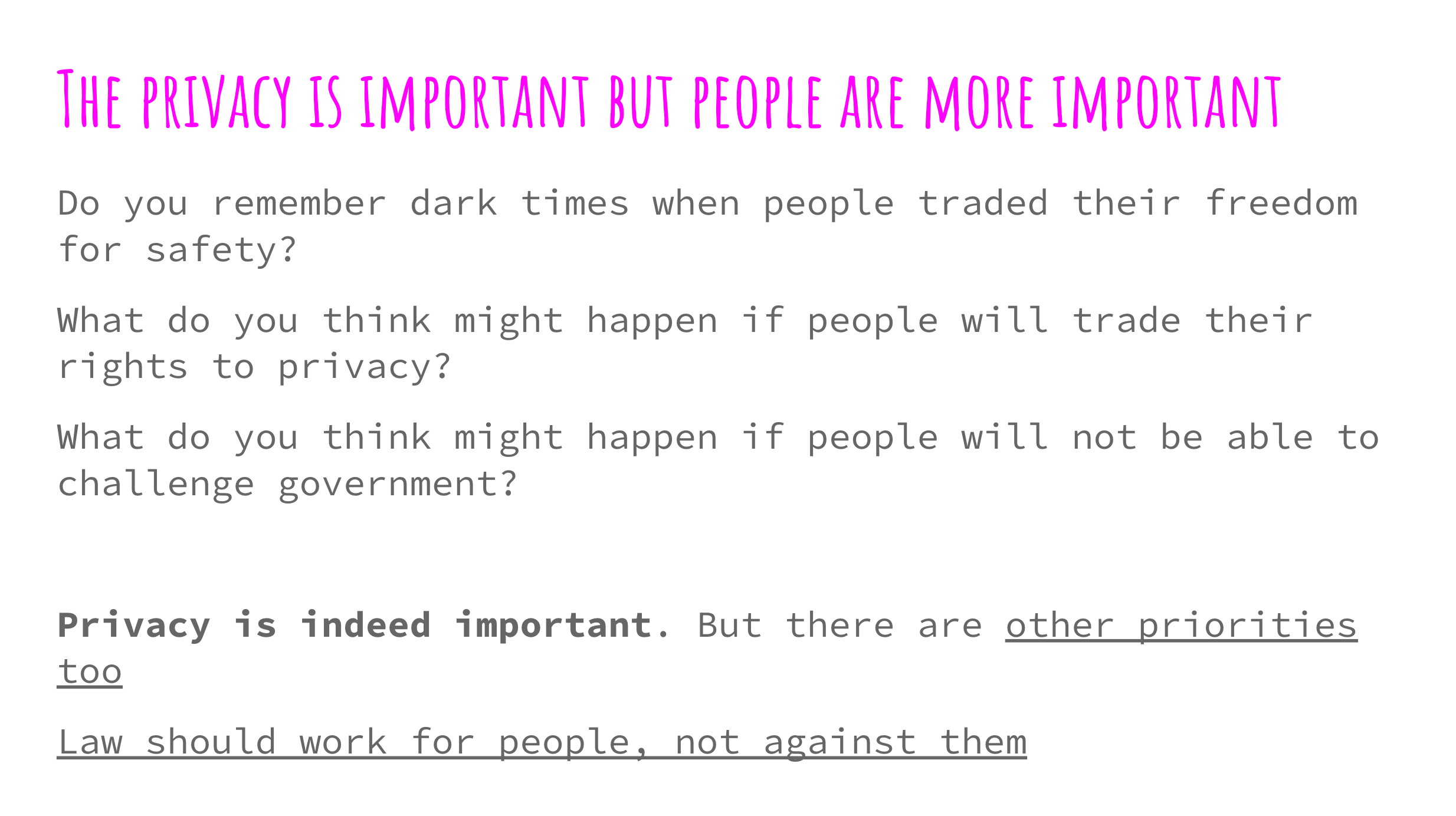
My experience at ZuVillage reminded me of many historical lessons where people traded their freedom for a false sense of security (or privacy in our case) or entrusted all power to a single leader, expecting that he would solve all their problems. History knows many examples where concentrating power in the hands of one person or a group led to catastrophic consequences. Take, for example, Austria in the 1930s and the rise to power of an ambitious artist who turned his country into a totalitarian state filled with fear and control. Such lessons show that laws should work for people, not against them, and freedom should be the foundation of any community, not a privilege of the few.
In the case of ZuVillage, this is especially relevant because the main goal of the village is to be a community for people. If those who manage this community ignore the voice of its members and make unilateral decisions, then everything else—from technology to mission—loses its meaning.
Following his visit to ZuVillage, Vitalik Buterin wrote an insightful piece on the importance of pluralism in community and organizational governance. He argued that "extreme libertarianism often fails to provide sufficient coordination for large-scale projects or public goods. On the other hand, overly centralized technocratic models can suppress individual freedoms and creativity." Instead, he proposed that we focus on "cooperation among different communities rather than enforcing conformity."
Vitalik's ideas resonate deeply with what we are trying to achieve. Building flexible and adaptive digital institutions that can evolve in a pluralistic ecosystem is not just a goal—it is a necessity. His emphasis on fostering cooperation rather than conformity should guide us as we think about the future of our community governance models.
We are at the beginning of a long journey to creating decentralized communities that can be sustainable, flexible, and truly inclusive. To achieve this goal, we need to continue learning, experimenting, and discussing how we can create a system where every voice is heard and every person has the opportunity to influence decisions.
Creating Transparent and Fair Governance Systems: Establish structures that allow for checks and balances, enabling residents to challenge decisions and propose alternatives.
Integrating Technology with Governance Processes: Utilize decentralized applications, smart contracts, and other digital tools to enhance transparency and participation, rather than control.
Fostering a Culture of Inclusivity and Open Dialogue: Encourage open and respectful discussions where diverse opinions are welcomed and valued.
Revising Power Structures and Distribution: Ensure that community leaders are chosen not only for their skills but also for their empathy and understanding of the community's needs.
Possibly replacing the leadership that takes more points of view under consideration and not focusing on one thing
This was very intense experience, though very valuable and enjoyable at most times. If I’d be formulating key lessons that I’ve learnt, they would be listed below:
It is not tooling, it is the governance protocol that should include this tooling in its processes. Software without users is nothing.
You need to have a healthy and transparent way for opposing the leadership decisions.
Social action is hard. For majority of people, civil rights are about talking and not doing.
You might not support me, but you must respect me, hear me and respond to me.
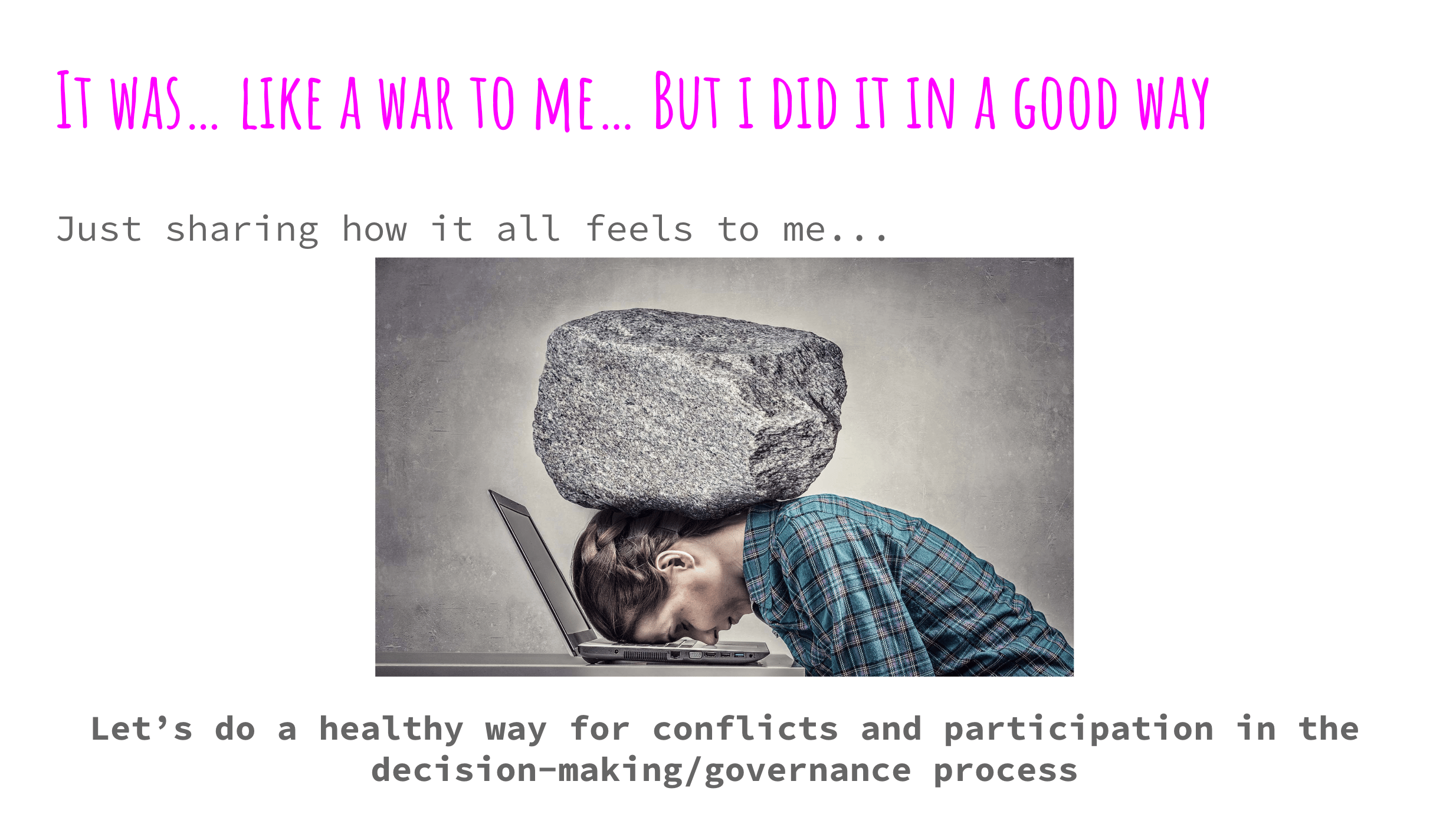
We are building the future, one decision at a time. Let’s make sure those decisions embody the values we want to see in the world.
P. S. After hackathon I’ve got a nice white hat, signed by one reputable master of governance and decentralization who understands and values all the lessons and errors that might happen in the process of becoming a healthy decentralized organization:
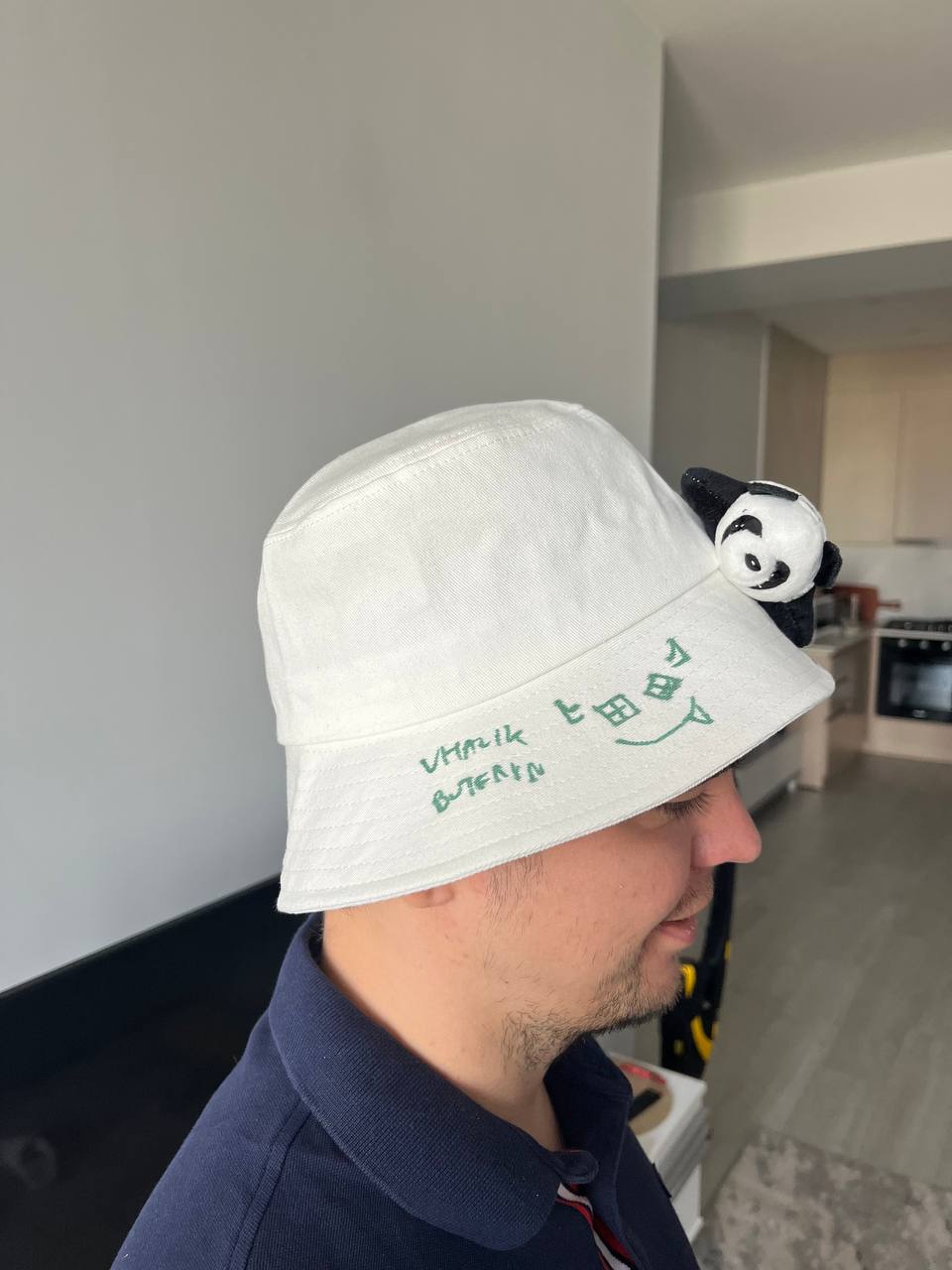
Possibly see you all next year at the next ZuVillage! (Of course if I will not be expelled :D )
Link to my hackathon presentation:
https://docs.google.com/presentation/d/1zGqorxqz5toBbkjI8OQVECI_g6fDFpE16O0Np2N40gk/edit?usp=sharing
Here a bit more about what I’m building:
https://docs.google.com/presentation/d/1W1x-WVqXKvLOxS2XHoFSjALigjx5-dyk_bdUpmnJ1eQ/edit?usp=sharing