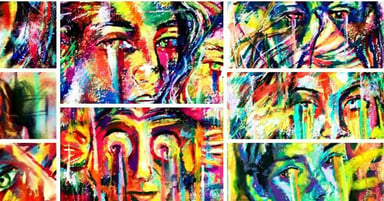
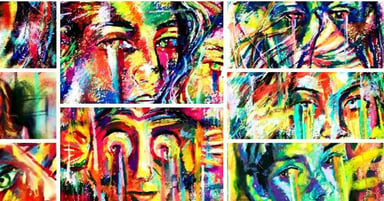
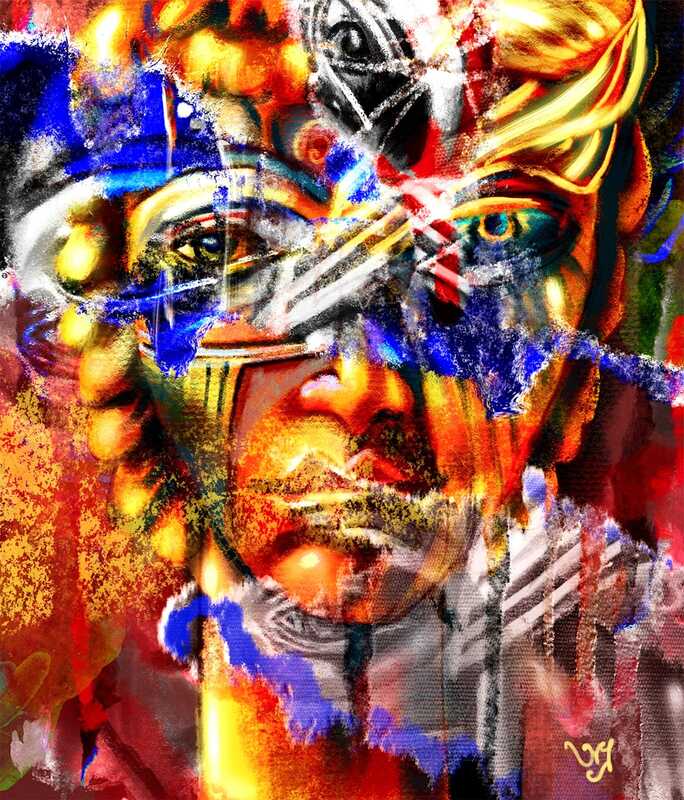
We met Abhro Deep Mukherjee, a digital artist known for his vibrant and surreal creations that push the boundaries of artistic expression, at a Twitter space. We were impressed by the transcending nature of his works and brought his The Cleansing from Darkness piece to our collection.
In this interview, Abhro shares insights into his artistic journey, philosophy, and the challenges he navigates in the dynamic web3 space. Dive into his world to discover the creativity and originality that make his art truly captivating.
Abhrodeep Mukherjee (@LUSUKCHAND) | Foundation
I am a New Delhi based artist born in city of Dhanbad. I am a graphic designer and illustrator and painter.. working mainly in predominantly oil pastels. Now i...
My art is about exploring my inner self. It expresses the emotions inside me—sorrow, happiness, or any emotion an individual might have. My art can take on different styles, such as abstract, realistic, and even surrealistic, depending on what I want to express.
I recently visited India, and I loved the art in Delhi. Do you feel your art is influenced by Indian culture, especially in its bright expression, or do you try to separate your art from it?
In my opinion, my art is not about India or its culture. It's about my style and expression. Even though I was born in India, the colors and expressions in my art are unique to me. An incident in 2009-2010 made me realize that I wanted to create something different, something beyond what we see directly. By that time, I had experienced different styles of painting, but eventually, I concluded that art is not just a vision or emotion; it's a direct experience of things that are beyond our general vision. That's when I started using vibrant colors. A senior artist once said my work reminded him of Henri Matisse, which intrigued me as I wasn't familiar with Matisse's work at the time.
How has your art evolved from the beginning until now? Do you paint and then digitize your work? Do collectors receive the physical piece or just the digital work?
I have been painting since I was six years old. I received basic formal painting training for six to seven years. After that, I had no intention of becoming an artist. I was basically a typical Indian studying and working as an engineer. However, I continued painting with charcoal and watercolors, which I loved. During that time, I created many realistic works.
Previously, I worked a lot with oil pastels a lot. If a collector were to ask for a one-on-one piece, I would send them a print. Now, everything is digital. But my digital art often looks like paintings because I love the imperfections of oil pastels. In general, it's one of my favorite mediums.
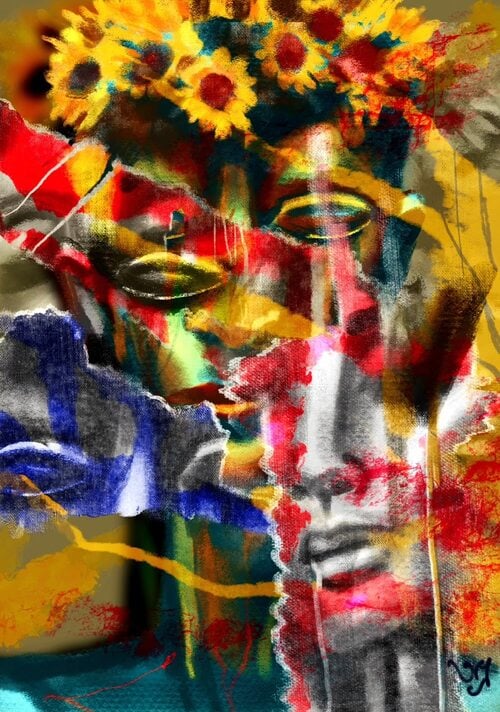
I began experimenting with pastels, transitioning from realistic to more abstract and surreal styles. Inspired by African masks, like those in Picasso and Matisse's work, I developed my own interpretation. A visit to see terracotta statues enriched my style, blending Eastern Asian art influences. Initially, I relied heavily on reference images, but I wanted to break free from this habit. I started using AI tools to create foundational structures for my art, which helped me explore new directions. With mentorship from a seasoned artist, I embraced spontaneity and a more free-form approach. This journey led to the creation of "The Cleansing from Darkness," reflecting my newfound spontaneity and object-oriented style.
It seems your work is a mixture of cultures and mediums. But also there is transcending quality in your art.
I've developed my own philosophy, which I share with my students. I believe that between point A and point B, there are countless paths. Each day, I embark on a journey to point B with an unknown driver, symbolizing the unpredictable nature of art. This driver, my medium, takes me to new, unseen destinations with every painting session. It's essential to trust this process, allowing art to guide you rather than forcing it to revisit the same place. This dialogue with art keeps the creative journey fresh and exciting, preventing stagnation.
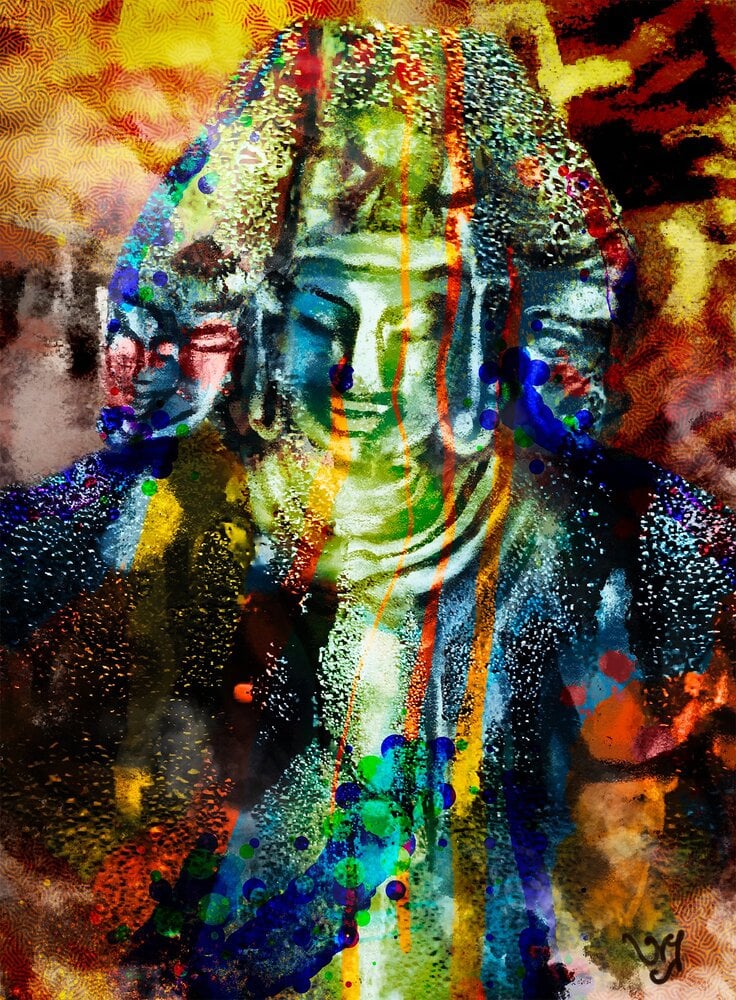
I believe art shouldn't have a fixed message. My work should provoke questions and dialogue between the viewer and the painting, allowing for curiosity and personal interpretation. It's interesting how the viewer interacts with the art, adding their own meaning. Art is dynamic, and each individual has a unique interpretation. A set message limits interpretation. I don't focus on thematic works because it restricts free interpretation. Francis Bacon's portraits, like his of Hitler, show nothing of the subject, yet evoke strong reactions.
Since everyone knows what something, a tree for example, looks like, why should I paint a tree in the same way? As an artist, I should bring a completely new vision to the tree. By doing so, I can offer a completely new perspective on that subject. This made me think that if I were to depict well-known figures like Ganesh or any other god, my interpretation should be completely different from others.
I started in November 2021.
With a background in digital knowledge and image engineering, I naturally gravitated towards NFTs during the initial boom. I began minting my work on OpenSea using the Polygon blockchain and engaged with Polygon spaces. My first sale came in January 2022, followed by several ETH sales. By late 2022, I shifted to selling editions on ETH and then moved to Tezos, where I am currently active. After a brief hiatus from the space from October/November 2023 to February 2024, I returned to continue my journey in the NFT world. I decided to return because I realized the potential for global recognition through NFTs, especially after my work was exhibited in Times Square—a dream for many artists. Despite rejections, I believe in being ready for opportunities and creating art so brilliant that it attracts collectors on its own merit. Inspired by artists like Marcelo Castigliani, I've learned that consistently creating better masterpieces is key to success. If your work is truly exceptional, it will eventually be collected.
It's an amazing approach! Consistency is the key. Do you have any challenges in the space now?
The main challenge in Web3 is promoting my art and creating narratives to attract collectors. I tackle this by trying different approaches and focusing on my work rather than getting overwhelmed by problems. The number of collectors has decreased, and biases exist where collectors favor friends over art quality. Despite my average appearance and lack of flashy traits, my art is my attraction. The NFT space feels like a jungle where survival requires navigating biases and building genuine connections.
Are you a part of any artistic community? Or do you just follow a more individualistic approach in space?
I prefer an individualistic approach, but I recognize the importance of community in selling art. While I don't mingle much, building connections is crucial for survival in the competitive art world.
You mentioned that your art was shown in Times Square. Do you consider participating in some exhibitions?
I actively apply to various exhibitions and side events at NFT conferences, though success is rare. I believe in consistently trying and improving. While finding dedicated collectors is ideal, I focus on interacting in spaces and creating opportunities for my work to be seen. I don't expect my work to sell automatically; instead, I work to create a path for sales. Inspired by artists like Rousseau, I understand that recognition can come later, and persistence is key. Despite challenges, I continue toward my goal, believing in the value of my art.
I would advise To truly embrace being an artist, it's vital to see yourself as the art. This self-realization should be a priority and happen as early as possible, as it forms the foundation of your artistic journey. In the art world, especially within the NFT space, there are no fixed rules. It's crucial to create your own path and navigate the complexities with a flexible mindset.
I engage with various spaces and maintain connections with different groups, even those who may not get along. This approach is essential for survival in the competitive environment, akin to forming alliances with both the lion and the tiger in a jungle. Offending no one ensures support and opportunities from all sides.
Ultimately, it's about taking responsibility for your unique path and understanding which connections resonate most with you. This personalized approach is key to thriving and finding success in the ever-evolving art landscape.
And finally, what are your near plans in the web3 space?
For the rest of 2024, I'm exploring new blockchain opportunities. I've tried Cosmos and am considering minting on Base, but I need to act quickly to avoid missing trends like with Solana, where some of my work remains unsold. Being proactive in minting is crucial in this dynamic space.
The NFT environment requires balancing art creation with understanding blockchain trends. I find myself questioning whether to focus solely on my art or also on the technological aspects. It's challenging, as artists in Web3 must navigate both creative and financial complexities.
Despite these challenges, I'm committed to my path. The encouragement to keep going resonates with me, as perseverance is key. I aim to stay truthful to my artistic journey while adapting to the ever-evolving landscape.
Abhrodeep Mukherjee (@LUSUKCHAND) | Foundation
I am a New Delhi based artist born in city of Dhanbad. I am a graphic designer and illustrator and painter.. working mainly in predominantly oil pastels. Now i...