

This research maps the active Zcash ecosystem across organizations, wallets, applications, infrastructure, explorers, developer tooling, protocol research, governance, education, and regional communities. Each entry has a checked link and a short description. A separate section remembers projects that helped shape Zcash but have since closed or been replaced.
It also covers the people and research behind Zcash, the cryptography it helped bring into real world use, and the papers that document that work. A listing needs a meaningful Zcash connection. Simply accepting ZEC, listing it on an exchange, or offering a generic swap route is not enough.
Bitcoin showed that digital money could work without a bank, but it left everybody’s payment history on a public ledger. The Zerocoin paper proposed adding cash like anonymity to Bitcoin. The seven authors of the 2014 Zerocash paper went further and described private payments that could hide the sender, recipient, and amount while still proving that the transaction followed the rules.
Zerocash: Practical Decentralized Anonymous E-Cash from Bitcoin @ Microsoft Research by Matthew Green
Zooko Wilcox assembled the company and engineering team that turned this research into a working network. Zcash launched on 28 October 2016. Sapling later made shielded payments practical on phones; Blossom shortened block times; and NU5 introduced Orchard and Unified Addresses without requiring a new trusted setup ceremony for the Orchard pool. In 2026, the network moved from zcashd to a Rust based stack built around Zebra, Zaino, and Zallet, while Ironwood brought formal verification directly into the story of Zcash’s circulating supply.
The project has survived hard stretches: wallet sync problems, spam attacks, delistings, regulatory pressure, funding disputes, and products that disappeared when their grants ran out. It also became less dependent on one company. Today the work is spread across ZODL, the Zcash Foundation, Zcash Community Grants, independent research teams, wallet builders, infrastructure operators, and regional communities. That persistence is a large part of the Zcash story.

Mathew Green on first 8 years of Zcash
Matthew Green: Johns Hopkins cryptographer who initiated the Zerocoin project, helped develop Zerocash, and persuaded Zooko Wilcox to create a company capable of bringing the protocol to life. Author of blog A Few Thoughts on Cryptographic Engineering
Ian Miers: Zerocoin and Zerocash co-author whose research helped define decentralized anonymous payments and the privacy model inherited by Zcash.
Christina Garman: Co-author of both Zerocoin and Zerocash and a central researcher in the transition from a Bitcoin privacy extension to a standalone private payment protocol.
Aviel D. Rubin: Johns Hopkins professor and co-author of the original Zerocoin paper.
Eli Ben-Sasson: Zerocash co-author and Zcash founding scientist who contributed expertise in succinct proof systems. He later co-founded StarkWare.
Peter Van Valkenburg: founding director of the Zcash Foundation
Alessandro Chiesa: Zerocash co-author and founding scientist who contributed to the zk-SNARK research that made practical private transactions possible.
Eran Tromer: Zerocash co-author and founding scientist whose work covered the protocol’s cryptographic construction, security, and practical realization.
Andrew Miller: An important early Zcash contributor. Participated in the 2016 Zcash parameter generation ceremony.
Here Andrew Miller talks about Data Liberation & Adversarial Interop with TEE and OAuth3 at Ethereum Cypherpunk Congres 2 by Web3Privacy Now
Madars Virza: Zerocash co-author and founding scientist who contributed to the design and implementation of the original protocol.
Zooko Wilcox-O’Hearn: Cypherpunk and security engineer who founded the Zerocoin Electric Coin Company, recruited the team, raised funding, and led Zcash to its 2016 mainnet launch.

The launch also depended on a wider engineering team. Nathan Wilcox, Daira-Emma Hopwood, Sean Bowe, Jack Grigg, Ariel Gabizon, and many others translated the papers into specifications, circuits, node software, security procedures, and network upgrades.

Thank you for your service, sirs!
youtu.be/EF8JcK8BppA
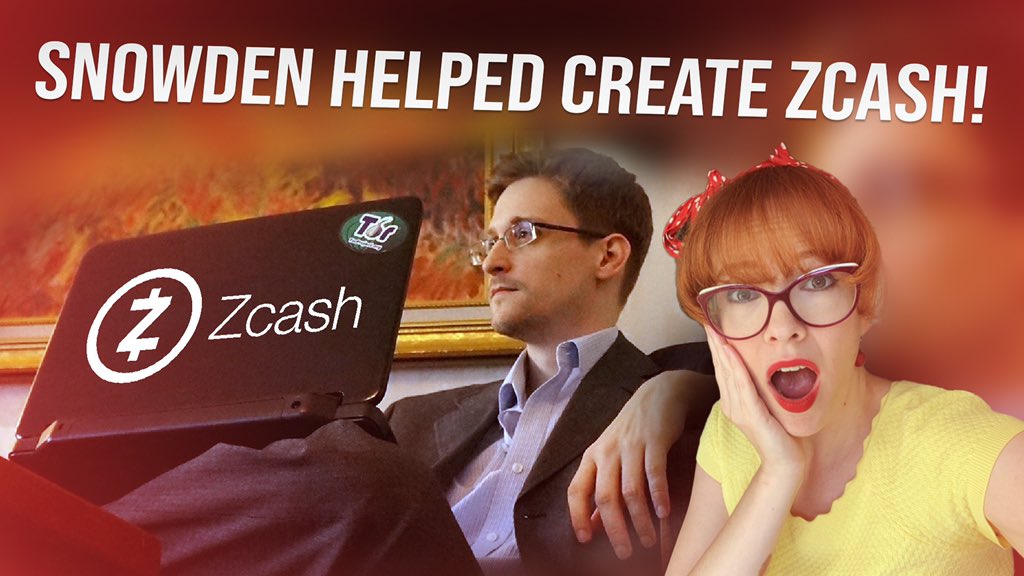
And did you know that Edward Snowden participated in Zcash "Sprout" trusted setup ceremony? Alongside Andrew Miller, Peter Van Valkenburgh, Zooko Wilcox-O'Hearn, Derek Hinch

On 28 July 2026, Zcash activated Ironwood as part of NU6.3. Ironwood introduced a new shielded pool and a turnstile that lets anyone check that no more value leaves the previous Orchard pool than entered it. The important story is not the upgrade name. It is the amount of work that went into making the new pool easier to trust.
Project Tachyon’s formal verification contains more than 2,700 machine-checked theorems written in Lean. Three teams of researchers and cryptographers from Tachyon, Shielded Labs, Zodl worked on it for more than a month. Their proof covers the balance integrity of the pool and shows, under clearly named cryptographic assumptions, that Ironwood cannot contain an undetectable counterfeiting flaw of the kind the work was designed to rule out.

For a quick visual introduction before going deeper, watch this video about ZCash.
Category | Listings |
|---|---|
Organizations, funding, and governance | 20 |
Wallets, payments, and applications | 31 |
Network infrastructure, explorers, and data | 19 |
Developer tooling, protocol development, and research | 28 |
Swaps, bridges, and cross-chain work | 7 |
Education, media, events, and communities | 23 |
Total active or actively developed listings | 128 |
These figures are snapshots, not permanent measurements. Network figures were checked on 6 August 2026; company figures are attributed to the organizations that published them.
220+ entries reviewed: Historical projects, organizations, integrations, research proposals, and experiments considered during this mapping.
128 current listings: Entries retained after removing duplicates, generic ZEC support, unsupported claims, and sunset projects.
16.86 million ZEC outstanding: Current figure displayed by the official Zcash network page.
4.35 million ZEC shielded: About one quarter of outstanding ZEC was shown in shielded pools on the official Zcash network page.
2,700+ machine-checked theorems: The public Lean development supporting Ironwood’s formal verification.
$25M+ raised by ZODL: The seed round announced in March 2026 included Paradigm, a16z crypto, Coinbase Ventures, Winklevoss Capital, and other investors.
400%+ shielded-pool growth: ZODL says the pool grew by more than 400% after the launch of its wallet in 2024.
$600M+ in ZEC swaps: ZODL reports that its wallet facilitated more than $600 million in ZEC swaps from October 2025 to March 2026.


ZODL: Zcash Open Development Lab builds core protocol software, the Zodl wallet, Zallet, and the post-
zcashdstack.Zcash Foundation: Public charity maintaining Zebra, governance processes, technical standards, events, and core Zcash community assets.
Shielded Labs: Independent Zcash support organization researching Crosslink, sustainable issuance, and fee market improvements.
Jason McGee has joined the ranks of Shielded Labs

Zcash Community Grants: Community-elected grants program funding independent public good work for Zcash.
Zingo Labs: Independent engineering team behind Zingo!, Zaino,
zingolib, and wallet interoperability work.Sovright: Nonprofit operator of Zcash recovery, relay, and mining infrastructure.

ZecHub: Open-source education and community contributor hub for Zcash.
Valar Group: Engineering team developing Zakura and contributing to Project Tachyon scaling work.
QEDIT: Privacy engineering company contributing research and implementation work for Zcash Shielded Assets.
Financial Privacy Foundation: Nonprofit providing operational and administrative support to financial privacy projects and teams.
ChainSafe: Protocol engineering company working on WebZJS and browser based Zcash integrations.
Blockchain Commons: Open-source standards group collaborating on ZeWIF and interoperable wallet data.

Zodl: Self-custody, Zcash only mobile wallet designed around shielded transactions and Unified Addresses.
Zingo!: Shielded first mobile wallet supporting Orchard, Sapling, Unified Addresses, and private memos.
YWallet: Advanced self-custody wallet supporting Zcash shielded pools, multiple accounts, and poweruser features.
Zkool: Open-source wallet in the YWallet family focused on modern Zcash shielded functionality.
Cake Wallet: Multi-asset self-custody wallet with integrated shielded Zcash support.
Edge Wallet: Multi-asset mobile wallet with client side key control and shielded Zcash functionality.
Unstoppable Wallet: Open-source multi-chain wallet that implements shielded Zcash transactions.
Vizor: Desktop Zcash wallet focused on shielded use and hardware wallet integration.
NozyWallet: Orchard-first command-line wallet for users running their own Zebra based node stack.
Noir: Zcash wallet and application environment operating on public mainnet with shielded functionality.
Zend: Zcash wallet focused on simple private payments and a streamlined user experience.
Zipher: Experimental Zcash wallet exploring private payments and agent oriented workflows.
Keystone: Air-gapped hardware wallet with Zcash shielded signing support.
OneKey Zcash integration: Active work to add transparent and shielded Zcash support to OneKey hardware wallets.
Hito Zcash cold signing: Hardware wallet development for offline Orchard transaction signing.
Ledger Zcash app: Maintained Ledger application and ongoing work toward stronger shielded Zcash support.
MetaMask Shielded Snap: ChainSafe built browser wallet integration using WebZJS to send, receive, and manage shielded ZEC in MetaMask.
Brave shielded wallet integration: Native Brave Wallet support for buying, receiving, and sending shielded ZEC on desktop.

CipherPay: Non-custodial merchant gateway that sends customer payments directly to shielded merchant addresses.
ZGo: Browser based point-of-sale system for accepting Zcash from a phone, tablet, or computer.
Free2Z: Creator publishing and donation platform centered on private Zcash payments.
BTCPay Server Zcash plugin: Self-hosted payment server integration for accepting Zcash without a custodial processor.
Zimppy: Orchard based payment tooling for machine-to-machine and AI-agent transactions.
ZecMap: Community maintained map of merchants and venues where people can spend ZEC.
ZcashNames: Mainnet-beta naming service that maps human readable names to Zcash Unified Addresses.
ZECPublish: Zcash powered publishing, directory, and anonymous messaging application.
Zcash.me: Zcash focused web application and community service for easier ecosystem participation.
Aftok: Cooperative crowdfunding and project financing tool developed with Zcash community use cases.

Zebra: Production Rust implementation of the Zcash consensus node maintained by the Zcash Foundation.
Zakura: Performance oriented Rust full node with fast synchronization, pruning, snapshots, RPC compatibility, and Ironwood support.

Zaino: Rust indexer and light client backend designed for the modern Zebra-based wallet stack.
Zallet: Rust full node wallet and RPC component that replaces the wallet functionality formerly bundled with
zcashd.Z3: Current Zcash node stack composed of Zebra, Zaino, and Zallet, with migration and deployment guidance.
zec.rocks infrastructure: Community operated endpoints, explorers, and open Zcash infrastructure delivered from multiple regions.
Sovright Relay: Public low latency block relay supporting more resilient Zcash block propagation.
Sovright Mining: Public Zcash NU6 testnet pool for testing Stratum V2 mining and open pool software; it is not a production mining pool.
ZEC.PRO: Community operated Zcash infrastructure, endpoints, explorers, and technical services.
Nym Mixnet integration: Network privacy work intended to hide wallet traffic metadata and transaction-broadcast patterns.
Zcash local network: Maintained tooling for launching reproducible local Zcash networks during development and testing.

ZcashInfo: Foundry operated block explorer with network, transaction, and mining statistics.
Zcash Block Explorer: Open-source explorer portal for inspecting Zcash mainnet and testnet data.
CipherScan: Privacy oriented Zcash explorer designed to present public chain data clearly.
ZEC.PRO Explorer: Community operated Zcash service whose site links to its live mainnet explorer.
ZecStats: Dashboard tracking Zcash network, supply, shielding, and usage metrics.
OpenZcash: Transparency dashboard covering the Dev Fund, Lockbox, grants, and ecosystem funding flows.
Zcash.Space: Utility for parsing and inspecting Unified Addresses and their receiver components.
ZNodes Explorer: Real-time map and telemetry view of reachable Zcash network nodes.

Zcash Improvement Proposals: Canonical proposal process and technical record for protocol and ecosystem changes.
Zcash Protocol Specification: Normative technical specification for Zcash consensus and shielded protocols.
Zcash developer documentation: Maintained documentation portal for node, wallet, protocol, and integration developers.
librustzcash: Core Rust libraries for Zcash primitives, transaction construction, scanning, and wallet functionality.Zcash Swift Wallet SDK: Official Swift SDK for building shielded Zcash wallets on Apple platforms.
Zcash Android wallet SDK: Official Kotlin/Android SDK for shielded Zcash wallet applications.
zingolib: Rust light client wallet library powering Zingo! and reusable Zcash wallet components.WebZJS: WebAssembly and JavaScript tooling for shielded Zcash applications in browsers.
FROST: Threshold Schnorr signature implementation used for distributed Zcash key management.
ZeWIF: Extensible wallet interchange format for moving Zcash wallet data safely between implementations.
PCZT: Partially Created Zcash Transaction format for coordinating offline, hardware, and multi-party signing workflows.
Zcash DevTool: Developer utility for inspecting, constructing, and testing Zcash protocol data.
Zcash integration tests: Cross component test suite for validating behavior across the modern Zcash stack.
sapling-crypto: Maintained Rust implementation of Sapling cryptographic primitives.orchard: Maintained Rust implementation of the Orchard shielded protocol.halo2: Proof system library underlying Halo 2 circuits and modern Zcash cryptographic development.sinsemilla: Rust implementation of the Sinsemilla hash and commitment primitives used by Orchard.incrementalmerkletree: Incremental Merkle tree components used by Zcash wallet and protocol libraries.Zcash test vectors: Reproducible cryptographic test vectors used to verify independent implementations.
ZecDev: Independent developer portal aggregating current Zcash stack guidance, resources, and migration information.

Ironwood / NU6.3: July 2026 network upgrade that replaced the Orchard pool with an audited, formally verified Orchard protocol pool and a supply checking turnstile.
Project Tachyon: Scaling program exploring proof carrying wallets, oblivious synchronization, and transaction aggregation.
Crosslink: Shielded Labs’ hybrid proof-of-work/proof-of-stake finality design and incentivized feature net program.
Network Sustainability Mechanism: Research into a more sustainable Zcash issuance and network security model.
Dynamic fees: Fee market research intended to improve capacity management and resistance to spam.
Orchard quantum recoverability: Proposal and engineering work for recovering Orchard funds if quantum attacks become practical.
Zcash Shielded Assets: QEDIT-led research and implementation for private user issued assets on Zcash.
25-second block target spacing: Active design discussion around reducing block intervals while preserving network safety.

Maya Protocol: Cross-chain liquidity protocol with a native ZEC integration rather than a custodial wrapped token.
THORChain: Cross-chain liquidity network supporting native ZEC swaps.
THORSwap: User interface and aggregator exposing native ZEC swap routes through supported liquidity networks.
SwapKit: SDK that makes ZEC available as a source and destination chain through Maya and intent based routes.
NEAR Intents: Intent based cross-chain execution integrated into Zcash wallet swap experiences.
Zcash–Avalanche Red Bridge: Decentralized bridge research and implementation connecting Zcash with Avalanche.
Rhea Zcash Gateway: Browser wallet and gateway work linking shielded ZEC with intent routing and cross-chain DeFi.


Zcash Dev Fund: Consensus defined funding mechanism supporting protocol development and ecosystem public goods.
Zcash Community Advisory Panel: Broad community panel polled by the Zcash Foundation on governance and grant decisions.
Coinholder polling: Governance mechanism for measuring the preferences of ZEC holders.
Zcash Community & Coinholder Funding Model: Current allocation model combining community directed and coinholder-directed ecosystem funding.
Secure Internet Voting: Cryptographic voting system used for Zcash Community Grants elections.
Lockbox: Protocol controlled accumulation mechanism reserving funds until community-approved disbursement rules exist.
ZIP process: Open governance process for proposing, discussing, and specifying changes to Zcash.
Zcash Grants Platform: Public portal for submitting and tracking Zcash ecosystem grant proposals.
Cypherpunk Technologies: Raised $58.88 million in a private placement led by Winklevoss Capital to establish a public ZEC treasury strategy. It later invested $5 million in ZODL.
ZODL: Raised $25 million+ from Paradigm, a16z crypto, Coinbase Ventures, Winklevoss Capital, Cypherpunk Technologies and others to support wallet, protocol and engineering development.
Shielded Labs: Received 3,221 ZEC, worth approximately $1.2 million, from Tyler and Cameron Winklevoss for independent protocol development.
Zcash Community Grants supported Internet Freedom campaign by Tor Project and Funding the Commons


Zcash: Main public portal for learning about, using, building on, and participating in Zcash.
Zcash Community Forum: Primary longform discussion venue for development, governance, grants, and ecosystem projects.
Zcash Global: Community operated Discord for Zcash users, builders, and regional groups.
ZecHub Wiki: Community maintained knowledge base covering Zcash concepts, projects, tutorials, and news.
Zcash School: Structured educational material for understanding and using Zcash.
My First Zcash: Open educational workbook that introduces Zcash and practical private transactions.
Zcash Media: Documentary and educational video project explaining Zcash and financial privacy.
ZecForge: Creator development and content distribution initiative for the Zcash ecosystem.
Zcon Voices: Recorded conversations and programming that extend Zcon’s community and educational work.
Arborist Calls: Recurring public technical calls coordinating Zcash engineering and protocol work.
Zcash Developer Summit: Builder focused event for coordinating current Zcash protocol and application development.
Zcon: Zcash Foundation’s annual conference for privacy technology, governance, and ecosystem collaboration.
Zcomm: Community led gathering focused on participation, collaboration, and Zcash culture.
PGP for Zcash: Policy and advocacy initiative promoting the right to private digital money through Zcash.
Shielded Aid Initiative: Program exploring practical private cash support for humanitarian and civil society use cases.

Zcash Brazil: Portuguese language education, meetups, adoption, and community support in Brazil.
Zcash India: Active Indian community running education, developer workshops, meetups, local-language content, and Zcash infrastructure.
Zcash Arabia: Arabic language education and community building for Zcash.
Zcash Nigeria: Nigerian community organizing education, content, and adoption activities.
Zcash Ghana: Ghana based Zcash education and community outreach.
Zcash Türkiye: Turkish language Zcash education and community coordination.
Zcash Spanish: Spanish language Zcash education, news, and community support.
Regional Zcash meetups: Locally organized events connecting Zcash users, educators, and builders.

Argos: Sovright recovery tooling for users migrating funds from legacy Zcash wallet software.
Zec App: Mobile companion app with ZIP-321 payment requests, address validation, QR scanning, and live network statistics.
Zcash Media Kit: Official downloadable logos and visual assets for accurate Zcash communication.
These entries are not included in the 128 active listings. Some ran out of funding. Others lost maintainers or were replaced by newer software. They remain here because people used them, learned from them, and in several cases built their successors from that work.
Electric Coin Company: ECC created and launched Zcash in 2016 and led much of its protocol, cryptography, SDK, and wallet development for almost a decade; its engineering and product team left in January 2026 and continued its work through ZODL.
Zashi: ECC’s shielded first flagship mobile wallet significantly improved everyday Zcash usability; it was not abandoned but renamed Zodl after the original team formed ZODL in 2026.
zcashd: The original C++ reference node and bundled wallet that powered Zcash from launch; it reached end of life after the ecosystem migrated consensus operation to Zebra and wallet functions to Zallet.lightwalletd: The original compact-block service used by Zcash mobile wallets; its architecture is being superseded by Zaino as the ecosystem moves to the modern Rust based stack.Zecwallet and Zecwallet Lite: Influential desktop and light wallet applications that made shielded Zcash more accessible, but were deprecated after they did not adopt the newer Orchard and Unified Address upgrades.
Nighthawk Wallet: Privacy focused iOS and Android wallet that contributed UX work and helped test Zcash mobile SDKs; long-term maintenance and user support became uncertain after its maintenance funding was rejected.
ZcashBlockExplorer.com: Widely used trackerfr ee explorer operated by Nighthawk Apps for roughly three years; it shut down on 31 May 2024 because continued operational support and funding were unavailable.
Nighthawk public
lightwalletdinfrastructure: Globally distributed wallet infrastructure that supported multiple Zcash applications before service ended in May 2024 when its funded operating period expired.Zboard: Early Zcash funded community message board remembered as a polished experiment that lost activity after launch because it received little continued iteration or user-development work.
These projects should remain visible in the written history, but their logos should not appear on a graphic representing the currently active ecosystem unless the graphic has a clearly separated historical or “honorable mentions” area.
Sven Hallberg presenting ZCash at biggest European hacker conference CCC in 2016
Zcash: History, Privacy, and the Future of Web3: Zooko Wilcox: The founder of the company that launched Zcash recounts his path through the cypherpunk history of encryption and explains why private money matters.
Play Video The origins of Zcash: Matthew Green at Zcon0: Zerocoin and Zerocash co-author Matthew Green gives a firsthand history of the research that became Zcash.
Perspectives on privacy: Zooko Wilcox and Eran Tromer: Zcash’s launch organizer and one of its founding scientists connect the project to the earlier political struggle over encryption.
How to think about what we want: Daira-Emma Hopwood: Recorded at a Web3Privacy Now event, Daira asks what cypherpunks should build for marginalized communities and argues for privacy tools that are better for everyone.
Play Video
Contribution from Zcash to ZK was quite specific: Zcash researchers designed several new constructions and the network put difficult cryptography into production, where it had to protect real money for years.
Contribution | What was new | First Zcash implementation or deployment |
|---|---|---|
Zerocash decentralized anonymous payment scheme | The 2014 construction turned Zerocoin’s fixed denomination unlinking mechanism into direct private payments that hide sender, recipient, and value. | Research prototype in 2014; deployed as the original Sprout shielded protocol when Zcash launched in October 2016. |
First large-scale cryptocurrency deployment of zk-SNARKs | zk-SNARKs existed before Zcash, but Zcash made them the consensus enforced validity mechanism for private payments on a public blockchain. | Sprout mainnet, October 2016. |
BLS12-381 curve | Pairing friendly elliptic curve designed by Sean Bowe for roughly 128-bit security and efficient zk-SNARK implementation, later adopted widely beyond Zcash. | Implemented for Sapling and deployed on Zcash mainnet in October 2018. |
Jubjub curve and RedJubjub signatures | A circuit friendly twisted Edwards curve and signature construction designed for efficient use inside Sapling’s BLS12-381 proof circuits. | Sapling libraries and mainnet activation, October 2018. |
Bowe–Hopwood Pedersen hash | Circuit efficient collision resistant hash construction over Jubjub, designed by Sean Bowe and Daira-Emma Hopwood for Sapling commitment trees and key derivation. | Implemented in Sapling and deployed in October 2018. |
RedDSA | Zcash’s cofactor-aware adaptation of Schnorr style signatures for curves such as Jubjub, designed to work safely with the protocol’s subgroup structure. | RedJubjub was deployed as part of Sapling in October 2018; RedPallas is used by Orchard. |
Sapling shielded protocol | Reworked keys, addresses, note encryption, viewing capabilities, and proving circuits so shielded transactions could become practical on mobile devices. | Sapling network upgrade, October 2018. |
Halo recursive proof composition | Removed the need for a trusted setup by recursively accumulating proof verification without relying on a pairing friendly cycle. | Announced and prototyped by the Zcash team in 2019; evolved into Halo 2. |
Pasta curve cycle: Pallas and Vesta | A cycle of prime order elliptic curves designed for efficient recursive proofs in Halo 2. | Implemented in Halo 2 from 2020 and deployed within Orchard in May 2022. |
Sinsemilla | Circuit-efficient algebraic hash and commitment construction designed for short commitments in Orchard’s Halo 2 circuits. | Implemented in the Orchard libraries and deployed with NU5 in May 2022. |
Orchard shielded protocol | New shielded-payment protocol built around Halo 2, the Pallas curve, Sinsemilla, and a unified action model, eliminating the pool specific trusted setup. | Activated with Network Upgrade 5 on 31 May 2022. |
Unified Addresses | Extensible address container allowing wallets to present one address while carrying Orchard, Sapling, transparent, and future receiver types. | Activated with NU5 in May 2022. |
Several ingredients came from elsewhere. Alex Biryukov and Dmitry Khovratovich designed Equihash, Jens Groth created Groth16, and FROST grew from a broader research collaboration. Zcash’s record is still substantial. It combined these ideas with original work, deployed them in a live monetary system, and kept revising the design when better cryptography became available.

Zerocoin: Anonymous Distributed E-Cash from Bitcoin (2013): Ian Miers, Christina Garman, Matthew Green, and Aviel Rubin proposed decentralized unlinking for Bitcoin without a trusted mixing service.
Zerocoin: Making Bitcoin Anonymous (2013): Matthew Green’s accessible account of why Bitcoin pseudonyms were insufficient and how the Zerocoin proposal worked.
Zerocash: Decentralized Anonymous Payments from Bitcoin (2014): Eli Ben-Sasson, Alessandro Chiesa, Christina Garman, Matthew Green, Ian Miers, Eran Tromer, and Madars Virza described the payment scheme that became the foundation of Zcash.
Zcash Protocol Specification (living specification, first released for the 2016 launch): The authoritative technical description of Zcash consensus, transactions, shielded protocols, keys, and cryptographic components.
BLS12-381: New zk-SNARK Elliptic Curve Construction (2017): Sean Bowe’s original technical introduction to the pairing-friendly curve designed for Sapling and later adopted across the zero-knowledge ecosystem.
Scalable Multi-party Computation for zk-SNARK Parameters in the Random Beacon Model (2017): Sean Bowe, Ariel Gabizon, and Ian Miers described the scalable setup protocol used for Sapling and documented the more secure pairing friendly curve construction.
Sapling protocol and consensus changes (2018): The transaction signature and protocol work accompanying the upgrade that made shielded Zcash substantially more usable.
Halo: Recursive Proof Composition without a Trusted Setup (2019): Sean Bowe, Jack Grigg, and Daira-Emma Hopwood introduced the recursive proof construction that changed Zcash’s cryptographic direction.
Halo Infinite (2020): The generalized research foundation for practical recursive proof systems without a trusted setup.
The Pasta Curves for Halo 2 and Beyond (2020): An accessible explanation of Pallas and Vesta and why Halo 2 required a new curve cycle.
The Orchard Book (2021–present): Design and implementation documentation for the Orchard protocol whose action and Halo 2 design are reused by Ironwood.
The Halo 2 Book: Developer oriented documentation for the proof system deployed by Orchard and used by projects beyond Zcash.
FROST: Flexible Round-Optimized Schnorr Threshold Signatures (2020): Foundational threshold signature research now maintained and implemented for practical use by the Zcash Foundation.