
You came for the football. Good. But the group stage hands you days off, and Estadio Azteca only lights up on certain dates: June 11, June 17, June 24, June 30, and July 5. The gaps in between are where most visitors panic, scroll through a tour site, and book a ten-hour van that swallows the whole day and spits them out exhausted.
You don't need the van. Mexico City sits in a valley ringed by places worth your morning, and the good ones are reachable by bus, by light rail, or by a short ride. The trick is knowing which trip fits a single free day and which one quietly eats your match week. Here's how I'd spend those gaps, in order of how far you have to go.
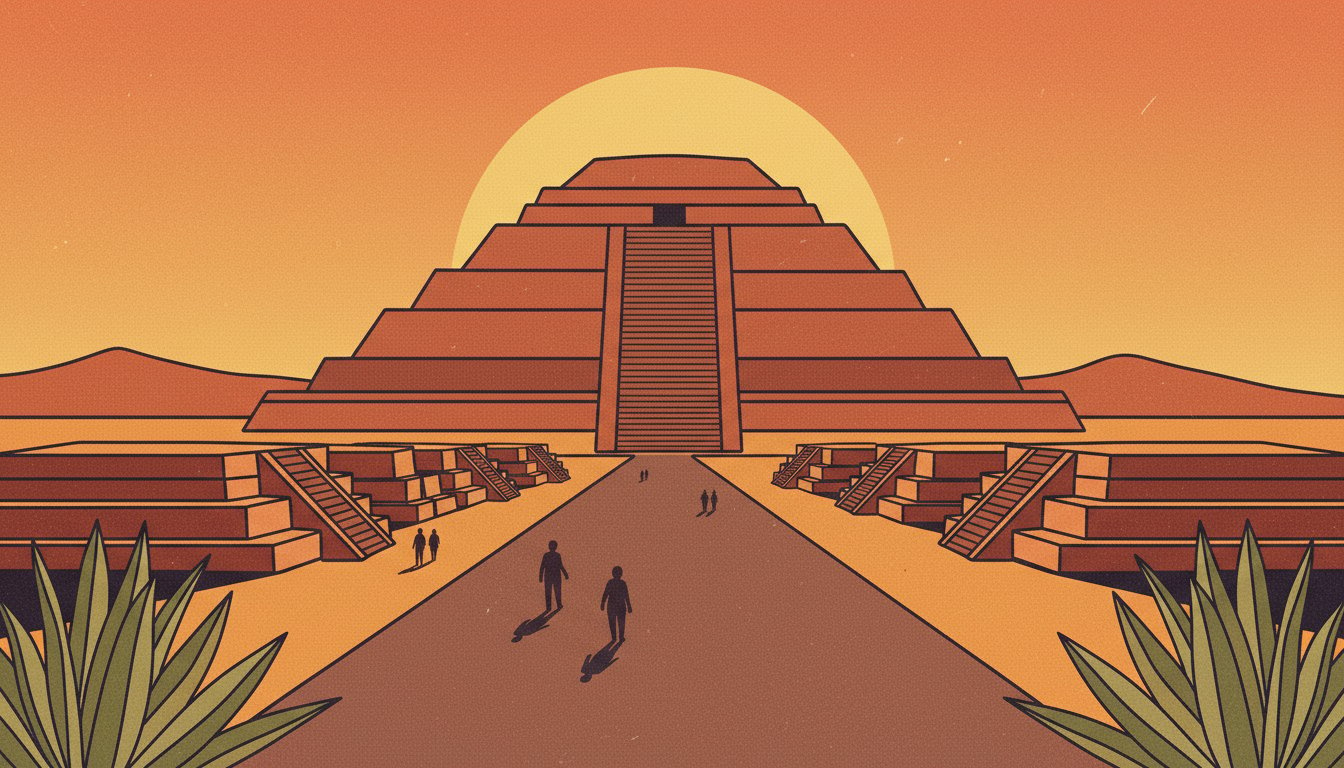
The pyramids are the one day trip that justifies a real alarm. Teotihuacán sits about 50 kilometers northeast of the city, a city of pyramids that held maybe 125,000 people at its peak around 450 CE, abandoned and half-buried long before the Aztecs ever found it and named it "the place where the gods were made." Standing at the base of the Pyramid of the Sun, you feel small in the specific way that only very old, very large human things make you feel.
Getting there is cheaper and easier than the tour sites want you to believe. Take the metro to Autobuses del Norte (Line 5, the yellow one), walk into the Terminal Central del Norte, and find Puerta 8, where the booths read "Pirámides" or "Teotihuacán." The company is Autobuses Teotihuacanos. A one-way ticket runs about 75 pesos, a round trip about 150, and they take cards now. Buses leave every 15 to 20 minutes. The ride is roughly an hour and twenty with traffic, longer if you leave late, which is the whole reason to leave early.
Here's the part nobody tells you firmly enough: be on a bus by 7am. The site opens at 9, the high-altitude sun has no mercy by 11, and the tour groups land in waves mid-morning. Arrive when the gates open and you get an hour of the Avenue of the Dead nearly to yourself, soft light, cool air, vendors still setting up their obsidian and their "you want a hat, amigo." Entrance for foreign visitors is 210 pesos as of January 2026. Bring water, bring a hat, bring sunscreen, and bring small bills. The bathrooms near the gates do not supply paper, so tuck some in your bag.
You won't be climbing the Pyramid of the Sun (closed to climbers for a few years now), and access to the Moon shifts season to season, so don't build your day around the summit. Walk the Avenue end to end instead, climb what's open, and give yourself two to three hours inside. Round trip from a central neighborhood, door to door, this is a five to six hour outing if you start early. That leaves your afternoon and evening intact. It fits a free day cleanly, even the day before a match, as long as you're not the type who needs a siesta to function.
Food on the way back: skip the overpriced site restaurants built into the caves and eat in the town of San Juan Teotihuacán, or hold out and get "barbacoa" closer to the city. Sunday is "barbacoa" day across Mexico, lamb steamed in maguey leaves until it falls apart, and the gap between a Teotihuacán morning and a "barbacoa" lunch is one of the better Sundays this country offers.
Daily guides until opening match. Free. If you're finding these useful, subscribe and the next one lands in your inbox tomorrow morning.
In the south of the city, the canals of Xochimilco are the last living piece of the lake the Aztecs built their capital on. You ride them in a "trajinera", a long flat boat painted in carnival colors, poled along by a "trajinero" who knows every turn of the water. Other boats slide past selling beer, "elotes", whole "marimba" bands that will park alongside and play for a fee. On a good afternoon it's the loudest, happiest traffic jam in Mexico.
On a bad afternoon it's a tourist trap, and the difference is entirely about timing. Go on a Sunday and you'll fight crowds, inflated quotes, and a wall of competing sound systems. Go on a weekday morning and the same canals are calm, green, and a quarter of the price energy. For a World Cup visitor with one free day, a Tuesday or Wednesday is the move.
Getting there rewards anyone who read my guide to the metro and the Tren Ligero. Take the metro to Tasqueña, then the Tren Ligero to its last stop, Xochimilco. That's the same Tasqueña hub you'll use to reach Azteca on match day, so consider this a dry run for the route that matters.
Now the money, because this is where visitors get fleeced. The official rate is 600 pesos per hour, per boat, not per person. A "trajinera" holds a big group, so split across six or eight people it's nothing, and even solo it's a fair price for two hours on the water. Agree on the number of hours and the total before you step on. Some boatmen will quote per person or "forget" the hourly rate when you dock; smile, repeat the real number, and don't pay extra for the boat to turn around. The "trajineros" joke about their own canals: "se le hace agua la canoa", they'll say with a grin about a boat that's seen better years, and you'll laugh along without quite knowing why they find it so funny.
Bring your own cooler. Beer, "micheladas", snacks, whatever you want, because buying from the vendor boats costs triple. Bring cash in small bills. Bring sunscreen, because there's no shade out there. Two hours is plenty. Round trip from the center, this is a half-day, four to five hours total, and it sits perfectly in the morning before an afternoon of doing nothing, which is exactly what you want the day before a match.
If you've got a free day but no appetite for an alarm clock or a bus, go to Coyoacán. It's not really a day trip, it's a neighborhood in the city's south, cobblestoned and shaded and slower than anywhere else in CDMX, the place Frida Kahlo was born, lived, and died. You can be there in 30 minutes from most central neighborhoods and treat the whole thing as a long, unhurried afternoon.
The draw is the Casa Azul, the cobalt-blue house where Frida lived, now the Museo Frida Kahlo. Two things you must know before you go. First, there are no tickets sold at the door, none, so book online in advance at the museum's site or you'll stand outside the prettiest house in Coyoacán and not get in. General admission is 320 pesos. Second, it's closed Mondays, and it's busy every other day, so grab a morning slot. Tuesday opens at 10, Wednesday at 11, Thursday through Sunday at 10, all closing at 18:00.
Around the museum, the neighborhood does the rest of the work. Wander to the twin plazas of Centro and Jardín Hidalgo, find the church, watch the balloon vendors and the old men playing chess. Eat a "tostada" at the Mercado de Coyoacán, where the stalls pile them with "tinga", ceviche, "pata", whatever you point at, and the line moves fast. Get a coffee in a courtyard. This is a trip with no logistics and no timing math: come when you want, leave when you want, and it costs almost nothing beyond the museum ticket and lunch. It's the ideal recovery day after a Teotihuacán dawn or a late night watching a match.
Here's which trip fits where, given the schedule at Azteca:
Teotihuacán is a five to six hour outing if you leave by 7am. Safe on any free day, including the day before a match. Do not attempt it on a match day itself; you want to be back, fed, and rested before kickoff, not stuck in return traffic on the Insurgentes corridor.
Xochimilco is a four to five hour half-day. Best on a weekday morning. Fine the day before a match, comfortable even the morning of an evening game if you keep it tight.
Coyoacán is as long or short as you make it, with no early start. The correct choice for the day after a late match, or any day you want the city without the effort.
What doesn't fit a single free day: the ten-hour combo tours that bundle Teotihuacán, the Basilica, Xochimilco, and Coyoacán into one death march. They look efficient on the booking page. In practice they give you 40 rushed minutes at each and a sunset spent in a van. Pick one place, go slow, eat well, come back before dark.
That last part matters. None of these are dangerous in daylight with normal city sense, but the return legs all get slower and sketchier after dark, especially the bus from Teotihuacán. Aim to be heading home by mid-afternoon and you'll never have to think about it.
This is a daily countdown to the June 11 opener at Azteca, and every guide is free. Subscribe now and tomorrow's piece lands in your inbox: exactly where to watch the matches you don't have tickets for, from the giant screens at the Zócalo to the corner cantina that'll adopt you for ninety minutes.