
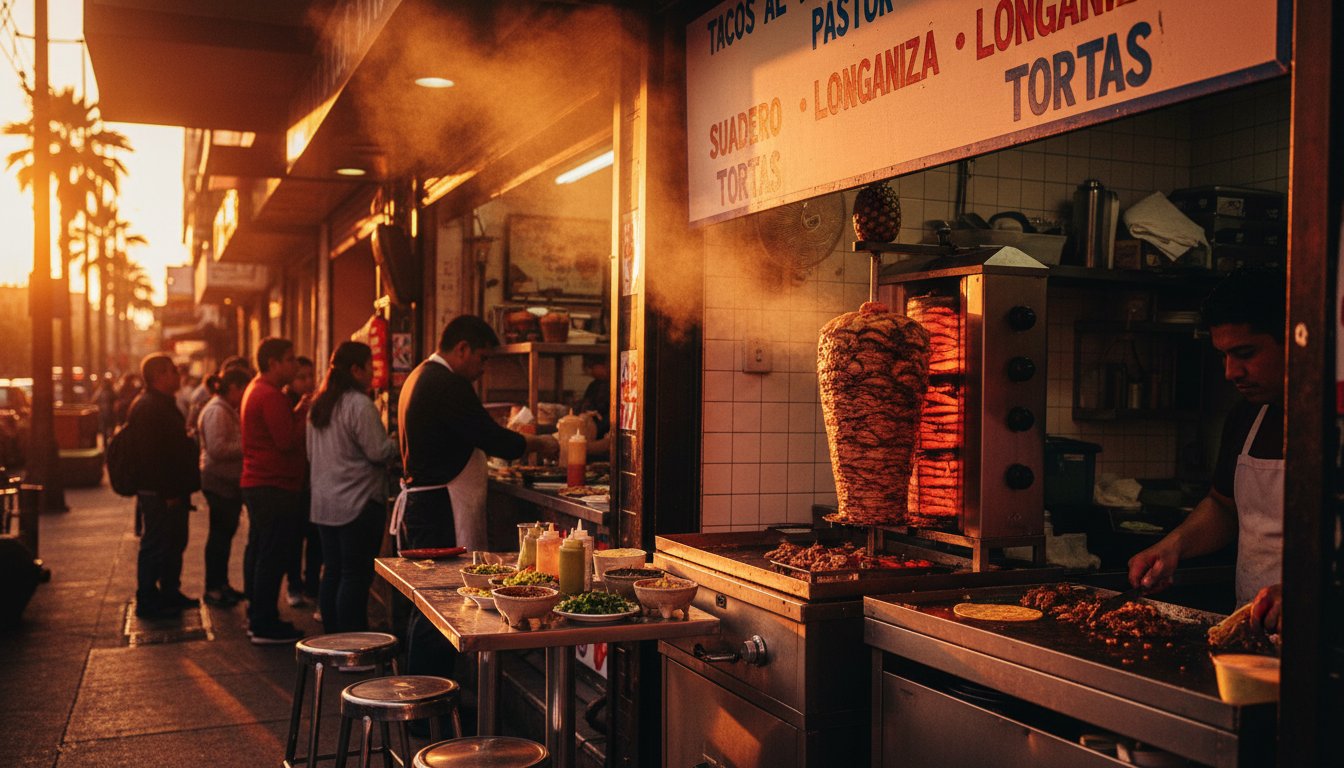
You can get through a whole trip to Mexico City on English and pointing. Plenty of people do. But the difference between a tourist and a welcome guest here is about fifteen phrases, and most of them you can learn on the flight in.
This isn't a language course. It's the exact Spanish that gets you fed, gets you on the metro, and gets you a beer, plus the unwritten rules about when to use it.
Mexicans greet. Walk into a shop, a "taquería", an elevator, a doctor's waiting room, and you say hello to the room before you do anything else. Skip it and you read as cold.
"Buenos días" until about noon, "buenas tardes" until dark, "buenas noches" after. When in doubt, just "buenas" covers all three.
Leaving? "Que le vaya bien" if you want to sound local, or just "gracias, hasta luego".
One greeting does more for how you're treated here than any amount of correct grammar.
This is the table you'll use most. Memorize these and you can order anywhere.
"¿Qué me recomienda?" — what do you recommend? The single most useful question in the country. Taqueros have opinions and they love being asked.
"Uno de pastor, por favor." — one "al pastor", please. Swap in "suadero", "bistec", "longaniza", whatever's on the "trompo".
"Con todo" — with everything: onion, cilantro, salsa. "Sin cebolla" if you want it without onion.
"¿Pica?" — is it spicy? Ask before you drown a taco in the green one.
"Para llevar" — to go. "Para aquí" — to eat here.
"La cuenta, por favor" or just "¿Cuánto le debo?" — how much do I owe you? Most street stands you pay at the end, on the honor system, by telling them what you ate.
When the "taquero" offers you the spicy salsa and you hesitate, the move is to nod and say "a huevo". It's the all-purpose Mexican yes — hell yes, absolutely, let's go — and it'll get you a grin every time.
"¿Esta línea va a...?" — does this line go to...? Point at the map, name the station, watch them point you the right way.
"¿Me da una recarga?" — top up my card, please, at the booth or the machine.
"¿Dónde está el baño?" — where's the bathroom? You will need this one.
"¿Se puede?" — may I? / is this allowed? A tiny magic phrase for everything from squeezing past someone to taking a photo.
If you ask a stranger to keep an eye on your bag while you grab tickets, "se lo encargo" — I'm leaving it in your care — and a thank-you afterward. People take that trust seriously here.
"Una más, por favor." — one more, please. The most honest sentence in any language.
"Una fría" — a cold one. Beer, understood.
"¿Me trae la cuenta?" — bring me the bill.
"Salud" before the first sip, every time, eyes up.
"Provecho" — what you say to strangers eating near you as you leave a fonda. Roughly "enjoy your meal." Say it. They'll say it back.
"Mande" — instead of "¿qué?" when you didn't catch something. "Qué" can land as blunt; "mande" is the soft, polite version everyone uses.
"Ahorita" — technically "right now," in practice anything from thirty seconds to never. "Ahorita llega" the bus could mean it's pulling up or it's a rumor. Learn to read the shrug that comes with it.
"Órale" — agreement, surprise, encouragement, "let's go," "wow," and "okay" all in one word. You'll know how to use it by day three without anyone explaining it.
Try. Mangle the accent, blank on the word, point at the wrong taco. Nobody here is grading you, and the effort itself is the message: you came to their city and you bothered. That buys you more warmth than fluency ever would.
Fifteen phrases. Learn them on the plane. By your second day you'll be ordering "con todo" like you've been doing it for years.
Next up: where to drink before and after the match, by neighborhood.