
Financial markets allow you to make a lot of money, but you can also lose a lot with them if you don't understand basic market principles. And the first principle is that the market is not fair and is often irrational. It is human-made and human-traded, so emotions play a decisive role. Big players and market makers understand this and use various methods to cause the right emotion in market participants and exploit it for profit. This is called manipulation.
The cryptocurrency market is easily manipulated because of its low capitalisation and liquidity, which is one of the reasons for the high volatility of cryptocurrencies. Consequently, to make money in the crypto market, you need to be able to detect and counter manipulation, and this article will show you how to do that.
There are various ways to evoke the right emotion in traders and investors, but market makers have 4 tools in their arsenal that are used particularly often and effectively in the crypto market. We will talk about them below.
Wash Trading is a way of trading in which large holders sell a particular asset to themselves in order to mislead retail investors into creating the illusion of activity. It's simple: candle red, candle green, repeat. There are 2 main reasons for using Wash Trading:
Creating visibility of activity or demand for the desired currency/trading pair.
Artificially increasing trading volumes to pay the exchange by disguising it as a commission.
A good example is the NFT. 2021 is remembered as the year of NFT fever for crypto. According to ChainAnalysis, at least $44.2bn was transferred into ERC-721 and ERC-1155 contracts, creating ample opportunities for both vosh trading and money laundering through self-funded trading. NFT purchases were often financed either by the sellers themselves or by those who financed the sellers. The number of such transactions reached several hundred:

A timeless classic - pampers spread information that gives investors a sense of a promising coin and consequently increases demand for the asset, and with it the price. When the price reaches the right level, the pampers dump their pre-packaged shields, simply unloading into 'greedy' investors.
The main ways to trigger Pump&Dump
Hype: "It's the next bitcoin", "The Ethereum Killer" and high-profile statements of this nature create optimism among investors, but 95% of the time it is just speculation and more of a red flag than a reason to buy.
Price spike: if a nonnome token grows rapidly in a short period of time, it is worth behaving more carefully. Parabolic growth may simply be retail bait.
News cycles: positive news coincides with big whale buying. This creates a sense of 'smart money', successful trading on events and 'whale insiders', which in turn makes retailers buy more, emulating the whales.
Examples of pomp events:
Crypto.com is being promoted at the Super Bowl.
Tesla buys BTC.
Coinbase launches its IPO.
All this news is aimed at creating a frenzy and encouraging impulse buying by retail investors.
The essence of this manipulation is that the big players open short positions and start spreading negative news about the asset, i.e. fudge. If successful, the FUD will cause panic among investors and they will start closing long positions, i.e., essentially becoming fuel for the shorts. A typical bearish onslaught pattern looks like this
Start the FUD.
Open some large short positions.
Continue to build up panic.
Fix the income.
To counter this type of manipulation it is important to diversify sources of information and distinguish between justified negativity and FUD. Or, as CZ used to say - "4".
Spoofing is a method of manipulation through the placing of fake orders that are cancelled before they are executed. Since for traders one of the basic indicators of a trend is the number of buy and sell orders, fake orders provoke decisions profitable to the manipulator.

Example: On 6 May 2010, the news of the Greek crisis in the EU started to make headlines. But in an instant, US indices fell by 10% in a matter of seconds, triggering a short-term panic. A few minutes later, the price levelled off as if nothing had happened:
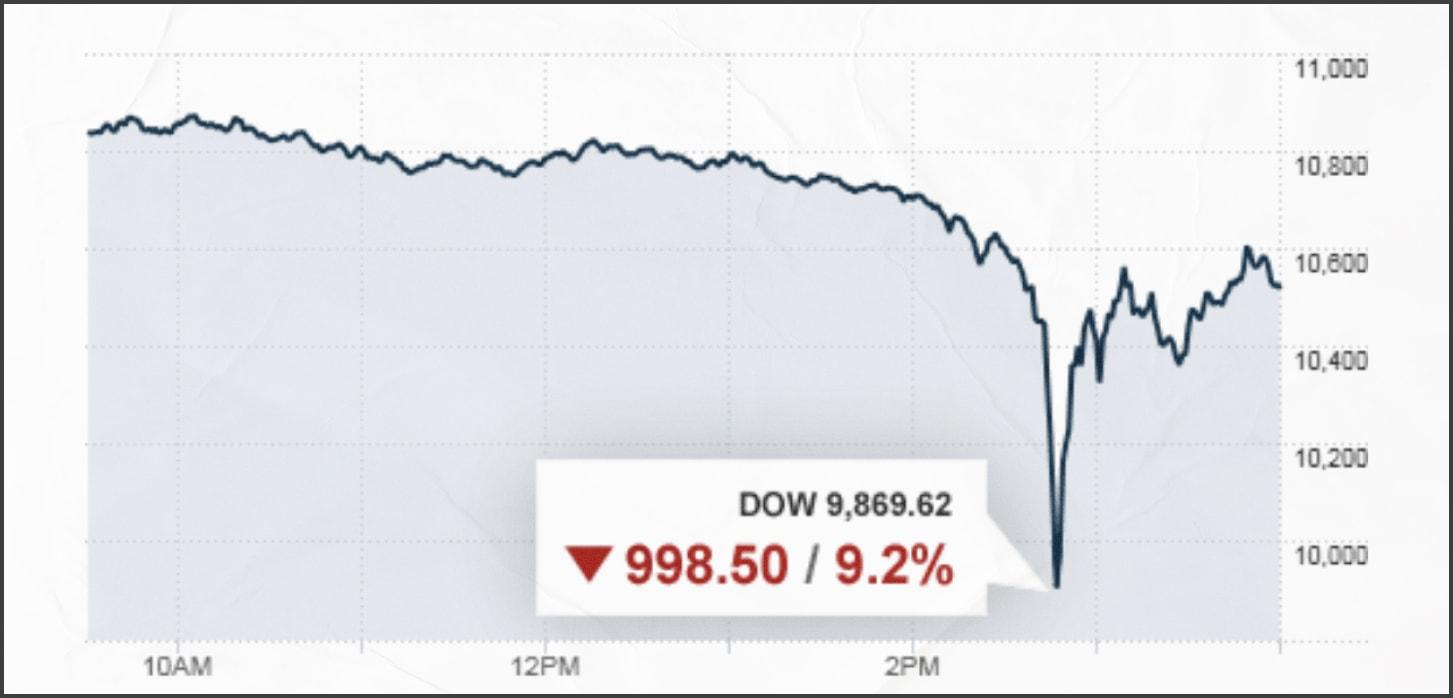
Nothing but holding Navinder Singh Sarao liable for market manipulation over a $200m open and cancelled short order.
This does not sound all that comforting for retailers, but the good news is that investors do not have to fight against manipulators and root them out - just be able to defend themselves at their level to generate income. To do so, it is important to follow the following rules:
Check information: you need several sources to get and check information. For example, you can follow prices on TradingView, Coingecko, Coinmarketcap, and to check news, you can use well-known publications, Telegram channels, Twitter accounts. It is worth checking every piece of news that affects your decision-making.
DYOR: research assets for investment thoroughly and monitor related news. Careful self-analysis is what creates faith in an asset and helps you ignore FUDs. And watching the news (subject to the previous rule) will allow you to change your attitude in time to coin.
Diversify: Diversifying your portfolio with Stablecoins or strong assets will reduce the impact of price manipulation of weaker coins. But it's important to strike a balance - too many assets in a portfolio will lead to a dissipation of both capital and attention.
Be rational: Because the main goal of manipulators is to evoke emotion, investors should be cold-blooded and sceptical about what is going on. News and rumours aimed at emotional rather than rational perception should be immediately marked with a rare flag.
Use DCA: Market manipulation is designed primarily for speculators and paper hands, not long-term investors. Building a portfolio using DCA over the long term will help create an optimal entry price for strong assets and resist manipulation.
Work by strategy: You must have a clear decision-making strategy that includes entry and exit points, short- and long-term horizons, fundamental analysis and faith in the chosen asset. All decisions should be made in accordance with the strategy.
These simple defence techniques will help reduce the influence of manipulators on decision-making and make emotional provocations less effective.
In conclusions