

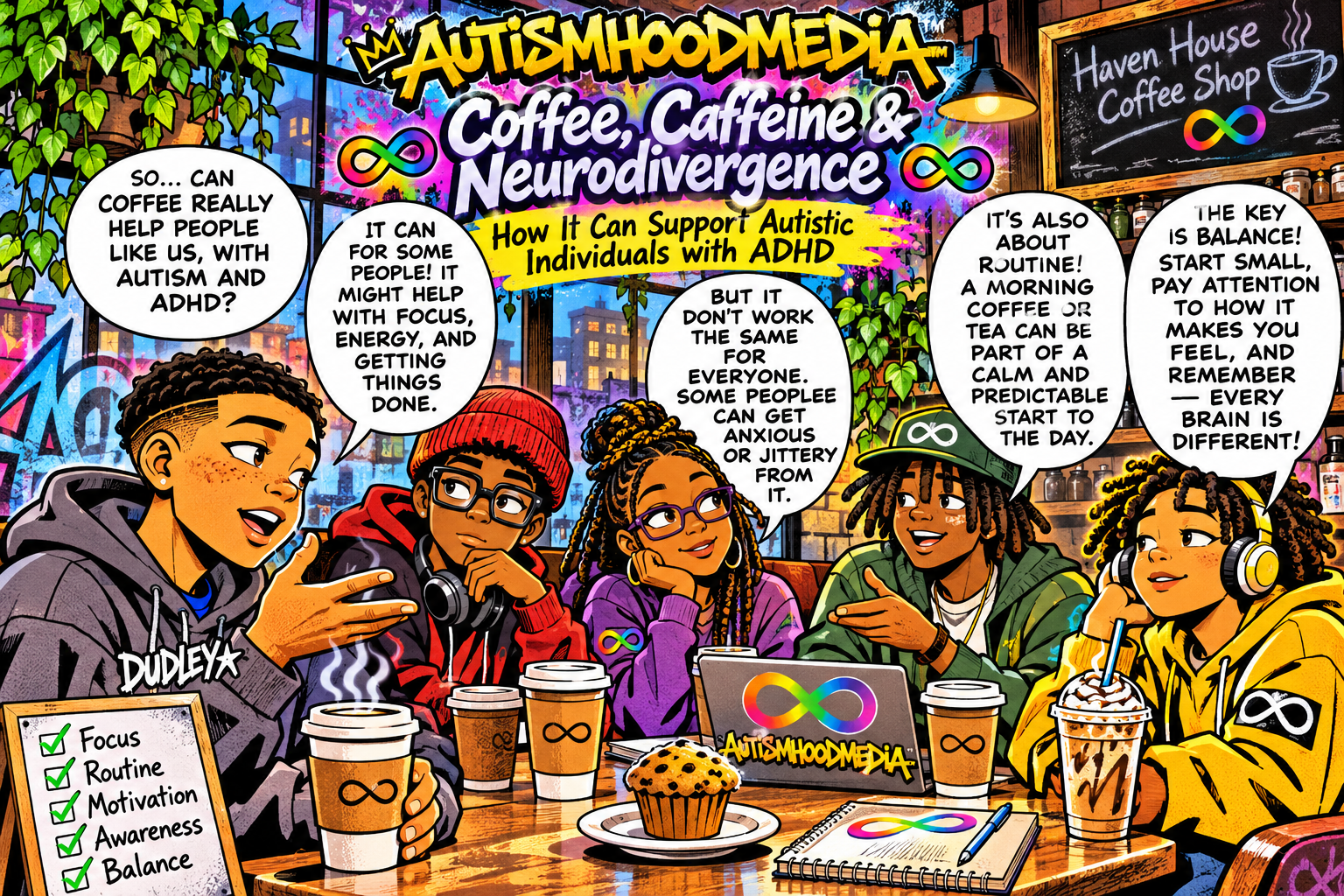
☕ Coffee, Caffeine & Neurodivergence
Understanding the Connection Between Caffeine, Autism & ADHD
Can a cup of coffee make a difference in a neurodivergent brain? Let’s talk about it.
For some people, coffee is simply part of getting the morning started. For others, caffeine is something they reach for when they’re tired, struggling to concentrate, or trying to get through a busy day.
But what happens when we look at caffeine through the lens of autism and ADHD?
It’s an interesting conversation, especially for individuals who experience both.
Some people with ADHD describe feeling more awake, alert, or focused after consuming caffeine. Others experience the complete opposite: increased anxiety, racing thoughts, irritability, or difficulty sleeping.
And here’s the important part: Not every neurodivergent brain responds to caffeine the same way.
Let’s break down what we know, what we don’t know, and what families should consider.
🧠 1. Why Does Caffeine Affect ADHD Differently?
Caffeine is a stimulant that affects the central nervous system. It works primarily by blocking adenosine, a chemical that helps regulate sleepiness.
This can temporarily increase alertness and make someone feel more awake.
Because ADHD involves differences in attention regulation, motivation, and executive functioning, it’s understandable that people wonder whether caffeine might help.
Some individuals with ADHD report:
-
Feeling more awake and mentally engaged.
-
Finding it easier to concentrate on certain activities.
-
Experiencing a temporary boost in motivation.
-
Feeling less tired during demanding tasks.
However, there’s an important distinction.
Caffeine is not an established treatment for ADHD. Research examining its ability to improve ADHD symptoms has produced mixed results, and a systematic review of clinical trials did not find an overall significant benefit compared with placebo.
We also shouldn’t assume that autism and ADHD create a predictable response to caffeine.
Every brain is different.
⚡ 2. Could Caffeine Help With Everyday Challenges?
Let’s look at some situations families might recognize.
Focus and Attention
Ever notice someone struggling to stay engaged with one activity but spending hours completely absorbed in something they’re passionate about?
That’s a familiar experience in many ADHD households.
Caffeine can temporarily increase alertness, which some people interpret as improved concentration.
But increased alertness doesn’t necessarily mean improved attention regulation.
Motivation and Getting Started
Sometimes the hardest part of a task isn’t completing it. It’s getting started.
Getting dressed, cleaning a bedroom, completing homework, or transitioning between activities can involve significant executive functioning demands.
Some adults report that caffeine helps them feel more ready to tackle these responsibilities.
But it isn’t a reliable solution for executive dysfunction, and other supports such as visual schedules, breaking tasks into smaller steps, and predictable routines are often more useful.
Sensory Overload
Here’s where things get interesting.
Autistic individuals can experience sensory input differently. A busy environment, loud conversations, bright lights, or unexpected changes can become overwhelming.
Caffeine doesn’t have an established role in reducing sensory overload.
In fact, for some individuals, the extra stimulation can make an already overwhelming day feel even more difficult.
It’s important to recognize the difference between feeling more awake and actually feeling regulated.
Mood and Emotional Regulation
Some people feel more energetic after coffee. Others become restless, anxious, or irritable.
Caffeine isn’t a proven emotional regulation tool.
When someone is already struggling with frustration, anxiety, or sensory overload, adding more stimulation may not be helpful.
Sometimes what the person needs isn’t another stimulant. It’s a quieter environment, a break, reassurance, or time to reset.
☕ 3. Sometimes It’s About the Routine, Not the Caffeine
This is an aspect worth talking about.
For many autistic individuals, predictable routines can provide comfort and a sense of control.
A familiar morning drink, using the same favorite cup, sitting in the same place, or following a consistent sequence of activities can become part of a comforting daily ritual.
And that ritual doesn’t necessarily need caffeine.
Decaffeinated coffee, herbal tea, or another preferred drink can provide the same familiar experience without the stimulating effects.
Sometimes it’s the predictability, not the ingredients, that makes the difference.
⚠️ 4. The Other Side of Caffeine: What Families Should Know
Caffeine isn’t harmless, and more isn’t better.
Depending on the individual, caffeine can contribute to:
-
Increased anxiety or nervousness.
-
Racing heartbeat or palpitations.
-
Restlessness and shakiness.
-
Irritability and mood changes.
-
Headaches and digestive discomfort.
-
Reduced appetite.
-
Difficulty falling asleep.
-
Poor-quality sleep.
Sleep deserves special attention.
Many autistic individuals and people with ADHD already experience sleep difficulties. Introducing caffeine, particularly later in the day, could make an existing problem worse.
And when sleep suffers, daytime attention, mood, patience, and sensory tolerance can suffer too.
A temporary energy boost isn’t necessarily worth sacrificing a good night’s sleep.
What About Medication?
If someone takes prescribed ADHD medication, caffeine deserves additional consideration.
Combining caffeine with stimulant medication may increase unwanted effects such as restlessness, anxiety, increased heart rate, and sleep difficulties.
Always discuss caffeine use with a healthcare professional who understands the individual’s medication and medical history.
Never use coffee as a replacement for prescribed ADHD treatment.
👨👦 5. A Special Note for Parents of Autistic Teens
This conversation becomes particularly important as our children grow into teenagers.
Coffee shops, bottled iced coffees, sodas, pre-workout products, and energy drinks are everywhere.
Some are marketed as lifestyle products, but they can contain substantial amounts of caffeine.
Parents should pay attention to what their teenagers are drinking, especially when products are advertised as ways to improve energy, concentration, or performance.
A few important points:
-
The American Academy of Pediatrics recommends avoiding caffeine for children.
-
Energy drinks are not recommended for children or teenagers.
-
The CDC reports that adolescents should avoid energy drinks and consume no more than 100 mg of caffeine daily, based on AAP guidance.
-
The American Academy of Child and Adolescent Psychiatry advises against routine caffeine use under age 12 and recommends limiting intake for ages 12–18.
For teenagers with additional medical considerations, including seizure disorders, it’s especially important to discuss caffeine with their healthcare team. Excessive caffeine can be associated with seizures and other serious effects.
Don’t assume that an adult-sized coffee drink is appropriate for a teenager.
❤️ 6. Practical Ways to Support Focus Without Depending on Caffeine
If you’re supporting someone who struggles with attention, motivation, or getting through the day, there are plenty of other approaches worth exploring.
Try incorporating:
-
Predictable morning routines: Make the beginning of the day less stressful with visual reminders and familiar activities.
-
Movement breaks: Walking, stretching, dancing, or other preferred movement can help some individuals feel more alert.
-
Smaller tasks: Break overwhelming responsibilities into manageable steps.
-
Sensory breaks: Provide access to quieter spaces, headphones, fidgets, or other preferred regulation tools.
-
Consistent sleep routines: Establish predictable bedtime activities and reduce stimulating drinks later in the day.
-
Food and hydration: Regular meals and water can help support everyday energy and wellbeing.
-
Individualized support: Work with healthcare professionals to identify strategies that address the person’s actual needs.
Remember, support isn’t about forcing someone to function like everybody else. It’s about helping them find approaches that work with their brain.
💬 7. The Real Conversation: There Is No Universal Neurodivergent Experience
One of the biggest mistakes we can make when discussing autism and ADHD is assuming that one person’s experience represents everybody else’s.
One individual might enjoy coffee and feel perfectly fine.
Another might experience anxiety after just a little caffeine.
Someone else might not like the taste, smell, temperature, or texture at all.
And that’s okay.
We need more honest conversations about how neurodivergent individuals experience everyday things, including food, drinks, sleep, sensory preferences, and daily routines.
Not every difference needs fixing, and not every popular wellness trend is appropriate for every brain.
Final Thoughts ☕
Coffee and caffeine are interesting subjects when we talk about autism and ADHD, but it’s important to separate personal experiences from proven medical benefits.
Caffeine may temporarily increase alertness. Some people report feeling more focused. Others experience unwanted stimulation and disrupted sleep.
What we shouldn’t do is turn coffee into an alternative ADHD treatment or assume it will improve emotional regulation or sensory processing.
Our goal should always be understanding the individual, recognizing their needs, and providing practical support without adding unnecessary pressure.
Because at the end of the day, neurodivergence isn’t a one-size-fits-all experience.
Different brains. Different needs. Different ways of navigating the world.
And that’s exactly why awareness matters.
Autismhoodmedia | Real Conversations. Real Experiences. Real Awareness.
This article is for educational and awareness purposes, not individual medical advice. Discuss caffeine consumption, medications, and relevant health conditions with a qualified healthcare professional.
Sources for further reading:
-
FDA – Spilling the Beans: How Much Caffeine Is Too Much?
-
CDC – The Buzz on Energy Drinks.
-
American Academy of Child and Adolescent Psychiatry – Caffeine and Children.
-
Systematic Review – Effects of Caffeine on Main Symptoms in Children with ADHD (2023).