

The Cyberculture had it origins in the end of 70s and on the convergence of video games movements of the 80s, turning to massive with the rise of the Internet in early 90s. This movement influenced art, literary and cinematographic cultura productions. This article is a brief outline of few profiles of hardware as well softwares personalities who contributed most to this movement.
Elliot Sharp:
Electronic style paths, influencing generations of musicians and performing artists who seek the fusion between sounds. He mix electronic components with industrial machinery noise in his art, and performances it on stage together with mapping projection.
William Gibson
“if they think you’re crude, go technical; if they think you’re technical, go crude. I’m very technical boy”
Gibson is considered the precursor of the literary style known as cyberpunk. He created several concepts related to the universe of cyberculture. His anti-hero characters almost always appears among the class workers of the cyber industry that would still be emerging in our society. Mixing politics, technology, pop culture and ethics his novels represents the counterculture and is fulfilled with games, horror films, punk rock and comics elements. Gibson created a new class of literature that inspires both film and digital industry.
H.R.Giger
Bizarre, the Swiss-born artist flirts with the cyborg and aliens bioforms, creating his biomechanics humanoid-looking figures. His dark paintings are inhabited by hybrid machine and meat beings, supported by scenarios where the metal makes their environments seems alive, breathing and letting the viscous liquid run down the walls. Considered controversial by the mainstream, and a genius for lovers of cyberculture and lovers of science fiction, he is considered an icon in the cinematographic. His work can be seen in music albums, movies, games, tattoos, and referenced by fans of body modification.
Mark Pauline
Precursor of robot battles, Mark Pauline begins in a extreme and apocalyptic version of it. Mark Pauline is one of mentors from SRL (Survival Research Laboratories) [ http: / /www.srl.org/\], an informal artistic organisation formed by engineers who organize performances around the world of terrifying displays in battle arenas with a shrill sound where colossal robots battle among themselves and directed by their ‘masters’. His robot battles were true gloomy marathons that last up to 48 hours, taking both man and machine to their limit, an essential issue of cyberculture.
Mike Saenz
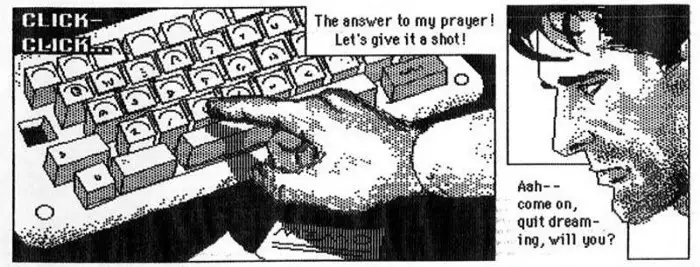
Mike Seanz in the 1980s used the newly released Macintosh to create the illustrations for the comics “Shatter” [ https://computerhistory.org/blog/the-dawn-of-computer-comics-shatter/], created in partnership with Marvel screenwriter Peter B. Gillis [ https://en.wikipedia.org/wiki/Peter_B._Gillis] (creator of Doctor Strange) [ http://toonopedia.com/drstrnge.htm], a story seted in the ‘Blade Runner’ universe. In the early 90’s he launched the game publisher Reactor, and launched games such as Spaceship Warlock and Interactive Virtual Valerie, one of the first to explore virtual sex. Mike is considered one of the main defenders of cybersex.
Hans Moravec

Hans Peter Moravec, futurist and professor of robotics at Carnegie Mellon University is the author of a series of works related to artificial intelligence, computer vision, transhumanism and robotics dedicates his career in the analysis of the impact of these technologies in our society. Moravec is also a co-founder of Seegrid Corporation, a company that develops autonomous robots designed to interact with social environments without human intervention, and is a member of the Extropy movement — a council formed by scientists and thinkers who believes will be possible to carry consciousness in a computer, discarding the replaceble human body and evolving the species into a new form of life: Superhuman.
Vannevar Bush
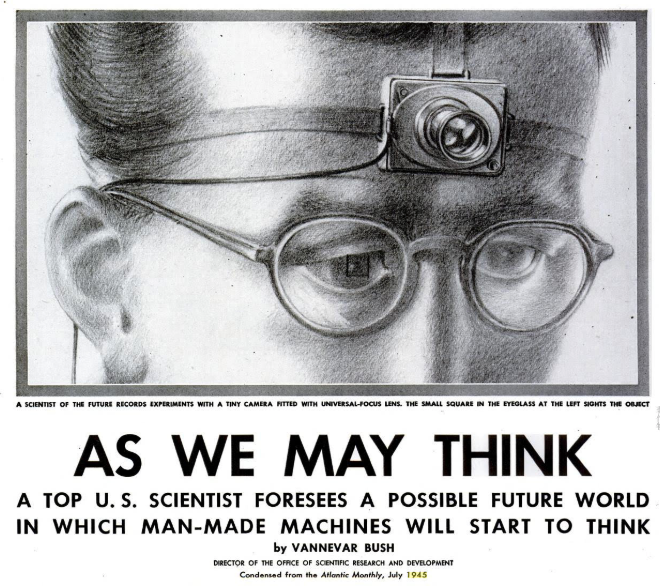
Vannevar Bush was an American scientist who headed the government’s research department, including among the patents that included radar development. During World War II he participated in the Manhattan Project. One of the projects was the atomic bomb. During this period he was part of the engineering department of MIT (1919 to 1932). His main contribution to cyberculture was when, in 1945, presented concepts about the future of hypertext in his legendary article “ As we may think”. In it, the central idea revolved around the links of associations from the human mind works. He is the inventor of Memex (a machine prior to the computer) and the concept of associative links.
Douglas Engelbart

Douglas Engelbart carried out researches in the 60s to increase the human intellect. In his work, he cites the fundamental contributions of Vennevar Bush, and directs his work in perfecting Memex with the computer technology of the time. Based on this, Engelbart created a Groupware Hypermedia System, NLS (oN Line System), a project carried out in conjunction with the same team of researchers who developed the hypertext, and which had the presence of Bill English, with whom he developed another device which until today is considered one of the main computational components in the human-machine relationship, the mouse.
Ted Nelson
The XanaduSpace Demo in Windows XP
Ted Nelson during his Harvard studies started the “ Xanadu Project”. The main concept was to facilitate non-sequential writing by offering the reader a non-linear way of reading, and at the time his project was called “Zippered lists”. With the advent of computer networks, the project gained a new version using the concept of networks and the distribution of virtual copies, and renamed the project as “Docuverse”, referencing a universe of documents. In the early 1980s, Ted Nelson and his team went bankrupt, which made Nelson look for investing angels. In 1983, Nelson met with John Walker, the founder of Autodesk, and with financial support they started the “Xanadu” project — initially developing in C and then rewriting it in Smalltalk. In 1992, Autodesk gave up the Xanadu project, and Charles Smith, founder of Memex (Vannevar Bush’s hypertext system) hired the programmers for that project and licensed the technology, and they say Tim Berners-Lee was inspired by this concept for development from the Word Wide Web.
Bill Atkinson

Atkinson is the creator of HyperCard, a hypertext system with a graphical interface launched in 1987 and created to run on MacOS, Apple’s operating system. The HyperCard,a sort of precursor of the (defunct) Adobe Flash, is designed to create interactive applications, called “stacks”, and in order to be an easy development environment enough for common Macintosh users, mostly artists graphics. HyperCard is credited with popularizing hypertext.
Thus ends the mapping of the founders of the web (or web2).