
TL;DR
●This strategy goes as follows, you start with 20,000 UST, 10k goes into Anchor for 8200 aUST and then you enter short on Twitter, and in two weeks buy an equal amount of Twitter and then pair your Twitter shares with the equivalent in UST in a long farm and you earn closer to 35-45%.
●The Terra chain is a proof of stake blockchain that is focused on quick decentralized payment processing. They have a protocol built on it called Anchor focused on becoming a decentralized savings bank giving out 20% APY on their stable coin UST. And Mirror is a protocol built on Terra focused on giving anyone the ability to trade any kind of asset through synthetics. They allow you to earn a yield on short and long positions for a lot of top-tier US equities and other cryptocurrencies.
●The whole strategy is dependent on the whole crypto ecosystem surviving in the long run as well as the avoidance of any protocol hacks, government regulation, hostile takeover of the chain, the stability of the UST peg, and the price action of Mirror protocols governance token, MIR.
The Basics
To assess the risks of this yield strategy, a great place to start is assessing the risks involved with crypto itself, the Luna Terra chain, Anchor protocol, and Mirror protocol.
As we all know cryptocurrencies fall under a large umbrella of risk-on assets as they focus mainly on bringing quick innovation that tends to break. Assuming the use of a Terra Station wallet as the first step in this strategy, depositing funds within this wallet should not be considered bulletproof in any way. Your private keys could be lost or stolen and protocols that you have connected to could fall under attacks that could reach into your wallets. I’d recommend using the hot/cold wallet method at the very least. Along with a secure browser like brave and attaching your ledger or similar hardware wallet to your Terra Station.
Terra Chain
With that being said we can dive into the fun stuff. Terra is a proof of stake blockchain intended to maximize the use case of crypto as a mass payment processor using multiple decentralized algorithmic stable coins UST (U.S. Dollar), KRT (Korean Wan), EUT (EURO). Terra is looking to replace Visa/MasterCard in payment processing by capping the cost to merchants at 1% instead of the usual 3%. This is a lofty goal because of how we’ve seen so many of these algorithmic stable coins burst into flames. Terra’s betting on their ecosystem allowing for real use cases for these stables. The two main coins in the ecosystem are LUNA and UST, and in theory, when the stable’s peg is off the community is incentivized to burn luna or earn luna by interacting with the terra ecosystem and they receive a small profit for doing this. Now this money comes from people trading in their other assets for UST stable coins, some of which go to the people burning or earning luna to balance the stable coin. Essentially just utilizing arbitrage opportunities to keep UST stable. Now I know, this doesn't really sound too legit, kinda smells like a Ponzi but it has been working significantly well. They have faced many tests to their stable coin with the whole MIM fiasco a few months ago and during the May 2021 market crash when the whole crypto ecosystem shit itself. In my opinion, they did a pretty good job of keeping things afloat, and the coin never fell more than 12 cents off its peg.
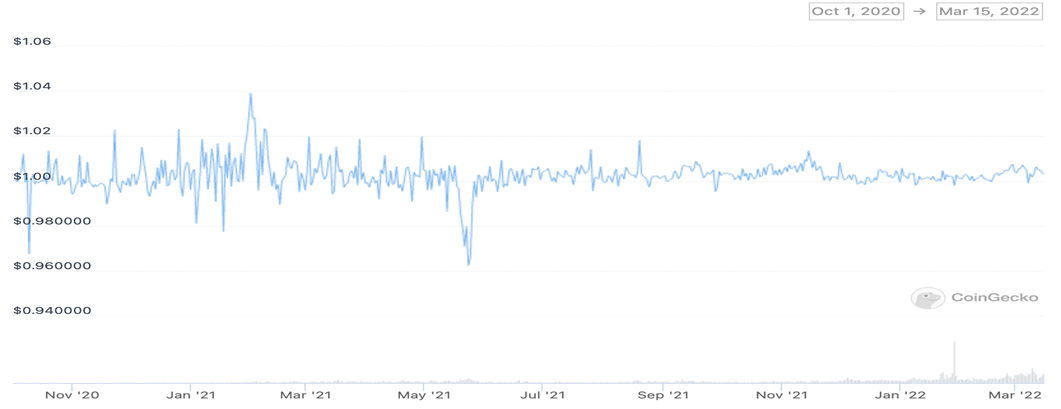
Now at this stage, you have to determine whether you believe in the terra ecosystem or not. Keep in mind they currently have $14 billion dollars in TVL and they don't seem to be stopping anytime soon so long as Anchor keeps giving out 20% APY on UST.
Anchor Protocol
Now we can discuss one of the most successful protocols in crypto, Anchor. Sitting at the 4th largest protocol three places behind Curve by about four billion dollars. If you count TVL used by Anchor in Lido there is a lot more. Now we are going to get into what Anchor does and whether or not this kind of TVL can sustain. Anchor began in May of 2021 built by Terraform Labs, seen as the savings account within the Terra Ecosystem. According to their whitepaper, they allow users to take out overcollateralized loans against bETH, bLUNa, with more assets planned for launch, and borrow UST. Anchor uses these deposits to earn yield in DeFi, mainly using LIDO which pays out around 6% APR for staked Luna and around 4% APR for staked ETH.They also charge around 4% for borrowed UST which thy then throw into the Anchor UST pool to earn a total of 24% on borrowed stables.
This is the most basic explanation of their current financing structure and how they can produce a “20%” APR. It flys a little over my head in the white paper but they go into depth on how they come up with their payout rate which boils down to this equation:

And simply put (bETH aprbETH deposited)+(bLUNA aprbLUNA deposited) + (UST borrowed*UST borrow apr) = Anchor Rate
Right now they are showing:

In theory, these yield reserves are the profits they’ve made off their lending vs payouts that have been accumulated and are used to counteract any imbalances in the platform when the borrow apr isn't enough to cover the differences. Realistically TVL has significantly outpaced borrowings to a point where the yield reserves had to be replenished, with the Luna Foundation Guard depositing around 450 million dollars in UST through the burning of their LUNA reserves. The LFG is a pretty peculiar organization labeled as a non-profit supporting the growth of decentralized money on the Terra ecosystem. Granted they hold around 36 billion dollars worth of LUNA it's a difficult pill to swallow under the context of removing centralized powers.
Wen Token?
There is an Anchor token, ANC is distributed to offset the borrow apr and create a net Apr. Sometimes in Anchor when you borrow you are being paid to borrow. They are doing this to incentivize people to use the protocol throughout the token distribution schedule which ends in 2024. Right now it's a regular governance token where you can vote on decisions on the protocol, as well as token staking and ANC-UST LP pools. In theory, the ANC token also allows for stakers to capture a portion of Anchor's yield so as the AUM grows the value of ANC does. A recent proposal has emerged from the Retrograde team introducing a ve (vote escrowed) model as opposed to the staking model similar to curve. Meaning people who lock the ANC token will be able to vote for gauges that dictate ANC emissions directed towards each Anchor-approved collateral type as well as all forms of governance. This is the Curve model which has been insanely successful in maintaining large TVL and overall success and longevity thus far. To me, this is a great idea to allow for more interaction from community members in governance. You can read more about the proposal here.
Now we can get into aUSt. aUST is basically a receipt given to you once you deposit UST into Anchor. You will receive around 1 aUST per UST deposited. It's not really a one-to-one ratio; they calculate the value of aUST by taking your deposit, adding the interest they owe you based on the time you have kept UST in the “savings account” and divide that by 1aUST. So let's say you're the first person to deposit on anchor. You deposit 100 UST and a year goes by and you only have 100aUST in your wallet. Your aUST balance did not go up but the value of your aUST gets you 1.2UST for every 1aUST so you did earn the 20% APR. Sadly you're not the only person using Anchor. So Anchor basically has a money market and is continuously calculating the ratio value previously mentioned by taking all of the deposited UST + all the interest and dividing that by all the aUST minted in order to get you the money you deposited plus the 20%.
Strategy Guide
Currently, 1aUST is worth around 1.209 UST so let's say you have 20,000 UST and deposit $10,000 UST you get around 8271.29 worth of aUST. And this is where the fun begins. Terraform Labs has built Mirror, a DeFi protocol that enables the creation of synthetic assets which mimic real-world assets like stocks, etc. Mirror protocol allows you to earn APY just for holding these synthetic stocks. And you can buy these assets using aUST. Now your biggest worry is whether the stock you pick goes up or down. But with this strategy, you don't have to worry about that. You take half of your 8271.29 aUST (4135.65) and you short something like Twitter with a collateral ratio of 200%. Just holding this short gets you around 30% APY. Then in two weeks, you'll get back the locked UST for shorting and then you can deposit that straight back into Anchor. And then you can buy an equal amount in Twitter shares. At this point, you're making more APY on top of the 20% from Anchor and you're theoretically delta neutral so it doesn't matter what Twitter does. But you're not done. You might as well earn yield for being long twitter. So you can pair your Twitter with equivalent UST and get even more APY. The main caveat to this extra APY is that it is distributed through Mirror tokens. Historically these tokens haven't really performed that well. Pretty much going straight down since its inception, but this was mainly caused by its high inflation.

As well as little utility other than governance which has shown very little incentive. There only being around a 5-10% participation rate in voting, there hasn't been much incentive to hold the token. Currently, its main use has been voting on polls where the more tokens a person stakes the more voting power they have in these polls. You can find more on their white paper here. So in terms of strategy, there is a significant change in APY that fluctuates based on the price of Mirror tokens. They are bottoming out around $1 and there is a bit of a pump happening with the price as the protocol reduces the inflation rate. You can find the schedule and tokenomics here.
Understanding Investment Risk
Now, this sounds all nice and dandy but there are risks to this strategy. The most obvious is crypto could be a scam created by Satan and it could all go to zero. Assuming you believe that BTC and crypto actually have value and longevity you move into the volatility risk. Now with this strategy, you are also assuming the terra ecosystem, including anchor and mirror can sustain itself. I believe this to be the case, mostly because of the Terraform Labs team. Do Kwon and his team has been building and shipping at every level and the whole ecosystem has gone through some significant headwinds and has still managed to keep the ship sailing. They are making insane partnerships including a partnership with the Washington Nationals. They also just announced a $1 Billion dollar token raise through Three Arrows Capital and Jump Crypto to create a decentralized $UST Forex Reserve denominated in $BTC.
To incorporate some Tradfi we can discuss the Tail Risk Management for a strategy like this. Tail risk is defined as a very low probability event that has a tremendous potential to negatively impact a position. This sort of strategy is usually assessed on less risky stocks and commodities where hedge funds take a range for something like natural gas etc and build up their positions within this range based on historic consistency of trading within a range. Tail risk is that black swan event, which people assess as having a 0.03% of even happening that can destroy an entire fund.

This graph is used to highlight how 68% of occurrences fall between +/- 1 standard deviation, 95% fall between +/- 2 standard deviations, and 99.7% fall between +/- 3 standard deviations.
So when we focus on tail risks we are talking about the 0.3% that occurrence exceeds the +/- standard deviations. This is just a statistical theory, and in practice, most financial theories use this in their investing because it's simple to use. That's why volatile events are very overstated. For me putting this to work gets distributed into two buckets of management, portfolio, and position. The portfolio is broken up into allocation, cash, and correlation and the position bucket is broken up by allocation, management, and time. And depending on the portfolio risk and the trade side I am on (long/short) I tend to close positions once I push the edge of these distribution curves.
The tail risk for something like crypto is already extremely higher than in the normal distribution curve. Kurtosis is a more appropriate statistical measure because it highlights the extreme values in either tail risk of a distribution curve. It combines the weights of distribution tails and m measures them against the center of the distribution. There are three types; ● Mesokurtic ● Leptokurtic ● Platykurtic

Now logically as a brand new market starts to gain adoption the tail-end risk begins to form closer to a normal distribution as it gets more adoption. The argument can be made for each of these distribution types on the cryptocurrency market. In my opinion, we are still in the stage of adoption somewhere between visionaries and pragmatists.

Bitcoin as a Safe Haven
So, in my opinion, the most appropriate distribution curve to measure the tail end risks is the mesokurtic curve. This shows that there are more tail-end risks present than something like stocks, bonds, commodities. But I think this is changing very quickly. Because cryptocurrencies fit into different asset classes with some arguing that Ethereum can fit in as a commodity because of gas fees, or a bond with Ethereum 2.0. So understanding the intricacies of the cryptocurrency market we can set different distribution curves for Bitcoin, Ethereum, and other alts. After seeing what Bitcoin has done on its own the tail end risks are significantly lower than they were even two years ago. For instance, the threat of banning Bitcoin has proven to be significantly lower after seeing a major world power like China ban the mining of Bitcoin. We saw a significant decrease in the hash rate but this was very quickly adjusted and people began investing more in other countries and moving mining rigs to other countries. To me, this moves the distribution curve closer to Leptokurtic or Normal as occurrences like “country bans” end up falling into a more normal part of the distribution curve. The same thing could be said about the recent events in Russia and Ukraine. We are seeing the fall of a major world power's currency go to almost nothing. Meanwhile, these people are flocking to Bitcoin as a safe haven. So to me, the risk of the whole world banning Bitcoin is almost ignorable and can easily fall in the tail end of a normal distribution curve in terms of measuring that risk.
Ethereum and Alt Levels
Now as you venture off into Ethereum this risk changes. And the distribution curve falls significantly closer to a Mesokurtic or even Platykurtic distribution curve. Things like a worldwide ban of the currency seem more destructive and probable, as well as a problem with ETH 2.0 or any updates that happen to Ethereum. But it has garnered a huge network effect in the retail sector as well as within institutions. Tail risks for Eth could include:
●Mining Ban
●Government Regulation
●Network failure
●Ethereum 2.0 failed launch
●50% takeover/attack
●Large Scale Internet/Power Shutdown
●Liquidity run
All of these risks amplify when looking into smaller ecosystems like Luna which have a significantly smaller market cap. There are also risks involved with a less decentralized ecosystem like luna. They have about 100 nodes right now and you need 20 million luna to become a validator. So that's around 200 million luna for an attack which seems unlikely with the current price being around $100 it would cost $20 billion dollars to take over the network. It is definitely a tail risk along with a large-scale ban of Luna's entire ecosystem. Mirror itself is clearly violating all kinds of SEC regulations by issuing synthetic versions of stock. In fact Do Kwon was served a subpoena to comply with the SEC’s investigation into Mirror back in February. But Do Kwon responds to these kinds of US bans and regulations by saying that he’s not taking US regulation above any other government regulation. He had a pretty funny interview with CoinDesk.tv where he says that US crypto regulation is not that interesting to him.
All jokes aside this is a serious threat but I do think he is laying out a solid foundation to allow for safe regulation grounding his roots in Singapore where Terraform Labs is a registered entity and as he is residing in Singapore, both he and TFL are not really subject to SEC regulation. But they are still subject to major broad cryptocurrency tail risk as listed above but they encountered some of these. In May as the crypto sell-off began there were cascading liquidations on Anchor causing many people to have their bLuna be sold off. There were so many people trying to cover calls all over the DEFI space gas prices soared across all chains making it even harder for people to cover their positions on Anchor. This is a major tail risk that would affect all cryptocurrencies and the Terra ecosystem would feel the pains. But as we saw in May, Anchor didn't really break down. And since we aren't borrowing against any Luna in this strategy the risk dwindles to whether or not UST could maintain its peg.
Anchor/Mirror Yield Strategy Tail Risks
To be concise there are major tail risks to deploying this strategy with a distribution curve similar to the Platykurtic curve shown above that could destroy this strategy. And to be specific those would include:
●A Depegging of UST
●51% attack on Terra Chain (LFG)
●Anchor Protocol Hack
●Mirror Protocol Hack
●Government Regulation
These five tail risks are specific to this strategy and the terra ecosystem. To put it briefly the Terra ecosystem incentives investors in the form of arbitrage whenever this is a de-pegging of the asset. Historically these have lasted only for a few hours and haven't gone below 10 cents off the dollar. Now, this risk falls under the tail end because there is still the chance during some unforeseen event that this can happen. And theoretically, we wouldn't be able to return our investment at the appropriate value if the peg is completely gone.
We discussed the 51% attack on the terra chain previously but to summarize some bad actors could amass $20 billion dollars and properly coordinate through the chain's nodes and completely shut down the chain. Now realistically this could be something we could see coming and there would be an opportunity to exit the chain with some of our finances but in this case, we’ll assume it isn't seen and our finances are completely gone in terms of usability. This also includes the part that the Luna Foundation Guard plays in this ecosystem. As stated earlier they have 36 billion dollars worth of LUNA and could half the market cap, or take full control of the chain if they wanted to. To give a little context they are a nonprofit with around 10 board members who vote on decisions that happen with this wallet, including people from Binance, Jump, etc. So realistically it seems their purpose is sincerely to excel and help the ecosystem.
There is a chance for hacks at every level within the crypto space. Staying away from a wallet hack that is controllable by our own choices is a tail risk evaluating a hack on the protocol itself. Anchor itself has never been hacked and it's been audited three times by third parties and they incentivize white hat hackers through a bounty program. These audits have found some vulnerabilities all of which have been resolved or acknowledged. This definitely doesn't mean the protocol is bulletproof. What I like about this protocol and the way TFL mitigates the potential for a hack is limiting the developer's incompetence possible. There is no giant multisig wallet holding all the funds in one place. So there is very little probability for a developer to be misguided. The same goes for Mirror, but with only two smart contract audits with all of the problems acknowledged or resolved by the team. But in any case, there could be a giga brain out there that breaks the smart contracts or finds overseen problems within the code to manipulate.
Relevant News and Updates as of 03/16/21
● Do Kwon took an 11 Million Dollar bet against some LUNA bears that the price of LUNA would be higher than it is now a year from today ($88). And the bet wallet is being managed by a Kurt Cobain impersonator who has a crypto podcast. ● LFG mints 370 million dollars worth of UST through LUNA burning for the stability of the Terra ecosystem and keeping the UST peg stable!