

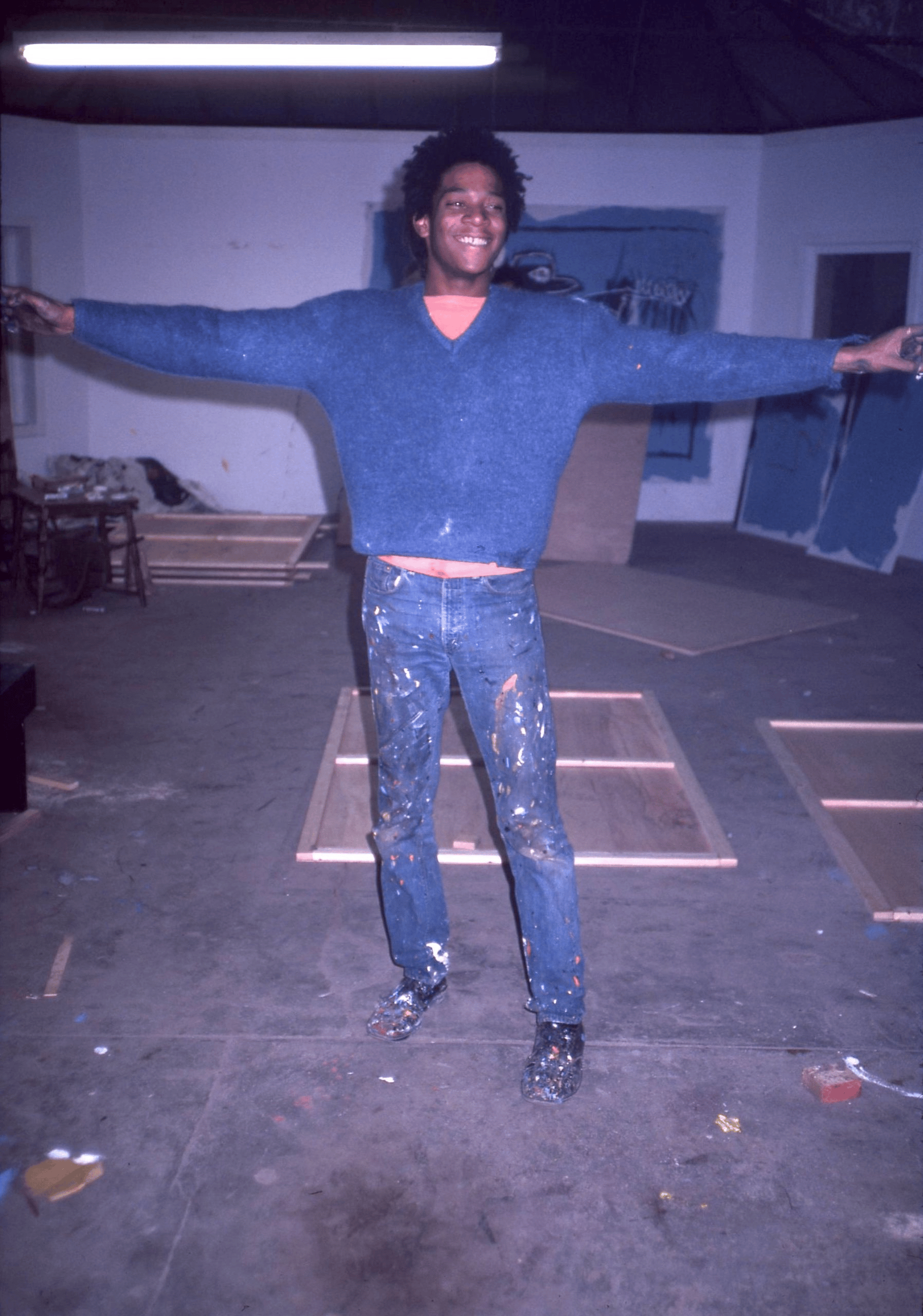
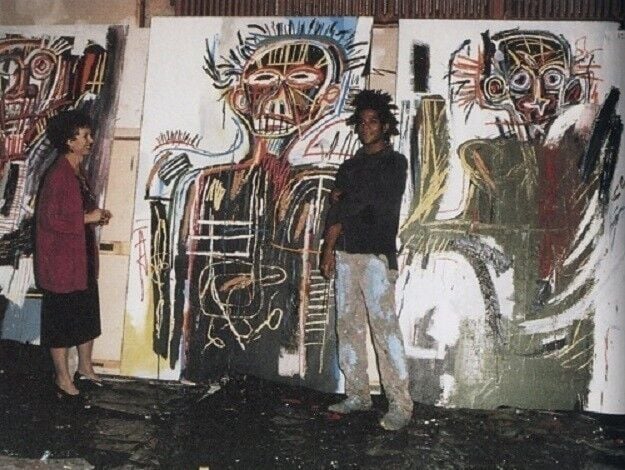
In September 1981, Jean-Michel Basquiat is 21 years old and on the cusp of becoming an art star.
In August 1988 he would be dead, aged 27 from a heroin overdose.
He is standing in the basement of the Annina Nosei gallery in SOHO, New York, looking not at the camera but off to the left, into the future perhaps. He looks both pleased and hopeful, with arms outstretched embracing the space and its’ possibilities. But maybe he is about to be crucified, by the art world, by his own ambition, by addiction.
Seth Tillet and Basquiat smoked a joint. He could not be enticed out to Disco Fever that evening, preferring to start work on what would become an explosive art career he had engineered through SAMO graffiti, precisely placed around the SOHO art and gallery scene.
How did he get here?
Art has the parameters of place, time and a way of seeing so understanding this photo needs some exploration. Here is the gallery building at Prince st today, the gallery long closed:
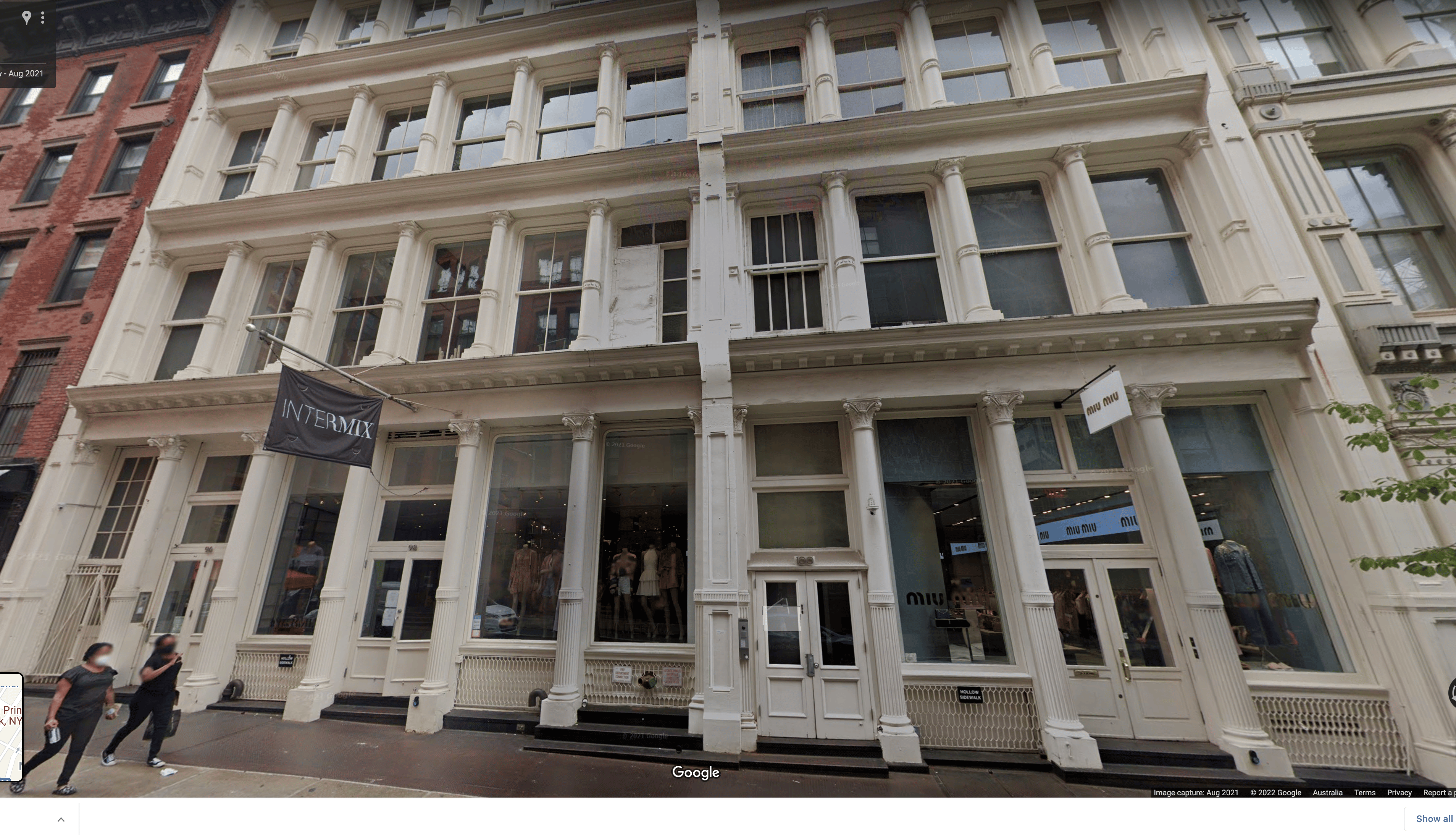
SOHO now, and when I last walked around in 2017 is bland, mainly clothing stores and high end real estate consultants. If one considers that New York is layered vertically, and that what is accessible from the street is a tiny portion of the cultural motherlode, it is still clear that in 2021 culture has moved on from this place. But in 1981 that was not the case. What we can see now is a wonderful high ceilinged NY loft building, now representing a global lifestyle motif in itself, and just the place to imagine Basquiat making big, important work, 40 years ago. (As I write I can hear the noise of a New York style ‘loft’ development going up in my neighbourhood, 12000 miles away from where Basquiat would emerge).
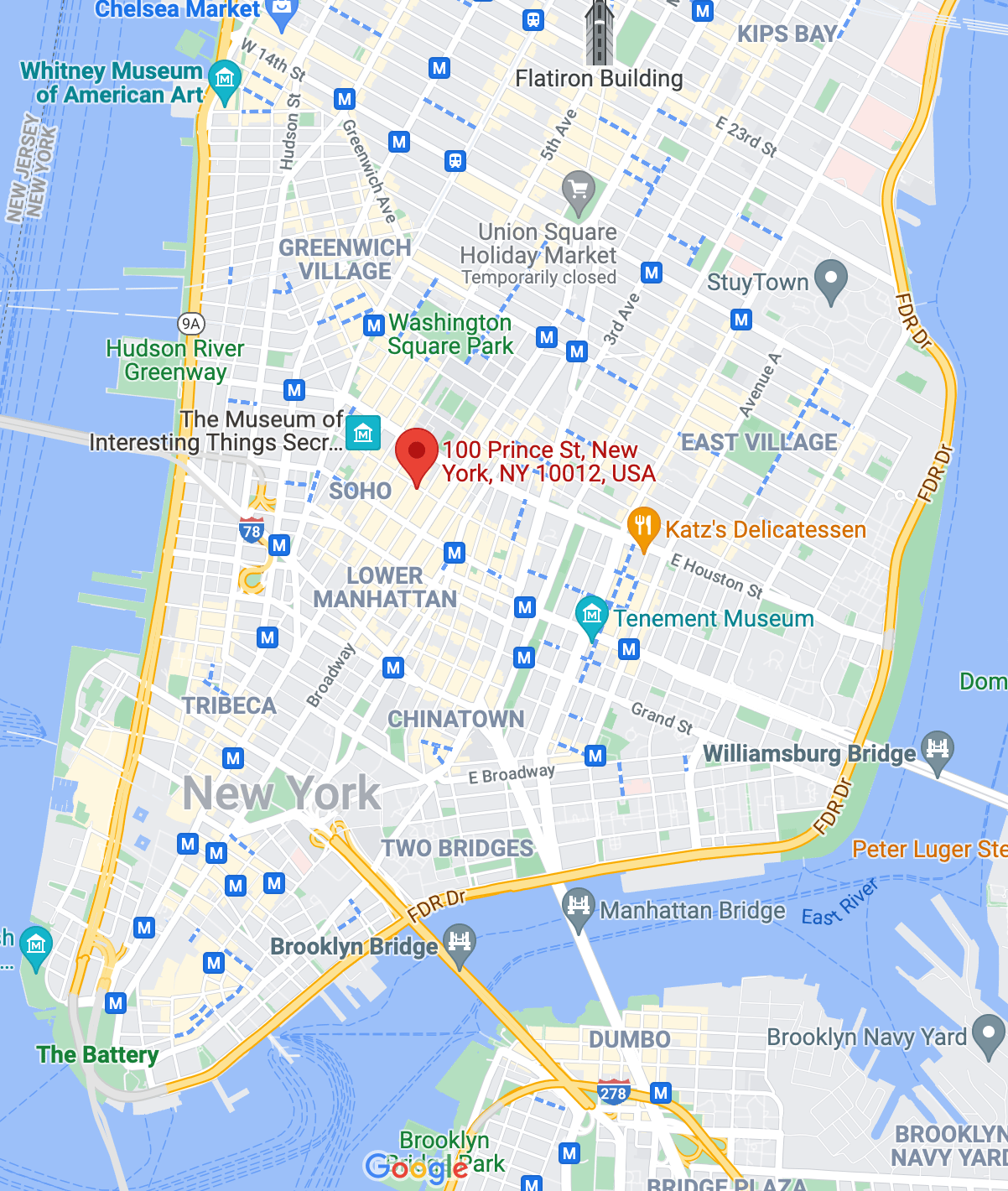
Basquiat is here by design, and his short lived gallerist is Annina Nosei, currently still alive aged 83. He had come here strategically. It’s hard to exactly define in retrospect what it was that got him here, but raw talent and hustle seem important.
Basquiat had left his Brooklyn home at 15, the eldest surviving child of his Haitian accountant father and Puerto-Rican heritage but Brooklyn born mother. His mother and father had separated when he was seven, and his mother had frequent psychiatric hospital admissions during his childhood. By tenth grade he was in an alternative Manhattan high school and there developed the SAMO identity with his friend Al Diaz. He began tagging SAMO graffiti around lower Manhattan. Through the Mudd Club, he met Diego Cortez. He did not ever attend art school or undertake any formal training. He is not homeless, but crashing on couches with no fixed address, and hustling for money.
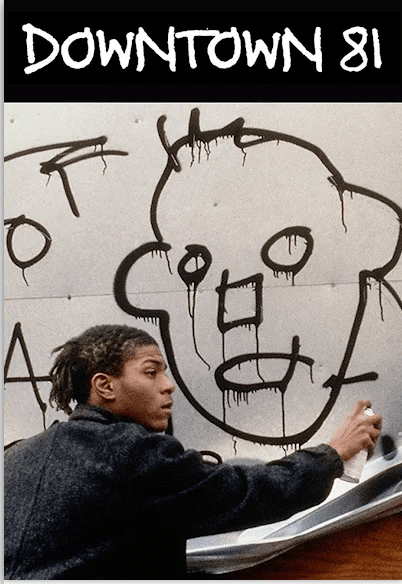
In Dec 1980-Jan 1981 Jean-Michel, then unknown, acted in Downtown 81 as the lead character of a day in the life of an artist. The film was made as a way to showcase bands at the time but for Basquiat it is a prescient roadmap. Remarkably it was only released at Canne in 2000.
I tried renting or buying it but couldn’t due to various georestrictions, but ended up watching it here. It is an amazing 71 minutes capturing the cultural zeitgiest of that time, and emblematic of the era. New York looks unbelievably run down and low rent, but alive with possibilities. Basquiat’s dialogue is dubbed, because the original was lost, but he looks assured, seeming to know what is coming.
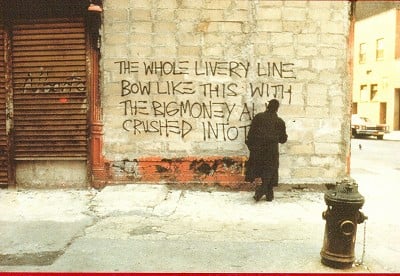
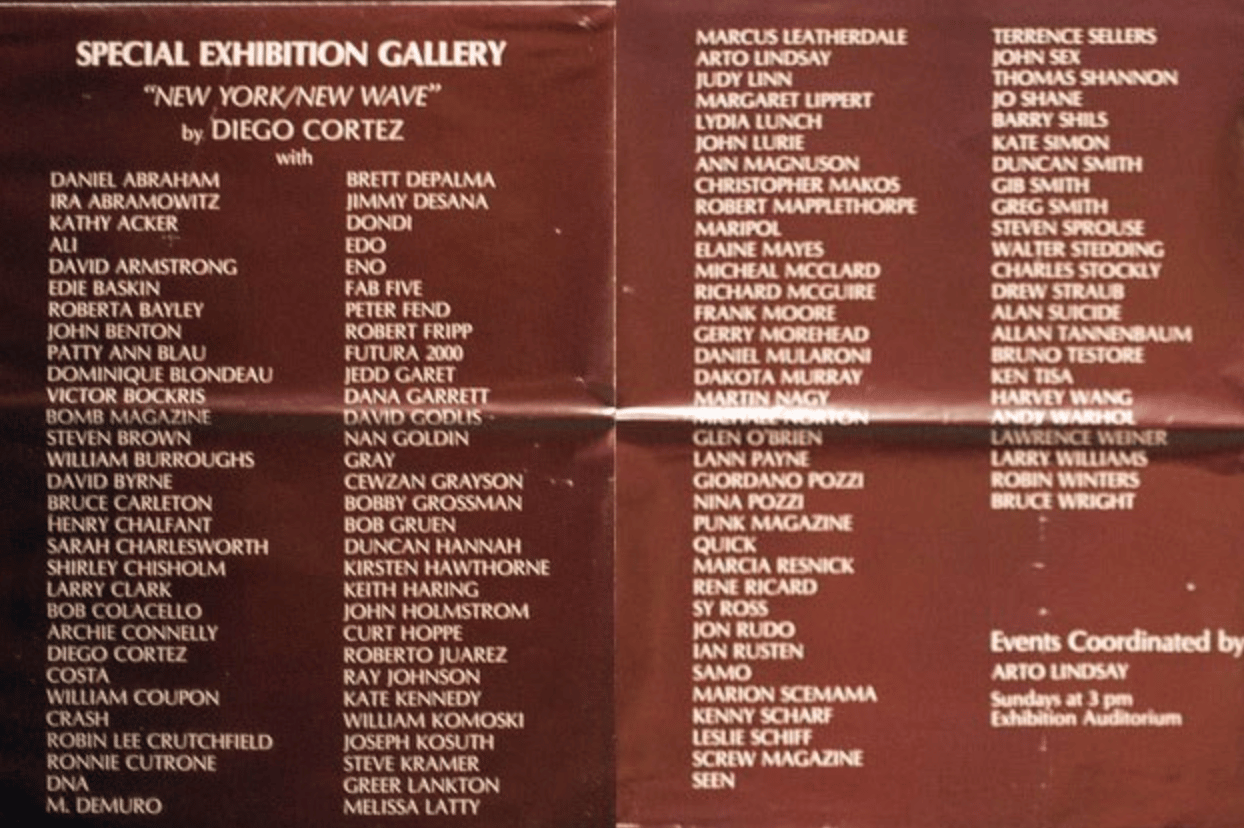
Diego Cortez died in June 2021, but is a fascinating and key figure because he curated the New York/New Wave exhibition that contained Basquiat, as well as many other important names. Note both ‘Gray’ (Basquiat’s noise band) and ‘Samo’ are credited here.

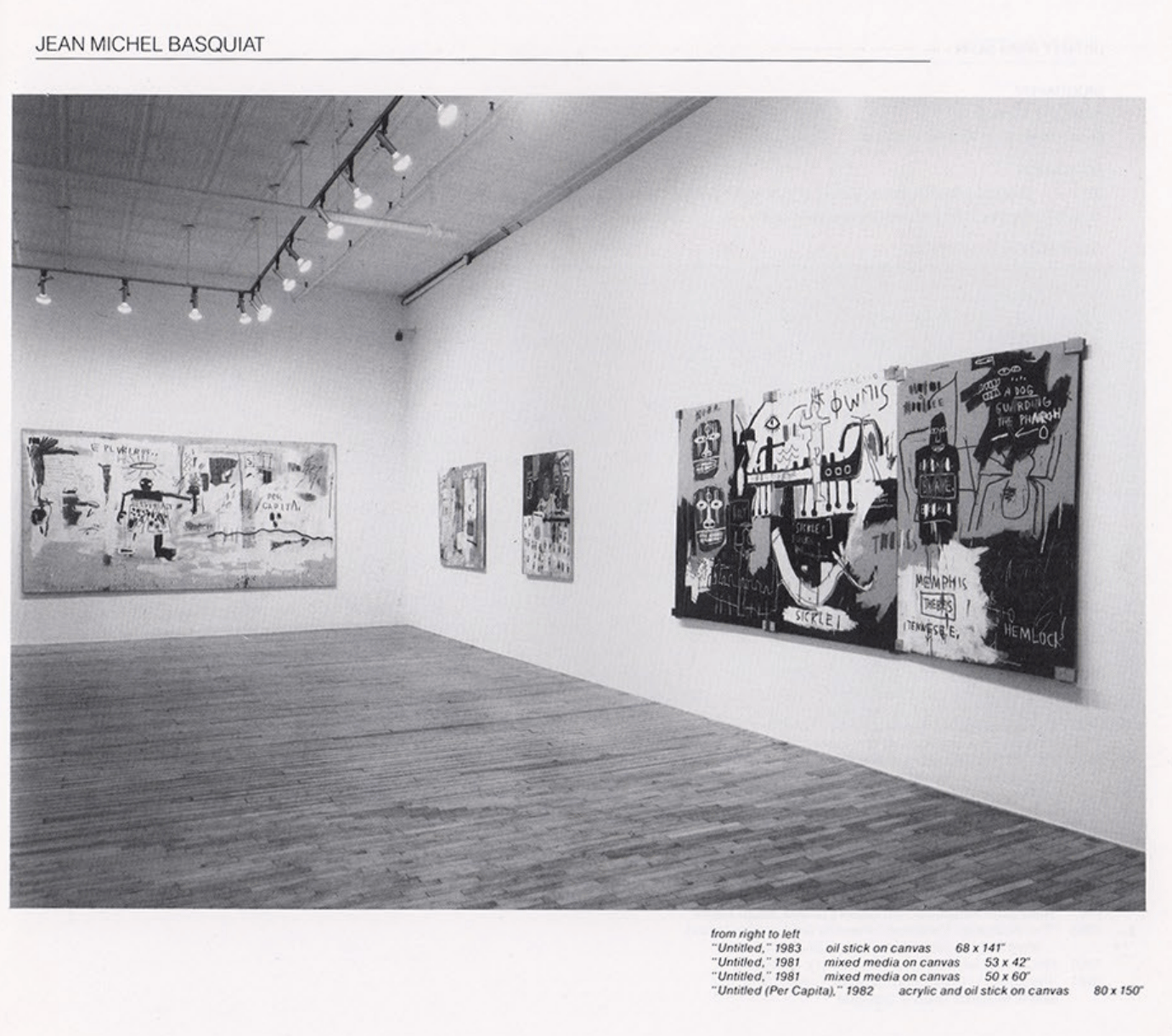
Annina was teaching at the School of Visual Art but had launched her own gallery, and was looking for artists. She arranged for a private viewing of the PS1 exhibit and asked Diego for Basquiat’s number, be he refused to give it to her. Annina cold called his fathers address in Brooklyn and eventually they connected. Though much of the writing around this relationship points to exploitation of the artists and Basquiat being taken advantage of, as usual the story is more nuanced. This interview is well worth reading. What seems relevant is that Nosei helped graduate Basquiat from drawing on paper to painting on canvas.
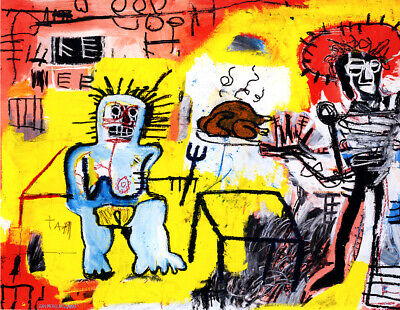
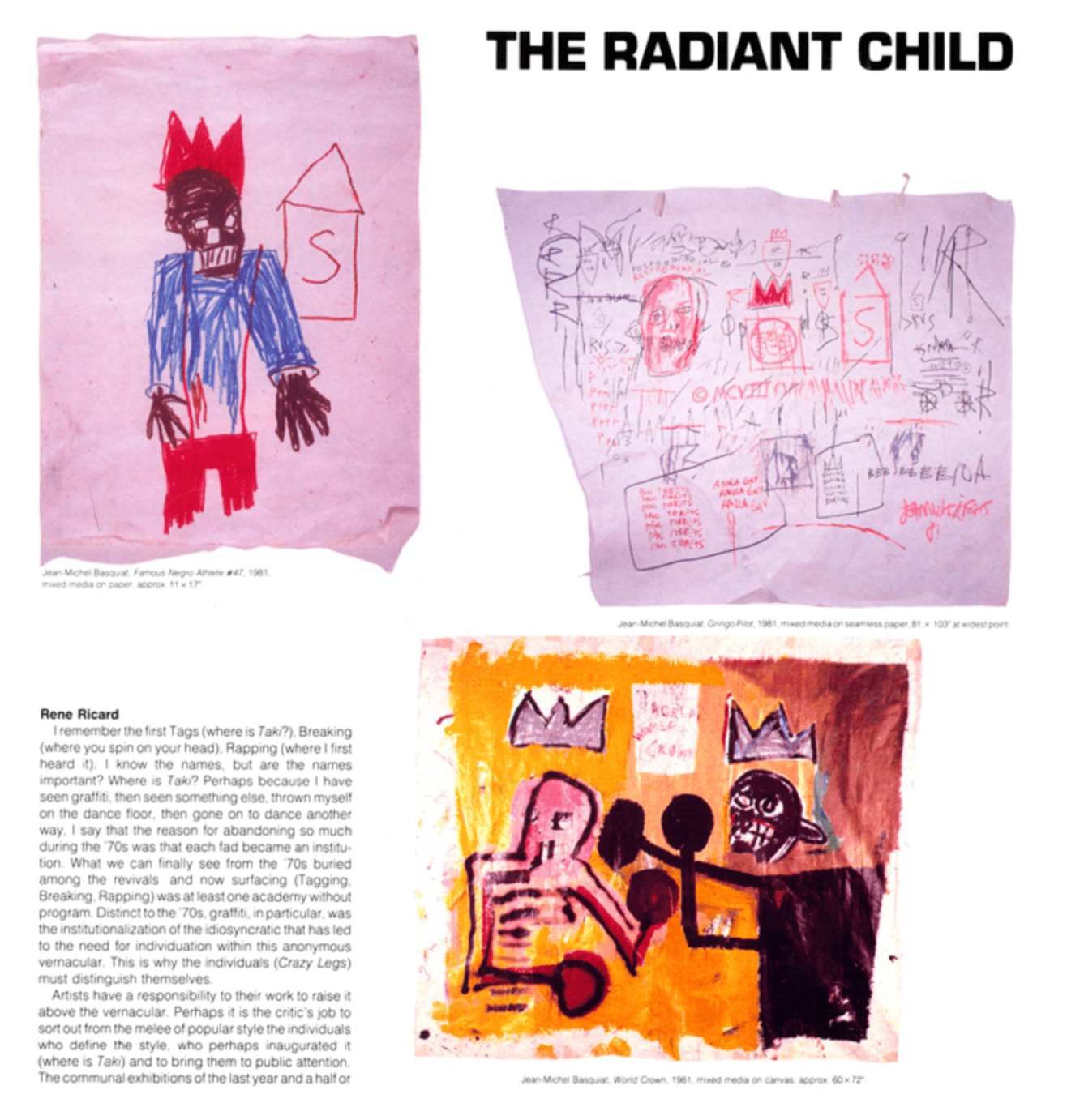
By December 1981 Basquiat is fully launched toward art stardom by a longform piece in ArtForum.
He was well on the way.
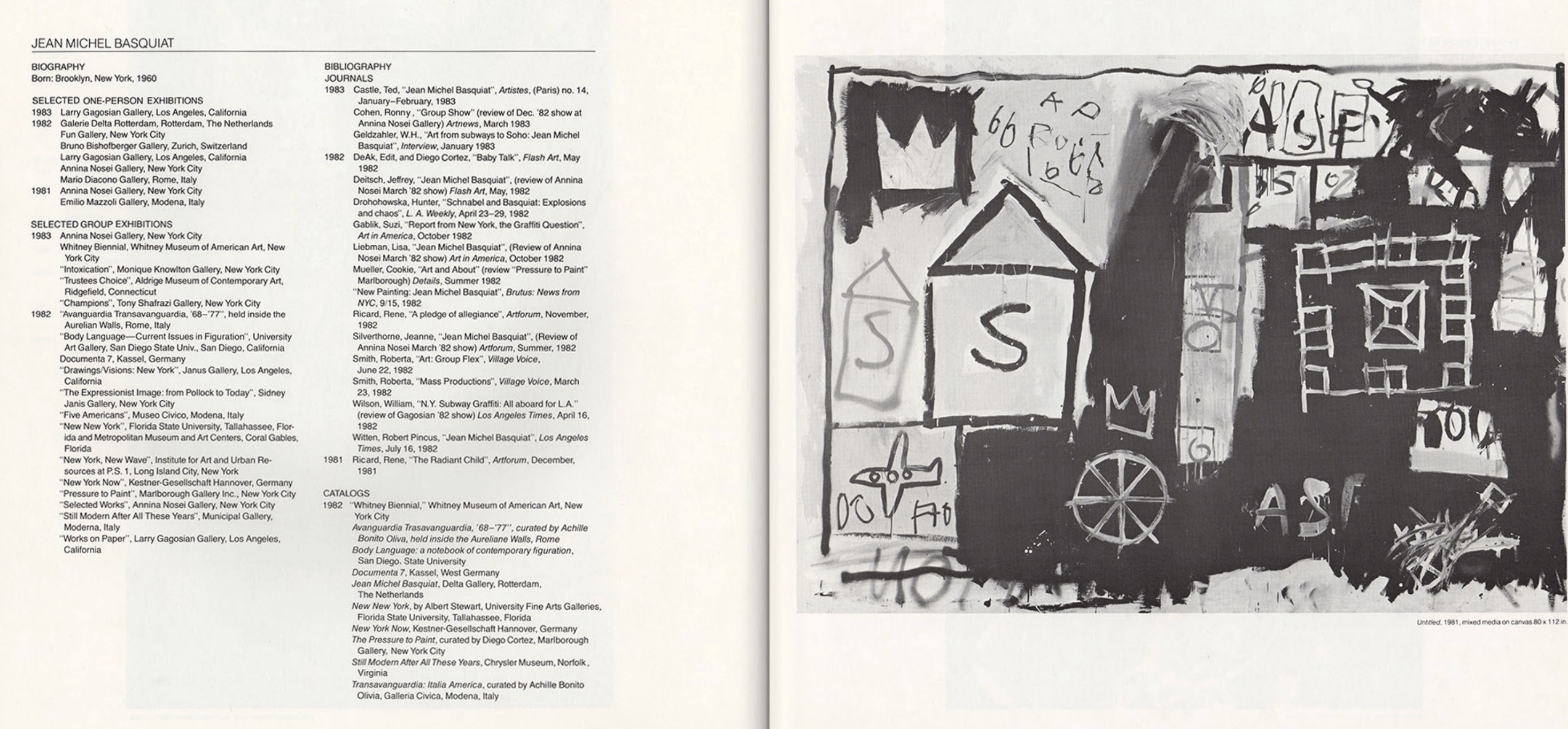
In subsequent years he moved around galleries and by some accounts at the end of his career had relationships with more than thirty galleries.
Criticism of Basquiat centres around his lack of formal training, the absurdly young age at which he became a cultural icon as well as the notion that being black was the novelty that the art market craved, rather than his talent.
For me these criticisms do not land. Basquiat, like many artists, was a deeply problematic individual but he was also a stunning success. Reflexivity dictates that he be taken seriously if only because of his fame and enduring cultural relevance.
His art is immediately accessible to a wide audience, and is lively and compellingly aesthetic. He combined a fresh visual dialogue that carried over a street level authority and edginess. He was also spectacularly stylish and attractive as an individual. He understood and took advantage of the explosion of art market commodification that critics like Robert Hughes railed against, to their own detriment.
Warhol, Koons, Hirst, and now Pak and Anadol have come to represent and embrace the commodification of art ideas, and indeed own them. In Basquiat’s day, gallerists would take 50% from every sale, and artists would receive no royalty on resales. Now, the artist can own 97.5% of the sale proceeds, plus 10% on resales.
What is the end point of this idea, of the art star, who may spend more time on deflationary economics rather than the aesthetics of the work? What would that idea look like, abstracted to its extreme in an Ad Reinhardt sense?
Maybe Seth Tilley’s photo of Basquiat represents the idea of a full embrace of artistic self actualisation.
Here I am, I have arrived.
https://knownorigin.io/tokens/5983003
https://www.artsy.net/article/christies-its-culture-or-its-not-culture-an
https://www.vogue.co.uk/article/jean-michel-basquiat-barbican-exhibition-boom-for-real-interviews
https://www.vanityfair.com/news/1988/11/jean-michel-basquiat
https://www.vulture.com/2019/10/jean-michel-basquiat-movie-downtown-81-metrograph.html
https://brooklynrail.org/2021/09/in-memoriam/A-Tribute-to-Diego-Cortez
https://www.nytimes.com/1985/02/10/magazine/new-art-new-money.html