

By now it is obvious that crypto is inevitable. Some might even say mainstream. Yet among crypto natives I speak to, there is great skepticism and nihilism. Sure, Bitcoin and stablecoins are now proven “products”, but what’s next? What else could there be that isn’t just a speculative bubble?
“Short term bearish, long term bullish.”
A deep rift runs through crypto culture: Satoshi’s cypherpunk wish of money without institutions, the degens chasing life changing gains, and the legion of actual institutions rallying around Blackrock’s charge towards tokenisation.
None can survive without the other, and each recognizes the others as a force, yet pretends that they are misguided, eventually irrelevant, or even regressive. I posit that this coming decade of crypto’s coming of age will be a synthesis of this trinity.

Satoshi believed in a form of money truly for the people. Bitcoin promises freedom because it is unhackable, unstoppable, and open to all. To protect this freedom, we also need privacy, self sovereignty, and credible neutrality.
Today, many think of cypherpunks as a fringe, idealistic group that has to accept reality. Their ideas do not make money, they just got lucky with Bitcoin.
But it is precisely the hard cryptographic guarantees and the impenetrable social fabric that makes blockchains and anything onchain valuable. Which bank would build on a blockchain if you could shut it down with a Discord message?
The killer products of crypto have this cypherpunk edge. Bitcoin, although integrated into traditional financial rails, retains its position as a debasement hedge and digital gold. Stablecoins, although represented offchain by assets in banks, grind against governments with weaker currencies and capital controls.
Products without this rebellious streak do not scale because their value proposition is better served by existing institutions. But cults are nothing without offerings from followers, and for better or worse, we crypto natives have branded ourselves as degens.

just know that one day i'll dump my bags on you
but one day we'll all be dead anyway
so now we live for the moment and for the memories

Every degen dreams of a 1000x return. And great returns demand great risk. Degens love being early, quickly become experts on any topic, and find alpha from any conceivable crevice.
The market is a short term voting machine, and a long term weighing machine – and degens are there to frontrun both, and in so doing, bootstrap the market itself. Bitcoin would not have survived if it did not make early adopters rich. Stablecoins would not have hit critical mass if it wasn’t first used for crypto trading and leverage.
But on its own, a degen is eventually lost. With Bitcoin near all time highs, degen sentiment is at all time lows. Many are financially free, but spiritually starving. The existential questions are deafening: What is the point? Are we still early? Is there a future? What do I really want? But the treadmill spins, and we keep coming back.
The shadow of the degen is a craving for meaning. We want to believe that we made money because we were early to the future of finance, and we were right. And even if we lost money, at least a new thing now exists.
Somewhere along the way, we saw extractors sail off into the sunset, and to protect ourselves we learnt the adversarial game. When there’s a new ponzi, the first instinct is to jump in early and get out when exit liquidity arrives. When there is no faith in the long term, everything looks like a ponzi, and the weighing machine sits in the dust.
In the absence of believers, it is hard to imagine willing greater fools who will fund this seemingly transparent bubble. Could it somehow be the institutions?

An institution is by definition an establishment. It meets a threshold of legitimacy and weight because it stands with sufficient backing, by capital, power, and reputation.
Many of the largest institutions are there because they are needed to coordinate to “do the right thing”. And what is right is often what is good for the people. Governments, sovereign/ pension funds, banks, giant corporations need to justify their actions with real utility and value.
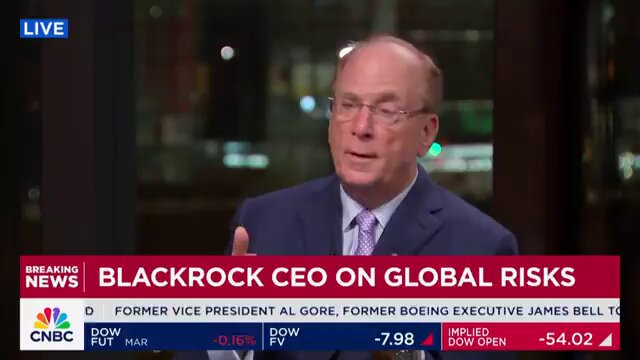
So when the world’s largest asset manager Blackrock issued a Bitcoin ETF, and it became its fastest growing and most profitable ETF ever, that sends an indisputable signal that Bitcoin has value and it is here to stay. And when President Trump signed the order to allow retirement savings to be invested in Bitcoin, it flashes a global green light. Now every institution will eventually buy crypto, and every single pensioner will have crypto exposure. Fidelity, Charles Schwab, Morgan Stanley – one by one they fall in line.
Similarly, when the GENIUS Act became federal law, it marked the beginning of a new era for crypto. It means that stablecoins are here to stay because they are valuable to the economy. Locally, they support government bonds. Globally, they extend the currency’s reach. Practically, they are simply superior – cheaper, faster, and programmable. Hence stablecoins must be regulated because they will be allowed to become giants of systemic importance.
And if we listen to the tremors just beyond the horizon, we hear that the SEC has made crypto and tokenization the top priority. The leadership DNA with Paul Atkins and Hester Peirce is a complete reversal of the previous regime, and they have been vocal supporters of crypto, speaking with builders, and figuring out new rules for this new world. Between the lines, it is obvious that the underbelly of “alts” are about to be shoved into the light of the law.
Under this harsh glare of the institutions, what will flourish, and what will wilt?

In retrospect, the common denominator for the maturation of Bitcoin and stablecoins is clear: start with a cultish cypherpunk spirit, grow from degen speculation, and emit positive externality to be consumed by the institutions and masses. This is the ouroboros that spits gold.
All three are necessary, and any other combination is necessary but insufficient.
A cypherpunk cult charged with degen speculation but no institutional value dies as a bubble. This is the case for most DeFi food forks, PFPs, memes.
But a cypherpunk idea that’s blessed by institutions without degen energy struggles to break out, like zk, TEE, proof of humanity.
And finally ones that tap into the power of degens and institutions without grounding in cypherpunk roots tend to be skeuomorphic and better as centralised products. Think tokenising stocks and real estate.
This is the Great Filter that all tokens will have to cross to persist in the next 10 years.
Perhaps it is premature to disqualify some of the primitives above, and perhaps it is a matter of timing. But there is at least one clear primitive that crosses the threshold:
How prediction markets saw something the polls and pundits didn't | CNN Business
How prediction markets saw something the polls and pundits didn't

The roots of prediction markets run deep. Economist F.A. Hayek. in 1945 wrote about how price aggregates dispersed information. Robin Hanson in 1990 proposed futarchy as a new form of governance by prediction, where decisions will lead to the best outcomes. Vitalik Buterin in 2014 included prediction markets as a use case in Ethereum’s whitepaper. Augur and Gnosis attempted the idea shortly after, but the timing wasn’t right.
The breakout moment came in 2024 when Polymarket surfaced surprising information that Trump was in fact the leading candidate in a historic election, while traditional polls and pundits were misled. And it did that while being blocked in the US by the CFTC since 2022 for “offering unregistered derivatives trading”.
The cypherpunk angle: When put onchain, prediction markets become open to all, so anyone anywhere with an edge or a hunch may bet. The odds become irrefutable and immutable. These markets can surface inconvenient truths, and attract pseudonymous insiders to contribute information for financial upside.
The degen angle: when we can create predictions about any significant event in the world, it opens a new frontier for speculation. Any social, political, natural event that people care about - especially those that are uncertain - become fertile ground for prediction markets.
The institutional angle: as prediction markets mature and the most dangerous parts trimmed (eg, assassination markets), the positive externality of surfacing real-time information can be incorporated into all ventures with exposure to those real world outcomes. For example, predictions about a trade war can be used to hedge or prepare for supply chain disruption.
While large players like Polymarket and Kalshi exist, the regulation around prediction markets is still unclear. There is room for specialised platforms, for example sports, or insider-based predictions (Will Zelensky wear a suit?). AI will also augment the creation and resolution of markets. AI agents could participate in or consume prediction markets odds/ outcomes to achieve their objectives.
“We have a duty to be optimistic. Because the future is open, not predetermined and therefore cannot just be accepted: we are all responsible for what it holds. Thus it is our duty to fight for a better world.” -David Deutsch
At this point, both bagholders and believers are bound to be up in arms. Surely there is more to crypto than Bitcoin, stablecoins, and prediction markets?
Definitely. But unfortunately, the easy road is behind us.
I can see a future where the push to “perpify everything” gets picked up by tradfi. I hope that the radical idea of launchpads to crowdfund anything – from AI agents, to biohacking, to games and music, becomes the default path for top talent. I would love if DePIN networks become superior to centralised ones. And of course it feels natural that DeFi legos follow stablecoin adoption to disrupt all of finance.
But realistically, today is not that day. And it might take years still. I can understand the skepticism we all face. But it means that those who take the winding path of today might find that the winds turn when we least expect it. And it also means - dare I say it - we are still early, our time will come.
It is an open secret that venture funding was overzealous this past 3-5 years. Many will wind down, many more will diversify or exit crypto.
I for one will remain.
Ethereum turns 10 years old this year. Maturing from a decade of experiments, I foresee a golden age in the next 10 years. So this is a call for the bold and tenacious: Stay the path. There are still many still who will walk by your side.
The ouroboros was originally a symbol for eternal life and rebirth. In crypto, we have repurposed it to mean the self-deluding ritual of moving around the same pool of magic internet money – speculation for speculation’s sake.
It is time to invoke the serpent again in a spirit of renewal by autophagy. We will burn away the rot of our excesses. We will keep the embers of the cypherpunks. And we will spit gold for the masses.

