
For many of its users, BTC is considered a store of value with almost infinite potential. However, recent years have been marked by the arrival of numerous BTC ETFs. It is clear that the profile of BTC holders is evolving, and perhaps its utility along with it. Indeed, for several years, certain protocols have been attempting to create ways to generate yield on BTC, just as we already do on Ethereum or Solana, and new categories of BTC holders might encourage this movement.
This is what we call BTCfi.
If we look at the four largest issuers of tokenized BTC for yield generation (wBTC, cbBTC, tBTC, Babylon), only 260,000 BTC are currently working on a blockchain to generate yield out of the 21 million total supply. While the first initiatives, still in use today, require relying on a trusted third party, new initiatives could bring trust and disintermediation—two fundamental pillars of Bitcoin.
Far be it from me to argue whether or not Bitcoin should offer yield to BTC holders; instead, let’s take an inventory of BTCfi in January 2026.
Today, the first gateway to BTC-linked yield is Bitcoin wrappers. As a reminder, a wrapped BTC is a token issued on a blockchain other than Bitcoin, with its value pegged 1:1 to the BTC price. Wrapped BTC emerged to allow the use of BTC equivalents in DeFi protocols.
Let’s review the different types of wrapped BTC.
wBTC - Bitgo
Several types of wrapped BTC exist. The most well-known is BitGo's wBTC, which currently represents a bit less than $10B in market capitalization. With wBTC, Merchants, who are previously whitelisted by BitGo, deposit BTC into a multi-sig vault (2-out-of-3) managed by BitGo and its partners on the Bitcoin blockchain. In return, a wBTC is issued on another blockchain such as Ethereum, Solana, Tron, Base, or Polygon. Upon withdrawal, the wBTC is burned and the BTC is returned to the user. The WBTC DAO is the body that makes decisions for the protocol, such as accepted merchants, custodians, and potential changes to the mint & burn smart contract.
However, BitGo faced difficulties in August 2024 with the controversy surrounding Justin Sun and BiT Global becoming a custodian for the protocol. Following this, some users feared that Justin Sun might use wBTC liquidity to support his own projects. This led to a massive burn of wBTC tokens. Furthermore, the Sky DAO (formerly Maker) voted overwhelmingly to end the use of wBTC as collateral for the protocol.

State of wBTC by 21shares - https://dune.com/21sharesresearch/wbtc
cbBTC - Coinbase
New wrapped BTC were created during this period to take advantage of the changes in BitGo’s governance. Coinbase’s cbBTC was announced in August 2024. In December 2025, cbBTC represents over $6B in valuation and a higher trading volume than wBTC. The model is similar, with Coinbase as the sole custodian of the BTC, but Coinbase also leverages its regulatory compliance as a major asset in a context of increasing need for transparency.

cbBTC by @eekeyguyy - https://dune.com/eekeyguyy/cbbtc
tBTC - Threshold Network
In this logic of transparency and progressive decentralization, a new player has carved out a place for itself: tBTC, born from a merger between Keep and NuCypher to form the Threshold Network. The version of tBTC as we know it today was born in early 2023 and now represents a valuation of over $500M. tBTC is considered the wrapped BTC most in line with Bitcoin’s fundamental values. Indeed, tBTC replaces human trust with probabilistic security. When a user deposits BTC on Bitcoin to receive tBTC on Ethereum, for example, a deposit address is created. Its security is managed by 100 signers (nodes) selected from the stakers of the T token issued by Threshold. These 100 signers share the private key according to the DKG (Distributed Key Generation) procedure. If a node is corrupted or inactive over the long term, slashing mechanisms are in place. To withdraw BTC on Bitcoin, at least 51 of the 100 designated signers must sign the transaction.
While the early (and most used in 2025) Bitcoin yield initiatives take place outside the foundations of the queen of blockchains, a new paradigm is shifting: Bitcoin is no longer leaving home. While wrappers served as a temporary fix for Layer 1’s lack of programmability, a new infrastructure layer is emerging to transform Bitcoin into a productive asset within its own ecosystem. Although yield methods on Bitcoin are becoming more mature, their foundations date back several years. Let’s look back:
Step 1 - Taproot
The first step took place in 2021 with the Taproot update. Briefly, Taproot allowed Bitcoin to become smarter without making it heavier. Before this date, the more complex a transaction was (like a multisig), the more space it took and the more it cost. Taproot allowed for block space to be freed up while reducing fees for advanced operations. This revolution relies on three complementary Bitcoin Improvement Proposals (BIPs):
BIP 340 (Schnorr Signatures): Allows for signature aggregation, making multisig transactions lighter and more discreet.
BIP 341 (Taproot & MAST): Allows for revealing only the conditions of a contract that are actually used. As a result, a multisig or a complex contract looks like a standard transaction on the blockchain, enhancing privacy.
BIP 342 (Tapscript): Updates Bitcoin’s script language to adapt it to Schnorr signatures and facilitates future evolutions (like adding new calculation tools).
These innovations indirectly removed the technical barriers blocking data size, giving birth to the Ordinals protocol. This allowed for the rise of ecosystems like Merlin Chain, which was structured to allow the exchange and use of these new assets (NFTs and BRC-20 tokens) seamlessly via Layer 2 solutions.
Step 2 - BitVM
The second step is BitVM. In October 2023, Robin Linus, a researcher at ZeroSync, published his whitepaper titled “BitVM: Compute Anything on Bitcoin.” Until then, the community thought a "hard fork" was mandatory to make Bitcoin programmable. Linus proved otherwise. Bitcoin’s programmability problem lies in its language (Script), which is intentionally limited and unable to handle complex loops or heavy calculations. BitVM changes the game with a simple idea: instead of asking Bitcoin to execute a program, it is executed off-chain, and Bitcoin is used only as an arbiter in case of a dispute.
BitVM enabled the emergence of BitEVM ecosystems like Bitlayer. This Layer 2 allows for the execution of complex DeFi protocols before communicating the final result to the Bitcoin blockchain. Concretely, Bitlayer compresses thousands of transactions into a single proof sent to Layer 1. This is where Verifiers come in: monitoring nodes financially incentivized to verify the accuracy of the information. If a Verifier suspects an error, they initiate a challenge and force Bitlayer to open a specific calculation step on the blockchain. If the Bitlayer operator cannot mathematically prove that this step is correct, they lose their stake and the fraud attempt is rejected—the fraudulent result is invalidated and is never permanently sealed on the Bitcoin blockchain. This stake must represent a significant portion of the total value locked on Bitlayer to ensure that cheating is mathematically suicidal. Verifiers must also deposit a stake (around 0.01 to 0.05 BTC) to prevent the spamming of false challenges.
In August 2024, Linus went further and published a new whitepaper titled: "BitVM 2: Permissionless Verification on Bitcoin." While the first version of BitVM limited the number of verifiers, V2 allows anyone to fill this role. Now, it only takes one honest verifier among thousands to guarantee the security of the bridge and trigger arbitration on Bitcoin in case of fraud. BitVM 2 helped strengthen the Stacks update, humbly named Nakamoto and activated in August 2024.
Stacks now positions itself as a true Bitcoin Layer 2. On paper, the operation is reminiscent of Wrapped BTC: a BTC is locked on Bitcoin and an equivalent, sBTC, is issued on Stacks. However, the security structure differs radically thanks to the Proof of Transfer (PoX) mechanism. During a deposit, BTC are sent to a threshold address managed not by a company, but by the network’s Signers (Stackers) via threshold cryptography.
To link the two chains, Stacks uses the OP_RETURN function: each deposit on Bitcoin contains a note specifying the recipient's Stacks address. The innovation lies in Stacks' "Bitcoin-native" nodes that scan Layer 1 in real-time to trigger the issuance of sBTC. Most importantly, the Nakamoto update bonded the two networks: every Stacks transaction now benefits from Bitcoin finality, inheriting 100% of its hash power. This mutation is accompanied by fast blocks (5 seconds) and the neutralization of MEV. In December 2025, the valuation of sBTC reached nearly $400 million, a fourfold increase over the year.
However, Stacks has limitations related to Stacker incentives. The latter lock their $STX tokens to validate blocks and receive in exchange the BTC transferred by miners. Although Stackers have an interest in protecting the protocol to preserve the value of their $STX, a theoretical risk remains: if the value of the locked BTC exceeds that of the staked $STX, collusion could be attempted. In practice, this scenario would require the agreement of 70% of the signers, a threshold nearly impossible to reach given that the majority are institutional players (Coinbase, Figment, Copper) whose reputational risk far outweighs the potential gain from a theft. In December 2025, we find several emerging DeFi protocols on Stacks, namely ALEX (DEX); Stacking DAO (Liquid Staking); Zest Protocol (Lending); or Velar (Perps), which together hold a bit more than $150m in TVL.
And what if the future of BTCfi played out on a forgotten Bitcoin command? Let’s look briefly at OP_CAT. OP_CAT is a command instruction that existed at the very beginning of Bitcoin. But Satoshi Nakamoto disabled it in 2010 to avoid saturating nodes. This instruction simply allows taking two pieces of data and sticking them together to form one. Thanks to this, it is possible to create “Covenants” allowing, notably, to force Bitcoin to execute an action only if certain complex mathematical conditions are met—such as verifying a ZK-proof directly on Bitcoin. Between 2024 and 2025, OP_CAT was tested intensively on Signet (Bitcoin's testnet). During this period, Starknet, a well-known player in DeFi and ZK, demonstrated that ZK-proofs could be verified natively on Bitcoin. It is likely that the mainnet implementation of OP_CAT will take place in 2026.
It is around these tests that Starknet is currently operating a major pivot: becoming a Bitcoin ZK-rollup. Concretely, the user deposits BTC to a Taproot address on Bitcoin that contains a special script: the Starknet Covenant using OP_CAT. In short, the address does not just receive funds; it "locks" the BTC under a mathematical condition: they can only be unlocked if a valid STARK proof is presented.
In early 2026, native verification via OP_CAT is not yet live; the BIP-347 update must be activated by miners and the Bitcoin mainnet. Nevertheless, since September 2025, staking wrapped BTC on Starknet has been possible to secure the network and receive $STRK tokens, and the bridge between the two chains using BitVM is live. This is not yet instant mathematical verification but a fraud proof.
Today, nearly $200m of the $750m in DeFi TVL on Starknet involves BTC & derivatives. This TVL is concentrated around a few protocols like Extended (Perps); Vesu (lending); Endur (Liquid Staking); Ekubo (DEX); AVNU (Aggregator); but also Uncap (CDP). Uncap allows depositing BTC as collateral on Starknet to borrow a dollar stablecoin, $USDU, at an interest rate set by the borrower with a model similar to Liquity's.

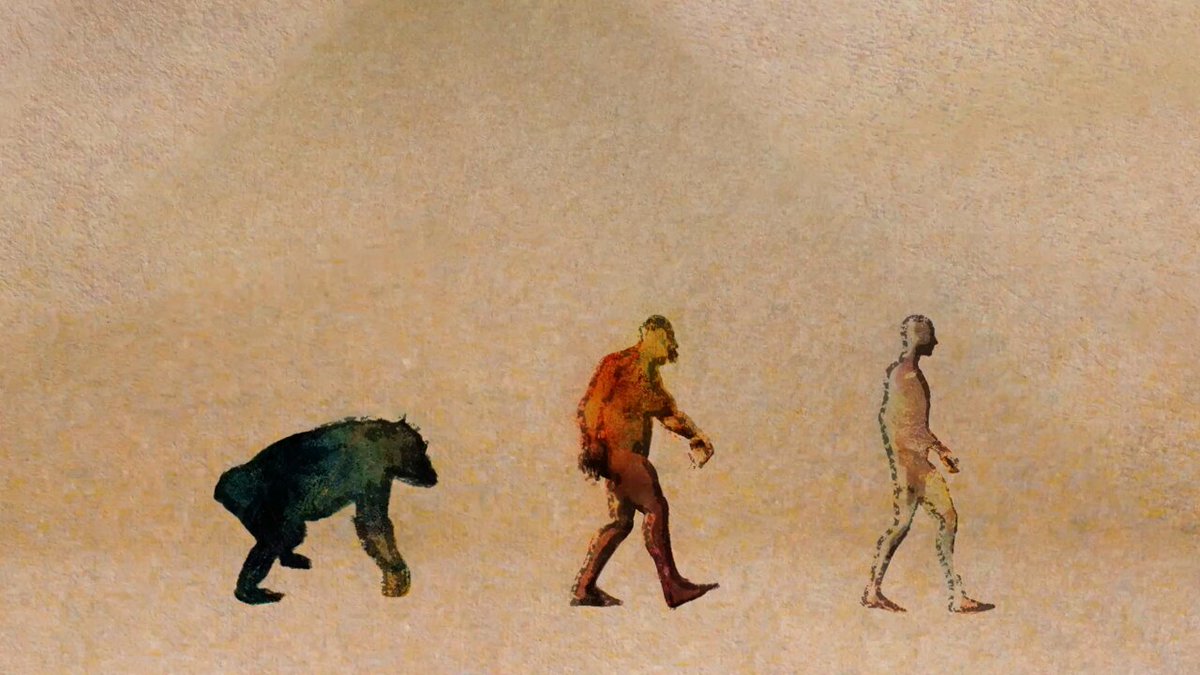
Clearly, in the same way that DeFi on the ecosystems we already know well has been structured around several players ranging from sidechains to ZK-rollups via Optimistic Rollups, BTCfi is undergoing the same maturation process:
Level 1 (Sidechains/Wrapped): Security by a company or a federation (WBTC).
Level 2 (Programmable L2s): Security by economic incentives (Stacks, Bitlayer).
Level 3 (Native ZK-Rollup): Security by pure mathematics verified by Bitcoin (Starknet with OP_CAT).
Everyone knows it: Bitcoin works according to the Proof-of-Work consensus mechanism. And yet, we are now talking about staking on Bitcoin. Indeed, after progressively obtaining DeFi opportunities from Bitcoin without moving assets off the parent blockchain, some projects are now looking to use Bitcoin as a means of securing other blockchains. This is notably the case for Babylon, which was founded in 2022 and has raised nearly $100m since. Babylon transforms Bitcoin into a universal security layer. Its role is to allow Proof-of-Stake networks to borrow the robustness of the Bitcoin blockchain to protect themselves against attacks, while offering BTC holders a native yield. Concretely, the user deposits their BTC to a Taproot address on Bitcoin for a defined period. A voting delegation is made to an FP—Final Provider—who signs blocks on other POS chains—which are called BSN for Bitcoin Secured Network—for the users. The staking rewards from the chain in question are shared between the FP and the users. In case of bad behavior by the FP, slashing occurs via EOTS (Extractable One-Time Signature) technology, which automatically reveals the FP's private key. Anyone can trigger the pre-approved slashing transaction in the initial Taproot script.
At the end of 2025, Babylon moved to Phase 3 of its mainnet. The nearly $5bn in BTC deposited by users no longer only secures the Babylon network but other chains on Cosmos such as TAC, Union, or XPLA. Users can also simultaneously secure multiple BSNs with the same transaction.
But staking also implies liquid staking logic. This is notably what Lombard offers. Users can deposit their BTC into a vault. These BTC are then deposited on Babylon, in return for which they receive LBTC, which is a Bitcoin LST. The BTC are managed by several FPs co-managed with major staking players like Kiln, Figment, or Galaxy. Recently, Lombard was integrated into Ledger Connect. Lorenzo goes even further and separates the Bitcoin LST—stbtc ($30m market cap)—and the yield associated with Babylon staking rewards—YAT. These YATs can thus be traded on a secondary market. Once the Bitcoin LST is in the wallet, it can be used to mint stablecoins like USDU (Uncap), which we mentioned earlier, or USBD (Bima).
While Bitcoin's technical parameters previously only allowed for limited ways to generate yield—often forcing the delegation of trust to third-party entities via wrappers—the situation is changing. Thanks to advances like BitVM and the prospect of OP_CAT, new ecosystems are establishing themselves. By replacing human trust with cryptographic and economic guarantees, these players are paving the way for massive use of BTC, no longer just as a store of value, but as a security foundation for the entirety of Web3. The coming years will show us both if the level of security and disintermediation is sufficient, and also, and above all, if BTC is destined to become not just a store of value, but also a productive asset.
Sources :
wBTC (BitGo) : Whitepaper - Wrapped Bitcoin (WBTC)
cbBTC (Coinbase) : Official Documentation - Coinbase Wrapped BTC
tBTC (Threshold Network) : Whitepaper v2 - Decentralized Bitcoin on Ethereum
Taproot (BIPs 340, 341, 342) : Bitcoin Improvement Proposals - Taproot Upgrade
OP_CAT (BIP 347) : BIP 347: OP_CAT in Tapscript
Bitlayer : Technical Whitepaper - Bitlayer Layer 2
Starknet BTCfi : Roadmap & Vision - Starknet as a Bitcoin Rollup
Uncap Finance : Documentation - USDU Stablecoin
Babylon : Whitepaper - Bitcoin Staking Protocol
Lombard : Documentation - LBTC Liquid Staking
Lorenzo Protocol : Documentation - stBTC & Yield Accruing Tokens (YAT)
Tiger Research (Janvier 2026) : Q1 2026 Bitcoin Valuation & Ecosystem Report

Subscribe to 50 Partners Web3
<100 subscribers
For many of its users, BTC is considered a store of value with almost infinite potential. However, recent years have been marked by the arrival of numerous BTC ETFs. It is clear that the profile of BTC holders is evolving, and perhaps its utility along with it. Indeed, for several years, certain protocols have been attempting to create ways to generate yield on BTC, just as we already do on Ethereum or Solana, and new categories of BTC holders might encourage this movement.
This is what we call BTCfi.
If we look at the four largest issuers of tokenized BTC for yield generation (wBTC, cbBTC, tBTC, Babylon), only 260,000 BTC are currently working on a blockchain to generate yield out of the 21 million total supply. While the first initiatives, still in use today, require relying on a trusted third party, new initiatives could bring trust and disintermediation—two fundamental pillars of Bitcoin.
Far be it from me to argue whether or not Bitcoin should offer yield to BTC holders; instead, let’s take an inventory of BTCfi in January 2026.
Today, the first gateway to BTC-linked yield is Bitcoin wrappers. As a reminder, a wrapped BTC is a token issued on a blockchain other than Bitcoin, with its value pegged 1:1 to the BTC price. Wrapped BTC emerged to allow the use of BTC equivalents in DeFi protocols.
Let’s review the different types of wrapped BTC.
wBTC - Bitgo
Several types of wrapped BTC exist. The most well-known is BitGo's wBTC, which currently represents a bit less than $10B in market capitalization. With wBTC, Merchants, who are previously whitelisted by BitGo, deposit BTC into a multi-sig vault (2-out-of-3) managed by BitGo and its partners on the Bitcoin blockchain. In return, a wBTC is issued on another blockchain such as Ethereum, Solana, Tron, Base, or Polygon. Upon withdrawal, the wBTC is burned and the BTC is returned to the user. The WBTC DAO is the body that makes decisions for the protocol, such as accepted merchants, custodians, and potential changes to the mint & burn smart contract.
However, BitGo faced difficulties in August 2024 with the controversy surrounding Justin Sun and BiT Global becoming a custodian for the protocol. Following this, some users feared that Justin Sun might use wBTC liquidity to support his own projects. This led to a massive burn of wBTC tokens. Furthermore, the Sky DAO (formerly Maker) voted overwhelmingly to end the use of wBTC as collateral for the protocol.
State of wBTC by 21shares - https://dune.com/21sharesresearch/wbtc
cbBTC - Coinbase
New wrapped BTC were created during this period to take advantage of the changes in BitGo’s governance. Coinbase’s cbBTC was announced in August 2024. In December 2025, cbBTC represents over $6B in valuation and a higher trading volume than wBTC. The model is similar, with Coinbase as the sole custodian of the BTC, but Coinbase also leverages its regulatory compliance as a major asset in a context of increasing need for transparency.
cbBTC by @eekeyguyy - https://dune.com/eekeyguyy/cbbtc
tBTC - Threshold Network
In this logic of transparency and progressive decentralization, a new player has carved out a place for itself: tBTC, born from a merger between Keep and NuCypher to form the Threshold Network. The version of tBTC as we know it today was born in early 2023 and now represents a valuation of over $500M. tBTC is considered the wrapped BTC most in line with Bitcoin’s fundamental values. Indeed, tBTC replaces human trust with probabilistic security. When a user deposits BTC on Bitcoin to receive tBTC on Ethereum, for example, a deposit address is created. Its security is managed by 100 signers (nodes) selected from the stakers of the T token issued by Threshold. These 100 signers share the private key according to the DKG (Distributed Key Generation) procedure. If a node is corrupted or inactive over the long term, slashing mechanisms are in place. To withdraw BTC on Bitcoin, at least 51 of the 100 designated signers must sign the transaction.
While the early (and most used in 2025) Bitcoin yield initiatives take place outside the foundations of the queen of blockchains, a new paradigm is shifting: Bitcoin is no longer leaving home. While wrappers served as a temporary fix for Layer 1’s lack of programmability, a new infrastructure layer is emerging to transform Bitcoin into a productive asset within its own ecosystem. Although yield methods on Bitcoin are becoming more mature, their foundations date back several years. Let’s look back:
Step 1 - Taproot
The first step took place in 2021 with the Taproot update. Briefly, Taproot allowed Bitcoin to become smarter without making it heavier. Before this date, the more complex a transaction was (like a multisig), the more space it took and the more it cost. Taproot allowed for block space to be freed up while reducing fees for advanced operations. This revolution relies on three complementary Bitcoin Improvement Proposals (BIPs):
BIP 340 (Schnorr Signatures): Allows for signature aggregation, making multisig transactions lighter and more discreet.
BIP 341 (Taproot & MAST): Allows for revealing only the conditions of a contract that are actually used. As a result, a multisig or a complex contract looks like a standard transaction on the blockchain, enhancing privacy.
BIP 342 (Tapscript): Updates Bitcoin’s script language to adapt it to Schnorr signatures and facilitates future evolutions (like adding new calculation tools).
These innovations indirectly removed the technical barriers blocking data size, giving birth to the Ordinals protocol. This allowed for the rise of ecosystems like Merlin Chain, which was structured to allow the exchange and use of these new assets (NFTs and BRC-20 tokens) seamlessly via Layer 2 solutions.
Step 2 - BitVM
The second step is BitVM. In October 2023, Robin Linus, a researcher at ZeroSync, published his whitepaper titled “BitVM: Compute Anything on Bitcoin.” Until then, the community thought a "hard fork" was mandatory to make Bitcoin programmable. Linus proved otherwise. Bitcoin’s programmability problem lies in its language (Script), which is intentionally limited and unable to handle complex loops or heavy calculations. BitVM changes the game with a simple idea: instead of asking Bitcoin to execute a program, it is executed off-chain, and Bitcoin is used only as an arbiter in case of a dispute.
BitVM enabled the emergence of BitEVM ecosystems like Bitlayer. This Layer 2 allows for the execution of complex DeFi protocols before communicating the final result to the Bitcoin blockchain. Concretely, Bitlayer compresses thousands of transactions into a single proof sent to Layer 1. This is where Verifiers come in: monitoring nodes financially incentivized to verify the accuracy of the information. If a Verifier suspects an error, they initiate a challenge and force Bitlayer to open a specific calculation step on the blockchain. If the Bitlayer operator cannot mathematically prove that this step is correct, they lose their stake and the fraud attempt is rejected—the fraudulent result is invalidated and is never permanently sealed on the Bitcoin blockchain. This stake must represent a significant portion of the total value locked on Bitlayer to ensure that cheating is mathematically suicidal. Verifiers must also deposit a stake (around 0.01 to 0.05 BTC) to prevent the spamming of false challenges.
In August 2024, Linus went further and published a new whitepaper titled: "BitVM 2: Permissionless Verification on Bitcoin." While the first version of BitVM limited the number of verifiers, V2 allows anyone to fill this role. Now, it only takes one honest verifier among thousands to guarantee the security of the bridge and trigger arbitration on Bitcoin in case of fraud. BitVM 2 helped strengthen the Stacks update, humbly named Nakamoto and activated in August 2024.
Stacks now positions itself as a true Bitcoin Layer 2. On paper, the operation is reminiscent of Wrapped BTC: a BTC is locked on Bitcoin and an equivalent, sBTC, is issued on Stacks. However, the security structure differs radically thanks to the Proof of Transfer (PoX) mechanism. During a deposit, BTC are sent to a threshold address managed not by a company, but by the network’s Signers (Stackers) via threshold cryptography.
To link the two chains, Stacks uses the OP_RETURN function: each deposit on Bitcoin contains a note specifying the recipient's Stacks address. The innovation lies in Stacks' "Bitcoin-native" nodes that scan Layer 1 in real-time to trigger the issuance of sBTC. Most importantly, the Nakamoto update bonded the two networks: every Stacks transaction now benefits from Bitcoin finality, inheriting 100% of its hash power. This mutation is accompanied by fast blocks (5 seconds) and the neutralization of MEV. In December 2025, the valuation of sBTC reached nearly $400 million, a fourfold increase over the year.
However, Stacks has limitations related to Stacker incentives. The latter lock their $STX tokens to validate blocks and receive in exchange the BTC transferred by miners. Although Stackers have an interest in protecting the protocol to preserve the value of their $STX, a theoretical risk remains: if the value of the locked BTC exceeds that of the staked $STX, collusion could be attempted. In practice, this scenario would require the agreement of 70% of the signers, a threshold nearly impossible to reach given that the majority are institutional players (Coinbase, Figment, Copper) whose reputational risk far outweighs the potential gain from a theft. In December 2025, we find several emerging DeFi protocols on Stacks, namely ALEX (DEX); Stacking DAO (Liquid Staking); Zest Protocol (Lending); or Velar (Perps), which together hold a bit more than $150m in TVL.
And what if the future of BTCfi played out on a forgotten Bitcoin command? Let’s look briefly at OP_CAT. OP_CAT is a command instruction that existed at the very beginning of Bitcoin. But Satoshi Nakamoto disabled it in 2010 to avoid saturating nodes. This instruction simply allows taking two pieces of data and sticking them together to form one. Thanks to this, it is possible to create “Covenants” allowing, notably, to force Bitcoin to execute an action only if certain complex mathematical conditions are met—such as verifying a ZK-proof directly on Bitcoin. Between 2024 and 2025, OP_CAT was tested intensively on Signet (Bitcoin's testnet). During this period, Starknet, a well-known player in DeFi and ZK, demonstrated that ZK-proofs could be verified natively on Bitcoin. It is likely that the mainnet implementation of OP_CAT will take place in 2026.
It is around these tests that Starknet is currently operating a major pivot: becoming a Bitcoin ZK-rollup. Concretely, the user deposits BTC to a Taproot address on Bitcoin that contains a special script: the Starknet Covenant using OP_CAT. In short, the address does not just receive funds; it "locks" the BTC under a mathematical condition: they can only be unlocked if a valid STARK proof is presented.
In early 2026, native verification via OP_CAT is not yet live; the BIP-347 update must be activated by miners and the Bitcoin mainnet. Nevertheless, since September 2025, staking wrapped BTC on Starknet has been possible to secure the network and receive $STRK tokens, and the bridge between the two chains using BitVM is live. This is not yet instant mathematical verification but a fraud proof.
Today, nearly $200m of the $750m in DeFi TVL on Starknet involves BTC & derivatives. This TVL is concentrated around a few protocols like Extended (Perps); Vesu (lending); Endur (Liquid Staking); Ekubo (DEX); AVNU (Aggregator); but also Uncap (CDP). Uncap allows depositing BTC as collateral on Starknet to borrow a dollar stablecoin, $USDU, at an interest rate set by the borrower with a model similar to Liquity's.
Clearly, in the same way that DeFi on the ecosystems we already know well has been structured around several players ranging from sidechains to ZK-rollups via Optimistic Rollups, BTCfi is undergoing the same maturation process:
Level 1 (Sidechains/Wrapped): Security by a company or a federation (WBTC).
Level 2 (Programmable L2s): Security by economic incentives (Stacks, Bitlayer).
Level 3 (Native ZK-Rollup): Security by pure mathematics verified by Bitcoin (Starknet with OP_CAT).
Everyone knows it: Bitcoin works according to the Proof-of-Work consensus mechanism. And yet, we are now talking about staking on Bitcoin. Indeed, after progressively obtaining DeFi opportunities from Bitcoin without moving assets off the parent blockchain, some projects are now looking to use Bitcoin as a means of securing other blockchains. This is notably the case for Babylon, which was founded in 2022 and has raised nearly $100m since. Babylon transforms Bitcoin into a universal security layer. Its role is to allow Proof-of-Stake networks to borrow the robustness of the Bitcoin blockchain to protect themselves against attacks, while offering BTC holders a native yield. Concretely, the user deposits their BTC to a Taproot address on Bitcoin for a defined period. A voting delegation is made to an FP—Final Provider—who signs blocks on other POS chains—which are called BSN for Bitcoin Secured Network—for the users. The staking rewards from the chain in question are shared between the FP and the users. In case of bad behavior by the FP, slashing occurs via EOTS (Extractable One-Time Signature) technology, which automatically reveals the FP's private key. Anyone can trigger the pre-approved slashing transaction in the initial Taproot script.
At the end of 2025, Babylon moved to Phase 3 of its mainnet. The nearly $5bn in BTC deposited by users no longer only secures the Babylon network but other chains on Cosmos such as TAC, Union, or XPLA. Users can also simultaneously secure multiple BSNs with the same transaction.
But staking also implies liquid staking logic. This is notably what Lombard offers. Users can deposit their BTC into a vault. These BTC are then deposited on Babylon, in return for which they receive LBTC, which is a Bitcoin LST. The BTC are managed by several FPs co-managed with major staking players like Kiln, Figment, or Galaxy. Recently, Lombard was integrated into Ledger Connect. Lorenzo goes even further and separates the Bitcoin LST—stbtc ($30m market cap)—and the yield associated with Babylon staking rewards—YAT. These YATs can thus be traded on a secondary market. Once the Bitcoin LST is in the wallet, it can be used to mint stablecoins like USDU (Uncap), which we mentioned earlier, or USBD (Bima).
While Bitcoin's technical parameters previously only allowed for limited ways to generate yield—often forcing the delegation of trust to third-party entities via wrappers—the situation is changing. Thanks to advances like BitVM and the prospect of OP_CAT, new ecosystems are establishing themselves. By replacing human trust with cryptographic and economic guarantees, these players are paving the way for massive use of BTC, no longer just as a store of value, but as a security foundation for the entirety of Web3. The coming years will show us both if the level of security and disintermediation is sufficient, and also, and above all, if BTC is destined to become not just a store of value, but also a productive asset.
Sources :
wBTC (BitGo) : Whitepaper - Wrapped Bitcoin (WBTC)
cbBTC (Coinbase) : Official Documentation - Coinbase Wrapped BTC
tBTC (Threshold Network) : Whitepaper v2 - Decentralized Bitcoin on Ethereum
Taproot (BIPs 340, 341, 342) : Bitcoin Improvement Proposals - Taproot Upgrade
OP_CAT (BIP 347) : BIP 347: OP_CAT in Tapscript
Stacks (sBTC & Nakamoto) : sBTC Whitepaper - Trustless Bitcoin Peg
Bitlayer : Technical Whitepaper - Bitlayer Layer 2
Starknet BTCfi : Roadmap & Vision - Starknet as a Bitcoin Rollup
Uncap Finance : Documentation - USDU Stablecoin
Babylon : Whitepaper - Bitcoin Staking Protocol
Lombard : Documentation - LBTC Liquid Staking
Lorenzo Protocol : Documentation - stBTC & Yield Accruing Tokens (YAT)
Tiger Research (Janvier 2026) : Q1 2026 Bitcoin Valuation & Ecosystem Report
Share Dialog
Share Dialog
50 Partners Web3
50 Partners Web3



No comments yet