Start typing to search this publication.
Brandon Donnelly logo Brandon Donnelly
Open menu
Brandon Donnelly logo

Subscribe to Brandon Donnelly

Get new posts delivered straight to your inbox.

Brandon Donnelly — Daily insights for city builders. Published since 2013 by Toronto-based real estate developer Brandon Donnelly. — Page 3

A misleading condo narrative

  • Development
  • Housing
  • Bc

One of the market narratives at this point in the development cycle is that, as an industry, we’ve built too many “shoe box condos” and that what people really want are more family-sized homes.

Now here’s some data from BC (via The Globe and Mail):

As of the end of the third quarter of 2026, the Lower Mainland had 5,770 completed but unsold condos either in high-rise concrete buildings or low-rise wood-frame buildings. That total consists of 177 studio units, 88 junior one-bedroom units, 1,859 one-bedroom units, 2,865 two-bedroom units, 598 three-bedroom units, and 32 four-bedroom units. (The remaining 151 units could not be classified.)

The region is also home to 1,253 completed unsold townhouses, the vast majority of which have two or more bedrooms.

What this means is that over 66% of the standing inventory in the Lower Mainland is what one could call “family-sized housing” — in other words, they are homes with 2 or more bedrooms. This suggests that the prevailing narrative isn’t entirely accurate.

The reality is that small condominiums and apartments exist because they are a natural market response to scarce land and high development cost structures.

This is why simply mandating larger suites doesn’t solve the problem, nor does offering more “family-friendly” floor plan designs. Both ignore the more fundamental issue: large suites are expensive to build.

I would also assume that some buyers are now substituting single-family houses for condos. I’m seeing that in Toronto. Whatever the exact situation, the answer isn’t as simple as too many small suites. In fact, based on the above figures, those are the ones that sold first.

True market preferences will only reveal themselves when we lower the structural cost of building new housing and permit a variety of different building types.
Beyond left and right in city building

  • Urbanism
  • Bike lanes
  • City building

I tweeted this morning (actually it was a post I scheduled weeks ago) that I generally don’t understand why so many city-building issues become political.

The example I gave was corner stores, more specifically small-scale retail within neighbourhoods. Does wanting to be able to easily walk to amenities from my home place me on the left or the right of the political spectrum?

I thought of this because every now and then someone will respond to one of my posts and sling some political moniker back at me in an attempt to debunk my argument.

And each and every time it makes me stop and think: Am I really that? I don’t like the idea of being neatly placed in a particular bucket, and that bothers me far more than someone disagreeing with my point.

When I ask AI to tell me what it thinks of me based on over 13 years of daily city-building posts, it says this:

Based on your writing on brandondonnelly.com, you do not fit neatly into conventional partisan left/right buckets. Instead, your positions place you firmly in the pro-growth, market-urbanist / “Abundance Agenda” quadrant: culturally and socially progressive, strongly urbanist, yet grounded in market discipline, capital allocation, and regulatory pragmatism.

This doesn’t sound wrong.

But the result is that I often sit on different sides. I’m for bike lanes and neighbourhood retail, but I’m against inclusionary zoning and I don’t believe that rent control as a broad tool achieves its desired housing outcomes.

At the same time, I also think you can look at specific issues from completely different perspectives.

Bike lanes, for instance, are typically associated with centre-left progressives, but I see them as a capital-efficient, high-throughput form of mobility that increases individual choice and helps wean us off government-subsidized roads.

Road pricing (or congestion charges) can similarly be viewed as a left-leaning tool that curbs emissions, promotes transit usage, and assuages the bike-lane crowd.

But it’s actually the most fiscally conservative way to price roads. It’s classic Milton Friedman. Congestion is merely an economic failure: an artificial shortage caused by zero user cost on a scarce good.

If I’m an advocate for anything on this blog, it is looking at each issue independently, trying to arrive at some understanding of the truth, and then being open to completely changing my mind if I end up being wrong.

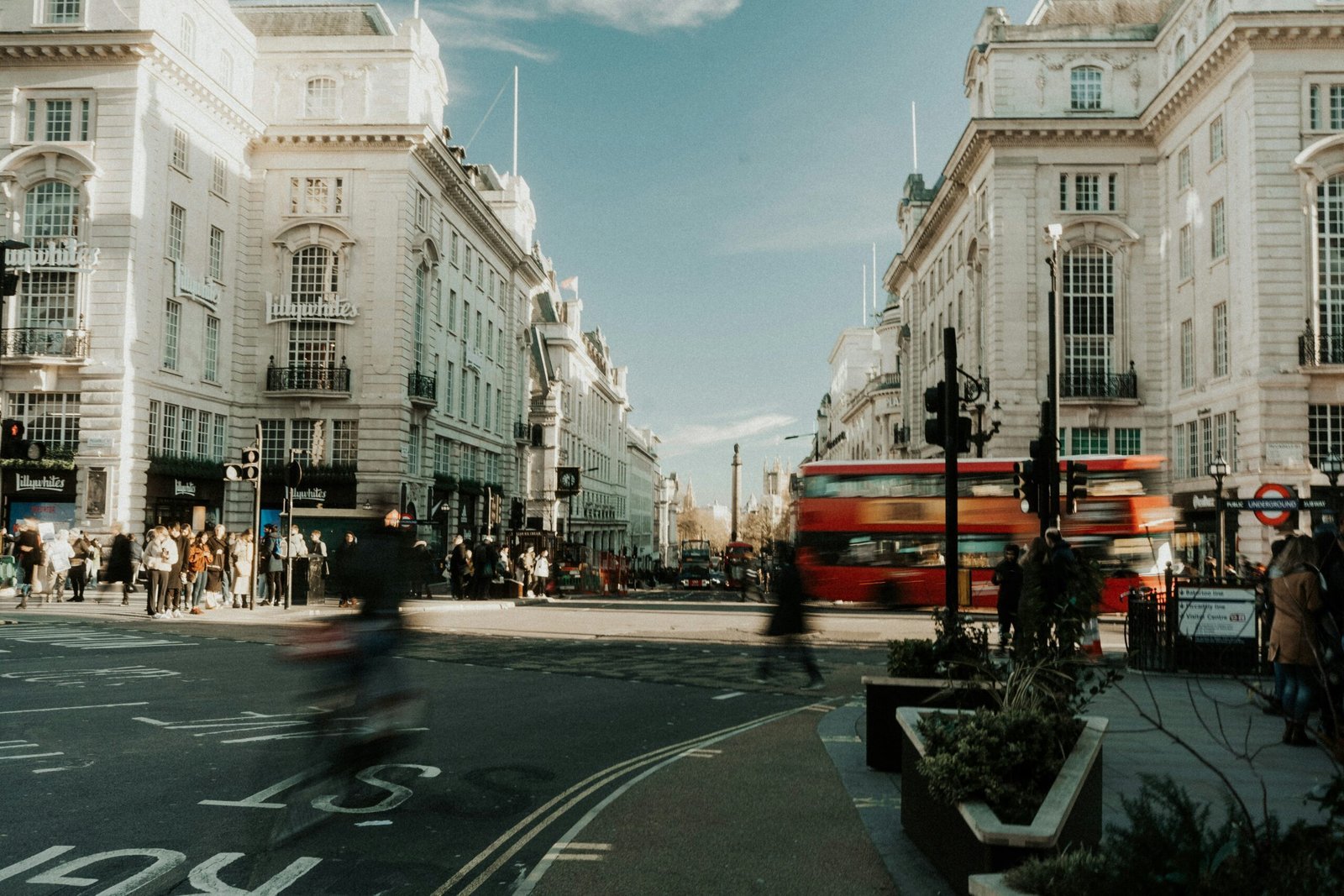
Cover image for The immediate returns of a car-free Oxford Street

The immediate returns of a car-free Oxford Street

  • London
  • Public space
  • Urbanism

It’s only been about two weeks since London pedestrianized Oxford Street. While it’s certainly possible that more people are visiting the street purely because of its novelty, the initial reports are positive.

In the first six days after it was pedestrianized, the broader West End area saw a 13% increase in transactions on Barclays debit and credit cards.

What’s more, separate figures published by payments company Adyen show that in-store transactions across 40 different businesses on Oxford Street increased by 19% both week-over-week and year-over-year.

While the datasets remain limited, all of this is promising and, in my view, expected. Oxford Street is coming off a difficult decade, during which vacancies rose to 13.7% in 2022 and average retail rents declined from £1,100 per square foot in 2016 to £600 during the pandemic.

London is aiming, as it should, to compete with Fifth Avenue and the Champs-Élysées with this £150 million investment. This is an effective way to do that.


Photo by Bryan Brittos on Unsplash

Subscribe to Brandon Donnelly

Daily insights for city builders. Published since 2013 by Toronto-based real estate developer Brandon Donnelly.