
Subscribe to Corbin Page
 Corbin Page
Quick neutral thoughts on Tempo Testnet
Overall impressionPretty impressive tech overall; aligns with what a corporate-grade chain built in 2025 should look like.Sub-second block times and EVM compatibility with parallel execution via sub-blocks and prioritized payment lanes is a strong design choice.They'll likely need guards against spamming/DDOS/MEV at the validator levelGas model + pathUSDNo native gas token is notable; pathUSD effectively becomes the gas asset if validators set it as their preferred token.Likelihood to swap in...
Corbin PageCorb's 2026 Crypto Predictions
Corbin PageW3P: Collab Market
An NFT marketplace for trading “social capital” like endorsements, intros, work-for-tokens, or a consulting calls. “Web3 Fiver” or “tokenized time” has been attempted a few times, but we propose a couple important tweaks: 1) focus only on the web3 creator economy like influencers, community managers, smart contract specialists, and NFT artists and 2) build the tech as an NFT marketplace to get composability with the already large ecosystem: 2ndary sale fees, aggregators, dexes, lending, fract...
>1K subscribers
Corbin PageQuick neutral thoughts on Tempo Testnet
Overall impressionPretty impressive tech overall; aligns with what a corporate-grade chain built in 2025 should look like.Sub-second block times and EVM compatibility with parallel execution via sub-blocks and prioritized payment lanes is a strong design choice.They'll likely need guards against spamming/DDOS/MEV at the validator levelGas model + pathUSDNo native gas token is notable; pathUSD effectively becomes the gas asset if validators set it as their preferred token.Likelihood to swap in...
Corbin PageCorb's 2026 Crypto Predictions
Corbin PageW3P: Collab Market
An NFT marketplace for trading “social capital” like endorsements, intros, work-for-tokens, or a consulting calls. “Web3 Fiver” or “tokenized time” has been attempted a few times, but we propose a couple important tweaks: 1) focus only on the web3 creator economy like influencers, community managers, smart contract specialists, and NFT artists and 2) build the tech as an NFT marketplace to get composability with the already large ecosystem: 2ndary sale fees, aggregators, dexes, lending, fract...
Share Dialog
Share Dialog
📈 Past week’s Top Crypto Product News
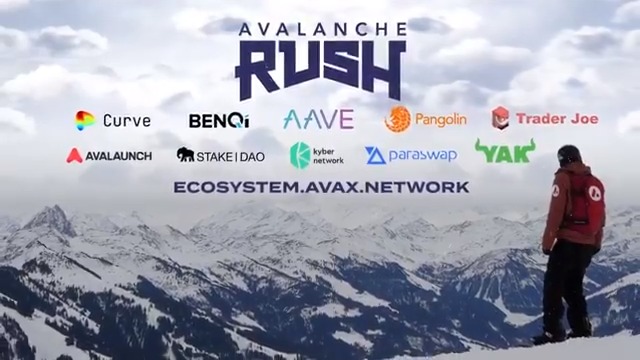
Aave launches on Avalanche | 🔼 40
Flashbots Protects launches to improve transaction execution | 🔼 39
a16z invests in Axie Infinity; massive growth in Play to Earn market | 🔼 17
🤔 Why it Matters
Crypto is the emerging financial + property layer of the Internet, and it’s being built on multiple chains, with each chain battling for the settlement activities of specific sectors like DeFi/Gaming/Social/reputation/etc. It’s similar to the Web Server and database battles in the late 90s, browser wars of the 00s, and iOS vs. Android in the 10s.
Forward thinking protocols like Aave (also Curve, Sushi and others) have embraced this multichain trend and deploy to new networks to meet users wherever they are (and aren’t priced out). $20M $AVAX incentive programs don’t hurt either. 😉 Compatibility across different EVM-enabled chains makes deployments much quicker but don’t bet against other smart contract enabled chains like Solana and multi-chain protocols like Cosmos and Polkadot. This is a multiyear trend that will be fascinating and good fun to watch. 🍿
Today Flashbots and our community are excited to launch a public beta of Flashbots Protect, a new product line focused on allowing everyday users and developers to easily submit transactions to...

🤔 Why it Matters
As trading volume has gotten massive for Dexes, the public mempool or Dark Forest has become an important layer of the crypto stack. Observant actors can pick off juicy transactions from the mempool and submit them in a way that they can extract value via front running, back running, or sandwich attacks. This is typically called Miner Extracted Value or MEV.
New APIs, like Flashbots Protect, prevent this type of behavior and also allow for features like cancelling transactions, preventing transaction failures, and gas optimization (or elimination). Matcha just enabled this functionality, and I expect all competitive Dexes and aggregators to do the same with time. It’s similar to the trade execution engines that power many TradFi Quant hedge funds, but more open to all because this is #DeFi. :-) Watch this space. There’s alpha here.
Jeff Bezos famously said "your margin is my opportunity," referring to the way Amazon grew market share by lowering prices and eating into competitor margins. In the transition from web2 to web3, a similar trend is taking shape, but this time the opportunity for entrepreneurs is the exorbitant take rates imposed by the platforms that...

🤔 Why it Matters
Back in the day, many crypto OGs assumed that NFTs would go mainstream via gaming. 👾 Cryptokitties was kind of a game and Gods Unchained, Neon District, and of course Axie Infinity built their games around Ethereum and real world value. We will likely look back at app-specific in-game credit/money/coins as silly compared to crypto-powered alternatives that have real world liquidty and impact.
Enter Play to Earn (P2E).
Axie is a digital pet universe where NFT characters can do all types of things. Not only is its economy open and liquid, but the platform invites other parties to create and remix experiences on top of it. Think of it as a reaction to the “Anti-FB+Zynga” saga. All gaming studios will be moving this direction in time, and it likely represents an opportunity for smaller players (like Sky Mavis) to leapfrog the larger, slower gaming incumbents. And that, my friend, is how the Metaverse will begin. Sorry Zuck. 😜
📈 Past week’s Top Crypto Product News
Aave launches on Avalanche | 🔼 40
Flashbots Protects launches to improve transaction execution | 🔼 39
a16z invests in Axie Infinity; massive growth in Play to Earn market | 🔼 17
🤔 Why it Matters
Crypto is the emerging financial + property layer of the Internet, and it’s being built on multiple chains, with each chain battling for the settlement activities of specific sectors like DeFi/Gaming/Social/reputation/etc. It’s similar to the Web Server and database battles in the late 90s, browser wars of the 00s, and iOS vs. Android in the 10s.
Forward thinking protocols like Aave (also Curve, Sushi and others) have embraced this multichain trend and deploy to new networks to meet users wherever they are (and aren’t priced out). $20M $AVAX incentive programs don’t hurt either. 😉 Compatibility across different EVM-enabled chains makes deployments much quicker but don’t bet against other smart contract enabled chains like Solana and multi-chain protocols like Cosmos and Polkadot. This is a multiyear trend that will be fascinating and good fun to watch. 🍿
Today Flashbots and our community are excited to launch a public beta of Flashbots Protect, a new product line focused on allowing everyday users and developers to easily submit transactions to...
🤔 Why it Matters
As trading volume has gotten massive for Dexes, the public mempool or Dark Forest has become an important layer of the crypto stack. Observant actors can pick off juicy transactions from the mempool and submit them in a way that they can extract value via front running, back running, or sandwich attacks. This is typically called Miner Extracted Value or MEV.
New APIs, like Flashbots Protect, prevent this type of behavior and also allow for features like cancelling transactions, preventing transaction failures, and gas optimization (or elimination). Matcha just enabled this functionality, and I expect all competitive Dexes and aggregators to do the same with time. It’s similar to the trade execution engines that power many TradFi Quant hedge funds, but more open to all because this is #DeFi. :-) Watch this space. There’s alpha here.
Jeff Bezos famously said "your margin is my opportunity," referring to the way Amazon grew market share by lowering prices and eating into competitor margins. In the transition from web2 to web3, a similar trend is taking shape, but this time the opportunity for entrepreneurs is the exorbitant take rates imposed by the platforms that...
🤔 Why it Matters
Back in the day, many crypto OGs assumed that NFTs would go mainstream via gaming. 👾 Cryptokitties was kind of a game and Gods Unchained, Neon District, and of course Axie Infinity built their games around Ethereum and real world value. We will likely look back at app-specific in-game credit/money/coins as silly compared to crypto-powered alternatives that have real world liquidty and impact.
Enter Play to Earn (P2E).
Axie is a digital pet universe where NFT characters can do all types of things. Not only is its economy open and liquid, but the platform invites other parties to create and remix experiences on top of it. Think of it as a reaction to the “Anti-FB+Zynga” saga. All gaming studios will be moving this direction in time, and it likely represents an opportunity for smaller players (like Sky Mavis) to leapfrog the larger, slower gaming incumbents. And that, my friend, is how the Metaverse will begin. Sorry Zuck. 😜



No comments yet