
On Friday evening, January 2, Donald Trump "deployed more than 150 aircraft," according to Al Jazeera, to provide cover for the overnight bombing of the Venezuelan capital Caracas, home to three million people.
Atleast 40 people were killed, including civilians and military personnel, as reported by The New York Times.
Venezuelan Interior Minister Diosdado Cabello called it a "terrorist attack" in a television broadcast aired shortly after the airstrikes.

And in the early hours of Saturday morning, US president Donald Trump took to social media to announce that Venezuelan president Nicolas Maduro and his wife have been "captured and flown out of the country" as part of a US regime change operation.

After decades of aggressive US sanctions, military coup attempts, political intervention and the killing of Venezuelan civilians, America has finally got what they wanted: a coup.
During the last few years of Maduro's time in office, his administration experimented with the idea of digital currencies to evade US sanctions.
Cryptocurrency played an indisputable yet underreported role in keeping Maduro's oil trade and the hope of a sovereign Venezuela alive.
Leading up to the events that unfolded over the weekend, in December 2024, Trump announced a "complete blockade of all sanctioned oil tankers going into and out of Venezuela," according to ABC News.
But like Iran and Russia who are also sanctioned by the US, Venezuela still needed to receive payments for its oil outside of America's financial oversight.
This is where crypto comes in: a decentralised tool for financial sovereignty used by countries like Venezuela to facilitate trade while evading US sanctions.

Although US sanctions on Venezuela began in 2006 under president George W. Bush, the first administration of Donald Trump, in August 2017, slapped “Russia-style” sanctions against the country "intended to restrict the Venezuelan government’s access to the US financial system," according to law firm Norton Rose Fulbright.
Since then, Venezuela has experimented in different ways to facilitate its oil trade and in early 2018, the Venezuelan government launched their state-run cryptocurrency, Petro.
In an effort "to support the nation's currency, the bolívar, in the face of an economic crisis exacerbated by US sanctions," Coindesk reports.
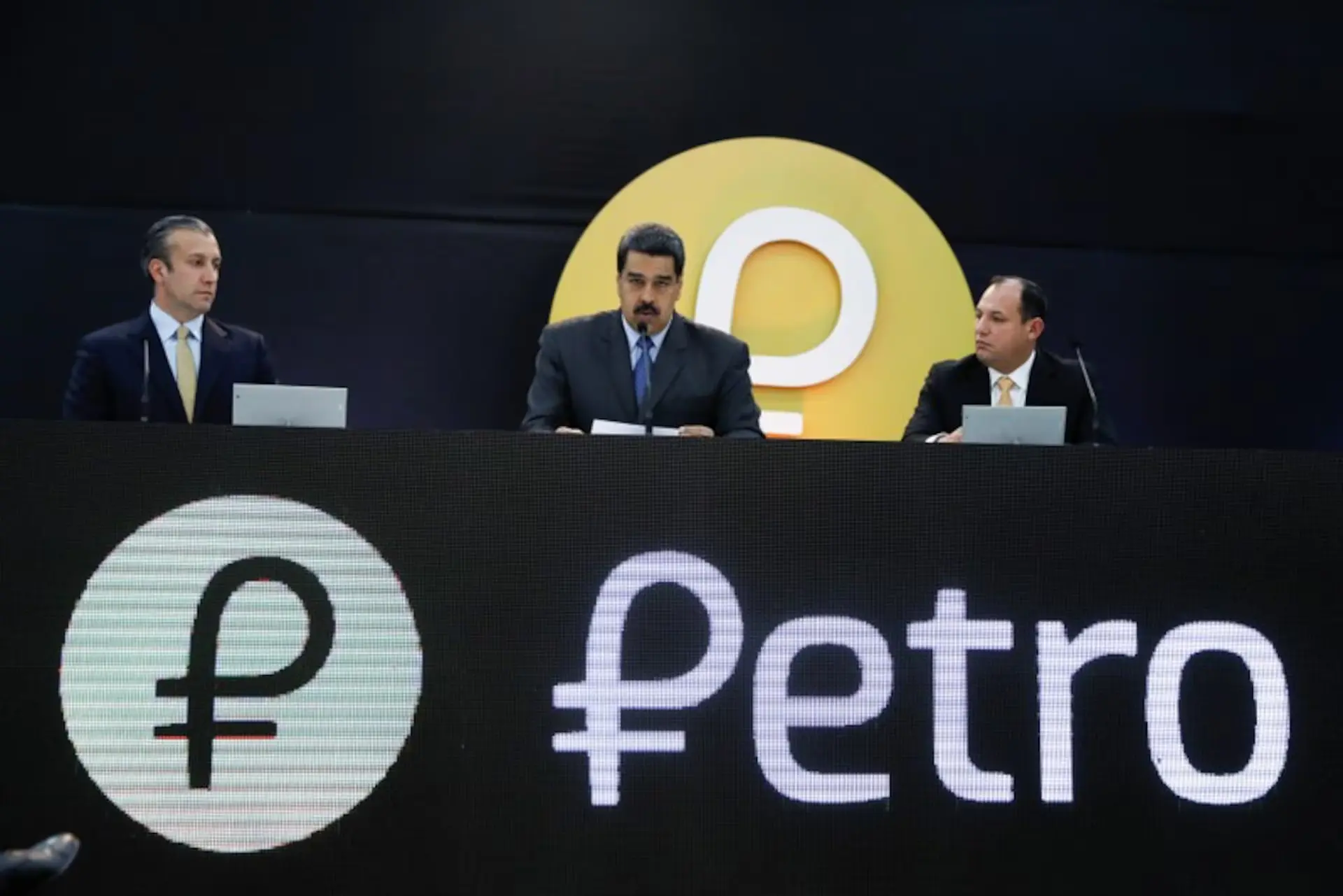
The tokens will each be valued at and backed by a barrel of Venezuelan crude oil, said Maduro, as per Reuters.
Though the coin "was embroiled in controversy even before the launch,"Coindesk reports, and was officially terminated on January 15, 2024, following a "a corruption scandal over financial irregularities".
Ultimately, Maduro's vision for Petro was to use it as a tool to evade US sanctions with the perks of possibly aiding Venezuela's hyperinflationary economy, though its tokenomics, opaque governance, and as a result, its widespread negative public opinion led it to failure.
Despite Petro's failure, Venezuela did not give up on crypto and instead shifted to Tether's USDT, a dollar-pegged stablecoin that has over 500 million verified users worldwide, as per Tether.

A stablecoin that 10% of Venezuelans now use in daily transactions, according to Bitget.
Prior to the shutdown of the Petro coin, since 2023, Venezuela's state-run oil company (PDVSA) "had been slowly moving oil sales to USDT," according to Reuters.
As Trump reimposed sanctions on Venezuela in spring 2024, PDVSA subsequently introduced "new contract terms requiring counterparties to make deposits or partial prepayments in Tether," according to Lawfare.
Fast forward to December 2025, and Venezuelan economist Asdrubal Oliveros in a podcast claims 80% of Venezuela's oil sales revenue is collected in Tether's USDT.

The economist attributed the recent growth of oil production in Venezuela to the utilisation of cryptocurrencies.
"This shift aims to reduce the risk of frozen oil sale proceeds in foreign bank accounts," law firm Holland & Knight claims in a report.
Though this adoption of USDT as a main facilitator of payment for Venezuela's oil trade led to Tether, USDT's issuer, to face scrutiny over its "alleged involvement in illicit finance and money laundering," as per Atlantic Council.
Which resulted in Tether freezing "41 wallets controlled by people on the Office of Foreign Assets Control's (OFAC) Specially Designated Nationals (SDN) List on Saturday," according to Coindesk.
Maduro's pivot to USDT proved far more effective than its earlier experimentation with Petro.
Oil production rose, exports steadied, facilitated by faster and cheaper cross-border transactions.
In this case, one could argue that crypto has been used as intended by the founding cypherpunks: as a tool for financial sovereignty, bypassing external state (US) control and interferance over global trade.

Russian smugglers, of residence in Dubai, were involved in a venture to sell five hundred thousand barrels of sactioned Venezuelan oil through USDT.
According to a 2022 Justice Department indictment, the smugglers reassured their Venezuelan partners that a USDT transfer would have “no worries, no stress” and would be processed in a manner “quick like SMS” text messages.
"The scheme also utilized bulk cash drops with couriers in Russia and Latin America, as well as cryptocurrency transfers worth millions of dollars, to effectuate these transactions and launder the proceeds," according to a US Bureau of Industry & Security press release.
The reason I included this bit into the article is to highlight the manipulation of framing.
Worded differently and this would sound like a legal business transaction between two consenting parties with a US-dollar denominated cryptocurrency as the chosen payment method.
But rather, by using the terms "smugglers," "venture," and "scheme," alongside quoting the US Justice Department indictment, it casts the story in a different light.
Venezuela using USDT to conduct its trade with other countries has been cast as "illegal," not because of the use of cryptocurrency, but because of the legal rulings imposed on the trade itself by an external state authority, in this case, the US.
The blame lies not with the technology or the coins, but with the actors who missuse them.
Crypto enables financial sovereignty, but it does not guarantee legality or immunity from state power.
To end, a quote from "A Cypherpunk's Manifesto" by Eric Hughes:
"We cannot expect governments, corporations, or other large, faceless organizations to grant us privacy out of their beneficence."
~ Eric Hughes.
<100 subscribers

On Friday evening, January 2, Donald Trump "deployed more than 150 aircraft," according to Al Jazeera, to provide cover for the overnight bombing of the Venezuelan capital Caracas, home to three million people.
Atleast 40 people were killed, including civilians and military personnel, as reported by The New York Times.
Venezuelan Interior Minister Diosdado Cabello called it a "terrorist attack" in a television broadcast aired shortly after the airstrikes.

And in the early hours of Saturday morning, US president Donald Trump took to social media to announce that Venezuelan president Nicolas Maduro and his wife have been "captured and flown out of the country" as part of a US regime change operation.

After decades of aggressive US sanctions, military coup attempts, political intervention and the killing of Venezuelan civilians, America has finally got what they wanted: a coup.
During the last few years of Maduro's time in office, his administration experimented with the idea of digital currencies to evade US sanctions.
Cryptocurrency played an indisputable yet underreported role in keeping Maduro's oil trade and the hope of a sovereign Venezuela alive.
Leading up to the events that unfolded over the weekend, in December 2024, Trump announced a "complete blockade of all sanctioned oil tankers going into and out of Venezuela," according to ABC News.
But like Iran and Russia who are also sanctioned by the US, Venezuela still needed to receive payments for its oil outside of America's financial oversight.
This is where crypto comes in: a decentralised tool for financial sovereignty used by countries like Venezuela to facilitate trade while evading US sanctions.

Although US sanctions on Venezuela began in 2006 under president George W. Bush, the first administration of Donald Trump, in August 2017, slapped “Russia-style” sanctions against the country "intended to restrict the Venezuelan government’s access to the US financial system," according to law firm Norton Rose Fulbright.
Since then, Venezuela has experimented in different ways to facilitate its oil trade and in early 2018, the Venezuelan government launched their state-run cryptocurrency, Petro.
In an effort "to support the nation's currency, the bolívar, in the face of an economic crisis exacerbated by US sanctions," Coindesk reports.

The tokens will each be valued at and backed by a barrel of Venezuelan crude oil, said Maduro, as per Reuters.
Though the coin "was embroiled in controversy even before the launch,"Coindesk reports, and was officially terminated on January 15, 2024, following a "a corruption scandal over financial irregularities".
Ultimately, Maduro's vision for Petro was to use it as a tool to evade US sanctions with the perks of possibly aiding Venezuela's hyperinflationary economy, though its tokenomics, opaque governance, and as a result, its widespread negative public opinion led it to failure.
Despite Petro's failure, Venezuela did not give up on crypto and instead shifted to Tether's USDT, a dollar-pegged stablecoin that has over 500 million verified users worldwide, as per Tether.

A stablecoin that 10% of Venezuelans now use in daily transactions, according to Bitget.
Prior to the shutdown of the Petro coin, since 2023, Venezuela's state-run oil company (PDVSA) "had been slowly moving oil sales to USDT," according to Reuters.
As Trump reimposed sanctions on Venezuela in spring 2024, PDVSA subsequently introduced "new contract terms requiring counterparties to make deposits or partial prepayments in Tether," according to Lawfare.
Fast forward to December 2025, and Venezuelan economist Asdrubal Oliveros in a podcast claims 80% of Venezuela's oil sales revenue is collected in Tether's USDT.

The economist attributed the recent growth of oil production in Venezuela to the utilisation of cryptocurrencies.
"This shift aims to reduce the risk of frozen oil sale proceeds in foreign bank accounts," law firm Holland & Knight claims in a report.
Though this adoption of USDT as a main facilitator of payment for Venezuela's oil trade led to Tether, USDT's issuer, to face scrutiny over its "alleged involvement in illicit finance and money laundering," as per Atlantic Council.
Which resulted in Tether freezing "41 wallets controlled by people on the Office of Foreign Assets Control's (OFAC) Specially Designated Nationals (SDN) List on Saturday," according to Coindesk.
Maduro's pivot to USDT proved far more effective than its earlier experimentation with Petro.
Oil production rose, exports steadied, facilitated by faster and cheaper cross-border transactions.
In this case, one could argue that crypto has been used as intended by the founding cypherpunks: as a tool for financial sovereignty, bypassing external state (US) control and interferance over global trade.

Russian smugglers, of residence in Dubai, were involved in a venture to sell five hundred thousand barrels of sactioned Venezuelan oil through USDT.
According to a 2022 Justice Department indictment, the smugglers reassured their Venezuelan partners that a USDT transfer would have “no worries, no stress” and would be processed in a manner “quick like SMS” text messages.
"The scheme also utilized bulk cash drops with couriers in Russia and Latin America, as well as cryptocurrency transfers worth millions of dollars, to effectuate these transactions and launder the proceeds," according to a US Bureau of Industry & Security press release.
The reason I included this bit into the article is to highlight the manipulation of framing.
Worded differently and this would sound like a legal business transaction between two consenting parties with a US-dollar denominated cryptocurrency as the chosen payment method.
But rather, by using the terms "smugglers," "venture," and "scheme," alongside quoting the US Justice Department indictment, it casts the story in a different light.
Venezuela using USDT to conduct its trade with other countries has been cast as "illegal," not because of the use of cryptocurrency, but because of the legal rulings imposed on the trade itself by an external state authority, in this case, the US.
The blame lies not with the technology or the coins, but with the actors who missuse them.
Crypto enables financial sovereignty, but it does not guarantee legality or immunity from state power.
To end, a quote from "A Cypherpunk's Manifesto" by Eric Hughes:
"We cannot expect governments, corporations, or other large, faceless organizations to grant us privacy out of their beneficence."
~ Eric Hughes.
Share Dialog
Share Dialog
ismail delal
ismail delal
No comments yet