

TL:DR: RGB is a limitless canvas to create new things, where the things that are created share data DNA.
Inspired by the RGB color model, RGB was designed to have the same constraints. An RGB value is a set of three integers between 0 and 255 that instructs a digital pixel what color to display. It’s elegant that with such a small number of values, we can visualize virtually an infinite number of things.
Just three colors, infinite possibilities.

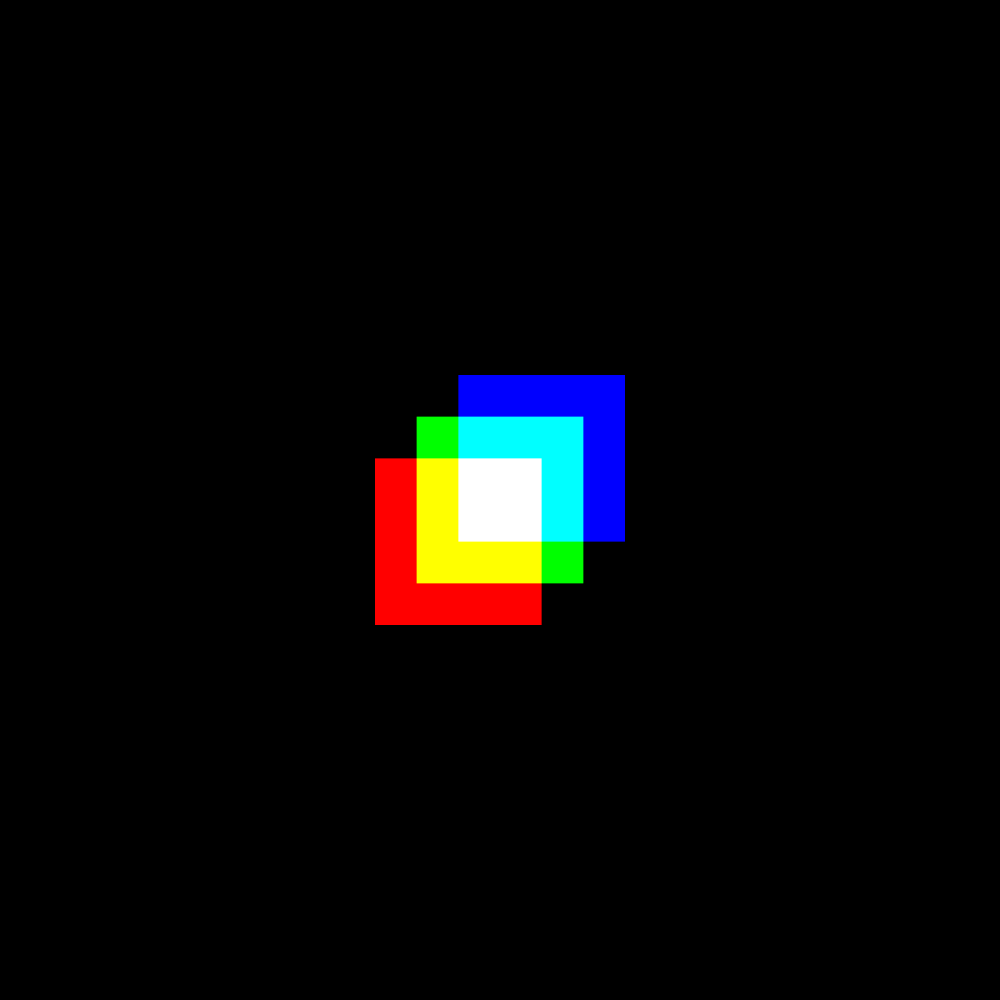
The RGB color model symbolizes a significant cultural shift in its early stages of evolution, not only in art but also on the screen you are currently reading. It empowers us to express ourselves at the literal speed of light.
This is why the internet took over, with a similar revolution unfolding with blockchain.
RGB is an attempt to invite the birth of endless creations onchain.
RGB can set your imagination free.
Two core components make up the RGB protocol:
RGB Signatures (chromasomes)
Tokenized primitives that visually encode and represent RGB values. Each one is reflexive in that it contains a specific RGB value combination while simultaneously displaying that value visually as a binary encoding. It uses a minimal number of visual elements to adequately capture all 16,777,216 possible RGB color values.
Note: Used as seed values or what we refer to as data DNA (chromasome), which is perhaps indicative of the burgeoning field of gemetics.
Printers
Decentralized applications that are built on the RGB Protocol configured to hold 768 (mapped to each of the red, green, and blue values) distinct chromasomal “traits” or digital media such as images, audio, text, etc.
The trait combinations (phototypic expression) are unknown until it is seeded by a matching RGB signature.
The directive of the protocol is to generate, distribute, manage, and secure the use of RGB Signatures.

Mechanism Overview
It starts with the generation and distribution of an RGB signature through a mint. Once created, an RGB signature can be used to secure the deployment of a Printer smart contract.
An RGB signature can also be used to mint a token from the Printer. The token that is minted from a Printer is called a Print. The set of RGB values contained in an RGB signature is used as a seed to produce the output of a Print and depicts the unique combination of the three traits configured by the printer. Only the matching RGB signature can be used to redeem a specific Print or unique combinational output.
Printers cannot prevent any RGB signature from interacting with it.
Constraints
Constraints are critical attributes of the design of RGB. Largely in terms of using RGB values (255³) as seeds as well as the minting mechanism to redeem Prints.
Ownership
NFTs can be a great representation of fractional ownership of a network. However, most networks will go to zero over time if they are not maintained. Having clear actions or incentives to maintain a network is paramount to its survival.
Fractional owner satisfaction can be lowered significantly if the threshold of maintenance diminishes over time. This is what we aim to do with RGB by increasing what each owner can do in a continuum through the addition of new printers.
Ownership of a signature preserves the right to create a printer.
Perhaps more importantly, owners have the right to mint a print specific to their NFT. In other words, ownership also provides a neutrally exclusive collecting experience without the use of additional actions or status outside of ownership like allowlists or “grindlists”.
Decoupling Supply and Demand
In general, many projects currently rely on fully minting out their supply, floor price, or daily auction price as metrics to measure “success”. This may be due to the ratio of quality active participants to speculators. It could also be the Lindy nature of the 10K PFP meta highlighting the deficiency of effective models to attract, channel, nurture, and incentivize newcomers into the space.
Overall, having a limited supply is a limitation on creation and participation in the space. An analogy would be if YouTube released a 10K token collection and used it to token-gate channel creation. Their options would either only allow 10K channels to exist or continuously release new sets of tokens incrementally artificially keeping up with the demand, likely deterring valuable user attention from the core value proposition of the product in the process. This is neither an actual decentralized model nor an overhead cost that is favorable to creators and consumers. It would be difficult for creativity to thrive under these conditions.
For RGB, since the distribution of RGB signatures, which are required to mint a print, is determined outside the creation of new printers, the dialectics around project launches completely change:
First, the “supply” for every printer is the same across the board since the amount of existing tokens represents the total available supply in the network.
Secondly, the supply is not capped.
Thirdly, an increase in supply does not contribute directly to inflation and diminishing of the value of each token as each one automatically preserves its access to valuable abilities present within the ecosystem.
Limit “whale” influence - positive or negative, projects often rely on garnering the interests of whales and experience highly volatile, often unsustainable, market movements as a result. RGB would not be subject to these types of forces as any collector early or otherwise has equal access to the entirety of the ecosystem.
Formalizing Permissionless Creation Onchain
The genesis of a print onchain can be traced back to the signature that secured the creation of the printer, creating a natural, low-barrier way to tie the entire history of the RGB signature and fully capture the level of participation within a network.
The constraints around printer creation are clear and minimal giving creators more autonomy and ownership of the creation process including all proceeds from the mint minus fees.
By giving creators access to the tools and means to create through the constraint of printers, the way creation happens is sufficiently standardized introducing some level of uniformity to the way collectors expect to participate in the project.
Creating Tangibly Appreciating Assets
The claim is that the current nature of appreciation of most NFTs is too opaque and intangible for mass adoption. What is value accruing for some is not the same as it is for others. RGB changes this mostly in two ways:
The ability of Printer owners to determine the supply to meet the perceived demand is decoupled from the actual demand since you must own an RGB signature to be able to mint.
The collective network is always known and remains the same for every printer. Not only will interesting things be possible with the network effect, but projects, brands, or creators that do successfully deploy a printer are incentivized to think about their strategy for a longer time horizon since their activities don’t have to revolve around identifying and cultivating localized demand. Priorities for teams and creators will shift to align with ways to attract new and existing owners of RGB signatures.
Changing the primary activity of new projects from creating new NFTs to focusing on creating network-aligned incentives may be a significant shift in value accrual within the space.
Teams and creators under these constraints would find more sustainable ways to communicate and deliver value upfront, adding value to the network overall, while ownership (including those of creators) would be able to capture that value and benefit from asset appreciation over time without needing to acquire additional assets.

what if...projects built products with the goal of retroactively receiving a community?
As it develops, we believe that these constraints would enable the network to get closer to a state of perpetual value creation.
All these mechanics contribute to a clear and transparent pathway to value appreciation to people outside of the blockchain space.
New Set of Social Primitives
New and existing owners have precisely the same level of access within the network regardless of when they acquire an RGB signature. Prints can be minted retroactively from existing projects while simultaneously reserved in the future. Minting experiences are timeless.
FOMO is nearly eliminated since there is no compression of the demand curve and hype cycles in the context of time as it is for many NFT project launches under the current paradigm.
Profile of the audience is no longer fragmented between price speculators, genuinely interested prospects, and existing community members as participation in a new project is elective by default. If you own a signature, you are already a qualified participant.
Arbitrarily determined rarity based on traits is not a relevant factor in the RGB protocol as all signatures are deterministically unique. This deemphasizes the importance of rarity within community hierarchies and overall value distribution but it still allows the owner to benefit from mechanisms anchored in identity such as signaling exclusivity.
Interoperability
RGB as a set of standard seed values universally understood by the network enables tremendous levels of interoperability. The protocol empowers owners to access different printers made by various projects with a deterministic, yet serendipitous, output. One signature, many printers.
Positive-sum networks - the interoperable nature of RGB signatures allows value to accumulate linearly as more are created, join the network, get value from the network, build value in the network, and grow the network.
Interoperability is a feature that is baked in and would replace the need to manually set up collaborations between projects that want to enhance the abilities of the asset. Interoperability would happen at the seed level rather than the collaboration level.
Identity
Arguably the best PMF that NFTs have found so far has been utility as a PFP. One reason is because it is tied to the sense of self. The way we represent ourselves in the digital space holds significance but in its current state, it is quite limited, especially since only one image can be used at one time. The idea of self-sovereign identities seems to be closer to the sophistication needed to be a truly decentralized identity - having the ability to own other assets, perform onchain actions, and manage its provenance.

They have the ability to own assets, perform on-chain actions, and more importantly create its own history.
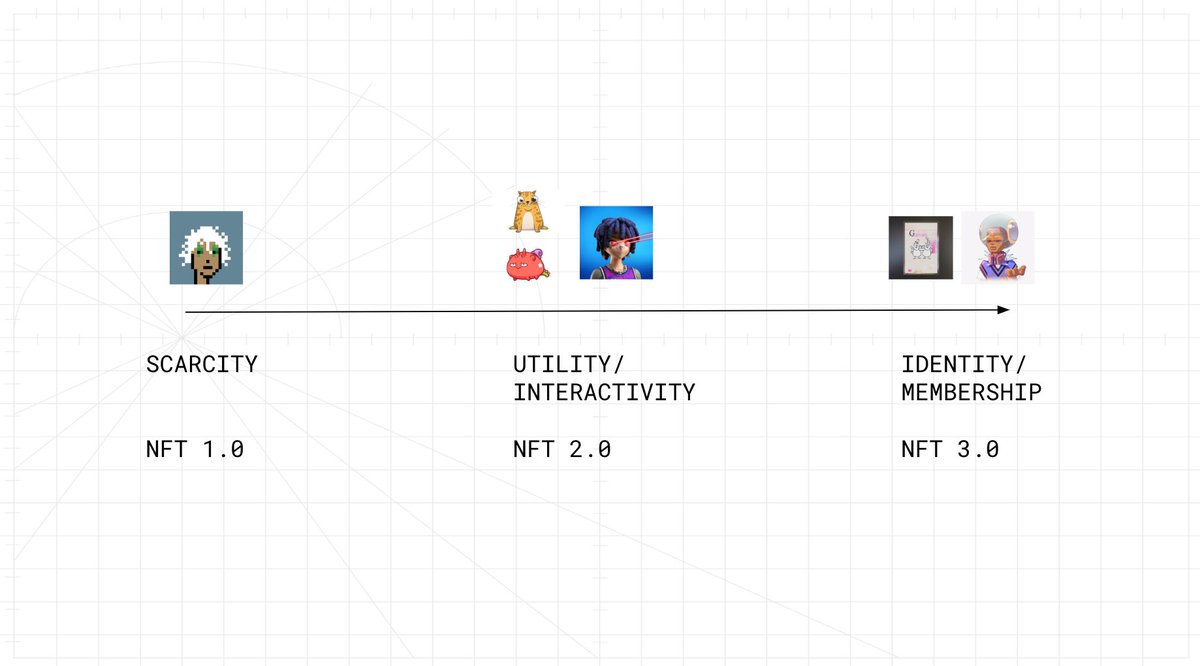
As an ERC-6551 token bound account, RGB signatures would also share onchain “lineage” with the prints that it mints. This adds an additional dimension to the provenance of the created asset itself and holds more meaning as the metadata was the seed that generated it. It is easy to underestimate the potential of a new onchain primitive such as “printing” but inventions like Facebook’s “like” button provided another way to show support at scale. Similarly, printing something is another way to show support…one that is directly tied to their seed graph and the network as a whole.
Binary
Binary is the universal computer language, it only seemed appropriate to encode an onchain primitive as a binary artifact and personally ascribe more value to it as a result. Also, it is somewhat memetic that binary RGB values are translated from 0’s and 1’s to white and black respectively to represent every color on the RGB spectrum.
printer → ink → print
RGB is rethinking conventional forms as the following:
smart contract → printer
traits/creator/collector → ink/cartridge
NFT → print
print > mint
why mint, when you can print
Trademark Thesis
a symbol that represents the ownership of something intangible that enables coordination, cooperation, and competition at scale
Web3 Trademark Thesis
a symbol that represents the ownership of something intangible that enables coordination, cooperation, and competition at scale
similar to memetic icons
an important attribute is network-aligned IP creation
The RGB Protocol introduces a novel approach in the blockchain and digital asset space, aiming to transform how value creation, ownership, and sustainability are perceived and managed. Distancing itself from the industry's typical volatility and speculative nature, the protocol provides a stable, sustainable, and user-friendly model for digital asset creation and management.
At its core, RGB redefines ownership, elevating it from mere symbolic representation to meaningful participation and influence within the network. This approach aligns individual interests with the network's long-term health and growth, crucial in an era increasingly focused on digital assets.