StartMode delivers AI-infused weekly insights into the contemporary futures of Web3 gaming, art, and technology, cutting through the hype to spotlight new innovations.
StartMode delivers AI-infused weekly insights into the contemporary futures of Web3 gaming, art, and technology, cutting through the hype to spotlight new innovations.

Subscribe to startmode
Subscribe to startmode
Share Dialog
Share Dialog

<100 subscribers
<100 subscribers
From the humble beginnings of mechanical amusement devices to the immersive virtual worlds of today, the evolution of gaming technology has been a remarkable journey marked by innovation, creativity, and technological advancement. This write-up explores the transformative path of technology and questions the art relevance in style vs the human experience.
The main question I want to focus on for today is this:
How does pixel art still matter in the modern gaming world?
The story begins in the 1970s with the emergence of the first video games, characterized by simple graphics composed of pixels on monochrome screens. Games like Pong, released in 1972, introduced players to the concept of interactive electronic entertainment, laying the foundation for what would become a global phenomenon.
I believe the reason for this success is simple. It reminds me of focus games like 'Checkers' or 'Tic Tac Toe' where you play based on the idea of preference, illusion, and intimidation. Competition naturally forms in game-like experiences. What makes them unique is that both players have their objectives on how they want to accomplish the game level. In Pong, it's all about who can be quicker to outsmart the other player (or the speed of the game can outsmart yourself).

The 1980s witnessed the rise of home gaming consoles and personal computers, democratizing access to interactive entertainment. Companies like Atari, Nintendo, and Sega vied for dominance in the console market.
As we reached the 1990s, advances in computer graphics technology and the introduction of dedicated 3D hardware accelerated this transformation, leading to the emergence of immersive 3D worlds and iconic titles such as Super Mario 64, Doom, and Quake. The shift to 3D not only expanded the possibilities of game design but also revolutionized player experiences, paving the way for the next generation of gaming.
Regardless of the impact 3D gaming brought into the modern day, pixel art still matters. It provides a bridge between the old and the new, preserving a sense of nostalgia while embracing the possibilities of emerging technologies. In games like Minecraft, Stardew Valley, and Undertale, pixel art remains a beloved aesthetic choice, cherished by developers and players alike for its versatility and timeless appeal.
Pixel Art & Its Relevance in 2024
Undertale is out on Switch today. It took three years for the excellent JRPG-inspired adventure to finally arrive on a Nintendo console. Now it has and, despite the sometimes clumsy Joy-Con controls, the game feels like it's come home. In Undertale you play as a kid who's somehow ended up in the underground, a world [...]

There are several reasons why Undertale is considered to be one of the most iconic games in history. I think it truly defined the idea of human choice before open-world games were trending.
However, here are some key factors that the game provides:
Unique Gameplay Mechanics: Undertale introduced innovative gameplay mechanics that subverted traditional RPG tropes. The game allowed players to choose between pacifist, neutral, or destructive routes, with consequences that deeply impacted the narrative and characters. This emphasis on player choice and consequence resonated with audiences, providing a refreshing take on the RPG genre.
Compelling Storytelling: Undertale's narrative, written and designed by Toby Fox, captivated players with its engaging characters, witty dialogue, and emotional depth. The game explored themes of morality, empathy, and the consequences of one's actions, inviting players to reflect on their decisions and the impact they have on the game world.
Cultural Impact: Undertale's impact extends beyond the gaming community, influencing other games, media, and internet culture. Its themes, characters, and music have been referenced and celebrated in various contexts, contributing to its status as a cultural phenomenon.
Pixel art continues to inspire creativity, connect people, and shape the cultural landscape in the digital age and beyond.
So...what could pixel art look like 20 years from now?
Future pixel art may incorporate dynamic elements and interactivity, blurring the line between traditional static images and interactive experiences. Artists could leverage technologies like augmented reality (AR) and virtual reality (VR) to create immersive pixel art installations that respond to user input or environmental cues. We are in the era of new intelligence and progressive technology for critical thinking.
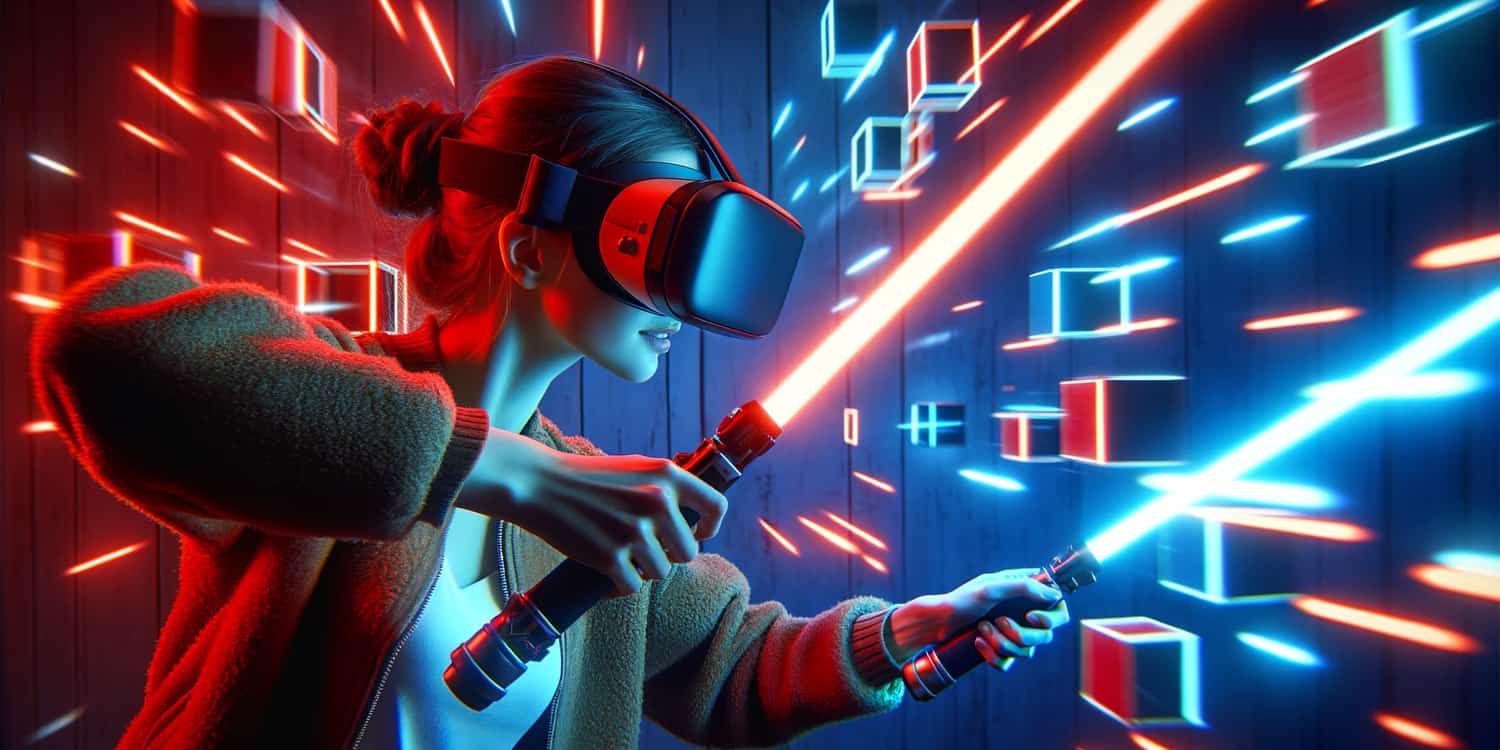
Games like Beat Saber use VR motion controllers to slash through blocks to the beat of music, immersing themselves in a rhythmic and visually stunning experience.
This is only the beginning of what potential pixel art can continue to grow as an influence in the artistry of gaming. Its respected traction in beautiful storytelling only excites me to see how developers and companies build for the new future.
Playing "Beat Saber" in VR improved some cognitive functions, unlike physical training, according to new research. The findings suggest that VR shows promise for cognitive gains in short, engaging sessions.
From the humble beginnings of mechanical amusement devices to the immersive virtual worlds of today, the evolution of gaming technology has been a remarkable journey marked by innovation, creativity, and technological advancement. This write-up explores the transformative path of technology and questions the art relevance in style vs the human experience.
The main question I want to focus on for today is this:
How does pixel art still matter in the modern gaming world?
The story begins in the 1970s with the emergence of the first video games, characterized by simple graphics composed of pixels on monochrome screens. Games like Pong, released in 1972, introduced players to the concept of interactive electronic entertainment, laying the foundation for what would become a global phenomenon.
I believe the reason for this success is simple. It reminds me of focus games like 'Checkers' or 'Tic Tac Toe' where you play based on the idea of preference, illusion, and intimidation. Competition naturally forms in game-like experiences. What makes them unique is that both players have their objectives on how they want to accomplish the game level. In Pong, it's all about who can be quicker to outsmart the other player (or the speed of the game can outsmart yourself).
The 1980s witnessed the rise of home gaming consoles and personal computers, democratizing access to interactive entertainment. Companies like Atari, Nintendo, and Sega vied for dominance in the console market.
As we reached the 1990s, advances in computer graphics technology and the introduction of dedicated 3D hardware accelerated this transformation, leading to the emergence of immersive 3D worlds and iconic titles such as Super Mario 64, Doom, and Quake. The shift to 3D not only expanded the possibilities of game design but also revolutionized player experiences, paving the way for the next generation of gaming.
Regardless of the impact 3D gaming brought into the modern day, pixel art still matters. It provides a bridge between the old and the new, preserving a sense of nostalgia while embracing the possibilities of emerging technologies. In games like Minecraft, Stardew Valley, and Undertale, pixel art remains a beloved aesthetic choice, cherished by developers and players alike for its versatility and timeless appeal.
Pixel Art & Its Relevance in 2024
Undertale is out on Switch today. It took three years for the excellent JRPG-inspired adventure to finally arrive on a Nintendo console. Now it has and, despite the sometimes clumsy Joy-Con controls, the game feels like it's come home. In Undertale you play as a kid who's somehow ended up in the underground, a world [...]
There are several reasons why Undertale is considered to be one of the most iconic games in history. I think it truly defined the idea of human choice before open-world games were trending.
However, here are some key factors that the game provides:
Unique Gameplay Mechanics: Undertale introduced innovative gameplay mechanics that subverted traditional RPG tropes. The game allowed players to choose between pacifist, neutral, or destructive routes, with consequences that deeply impacted the narrative and characters. This emphasis on player choice and consequence resonated with audiences, providing a refreshing take on the RPG genre.
Compelling Storytelling: Undertale's narrative, written and designed by Toby Fox, captivated players with its engaging characters, witty dialogue, and emotional depth. The game explored themes of morality, empathy, and the consequences of one's actions, inviting players to reflect on their decisions and the impact they have on the game world.
Cultural Impact: Undertale's impact extends beyond the gaming community, influencing other games, media, and internet culture. Its themes, characters, and music have been referenced and celebrated in various contexts, contributing to its status as a cultural phenomenon.
Pixel art continues to inspire creativity, connect people, and shape the cultural landscape in the digital age and beyond.
So...what could pixel art look like 20 years from now?
Future pixel art may incorporate dynamic elements and interactivity, blurring the line between traditional static images and interactive experiences. Artists could leverage technologies like augmented reality (AR) and virtual reality (VR) to create immersive pixel art installations that respond to user input or environmental cues. We are in the era of new intelligence and progressive technology for critical thinking.
Games like Beat Saber use VR motion controllers to slash through blocks to the beat of music, immersing themselves in a rhythmic and visually stunning experience.
This is only the beginning of what potential pixel art can continue to grow as an influence in the artistry of gaming. Its respected traction in beautiful storytelling only excites me to see how developers and companies build for the new future.
Playing "Beat Saber" in VR improved some cognitive functions, unlike physical training, according to new research. The findings suggest that VR shows promise for cognitive gains in short, engaging sessions.
Pixels and Progress: Why Is This Genre Still Relevant? Check this article My answer - It reminds me my childhood. "Tank 1990" forever
@nygilia agree?
Yes I agree! Thank you so much for sharing ☺️✨ I feel pixel art has this innocence to it. Like when we used to scribble with crayons as kids. It’s calming and genuine.
Maybe you’d like to share your favourite pixel arts?
When caricatures were invented, the art of painting was already super realistic. It's not always about that. Sometimes you want a distorted reality.
agree. That's why Picasso, Salvador Dali, Edvard Munch and many others are popular
Pixels and Progress: Why Is This Genre Still Relevant? 🎮 📝 Available to claim on @paragraph via @base.base.eth



7 comments
Pixels and Progress: Why Is This Genre Still Relevant? Check this article My answer - It reminds me my childhood. "Tank 1990" forever
@nygilia agree?
Yes I agree! Thank you so much for sharing ☺️✨ I feel pixel art has this innocence to it. Like when we used to scribble with crayons as kids. It’s calming and genuine.
Maybe you’d like to share your favourite pixel arts?
When caricatures were invented, the art of painting was already super realistic. It's not always about that. Sometimes you want a distorted reality.
agree. That's why Picasso, Salvador Dali, Edvard Munch and many others are popular
Pixels and Progress: Why Is This Genre Still Relevant? 🎮 📝 Available to claim on @paragraph via @base.base.eth