

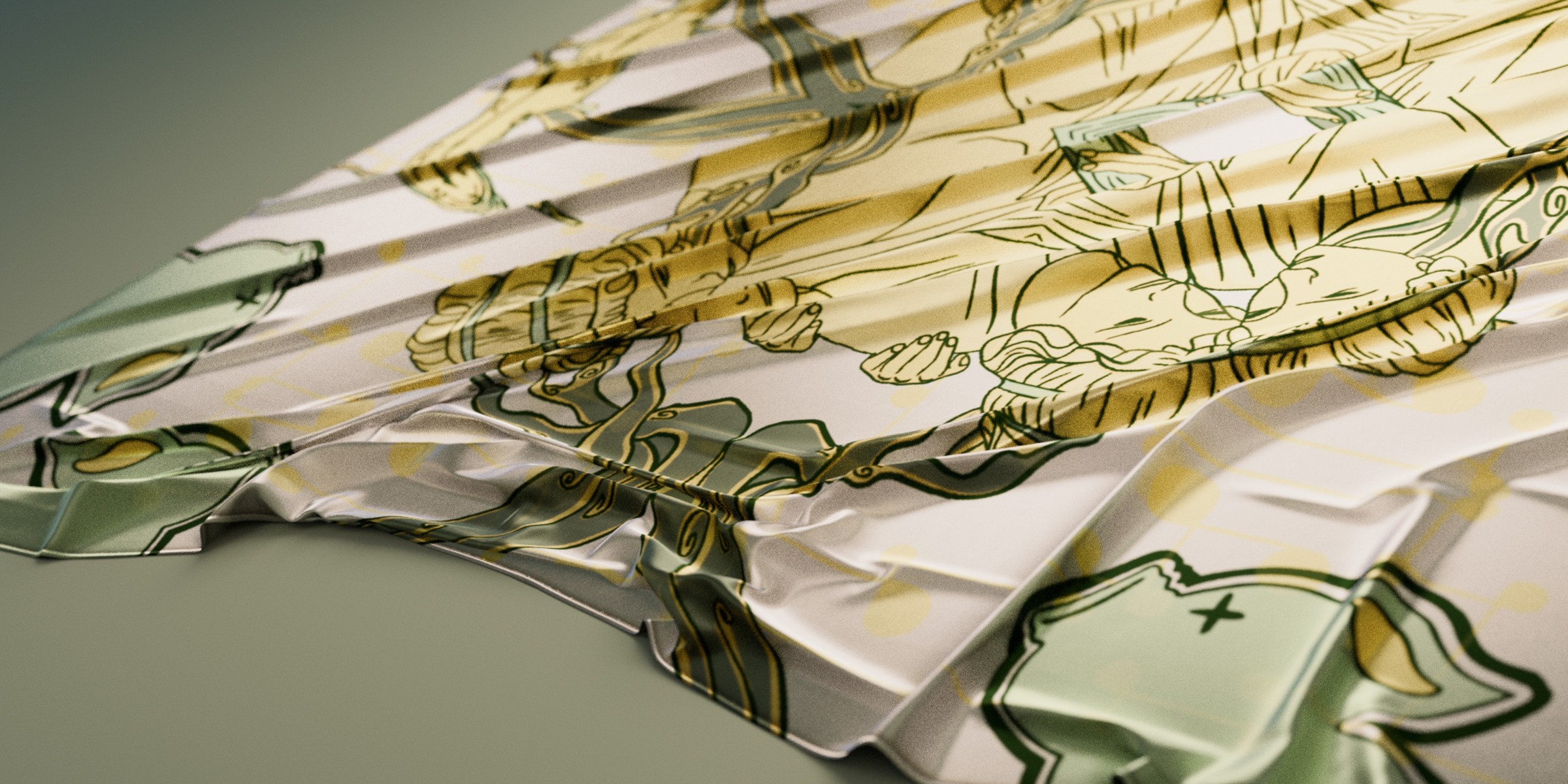
This is the beginning of the story of how a ginormous metal flower in Buenos Aires and a stickered lamppost in Mexico City became my favorite travel memories.
I take a lot of photos when I travel, but almost none of them make it to my social channels, and they definitely don't live in neatly organized folders on my phone. Instead, they reappear later, cropped, mirrored, and disguised as ornaments inside square illustrations I draw. These translations I call "Traveling Patronage." It is my quiet way of keeping a visual diary of those trips; not by drawing the whole scene, but by smuggling small details, gestures, and borrowed colors into patterns that only I can "fully" read.
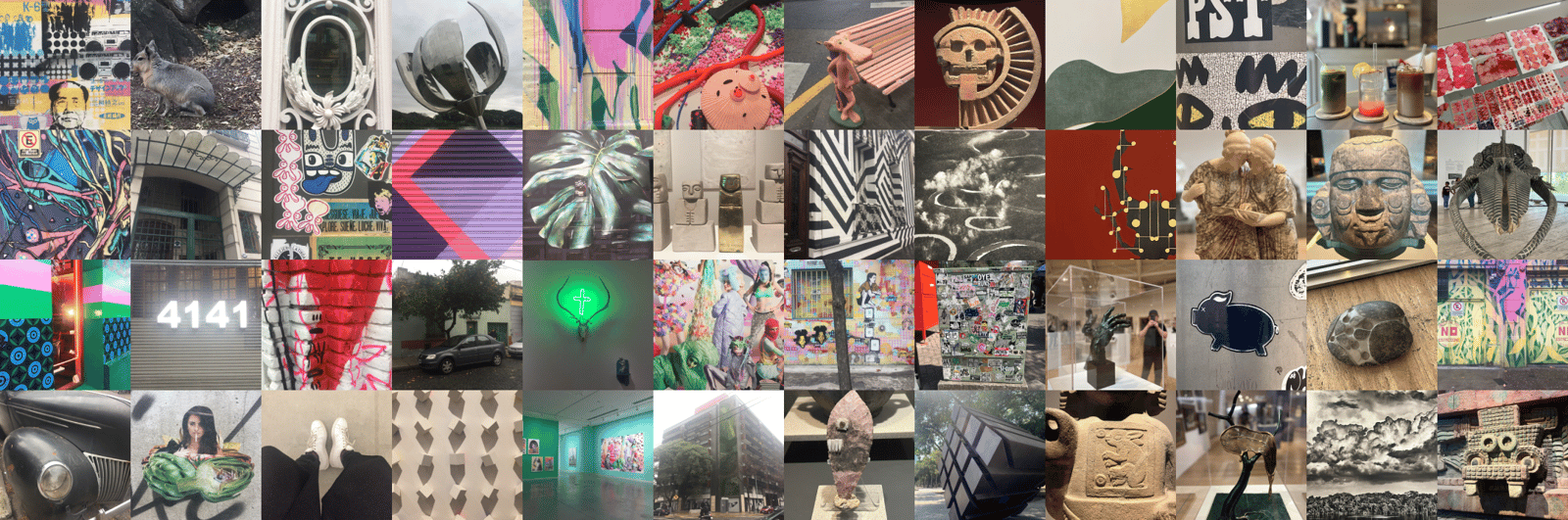
For this first chapter, I'm opening the archive with two places that have inspired me to look at the world in much more detail to experience it more holistically: Buenos Aires in 2019 and Mexico City in 2025.
In 2019, I traveled to Buenos Aires on my own time. I was still "stumbling through" the Spanish language. These frustrating yet sometimes funny moments made me understand that even language can feel like a visual pattern. This constant background noise shaped how I experienced a different culture and its native tongue. Mexico City, years later, became the place where those patterns loosened up: more color, more emotion, and the first time I seriously asked myself what if I were to turn these illustrated memories into a physical product like a scarf. Together, they feel like the beginning of a travel archive and the resolution to turn it into something more serious without yet knowing all the details. "Traveling Patronage" is hereby officially.
It All Started In Buenos Aires, 2019
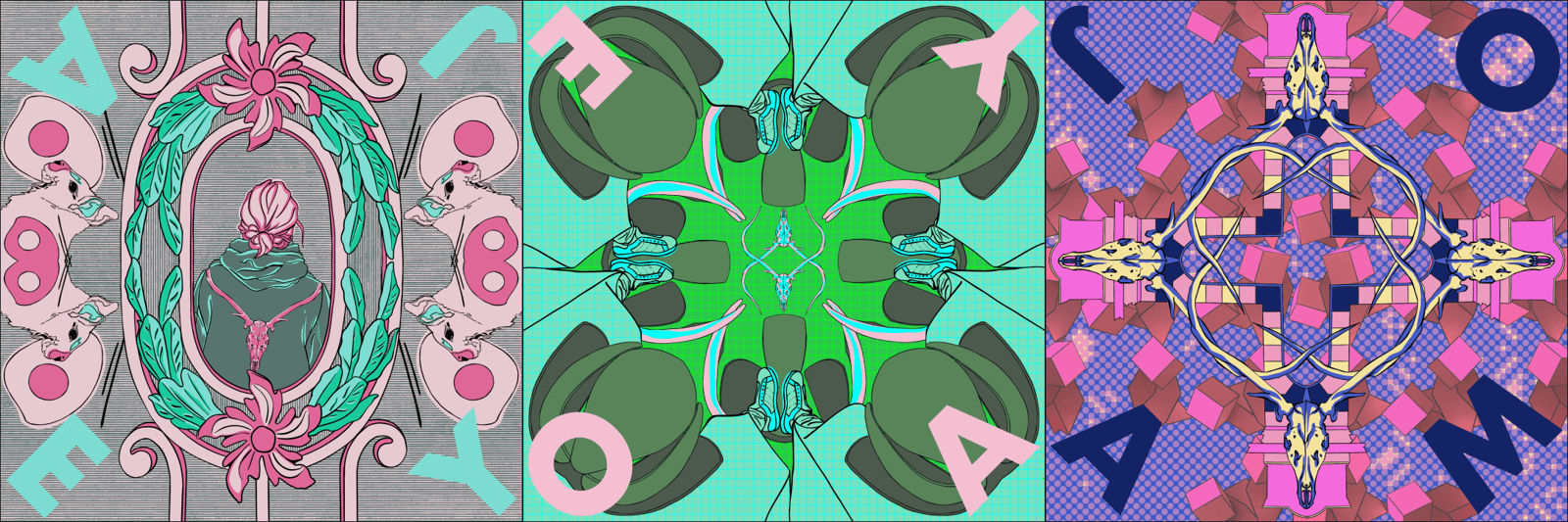
As mentioned above, in 2019, my Spanish was even more awkward than it is today, and I just understood enough to be confused all the time. Argentinian Spanish added an extra layer of chaos: the way "ll" suddenly turned into a "j" sound made my brain glitch every time I heard it. That sound followed me through the city, and at some point, it slipped into the work. In the Buenos Aires scarves, four scattered letters sit in the corners and along the edges, a private note to myself about how language can feel like typography before it becomes meaning.
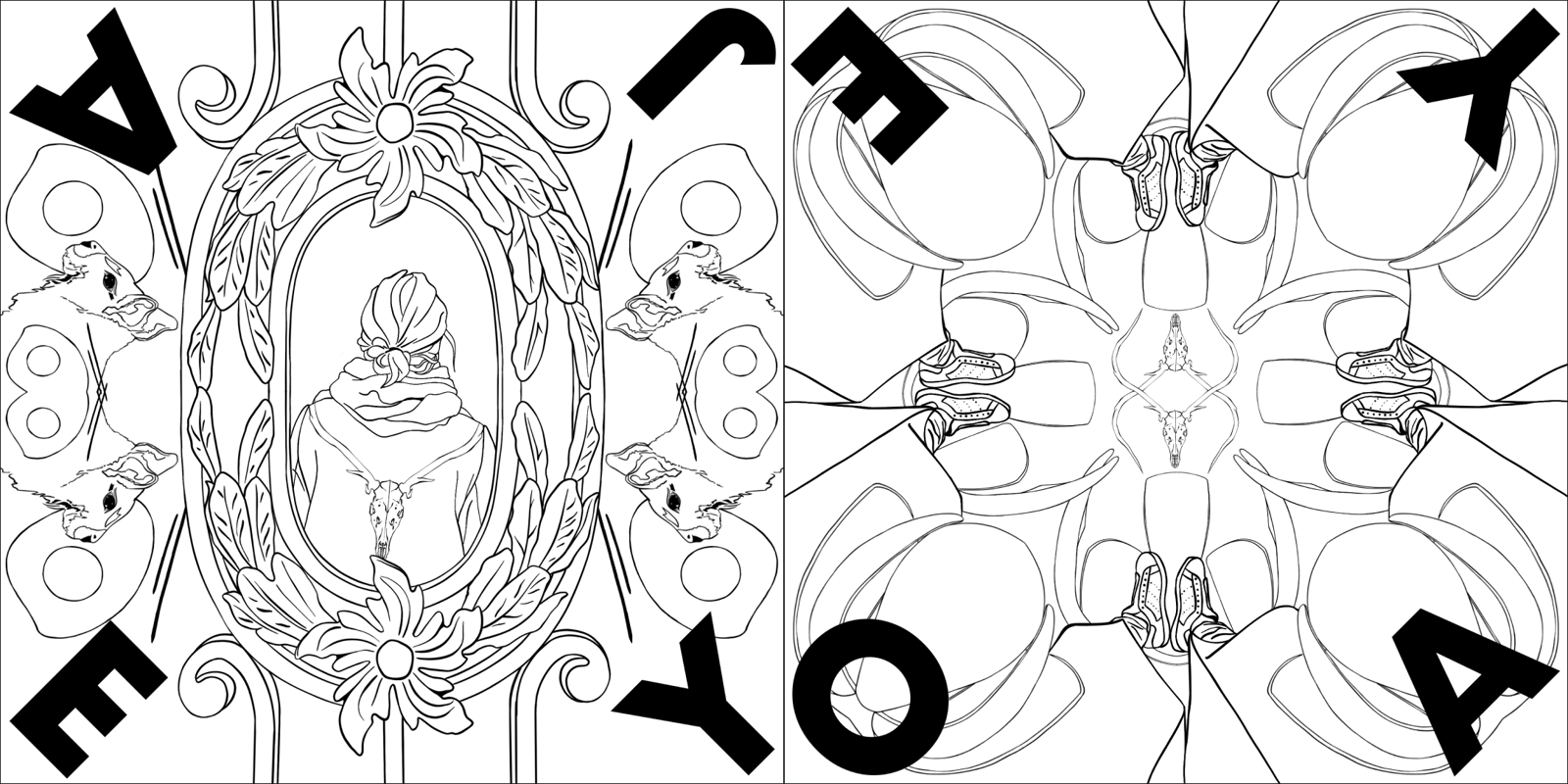
Most days, I walked. I walked to the Floralis Genérica and watched it in its closed state. It felt heavy and light at the same time against the pale greyish sky. I walked through parks and into Museo Moderno, where pieces by other people quietly arranged and collaged my own. Colorful murals and colonial houses in the beautiful Palermo district inspired several of the color schemes and motifs I used in the illustrations. Even the bottom of my coat and my shoes ended up inside one of the scarves, a small but very literal reminder that I was there, moving through the cityscape.
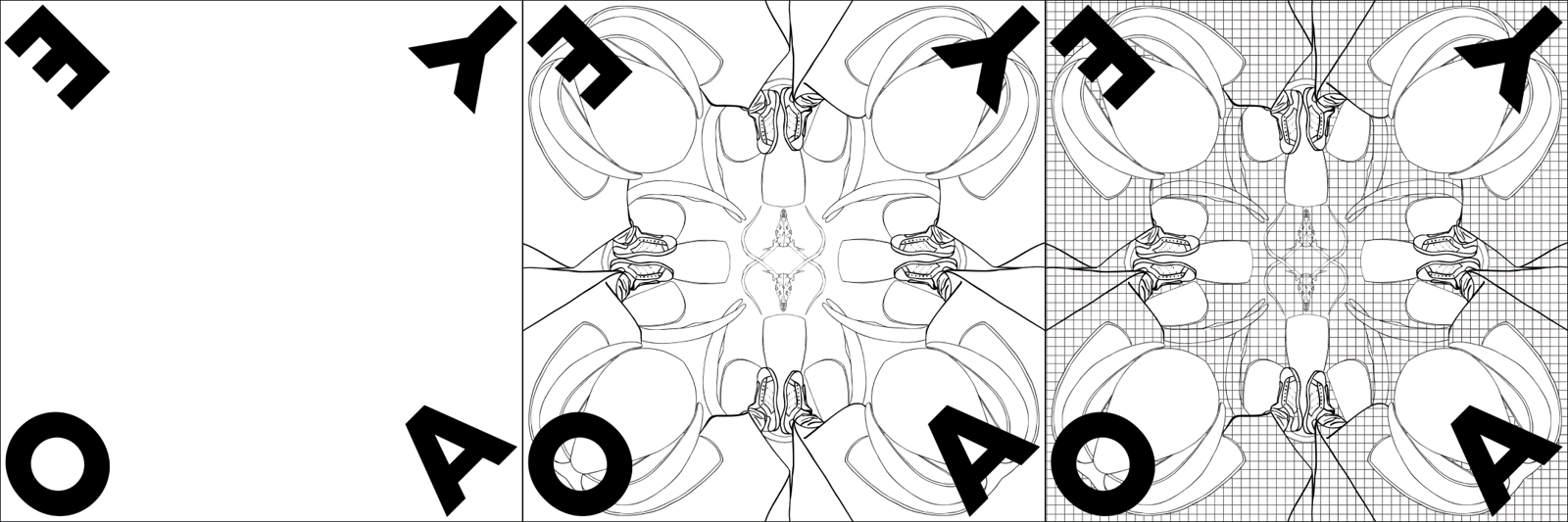
What I like about the Buenos Aires illustrations is that they still feel slightly rigid, as if they are trying very hard to hold everything together. The skulls, letters, cubes, and architectural fragments all repeat in a way that mirrors how I was moving through the city, repeating sentences in my head, replaying sounds until they made sense. They don't depict a town but rather how I experienced it mentally and emotionally, as if I were trying to belong there.
Mexico City 2025 – A Day In Condesa
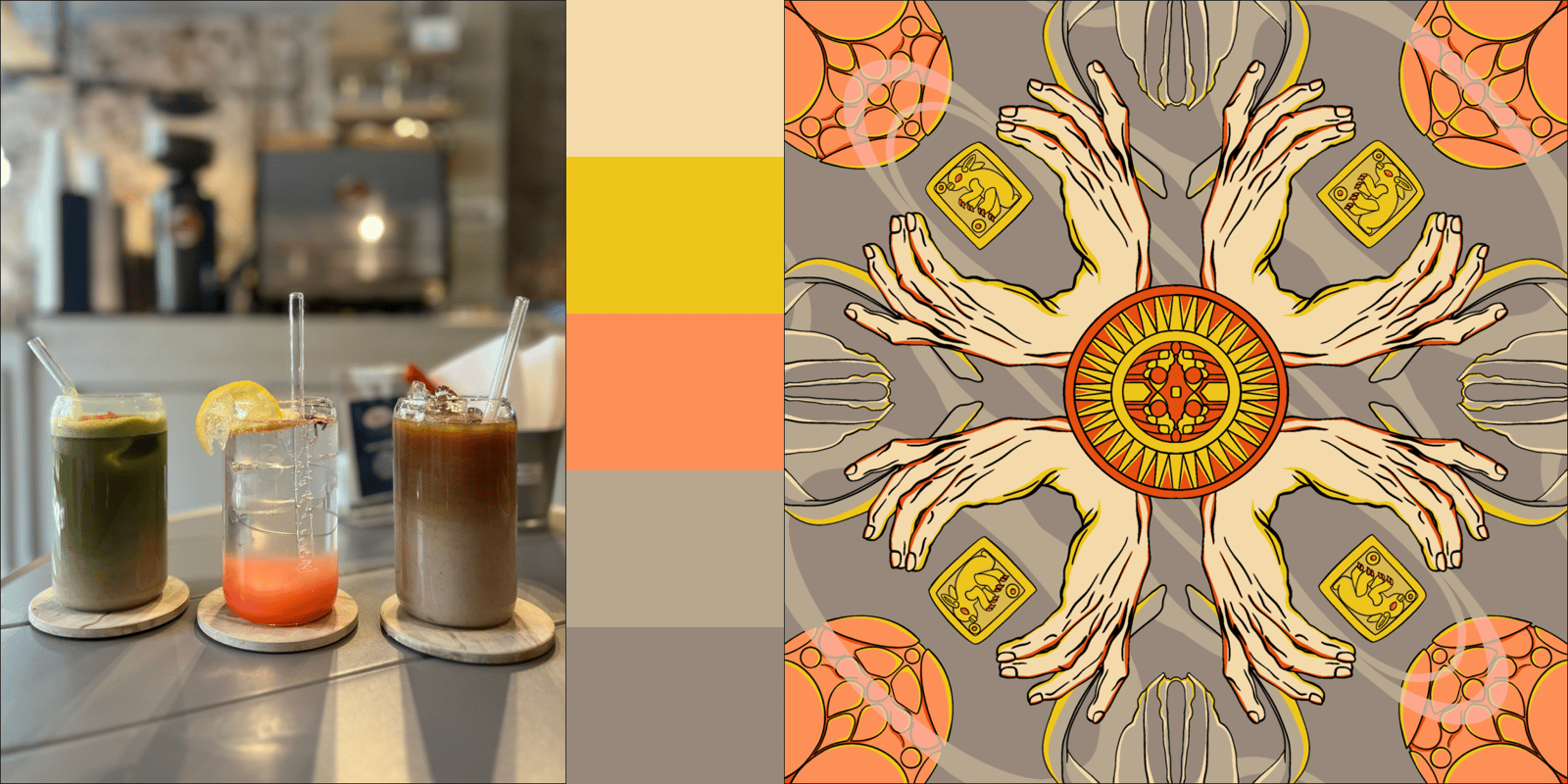
Fast forward to 2025 and Mexico City, where my Spanish felt less like a puzzle and more like a muscle I could actually use. As I was preparing for one of my two panels at Ethereum Cinco de Mayo, I had a full day to myself in Condesa, which I started with breakfast at Mora Mora. A simple, yet flavorful sourdough bread with lentil pâté, half an avocado on top, crispy tortilla chips, and a beetroot dip that painted everything in a shade of grounded yet vibrant pink got me started for the day. After breakfast, I did what I do best in a new city: I walked.
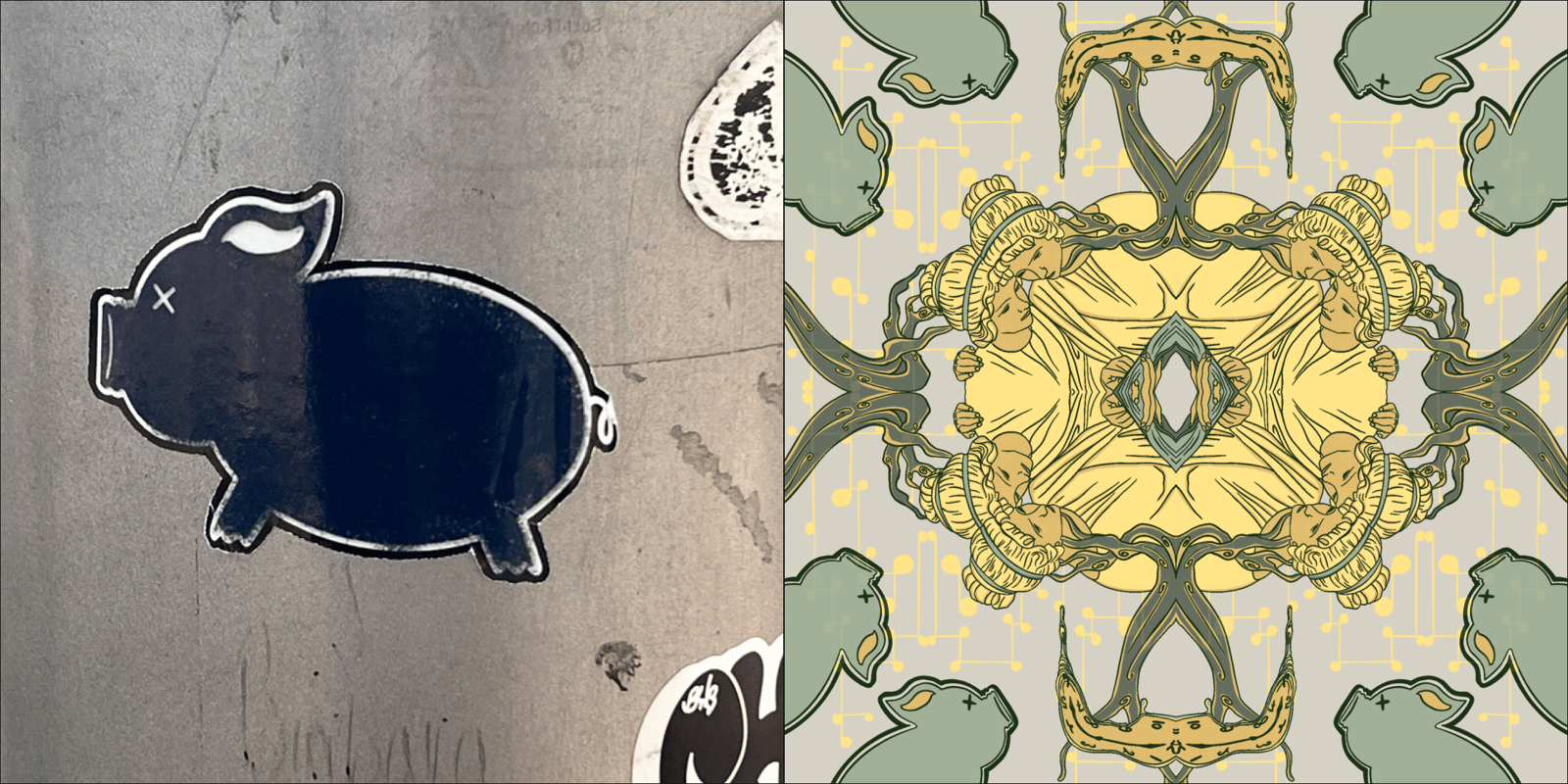
On the way to the Museo Nacional de Antropología, I started taking photos of small things. A lamppost in the park was covered in stickers; two of them caught my attention. One was an abstract drawing of eyes, simple and graphic, that later became the background of the "PST It’s Mexico" illustration. The other was a little pig, slightly dead yet "standing" boldly, which ended up front and center in "Time Is Running Out." Both were technically paper left to peel in the weather, but inside the illustration, they became anchors, tiny characters in an ongoing diary.
As I arrived at the museum, I was in for a pleasant surprise: In addition to the already amazing, endless permanent exhibition, the museum was hosting a temporary, very special exhibit by photographer Sebastião Salgado. His incredible series Amazônia, which stopped me in my tracks, made a lasting impression on me, and two elements of his beautiful pictures actually found their way into my illustrations:
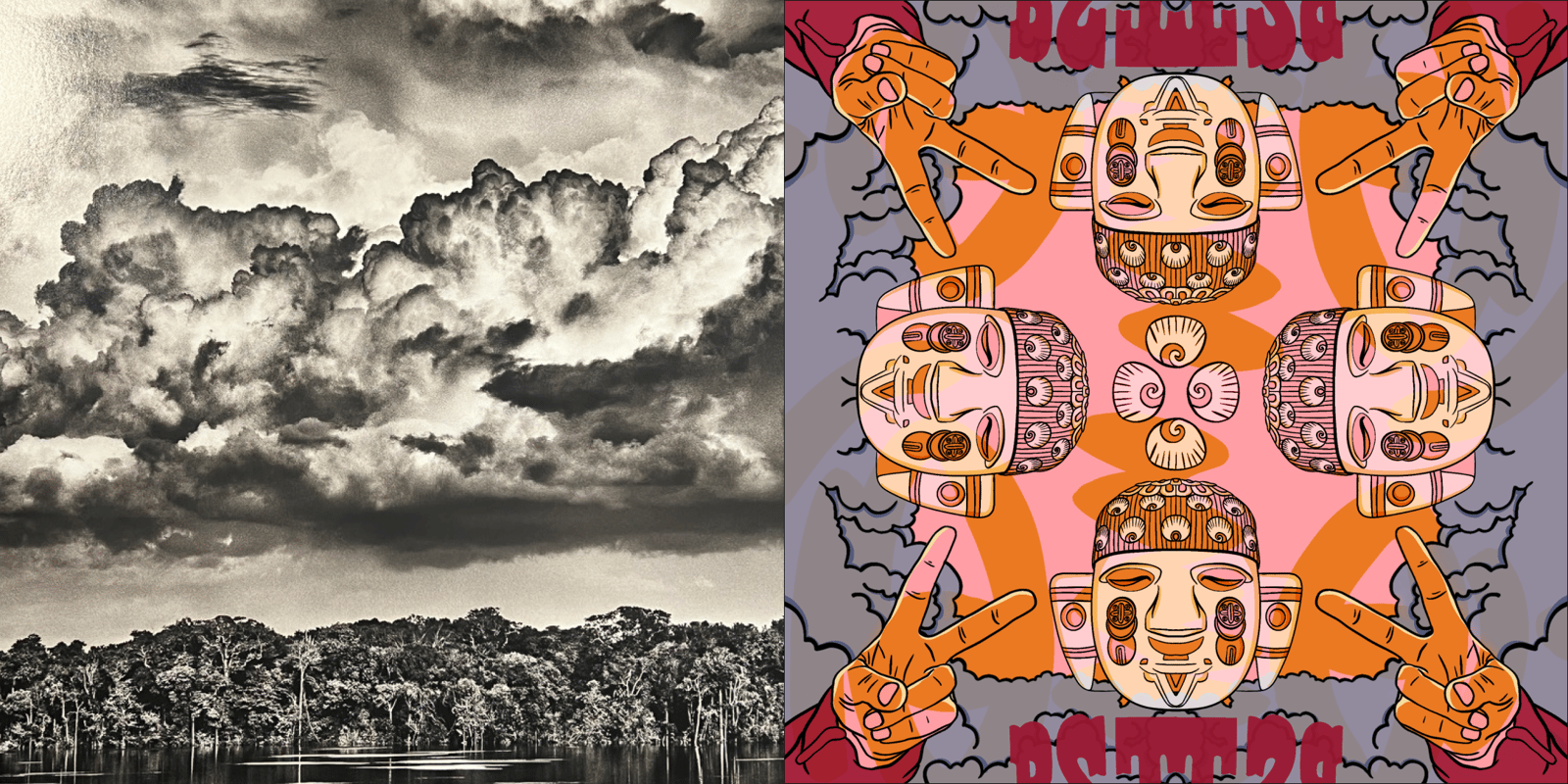
The whole visit had an air of not wanting to let go. The beautiful contemporary photographs by Salgado, alongside those artifacts that have carried tens of thousands of years of culture and wisdom, made me feel heavy and light at the same time. It made me think that if all of these people before us survived their times, we might survive ours as well.
A Conclusion & A Revival
On the way out, I concluded something very practical and very symbolic: I need a new iPad and continue the "Traveling Patronage" series I began all those years ago in Buenos Aires. My old tablet was about ten years old at the time and had been gently protesting every time I opened Procreate. The Apple Store was hosting a beginner iPad illustration class, and I joined on a whim. It felt slightly ridiculous to sit in a basic workshop after years of drawing on the device, but also grounding. It was a quiet reset, a reminder that we never stop learning. That day in Condesa is when I decided that Traveling Patronage deserved a new beginning and a bit more intentional time.
The Process
Underneath all of this narrative is a very concrete pipeline. It usually starts with an iPhone photo that lingers in my camera roll for weeks or months. When something about it refuses to leave my head. As you now know, it can be a half-peeled sticker or a fragment of a 3000-year-old mural. I pull it into Procreate on the iPad and start redrawing and collaging. Sometimes I keep the original composition; sometimes I isolate a single element, like the almost closed Floralis or the pig, and spin it around a central axis until it becomes a pattern.

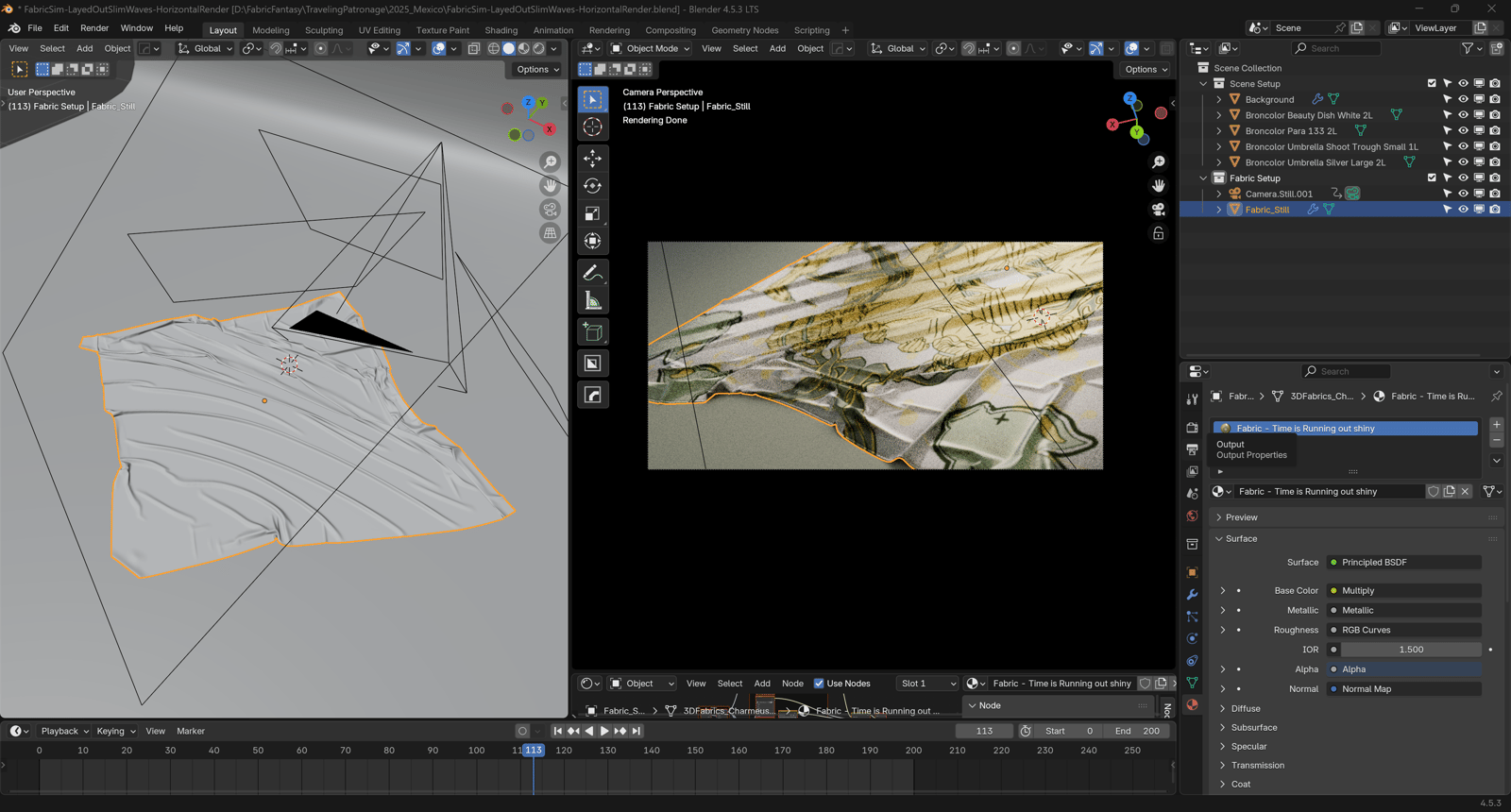
Once the illustration works as a 1:1 square, I export it and move into Substance Designer to build a texture set. From there, it goes into Blender, where I started rendering the illustrations out as scarves. Finally, the flat image turns into something somewhat tangible again. This is where I test how the pattern drapes or moves with a breeze, and where I push the fabric simulations sometimes a bit too far just to see what happens.
The two parts of the process that cost me the most energy are very early and very late:
-
Choosing which photos to include in the final designs.
-
Experimenting with the final fabric simulation and rendering to hit the feel of the actual textile I imagine it to be. Honestly, this one keeps being an ongoing work in progress. I can't claim I have fabric simulations in Blender figured out in its entirety.
Everything in between feels surprisingly straightforward compared to those decisions.
Wearing The Diary ... Maybe
As I decided to render the illustrations in 3D, I kept thinking: what if these visual diary fragments become wearable? The thought was there right from the beginning. Since I am a former fashion designer, I can't shake the idea of seeing them as silk scarves; folded, tied, worn, creased. But for now, this idea has only been moving in the back of my head.
I'm still figuring out what that could look like in practice, and how far to take the phygital side of the project. In 2025, I even applied for a grant with Rarible, imagining a few focused months in 2026 dedicated only to this archive, both as digital pieces and as physical objects.
For now, this article is the first step: opening up the archive, showing some of the behind-the-scenes, and admitting that this really is my visual diary of travel. It's me discovering beauty in the hidden and giving those fragments a place to live. If one of these squares feels like something you would actually wear, tell me which one. Maybe, at some point, this diary will move from my iPad and the three-dimensional space of Blender onto your shoulders.
Support Me
If you enjoy my writing, please consider supporting me. There are several ways of doing so, and not all of them cost money:
-
Subscribe to this blog. Thank you if you have already subscribed.
-
Get my free or paid membership tier powered by Unlock Protocol (it will unlock parts of my WIP website).
-
Leave a tip using the recently implemented system here on Paragraph by clicking the "Support" button at the top of the article and leaving a tip. Thank you if you have already done so.