
Toward A Healthy Transhumanism (Part IV): Electric Transhumanism
“You see, to me it seems as though the artists, the scientists, the philosophers were grinding lenses. It’s all a grand preparation for something that never comes off. Someday the lens is going to be perfect and then we’re all going to see clearly.” —Sexus, Henry Miller“Damn 'em all. They changed it, changed it all around. Smeared it all over with blood.” —The MisfitsThose who are or who have been saved must above all, to have donned the helmet-hat of salvation, have been sealed with the...

States of the Union
“The Americans of all nations at any time upon the earth have probably the fullest poetical nature. The United States themselves are essentially the greatest poem.” —Walt WhitmanFL Gazing down nereids I, absent on some swelling shore, From above again by the soft distance? Up do they look? Thin-bronze latino familias, their silken hair and linen, Wool and Tassels Yahwe- Sun so bright so-can’t be seen, diadems, Heavenly host, etc Dissipates. The best of the orients skyscrapers almost Lush pave...

Four Movies America Didn't Understand
“Ah, Ah, Ah, Ah Stayin’ Alive…” —The Bee GeesI thank God that my parents didn’t watch movies with me growing up. But should I really thank them? Would it not be cruel for me now to do the same to my children? Did them not watching movies allow me to watch and sublimate the American masterpieces with proper maturity and respect? It is unclear, but it likely saved me from the extent of my interaction with them being the purchase and use of a Scarface or Godfather themed gaming mousepad, likely,...
<100 subscribers

Toward A Healthy Transhumanism (Part IV): Electric Transhumanism
“You see, to me it seems as though the artists, the scientists, the philosophers were grinding lenses. It’s all a grand preparation for something that never comes off. Someday the lens is going to be perfect and then we’re all going to see clearly.” —Sexus, Henry Miller“Damn 'em all. They changed it, changed it all around. Smeared it all over with blood.” —The MisfitsThose who are or who have been saved must above all, to have donned the helmet-hat of salvation, have been sealed with the...

States of the Union
“The Americans of all nations at any time upon the earth have probably the fullest poetical nature. The United States themselves are essentially the greatest poem.” —Walt WhitmanFL Gazing down nereids I, absent on some swelling shore, From above again by the soft distance? Up do they look? Thin-bronze latino familias, their silken hair and linen, Wool and Tassels Yahwe- Sun so bright so-can’t be seen, diadems, Heavenly host, etc Dissipates. The best of the orients skyscrapers almost Lush pave...

Four Movies America Didn't Understand
“Ah, Ah, Ah, Ah Stayin’ Alive…” —The Bee GeesI thank God that my parents didn’t watch movies with me growing up. But should I really thank them? Would it not be cruel for me now to do the same to my children? Did them not watching movies allow me to watch and sublimate the American masterpieces with proper maturity and respect? It is unclear, but it likely saved me from the extent of my interaction with them being the purchase and use of a Scarface or Godfather themed gaming mousepad, likely,...
Share Dialog
Share Dialog


“Our body must be our work”
—Nikolai Fedorov
To readjust man’s current course toward what can be called the “transhuman”, we must first suspend the crutch that creationism is and really think. We must first define what is human. We must define it the only way we know how, by investigating how we unconsciously we define it already. Surprisingly, the consensus around what is human is basically ubiquitous, and, importantly, “humanity” once taxonomically ascribed is immutable (and therefore not to be taken lightly). Surely, there are exceptions to this consistency, maybe most contentiously with respect to stages of fetal growth, but in actuality, aside from fetal debaters and those hyper-racists who would label particular races as sub-human, what is human (or “man”) is simple; what is human is what comes out of a woman.
What is human is human whether living or dead, if it was at one time human. What was once human is always human in this sense, but here we are not concerned with the dead except as inspiration, here we are concerned with the human as living. Now, let us consider what we, as of the year 2025 AD, accept as human, and witness reality’s confirmation of our above definition. Until 1978 what was human, or that which is living and comes out of a woman, was simple. Some infants died moments after birth, some days before, but basically, what was born of a woman, living, was human: forever.
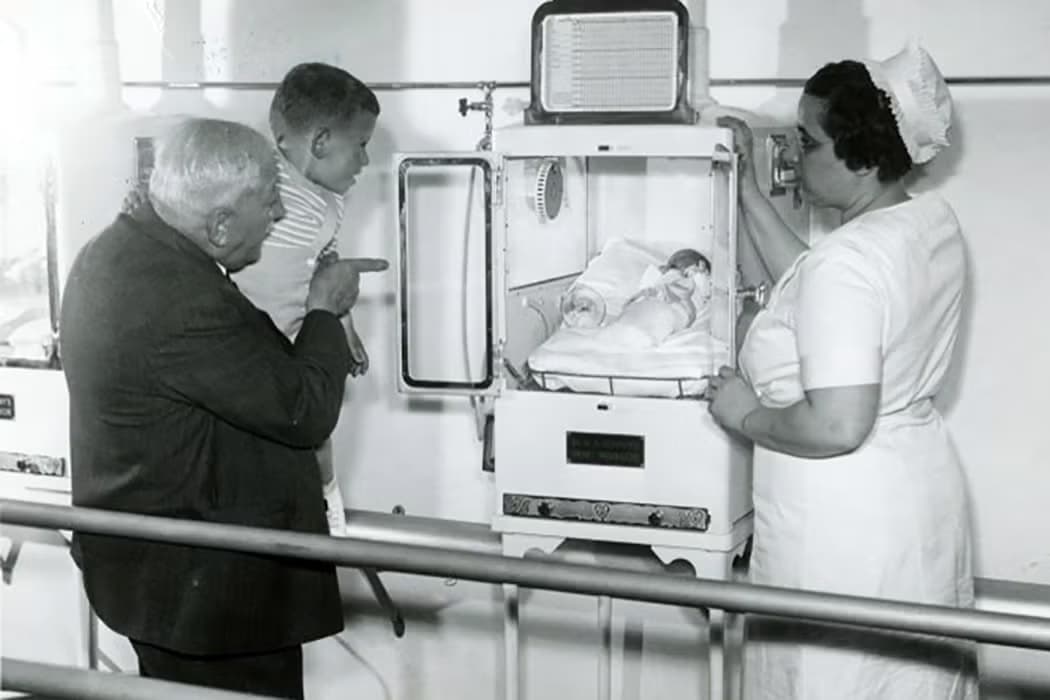
Premature births and deaths have happened for as long as biological reproduction has, and whether or not a miscarried baby is human is not the purpose of this discussion, however, what is obvious to the point of redundancy is that those babies who are birthed still living (still breathing), are immutably human. What the use of incubators and feeding tubes (originally accomplished using a modified gravage, “merci foie gras!”) in the late 19th century retroactively reveal to us, is that we as humans place no lower limit on the pre-term date at which humanity can be ascribed to something once born. In other words, what is born of a woman (sidenote: we have intentionally opted for the phrase “comes out of a woman” over “born of a woman” due to the existence of “birthing” techniques like the Cesarean, but ultimately these phrases are interchangeable given the broad sense of the latter) is “human”, no matter how premature the birth.
Given the fact that what is human is human once born of a woman, regardless of its coming to term, we now look for more examples of what we, in the modern day, explicitly and ubiquitously accept as human. The most obvious edge case that modern science allows us in this respect is IVF (in vitro fertilization, first successful in 1978). There are other techniques like intrauterine insemination that “conceive” babies where it would otherwise not be possible, but with IVF being the most involved and “unnatural” of these processes, we pursue our inquiry there. It must also be noted, however, that under the umbrella of IVF, there are increasingly sophisticated techniques around zygote trait selection, ranging from the (currently possible and implemented) parental selection of a superiorly endowed zygote from a batch of fertilized eggs to the, much more drastically eugenic, genetic iteration (100x times) over sperm cells later fertilized to form what can be reasonably called a “super baby”.
There are groups, most notably the Catholic Church, opposed to conception methods like IVF for obvious (in their eyes) reasons, but what is fascinating to note is that even if these groups and individuals view processes like IVF as unadvisable and “haram”, they have never once dared to claim that individuals born of such methods are not human. Similarly, it would be cruel for a Catholic, or anyone else with non-mainstream views, to suggest that incubation/feeding techniques for a premature infant are unadvisable or sacrilegious, given the child has been born and is human, and we likewise notice this pattern of thought being followed in their supposed acceptance of an IVF baby as perfectly human (without reservation) once born, even if they are hesitant about such practices generally.
And so, to summarize by exemplifying the extreme, today in 2025 (these walk among us), a child can be chosen in trait based fashion by their parents from a batch of IVF zygotes, be operated upon while remaining in the womb of its surrogate mother, and finally, be born 21 weeks into their gestational period with the aid of an incubation device. This is still human. This is still human, even without us even touching on possible augmentations after the fact; and it seems foolish to question this, and even more foolish to think one could argue otherwise, given we have already all accepted it.
What is “transhuman” is primarily thought to specify that which is “beyond-human”: that which, once human, has been augmented to the point of discreet-being compared to that which is human. However, as emphasized above, before we may even hope to critique or consciously engage in human augmentation, we should first try to localize what is human, and what might surprise us to already be human. The fact that there are living humans, who, thanks to incubators first and IVF more recently, could not have existed, but are now fully and unexceptionally existing as human, necessitates a new and pre-existent category of transhumanism: reproductive transhumanism.
Transhumanism is about going beyond what is human, but is not birthing otherwise impossible human beings that very thing on an, even deeper, ontological level. Incubators and feeding tubes may, within a strict definitive paradigm, may actually not be “transhuman” in the reproductive sense, as they deal with humans already “born of a woman”, but they are forerunners to what is truly reproductively transhuman: IVF and genomic editing. There was recent outrage against transgender athletes, against boys competing against girls in boxing or swimming competitions, but will there ever be outrage against genetically selected children, against children whom parents select to birth based on traits and gender and, most importantly, against children who have ½ (usually the sperm) of their DNA genetically edited, to the point of having 5+ standard deviation traits, through genetic iteration for superiority’s sake. Of course, one can “trust in God”, and claim that the old cart-and-buggy technique for making babies is ultimately the greatest way to make a “super baby” (and they might be right, at least compared to standard, non-genetically modified IVF techniques), but genome editing technology will soon be ready for commercial use, and what’s left us then? Until artificial womb technology supports gestation from conception to birth (this might be the only bifurcative, and likely useless, line we will be able to draw as far as “humanness” goes), these children will still be human having obeyed our mutually-consentual definition of being born of a woman.
Given the difficulty of forming any definition for what is human aside from being “born of a woman”, and given the rapidly varied inclusiveness of this definition due to scientific achievement, it follows that to define what becomes other than human, or “transhuman”, will be just as generally vague and non-exclusive. Yes, the above hermeneutic is helpful in an age where “agency” and “ethics” are talked about in relation to Artificial Intelligence, but aside from the obvious point that until AI is born of a woman (AI-VF) it should not be given ethical status as human, we are left exposed to science’s confused teleological vector. No one has dared yet call the first handicap-cured Neuralink recipient “transhuman” given the irrevocability of “humanity” as an identifier; but there will have to be a line drawn in the sand at some point right?
Maybe this line will look less like a demarcation and more like a suggestion, a prejudice. Maybe as Mr. Guppy suggests, specifically with respect to the “plastic surgery question”, this is all we can hope for. Regardless, let us continue to plumb these depths with mute hope, with vagaries like “that which is human is what is felt not simply altered” and concrete (and for the most part inclusive) statements like “what is human is what comes out of a woman”. These are the best we have for now.

“Our body must be our work”
—Nikolai Fedorov
To readjust man’s current course toward what can be called the “transhuman”, we must first suspend the crutch that creationism is and really think. We must first define what is human. We must define it the only way we know how, by investigating how we unconsciously we define it already. Surprisingly, the consensus around what is human is basically ubiquitous, and, importantly, “humanity” once taxonomically ascribed is immutable (and therefore not to be taken lightly). Surely, there are exceptions to this consistency, maybe most contentiously with respect to stages of fetal growth, but in actuality, aside from fetal debaters and those hyper-racists who would label particular races as sub-human, what is human (or “man”) is simple; what is human is what comes out of a woman.
What is human is human whether living or dead, if it was at one time human. What was once human is always human in this sense, but here we are not concerned with the dead except as inspiration, here we are concerned with the human as living. Now, let us consider what we, as of the year 2025 AD, accept as human, and witness reality’s confirmation of our above definition. Until 1978 what was human, or that which is living and comes out of a woman, was simple. Some infants died moments after birth, some days before, but basically, what was born of a woman, living, was human: forever.

Premature births and deaths have happened for as long as biological reproduction has, and whether or not a miscarried baby is human is not the purpose of this discussion, however, what is obvious to the point of redundancy is that those babies who are birthed still living (still breathing), are immutably human. What the use of incubators and feeding tubes (originally accomplished using a modified gravage, “merci foie gras!”) in the late 19th century retroactively reveal to us, is that we as humans place no lower limit on the pre-term date at which humanity can be ascribed to something once born. In other words, what is born of a woman (sidenote: we have intentionally opted for the phrase “comes out of a woman” over “born of a woman” due to the existence of “birthing” techniques like the Cesarean, but ultimately these phrases are interchangeable given the broad sense of the latter) is “human”, no matter how premature the birth.
Given the fact that what is human is human once born of a woman, regardless of its coming to term, we now look for more examples of what we, in the modern day, explicitly and ubiquitously accept as human. The most obvious edge case that modern science allows us in this respect is IVF (in vitro fertilization, first successful in 1978). There are other techniques like intrauterine insemination that “conceive” babies where it would otherwise not be possible, but with IVF being the most involved and “unnatural” of these processes, we pursue our inquiry there. It must also be noted, however, that under the umbrella of IVF, there are increasingly sophisticated techniques around zygote trait selection, ranging from the (currently possible and implemented) parental selection of a superiorly endowed zygote from a batch of fertilized eggs to the, much more drastically eugenic, genetic iteration (100x times) over sperm cells later fertilized to form what can be reasonably called a “super baby”.
There are groups, most notably the Catholic Church, opposed to conception methods like IVF for obvious (in their eyes) reasons, but what is fascinating to note is that even if these groups and individuals view processes like IVF as unadvisable and “haram”, they have never once dared to claim that individuals born of such methods are not human. Similarly, it would be cruel for a Catholic, or anyone else with non-mainstream views, to suggest that incubation/feeding techniques for a premature infant are unadvisable or sacrilegious, given the child has been born and is human, and we likewise notice this pattern of thought being followed in their supposed acceptance of an IVF baby as perfectly human (without reservation) once born, even if they are hesitant about such practices generally.
And so, to summarize by exemplifying the extreme, today in 2025 (these walk among us), a child can be chosen in trait based fashion by their parents from a batch of IVF zygotes, be operated upon while remaining in the womb of its surrogate mother, and finally, be born 21 weeks into their gestational period with the aid of an incubation device. This is still human. This is still human, even without us even touching on possible augmentations after the fact; and it seems foolish to question this, and even more foolish to think one could argue otherwise, given we have already all accepted it.
What is “transhuman” is primarily thought to specify that which is “beyond-human”: that which, once human, has been augmented to the point of discreet-being compared to that which is human. However, as emphasized above, before we may even hope to critique or consciously engage in human augmentation, we should first try to localize what is human, and what might surprise us to already be human. The fact that there are living humans, who, thanks to incubators first and IVF more recently, could not have existed, but are now fully and unexceptionally existing as human, necessitates a new and pre-existent category of transhumanism: reproductive transhumanism.
Transhumanism is about going beyond what is human, but is not birthing otherwise impossible human beings that very thing on an, even deeper, ontological level. Incubators and feeding tubes may, within a strict definitive paradigm, may actually not be “transhuman” in the reproductive sense, as they deal with humans already “born of a woman”, but they are forerunners to what is truly reproductively transhuman: IVF and genomic editing. There was recent outrage against transgender athletes, against boys competing against girls in boxing or swimming competitions, but will there ever be outrage against genetically selected children, against children whom parents select to birth based on traits and gender and, most importantly, against children who have ½ (usually the sperm) of their DNA genetically edited, to the point of having 5+ standard deviation traits, through genetic iteration for superiority’s sake. Of course, one can “trust in God”, and claim that the old cart-and-buggy technique for making babies is ultimately the greatest way to make a “super baby” (and they might be right, at least compared to standard, non-genetically modified IVF techniques), but genome editing technology will soon be ready for commercial use, and what’s left us then? Until artificial womb technology supports gestation from conception to birth (this might be the only bifurcative, and likely useless, line we will be able to draw as far as “humanness” goes), these children will still be human having obeyed our mutually-consentual definition of being born of a woman.
Given the difficulty of forming any definition for what is human aside from being “born of a woman”, and given the rapidly varied inclusiveness of this definition due to scientific achievement, it follows that to define what becomes other than human, or “transhuman”, will be just as generally vague and non-exclusive. Yes, the above hermeneutic is helpful in an age where “agency” and “ethics” are talked about in relation to Artificial Intelligence, but aside from the obvious point that until AI is born of a woman (AI-VF) it should not be given ethical status as human, we are left exposed to science’s confused teleological vector. No one has dared yet call the first handicap-cured Neuralink recipient “transhuman” given the irrevocability of “humanity” as an identifier; but there will have to be a line drawn in the sand at some point right?
Maybe this line will look less like a demarcation and more like a suggestion, a prejudice. Maybe as Mr. Guppy suggests, specifically with respect to the “plastic surgery question”, this is all we can hope for. Regardless, let us continue to plumb these depths with mute hope, with vagaries like “that which is human is what is felt not simply altered” and concrete (and for the most part inclusive) statements like “what is human is what comes out of a woman”. These are the best we have for now.

No comments yet