I love how Saint Laurent’s creative director, Anthony Vaccarello, has taken a form of brutalism — corduroy-imprinted concrete and generally raw and exposed materials — and elevated it to high fashion. It’s a perfect example of “raw meets refined.” And you’ll find this approach in its stores all around the world, including in Toronto on Bloor Street. For me, it’s also a great microcosm of Paris. This is a city with a deep, rich history, but one that isn’t afraid to disrupt that history and look forward when it makes sense to do so.
This is a wall of 20th-century filmmaking equipment captured at the Fondation Jérôme Seydoux-Pathé. For background, Jérôme Seydoux is a French businessman and movie producer (and the grandfather of French actress Léa Seydoux). Pathé is the second-oldest operating film company in the world. It was founded by the Pathé brothers in the late 19th century. (For architecture fans, the Fondation itself was designed by Renzo Piano. Note: Full architecture tours only happen once a week.)
Seeing this taxonomy of equipment and reading about its market adoption reminded me that technologies change, but human impulses tend to remain remarkably static. Film cameras at the beginning of the 20th century were made for industry. They were expensive, bulky, and required teams of people. But as you’d expect, by the middle of the century, these devices became more affordable and suitable for individual use. This gave rise to amateur filmmakers and eventually, you could say, proto-influencers.
The introduction of smartphones made creation even easier and social media platforms completely changed the game of distribution, turning content creation into an even bigger business. But in the end, the human desire to capture, create, and share remains the same. Today, however, the game is fundamentally changing. AI eliminates the need for handheld devices and physical models and locations. Now you can just prompt. The possibilities are endless.
As I was walking around the Fondation and reading about how it took a year to cast the right female lead for L’Amant (Jane March was eventually found in the suburbs of London), I couldn’t help but think about how AI completely collapses this process. Today, there’s no need to look; you just need to describe exactly what you want. Invariably, this is going to feel like some kind of loss to purists. Isn’t this artificial?
We are now in a post-camera world. But what will never change is our desire to tell stories.
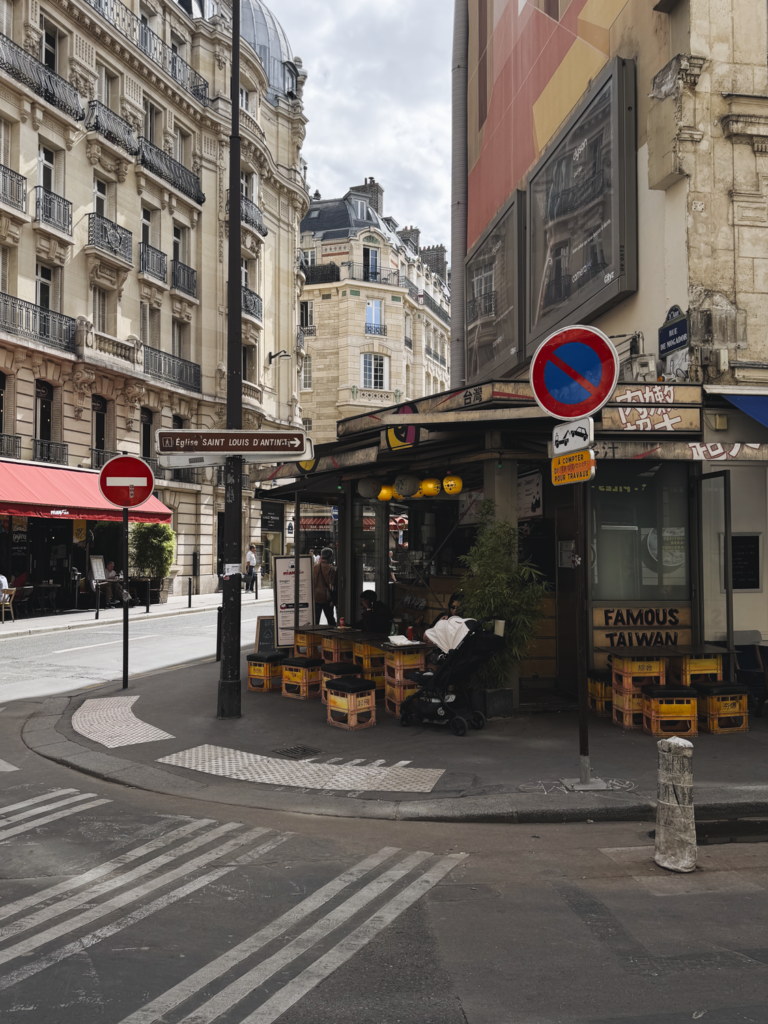
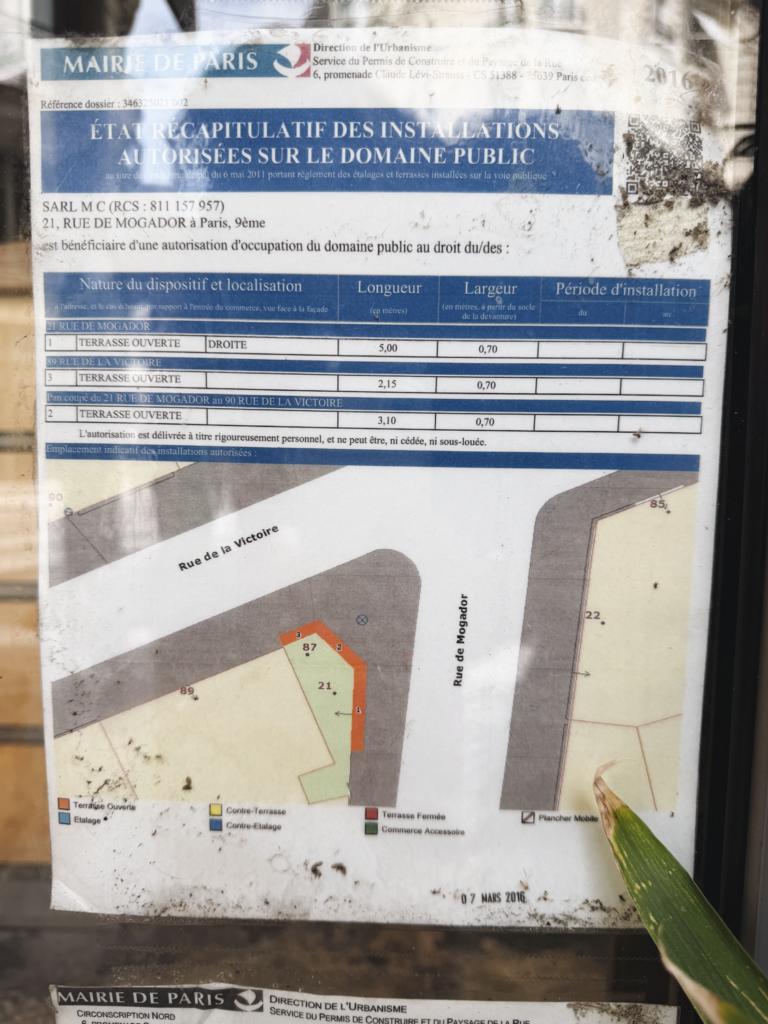
This corner, the corner of rue de la Victoire and rue de Mogador in Paris, could have very easily been nothing. The side wall of the main building is, for whatever reason, blank. There’s a tall mural, two advertising billboards, and a remnant parcel of land that looks to be no deeper than about 3 metres at its absolute deepest.
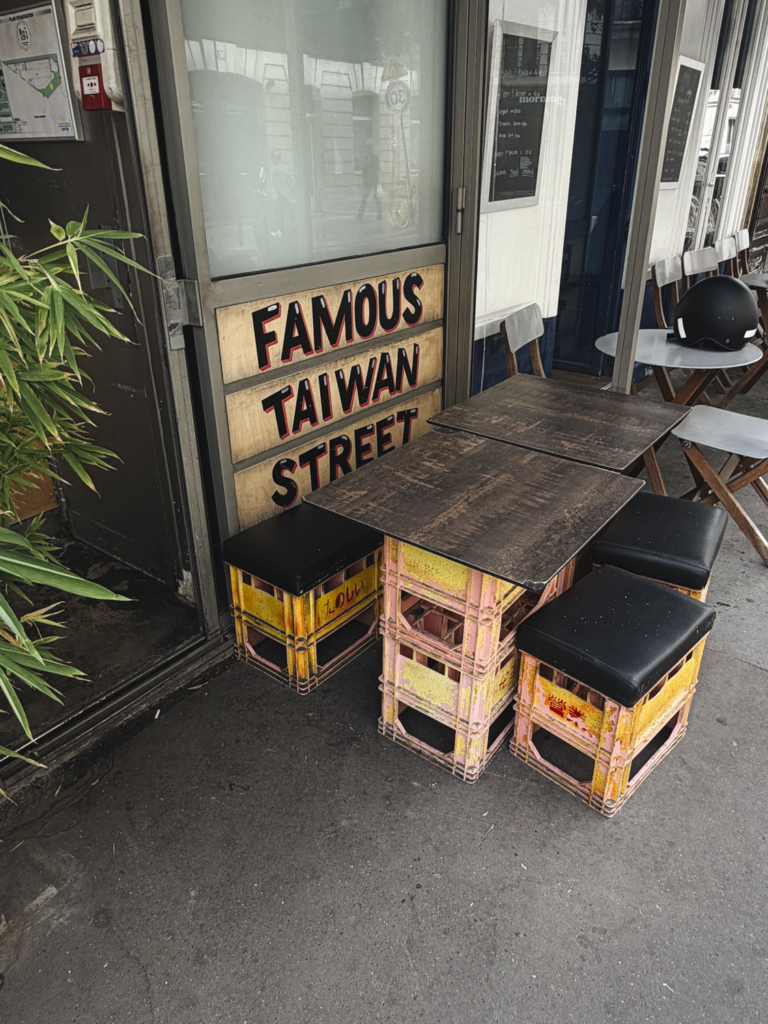
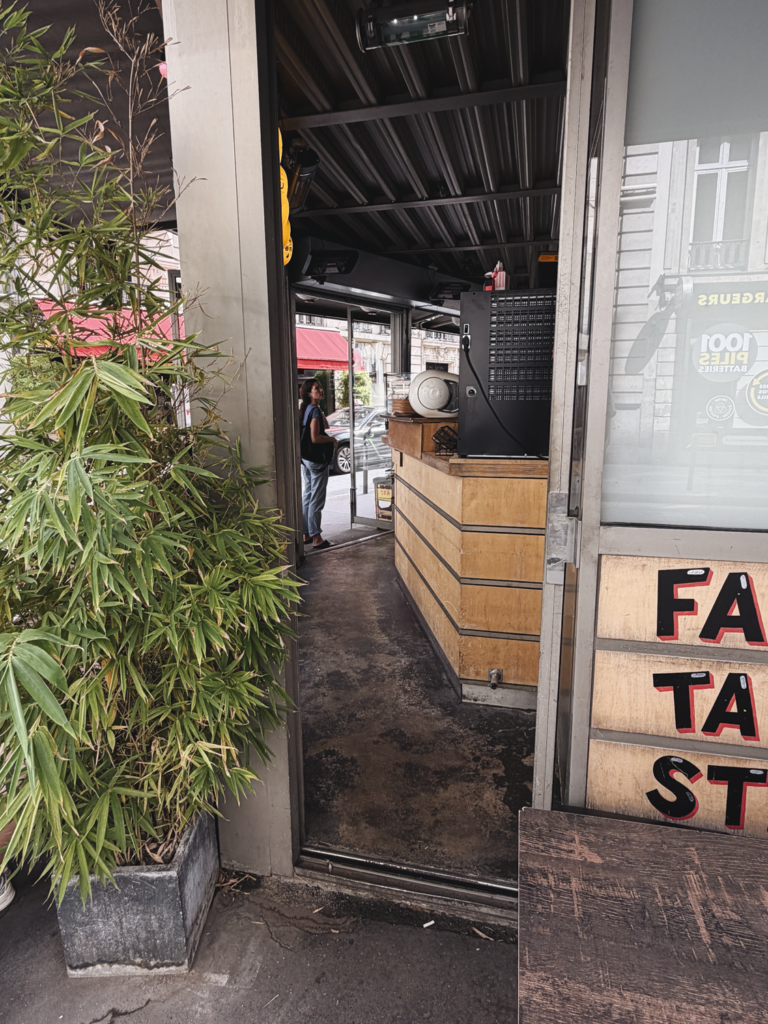
But instead, you’ll find a Japanese street food restaurant called Mian Fan Onigiri (I’m not sure what the Taiwan sign is all about). The interior can’t be larger than 20 or so square metres, but it’s surrounded by a 0.7-metre-deep patio that wraps around the outside of the space and runs about 10 m in total along three faces (see city terrace permit document).
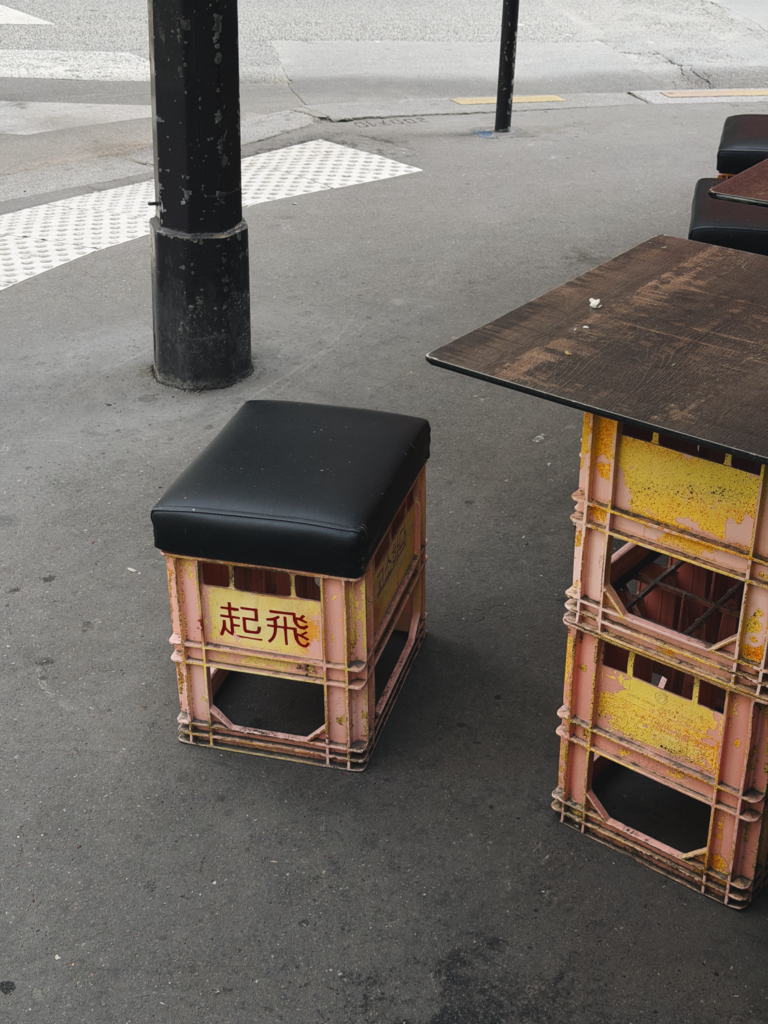
It’s a simple and unfussy space. The patio consists of milk-crate furniture. But these kinds of small spaces punch well above their weight in what they contribute back to a city in terms of street animation and public life. Cities would do well to reduce the barriers to this scale of business and encourage more small entrepreneurs to hang a shingle.
And until they do, we’ll never know how much of this urban spirit is being suppressed.
Subscribe to Brandon Donnelly
Daily insights for city builders. Published since 2013 by Toronto-based real estate developer Brandon Donnelly.